

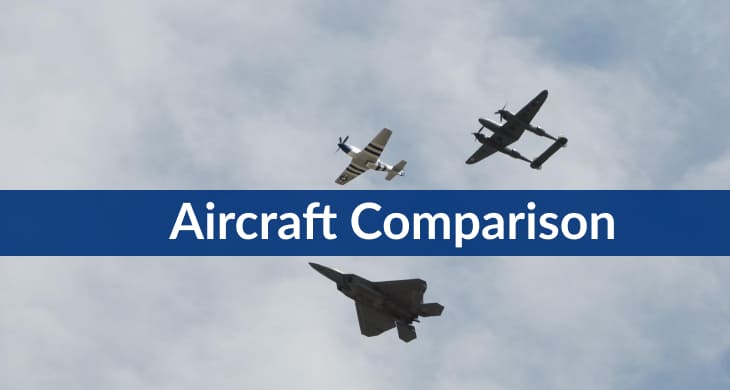
Which is better, the Su-27 or the F/A-18? This question has been asked by fighter jet enthusiasts for many years. In this blog post, we will compare and contrast these two aircraft and try to conclude which one is better.
The Sukhoi Su-27 Flanker
The Sukhoi Su-27 was developed and built primarily to counter the United States’ formidable 4th-generation fighter jets. It was designed to match the capabilities of such jets as the F-15 Eagle, F-16 Fighting Falcon, and F/A-18 Hornet.
The aircraft also served as an interceptor, detecting and engaging aerial targets in all weather conditions. Furthermore, its variable geometry air intakes gave it an advantage regarding quick acceleration and deceleration required during combat maneuvering.
Its powerful thrust-vectoring engines have enabled it to perform aerobatic stunts like “the cobra” with impressive agility at low speeds, making it a formidable opponent in close-range dogfights.
Its rugged airframe and reliable avionics system have cemented the Su-27’s reputation as one of the most successful air superiority fighter jets in history.
The Boeing F/A-18E/F Super Hornet
The F-18, developed by the McDonnell Douglas (now Boeing) company, was a multirole fighter jet designed to respond quickly to any threat. It was designed and built for the United States Navy as an all-weather aircraft that could easily change roles depending on mission requirements.
It was also used for reconnaissance purposes and provided defensive capabilities as well.
As a state-of-the-art aircraft at the time, equipped with high maneuverability, advanced radar array, and infrared sensors, it filled various operational requirements and allowed pilots to perform aerial combat missions where they could successfully engage their targets while lowering overall risk exposure.
It served in both air-to-air and air-to-ground missions due to its advanced features. The F-18 has become one of the most successful military aircraft ever built, with thousands flying almost daily worldwide.
Differences between the Sukhoi Su-27 and the Boeing F/A-18E/F Super Hornet
The Su 27 and F 18 are among the most advanced fighter jets currently in operation. They both come equipped with sophisticated navigation and weapon systems, making them excellent choices for defensive and offensive maneuvers.
Nevertheless, the two models do differ from each other in essential aspects. The Su 27 can reach a top speed of 2120 kilometers per hour, while the F 18 can have a maximum velocity of 1440 kilometers per hour.
This makes the Su 27 faster than its rival. Still, it has a shorter flight duration and less payload capacity than its rival. Another main difference is their maneuvering speed: the Su 27 boasts an impressive maximum turn rate of 60 degrees per second, compared to 22 degrees per second on the F 18.
This is advantageous for the former since it has been developed with air shows in mind. At the same time, the latter is more suitable for combat missions due to its superior weapons loadout ability.
Ultimately, although they share similarities and come from the same family of jets, each is suited differently according to its intended purpose.
Similarities between the Sukhoi Su-27 and the Boeing F/A-18E/F Super Hornet
The industrial and tactical capabilities of the two planes, the Su 27 and F 18 are similar in many ways. Both aircraft have been crafted with vast maneuverability degrees and a powerful afterburner that allows them to reach speeds of more than Mach 2.
These fighter jets are also designed with advanced fire-control radar systems to detect incoming objects from a considerable distance. Moreover, both aircraft can carry a significant payload for extensive aircraft strikes, including various missiles and bombs.
Furthermore, each has an integrated digital defense system to protect them against incoming heat-seeking threats. In addition to their functional similarities, the two fighters feature inside avionics created explicitly for their ejective seating mechanisms.
Over the years, both planes have proved their exceptional combat skills in various geopolitical contexts. Still, They have not been used together in any military operations as they were intended to fight on opposite sides of any major conflict as initially mandated by their respective governments.
What’s better about the Sukhoi Su-27?
Here are the four better things about Su-27:
Great flying qualities
The Sukhoi Su-27 is a mighty, heavy fighter jet. It has become a leader in the aviation industry due to its reliability, prowess, and impressive design.
Powerful engines
Its engines have an impressive thrust-to-weight ratio, making this aircraft one of the most cost-effective fighters. Its long range, complemented by multirole capability, makes it an ideal choice for many nations’ security infrastructures.
It’s lightning fast
The Su-27 also excels with its lightning-fast speed, besting comparable models because of its lighter and more aerodynamic canopies.
It’s versatile
The versatile avionics suite integrated with advanced sensors makes it a formidable combatant in any mission. The Sukhoi Su-27 is a reliable aircraft that deserves recognition as one of the finest heavy fighters.
What’s better about the Boeing F/A-18E/F Super Hornet
Here are the four better things about Boeing F/A-18E/F Super Hornet:
It’s supersonic
Its supersonic capacity puts it ahead of any other fighter jet in terms of speed, and its maneuverability gives it a clear advantage over other aircraft.
Best infrared system
It’s also equipped with a Large Aircraft Infrared Countermeasures system, significantly improving its defensive capabilities. In addition, the F-18 maintains peak performance even in rugged terrain, thanks to its superior avionics package that allows autonomous operation.
Heavily armed
Its advanced weapons systems ensure precise targeting by leveraging sensor fusion between several platforms.
It’s fuel efficient
The F-18 has an excellent power-to-weight ratio enabled by the use of robust composite materials that allow for greater fuel efficiency without reducing the strength of the aircraft structure.
Conclusion
Overall, the Su 27 and F 18 are both incredible fighters that offer a wide range of capabilities for modern military operations. Although they have similar characteristics, there is yet to be a clear winner as to which is better.
Ultimately, it depends on what kind of mission you are planning to undertake and the desired performance needed from your aircraft. Both of these planes can deliver superior results from short-term air superiority missions to long-range raids.
With their impressive capabilities and design, the F-18 and Su 27 will remain reliable for military operations. No matter which plane you choose, they are both exceptional fighters and will serve you well.