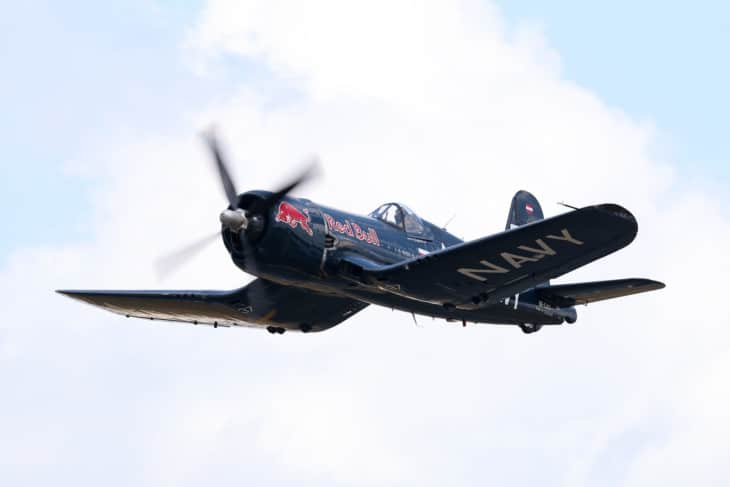
In the annals of military history, few aircraft can match the raw power and deadly efficiency of the F4U Corsair and the FW 190. These two warbirds went head-to-head in some of the fiercest dogfights of World War II. So, F4U Corsair vs Fw 190, which one is better? Let’s find out.
The Vought F4U Corsair
The F4U Corsair was a fighter aircraft that operated primarily in the Pacific Theater during World War II. It had a top speed of 435 miles per hour and could reach an altitude of 42,000 feet. The Corsair was armed with six .50 caliber machine guns and could carry bombs or rockets under its wings.
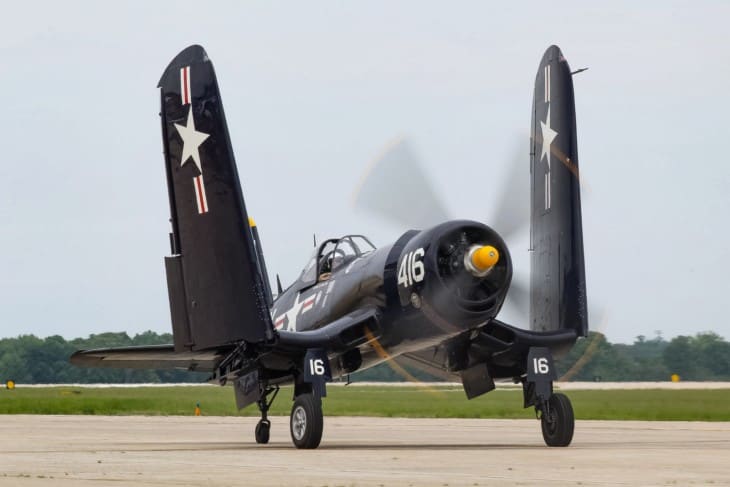
Why was it developed and built?
The F4U Corsair was a fighter plane used by the United States Navy and Marines during World War II. It was designed and built by Chance Vought and first flew in 1940. The Corsair was powered by a 2,000 horsepower Pratt & Whitney R-2800 engine, making it one of the most powerful fighters of its time.
What purpose did it serve?
The F4U Corsair was designed to be a versatile aircraft capable of engaging in various military missions. It was fast and agile, making it an ideal choice for aerial dogfights or bombing runs.
Throughout its service history, the Corsair served as a valuable asset for the US military, helping to protect our troops on the front lines and ultimately contributing to the victory in World War II.
The Focke-Wulf Fw 190
The FW 190 was a fighter aircraft used by the German Luftwaffe during World War II. It had a top speed of 430 miles per hour and could reach an altitude of 38,000 feet. The Fw 190 was armed with two 7.92 mm machine guns and two 20 mm cannons, and it could also carry bombs or rockets under its wings.
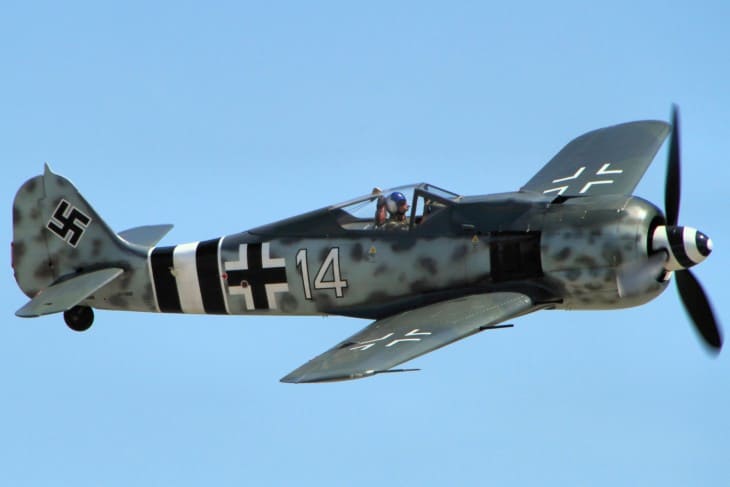
Why was it developed and built?
The Fw 190 was a fighter plane used by the German Luftwaffe during World War II. Kurt Tank designed it, and it first flew in 1939. The Fw 190 was powered by a 1,700 horsepower BMW 801 radial engine, making it one of the most powerful fighters of its time.
What purpose did it serve?
The Fw 190 served many vital roles during the Second World War. Originally developed as a fighter plane, it quickly proved to be a powerful and versatile aircraft. Its most notable uses included escorting bombers on long-range missions.
Likewise, the Fw 190’s innovative design, combined with its impressive speed, power, and maneuverability, made it one of the war’s most formidable weapons. Despite being after the war’s end, this plane played an essential role in securing victory for the Allied forces.
How are the F4U Corsair and Fw 190 different?
In the annals of military history, few aircraft are as iconic as the F4U Corsair and the FW 190. But how were they different from each other? Let’s take a closer look.
Design and Appearance
The Corsair was immediately distinguishable from other fighters of its day thanks to its unique inverted gull-wing design. This distinctive look was necessitated by the plane’s large propeller, which would otherwise have hit the ground on takeoff.
The Fw 190, on the other hand, had a more traditional design with low-set wings. It was also significantly smaller than the Corsair, which made it more agile in battle.
Performance
Both planes were fast and maneuverable, but they had different strengths. The Corsair’s biggest advantage was it’s long-range; it could stay in the air for hours longer than the FW 190. This made it perfect for escorting bombers on long-range missions.
The Fw 190’s main advantage was its speed and agility; it could outmaneuver almost any other fighter in the sky. This made it deadly in close-quarters combat.
Armament
The Corsair was armed with six .50-caliber machine guns, while the Fw 190 had two 13mm (.51-caliber) Machine guns and four 7.92mm (.312-caliber) machine guns. The difference in caliber meant that the Fw 190 could do more damage per shot, but the Corsair could fire more shots in a given period, thanks to its higher rate of fire.
How are the F4U Corsair and Fw 190 similar?
The F4U Corsair and the Fw 190 are iconic fighter planes that played an essential role in World War II. Let’s look at their similarities:
- Both aircraft were highly maneuverable and capable of delivering heavy payloads, making them ideal for air-to-air combat and ground support missions.
- Likewise, both planes featured advanced flight systems and robust engines that allowed them to perform well even in difficult weather conditions.
Ultimately, though both planes were prized for their speed and firepower during World War II, their differences and shared strengths helped make them such compelling aircraft. Do you know what the 1920s air travel was like?
What’s better about the F4U Corsair?
Many factors contribute to the superior performance of the F4U Corsair compared to other fighter planes.
- For starters, this aircraft is highly maneuverable and offers excellent flight control.
- Thanks to its powerful engine, it can reach top speeds while maintaining its stability in the air.
- Additionally, Corsair is armed with an array of weapons and ammunition that make it a formidable opponent on the battlefield.
Whether engaging enemy fighters or attacking ground targets, Corsair has what it takes to succeed in various combat scenarios. Therefore, it is clear that this plane is truly one of the best fighters ever created.
What’s better about the Fw 190?
This plane’s speed and power make it special, giving it an edge over virtually all other fighters of the same era. For example, Fw 190 has a higher top speed than many other planes, allowing it to outmaneuver its opponents in almost any situation.
It also boasts superior firepower, with far more machine guns and cannons than comparable aircraft. This plane has superior maneuverability, allowing it to make quick turns or climb to greater heights while maintaining an impressive level of stability.
Overall, what makes Fw 190 truly stand out is its ability to adapt to quickly changing situations on the battlefield to overwhelm and defeat even the most formidable foe.
Conclusion
So, which plane is better? The answer is complicated because both planes had their strengths and weaknesses. The F4U Corsair was a better plane thanks to its higher speed, longer range, and heavier armament. Now let’s look at what happened to airplane Repo, the intriguing history of Barnstorming, and the safe management systems of aviation.