



Table of Contents
| Question | F-86 Sabre | MiG-15 |
|---|---|---|
| Job | Day fighter, later fighter-bomber | High-altitude day interceptor built to kill bombers |
| First flight | October 1, 1947 | December 30, 1947 |
| Guns | Six .50 caliber machine guns | One 37 mm and two 23 mm cannon |
| Gunsight | AN/APG-30 ranging radar | No radar ranging listed |
| Speed limit in a dive | None noted | Mach 0.92, where controls became ineffective |
| Korean War claim | 792 MiGs for 78 Sabres lost (USAF original) | 1,106 UN aircraft claimed by the Soviet 64th Corps |
| Built | 9,860 Sabres and Furies, all versions | 13,130 in the USSR plus at least 4,180 under license |
| Biggest strength | Aiming and dive speed | Climb, ceiling and cannon punch |
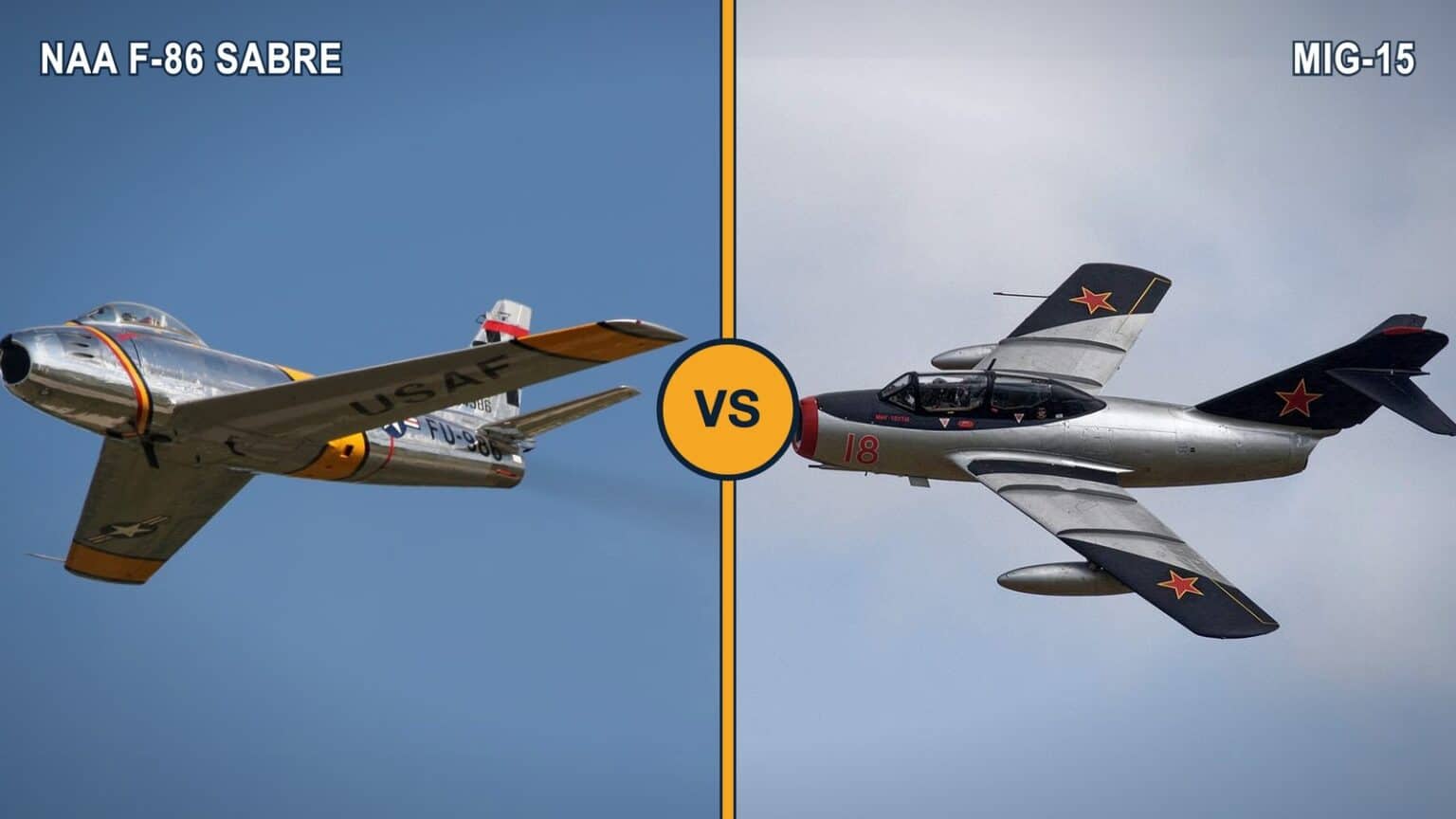
Did the F-86 Sabre and MiG-15 really fight each other?
Yes, and this is the pair people mean when they talk about the first big jet-versus-jet war. The F-86 Sabre first flew on October 1, 1947. The MiG-15 followed on December 30, 1947.
They met over MiG Alley, near the mouth of the Yalu River where Korea meets China. The 4th Fighter-Interceptor Wing flew Sabres from Kimpo to fight there.
Many MiGs were flown by experienced Soviet pilots in North Korean or Chinese markings. Chinese and North Korean pilots flew more of them as the war went on.

Myth check: it was never a 10 to 1 war
The USAF credited Sabres with 792 MiGs for 78 lost in air-to-air combat. A post-war USAF review cut that roughly in half. RAND later found 1.8 to 1 overall and about 1.3 to 1 against Soviet-flown MiGs.
Edge: even, with the Sabre ahead on the record
Speed, climb and ceiling: the MiG-15 wins by a little
AeroCorner’s spec panel gives the MiG-15 a top speed of 688 mph (1,107 km/h) and the F-86 678 mph (1,091 km/h). That is a gap of about 10 mph, which no pilot would notice.
The climb gap is bigger. The MiG-15 climbs at 10,080 ft/min (51 m/s) against 9,000 ft/min (46 m/s) for the Sabre.
The MiG also flew higher, with a ceiling of 50,800 feet (15,500 m) against 49,600 feet (15,100 m). Above 10,000 meters Wikipedia says the MiG had the advantage in turn radius.

The Sabre fought back at lower altitude. Wikipedia says it held a slight advantage below 8,000 meters in most respects except climb rate.
Edge: MiG-15
Firepower: three cannon against six machine guns
The F-86F carried six .50 caliber (12.7 mm) Browning machine guns firing 1,200 rounds per minute. The guns were harmonized to converge at 1,000 feet (300 m).
The MiG-15 carried one 37 mm cannon with 40 rounds and two 23 mm cannon with 80 rounds each. The Smithsonian says it was designed as a high-altitude day interceptor, so the guns were chosen to kill bombers.
The punch showed on April 12, 1951. Soviet pilots shot down or damaged 10 B-29As and three F-80Cs for the loss of one MiG, according to Wikipedia.
A cannon shell does more damage, but it has to hit. The Sabre’s guns fired 1,200 rounds per minute, which gave a pilot more chances in a fighter-versus-fighter fight.

Edge: MiG-15 against bombers, a toss-up against fighters
The gunsight and the dive: where the Sabre pulled ahead
The F-86F used an AN/APG-30 radar to range its gunsight. In October 1951 the Soviets recovered a downed Sabre and concluded the radar gunsight gave it an edge.
The Sabre was also marginally faster in a dive. Wikipedia says the F-86 could out-dive the MiGs.
The MiG-15 could not safely exceed Mach 0.92. Past that speed its flight controls became ineffective.


Armed with cannon, but beaten by a gunsight
Many write-ups assume the heavier armament meant a better fighter. The Soviets themselves judged the Sabre’s radar gunsight to be an edge, which helps explain why the record was closer than the cannon suggest.
Edge: F-86 Sabre
Range: the MiG-15 flew a little farther
AeroCorner’s spec panel gives the MiG-15 a range of 1,570 miles (2,520 km) and the Sabre 1,520 miles (2,450 km).
The two are within about 50 miles. Both figures are paper ranges, so they say little about time spent fighting over MiG Alley.

Edge: MiG-15, by a hair
Engines and pilots: the other half of the fight
The MiG-15’s engine started as a British design. Wikipedia says the Rolls-Royce Nene was licensed and adapted as the Klimov RD-45, after the UK government agreed to supply engines and a manufacturing license.
The panel lists the MiG-15’s Klimov VK-1 at 5,950 lbf (26 kN) of thrust. The F-86’s General Electric J47-GE-27 is listed at 5,910 lbf (26 kN), so the two engines were almost evenly matched.
Pilots mattered as much as thrust. Soviet pilots in disguised uniforms had to be under 27, and World War II veterans were prioritized. Ivan Kozhedub, a top World War II ace, commanded the first large Soviet unit sent to Korea.
That is part of why RAND’s 1.3 to 1 figure against Soviet-flown MiGs is so much lower than the headline claim.

Edge: even
Who really won the air war over Korea?
It depends who is counting. The USAF claimed 792 MiGs for 78 Sabres lost in air-to-air combat. A later USAF review cut that roughly in half.
Dorr, Lake and Thompson argue for about 2 to 1. RAND found 1.8 to 1 overall and about 1.3 to 1 against Soviet-flown MiGs.
The Soviet side claimed far more. Wikipedia says the Soviet 64th Fighter Aviation Corps claimed 1,106 aircraft, and Soviet records show 335 MiG-15s lost to all causes.
USAF data show 224 F-86s lost in Korea, 78 of them in air-to-air combat. Neither side’s claims should be taken at face value.

Edge: F-86 Sabre, by a smaller margin than the legend says
Numbers built and the pilot who delivered a MiG
Wikipedia counts 9,860 Sabres and Furies in all, including 6,297 F-86s from North American and 1,815 from Canadair.
It counts 13,130 MiG-15s built in the USSR, made up of 1,344 early MiG-15s, 8,352 MiG-15bis and 3,434 two-seaters. At least 4,180 more were built under license.
On September 21, 1953, North Korean Lieutenant No Kum-sok landed his MiG-15 at Kimpo Air Base. The US had offered $100,000 under Operation Moolah for a pilot who delivered one, and Chuck Yeager test-flew the aircraft.
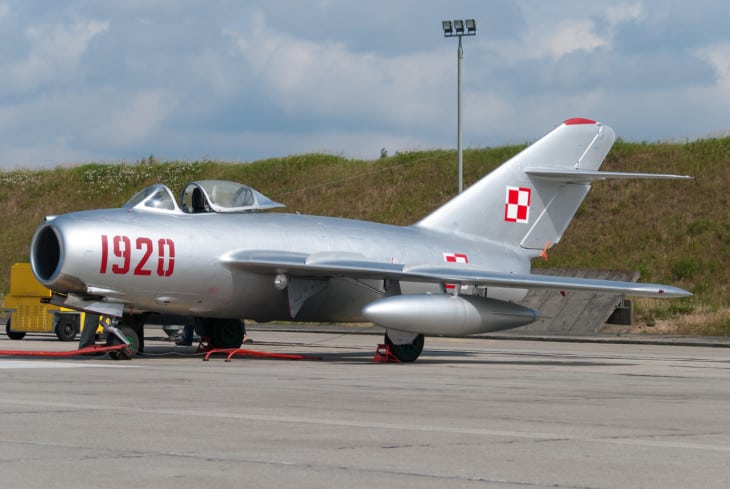
Edge: MiG-15, on numbers built
Verdict: who wins, the F-86 Sabre or the MiG-15?
It is a split decision. The MiG-15 had the better climb, ceiling and cannon, while the Sabre had the better gunsight and dive.
In the hands of equal pilots, the Sabre had the slight edge in a fighter fight, and the MiG-15 was the better bomber killer.
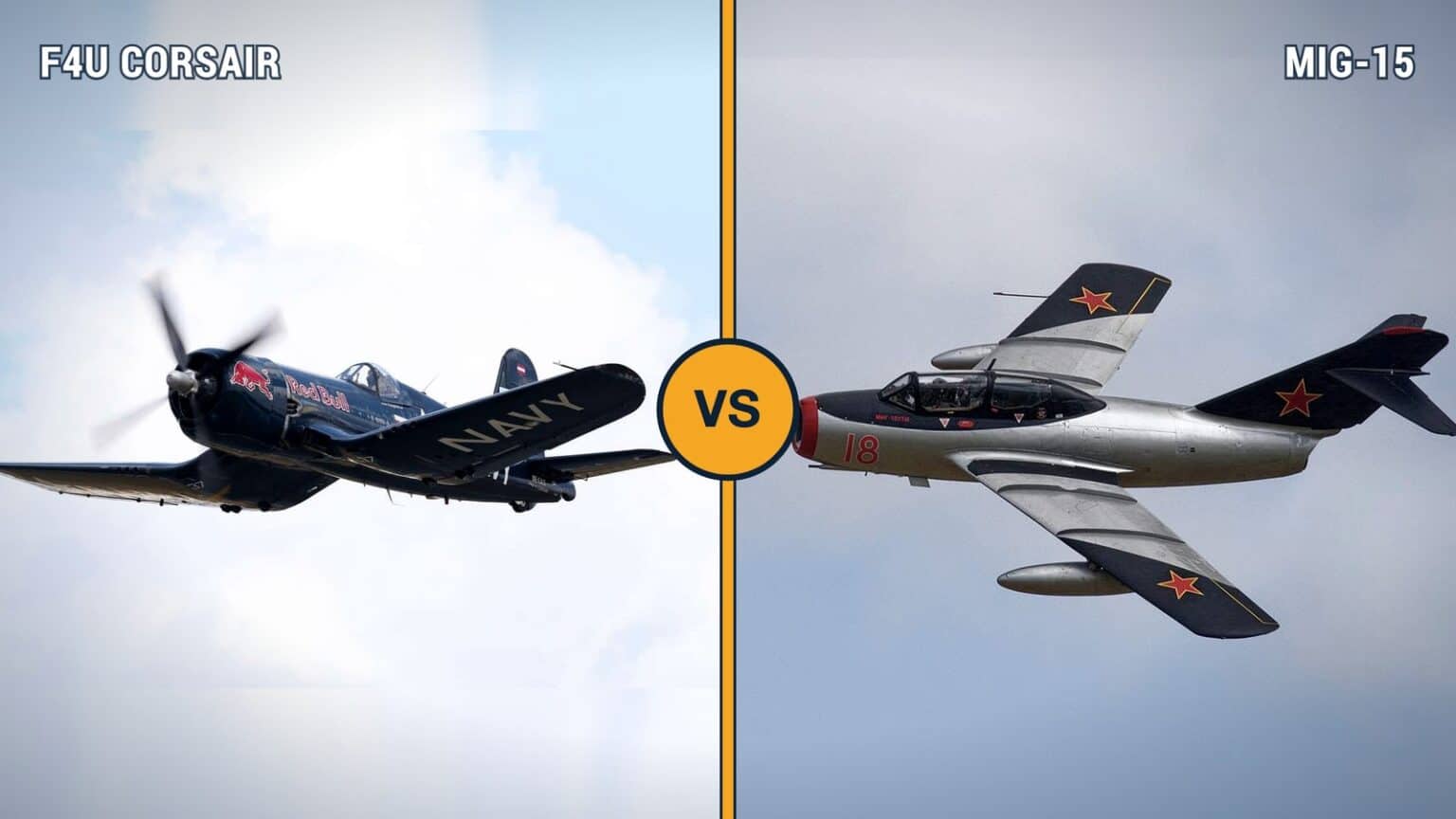
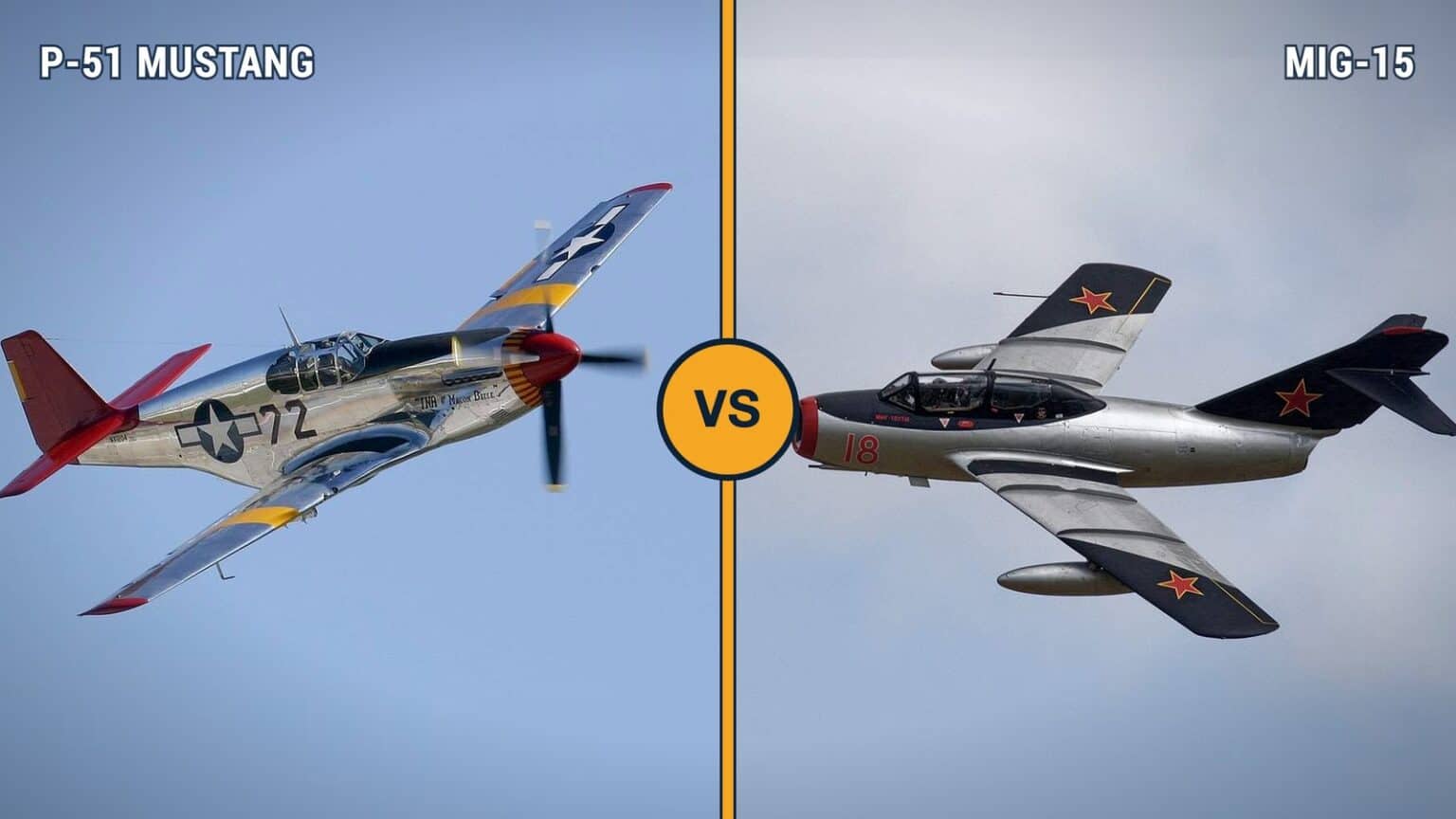
For a piston rival against the same jet, see our P-51 vs MiG-15 comparison or F4U Corsair vs MiG-15. Our guide to Korean War fighter jets covers the wider field.
Verdict: a narrow call
F-86 Sabre: radar gunsight, dive speed and a better record against fighters. MiG-15: climb, ceiling and cannon against bombers. Edge in a duel: F-86, narrowly.
FAQ
Sources and references used for research and fact-checking.
About the Author

Tim is the owner and lead editor of AeroCorner since 2019, overseeing aviation content covering aircraft, airlines, airports, and the broader aviation industry. Through years of researching, writing, editing, and publishing aviation-focused content, he has developed extensive practical knowledge of commercial aviation and air travel. Based in Asia and a frequent traveler himself, Tim also brings firsthand passenger experience to AeroCorner’s coverage. Outside of publishing, he has also explored aviation firsthand through hands-on flight training in New Zealand.