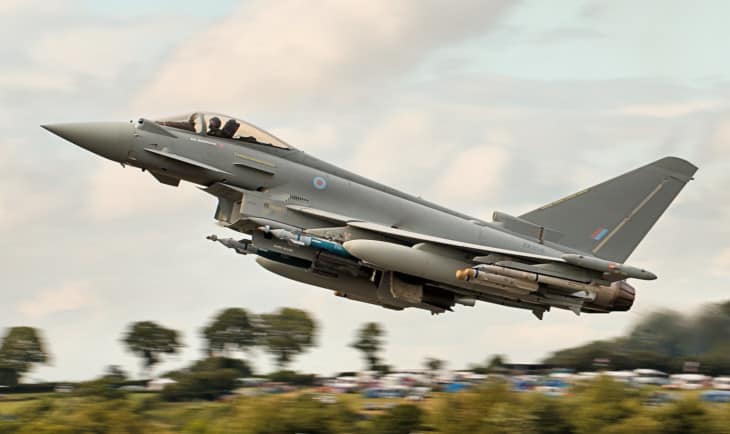
Which fighter jet is better: the Eurofighter Typhoon or the Saab Gripen? This article will compare the two jets and see which one comes out on top. Both of these jets are some of the best in the world, so it should be an interesting battle. Let’s get started!
The Eurofighter Typhoon
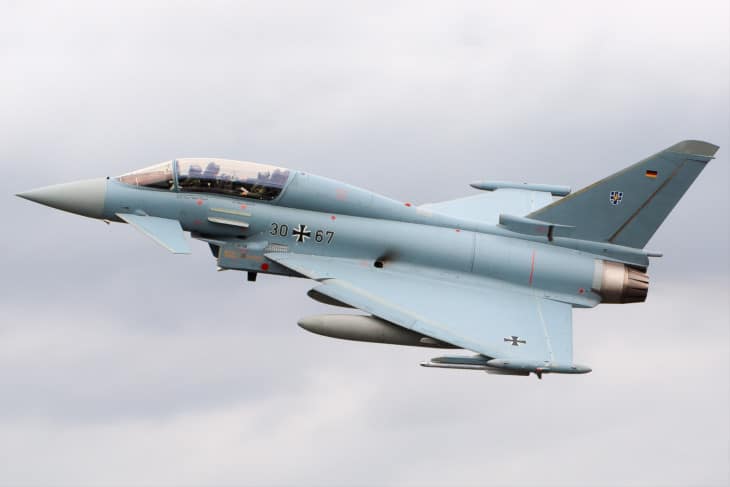
The Eurofighter Typhoon is a twin-engine, canard-delta wing, multirole fighter designed and built by Airbus, BAE Systems, and Leonardo. The Typhoon was originally designed as an air superiority fighter and is capable of reaching speeds of Mach 2.0.
However, the Typhoon has since been developed into a versatile platform that can be used for a variety of missions, including ground attack, intelligence gathering, and combat search and rescue. The Typhoon is currently in service with the air forces of Austria, Germany, Italy, Saudi Arabia, Spain, the United Kingdom, and Oman.
A total of 599 aircraft have been delivered to date, with production expected to continue until 2023.
When Was The Eurofighter Typhoon Developed?
The Eurofighter Typhoon was developed in the 1980s as a response to the increasing capability of Soviet fighter jets. At the time, NATO countries were looking for a new fighter jet that would be able to match the performance of the Soviet Union’s best aircraft.
The Eurofighter Typhoon was designed to fill this role, and it entered service in 2004. Since then, it has been used by many countries, including the United Kingdom, Germany, Italy, and Spain.
Purpose Of Developing The Eurofighter Typhoon
The Eurofighter Typhoon is a twin-engine, multi-role fighter jet that was developed by a consortium of European aerospace companies. The aircraft was designed to perform a variety of roles, including air-to-air combat, air-to-ground attack, and maritime strike.
The Typhoon entered service with the UK Royal Air Force in 2003, and it has since been adopted by the air forces of several other nations. To date, over 500 Typhoon jets have been built, and the aircraft has seen action in conflicts such as the Libya Air War and the ongoing fight against ISIS in Iraq and Syria.
The Typhoon has proved to be a highly capable and versatile warplane, and it is expected to remain in service for many years to come.
Saab Gripen
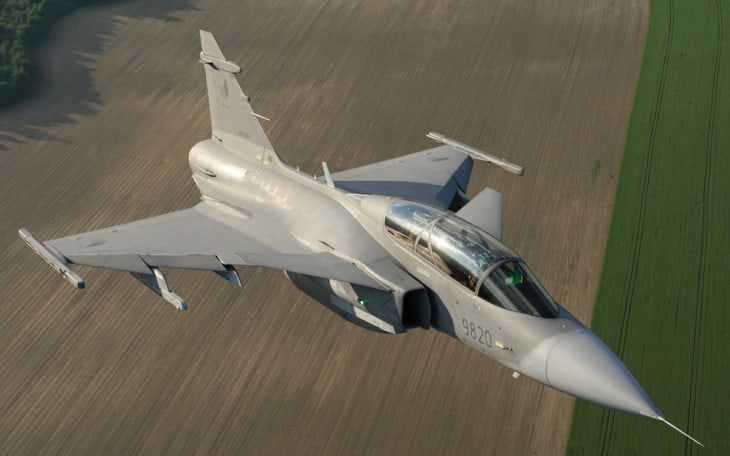
Saab’s Gripen aircraft is a multi-role fighter designed to perform a variety of missions in all weather conditions. The Gripen features a delta wing design and is powered by a single turbofan engine. It is equipped with leading-edge avionics and sensors, including an active, electronically scanned radar.
The Gripen is also capable of carrying a wide range of air-to-air, air-to-surface, and anti-ship missiles. In addition, the Gripen can be fitted with external fuel tanks for extended-range missions. Saab has developed two variants of the Gripen: the Gripen A for the Swedish Air Force, and the Gripen NG for export customers.
When Was The Saab Gripen Developed?
Saab began working on the Gripen in the early 1980s as a response to the increasing threat of Soviet fighter jets. The prototypes were developed in the mid-1980s, and the aircraft entered service with the Swedish Air Force in 1997. Saab has continued to develop the Gripen over the years, and it is currently in service with several countries, including Brazil, South Africa, and Hungary.
The latest version of the aircraft, the Gripen E, was unveiled in 2016 and is scheduled to enter service in 2019. Saab is also working on a naval version of the Gripen, which is undergoing trials on Brazil’s new aircraft carrier.
Purpose Of Developing The Saab Gripen
Saab developed the Gripen as a multirole fighter aircraft with the intention of it being able to perform a wide range of roles while still being able to be operated at a low cost. The purpose of its development was to be an air-superiority fighter, meaning it would excel in combat against other aircraft.
In addition, Saab also designed the Gripen to have a ground attack, reconnaissance, and electronic warfare capabilities, making it a versatile jet that could be used in multiple situations.
How Is The Eurofighter Typhoon Different From The Saab Gripen?
The Eurofighter Typhoon and the Saab Gripen are two of the most popular fighter jets in the world. Both jets are highly maneuverable and designed for air-to-air combat, but there are some key differences between them. The Typhoon is a twin-engine jet, while the Gripen has a single engine.
The Typhoon is also larger and heavier than the Gripen, making it more difficult to maneuver at high speeds. The Gripen is also equipped with an ejection seat, while the Typhoon does not have one. Finally, the Typhoon has a longer range than the Gripen and can carry more weapons.
How Is The Eurofighter Typhoon Similar To The Saab Gripen?
The Eurofighter Typhoon and the Saab Gripen are two fighter jets that have a lot in common. Both are twin-engine, multi-role aircraft that can be used for air-to-air combat, air-to-ground attacks, and reconnaissance missions. They are also both highly maneuverable and can reach speeds of Mach 2. However, there are some important differences between these two aircraft.
The Typhoon is larger and heavier than the Gripen, and it has a longer range. It is also equipped with more powerful engines and carries a larger weapons load.
What Is Better About The Eurofighter Typhoon
Eurofighter Typhoon and Saab Gripen are two of the most popular fighter jets in the world. But which one is better? When it comes to performance, the Typhoon is in a league of its own. It can reach speeds of up to 1,550 mph, and it has a range of more than 3,000 miles.
The Gripen, on the other hand, has a top speed of just 1,275 mph and a range of only 2,500 miles. In terms of armament, the Typhoon can carry up to nine missiles, while the Gripen can carry just six.
The Typhoon also has superior electronic warfare capabilities and an advanced radar system.
What Is Better About The Saab Gripen
There are a few key factors that set the Saab Gripen apart from the Eurofighter Typhoon. For one, the Gripen is significantly lighter than the Typhoon, making it more agile and easier to maneuver. Additionally, the Gripen has a more advanced radar system that allows it to detect and track targets more effectively.
The Gripen also has a longer range than the Typhoon, meaning it can stay in the air for longer periods of time without having to refuel. Finally, the Gripen is compatible with a wider range of weapons systems than the Typhoon, giving it greater flexibility in terms of how it can be used in combat. Overall, the Saab Gripen is a more advanced and capable fighter jet than the Eurofighter Typhoon.
Conclusion: Eurofighter Typhoon vs Saab Gripen
The Eurofighter Typhoon and the Saab Gripen are both excellent fighter jets. They both have their pros and cons, but in the end, the Typhoon is a better overall jet. It is faster, more maneuverable, and has better avionics. The Gripen is cheaper and lighter, making it a good choice for countries with smaller budgets. However, the Typhoon is the better jet overall.