

Table of Contents
A-12 vs SR-71 at a glance
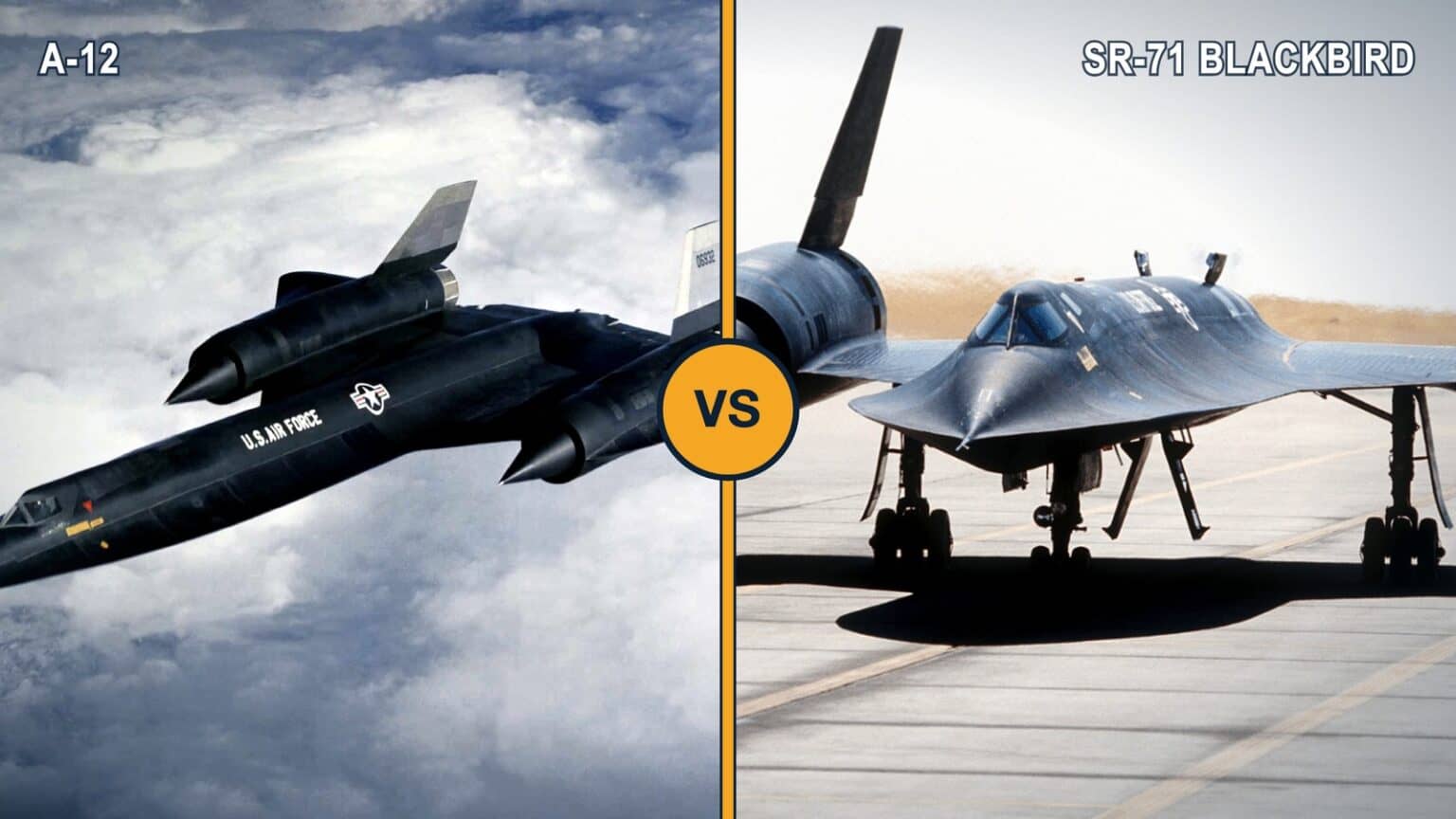
The A-12 and the SR-71 look almost identical, but they were built for different customers. The A-12 was the CIA’s single-seat Oxcart. The SR-71 was the Air Force’s two-seat development of the same design.
The A-12 was lighter and, at the same Mach number, flew 2,000 to 5,000 feet (610 to 1,500 m) higher. The SR-71 carried more sensors and flew for three decades longer.
This page compares the single-seat A-12 with the SR-71A, the main production version. The spec widget above sets the two side by side. This table covers what it does not.
| Lockheed A-12 | Lockheed SR-71 | |
|---|---|---|
| Role | CIA reconnaissance (Project Oxcart) | US Air Force strategic reconnaissance |
| First flight | April 26, 1962 | December 22, 1964 |
| In service | Black Shield missions from May 31, 1967; retired June 1968 | January 1966; final USAF retirement 1998, NASA 1999 |
| Number built | 18 airframes across the A-12, YF-12A and M-21 family | 32 (29 SR-71A, 2 SR-71B, 1 SR-71C) |
| Combat record | 22 Vietnam sorties in 1967, plus three North Korea missions in 1968 | Strategic reconnaissance flown overtly; about 800 missiles fired over Vietnam, none hit |
| Sensors | Cameras, including one with one-foot resolution | Cameras, side-looking radar and ELINT, often run together |
| Aircraft lost in accidents | Six | 12 (none to enemy action) |
Why Lockheed built two Mach 3 spyplanes
Kelly Johnson’s Skunk Works designed the A-12 as the successor to the U-2. The CIA picked it over Convair’s Kingfish in September 1959 and ordered 12 aircraft in January 1960.
The first A-12 flew on April 26, 1962, at Groom Lake. The first five used Pratt & Whitney J75 engines and reached about Mach 2. The J58 engines that gave Mach 3 arrived in 1963.
The Air Force wanted a reconnaissance aircraft of its own, so Lockheed developed the SR-71 from the A-12. It first flew on December 22, 1964, and entered service in January 1966. The A-12 program was ended on December 28, 1966.
Johnson’s story is told in Kelly Johnson and the SR-71.
Where the A-12 won: weight and altitude
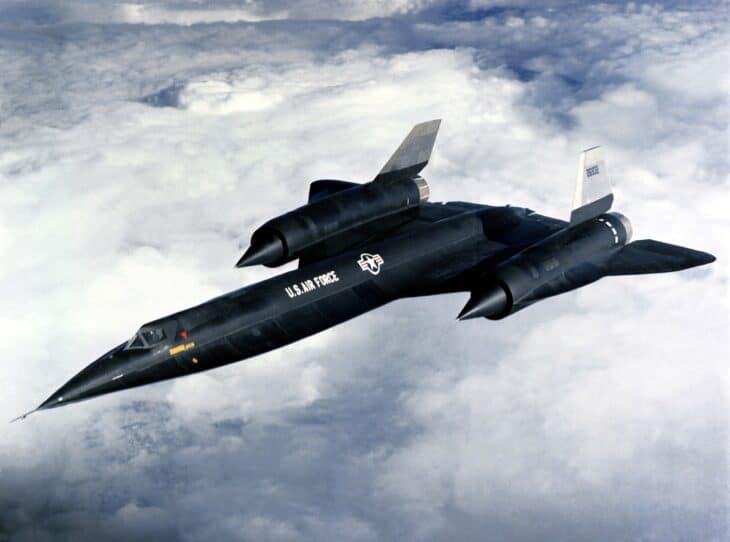
The A-12 was the lighter aircraft. Its maximum takeoff weight on the spec widget is 117,000 lb (53,000 kg), against 172,000 lb (78,000 kg) for the SR-71.
Less weight meant more altitude. At the same Mach number, the A-12 flew 2,000 to 5,000 feet (610 to 1,500 m) above the SR-71.
It was also built mostly of titanium, about 93% of its structure. The A-12’s top speed is given as Mach 3.3, with a cruise of Mach 3.1.

For the full specs, see the Lockheed A-12 page.
Where the SR-71 won: crew, sensors and records
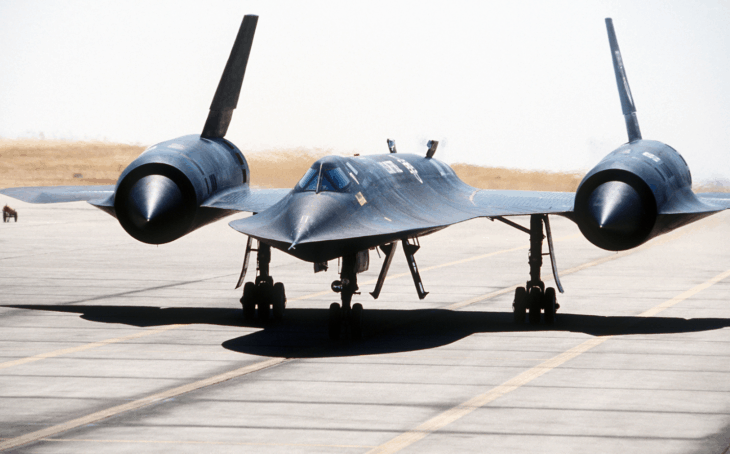
The SR-71 added a second seat. A pilot flew it, and a reconnaissance systems officer ran the sensors from a tandem cockpit behind.
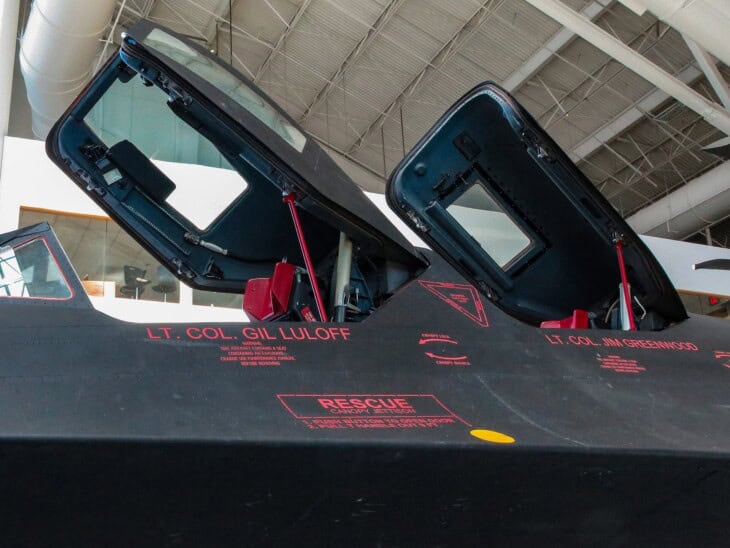
Those sensors were the point. The SR-71 carried wide-area and horizon-to-horizon cameras, side-looking radar and signals-intelligence gear, and it could run photography and ELINT at the same time.
The A-12’s best camera gave a swath 63 nautical miles wide at one-foot resolution.
The SR-71 also became the fastest air-breathing manned aircraft in 1976 and still holds that record.
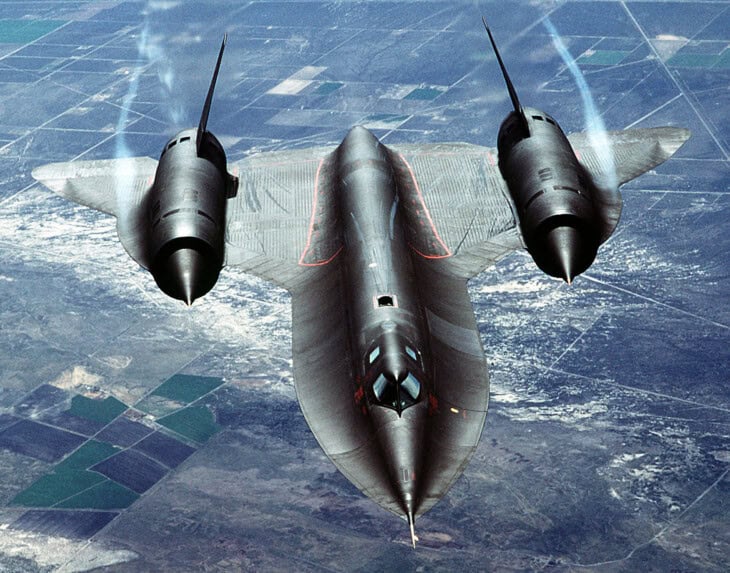
For the full specs, see the Lockheed SR-71 Blackbird page.
What they did operationally
Operation Black Shield sent the A-12 from Kadena Air Base, Okinawa. Mel Vojvodich flew the first mission over North Vietnam on May 31, 1967, photographing missile sites.
The A-12 flew 22 sorties over Vietnam in 1967. After North Korea seized the USS Pueblo in 1968, an A-12 located the ship in Wonsan Bay.
The last A-12 flight was on June 21, 1968, to Palmdale, California. The SR-71 took over the mission and kept flying until 1998.
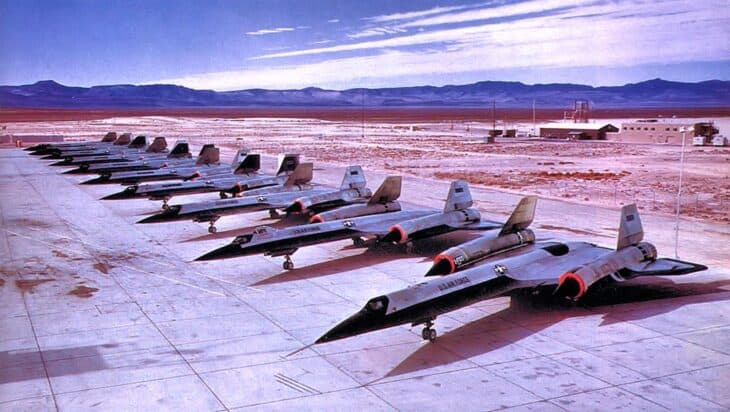

The SR-71 flew openly in Air Force service. About 800 missiles were fired at SR-71s over Vietnam and none hit, and no SR-71 was ever shot down.
The Oxcart that never wore a flag
The A-12 was a CIA aircraft, so the Air Force markings on some airframes helped hide who owned them. The SR-71 flew openly in Air Force colors.
Engines and stealth
Both aircraft used Pratt & Whitney J58 engines in production form. The early A-12s flew on J75s and reached only about Mach 2, and the J58 is what made Mach 3 possible.
The first flight with one J75 and one J58 came in October 1962. By early 1963 the A-12 fleet was flying on J58s, and the aircraft reached Mach 3.2 that year.
Both were designed to be hard to see on radar. In clean configuration both had a low radar cross-section, but the SR-71’s grew when it carried a full sensor fit, and more so with side-looking radar.
Where to see them
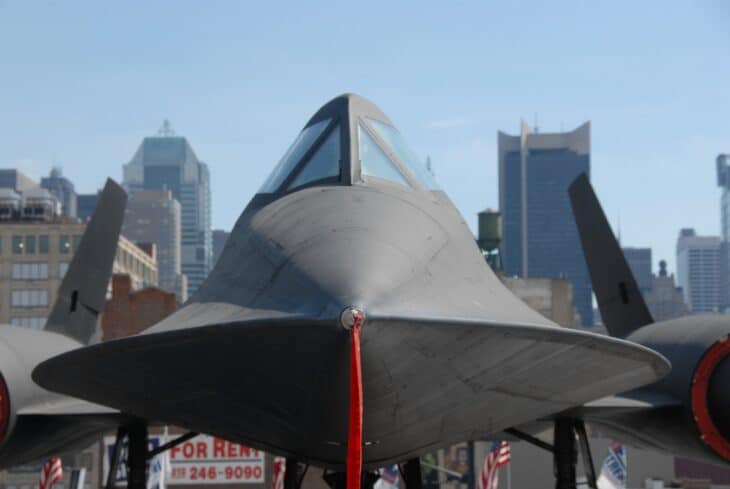
Several A-12s survive in public view. Article 60-6931 stands on a pylon outside CIA headquarters in Langley, Virginia, and 60-6925 sits on the flight deck of the Intrepid museum in New York.
Others are at Blackbird Airpark in Palmdale, the San Diego Air & Space Museum, the Southern Museum of Flight in Birmingham and Battleship Memorial Park in Mobile.
The two-seat trainer, 60-6927, is at the California Science Center in Los Angeles. It was nicknamed the Titanium Goose and kept its J75 engines throughout its service life.
Which versions are being compared?
Neither name covers a single aircraft. The A-12 family includes a two-seat trainer, three YF-12A interceptors and two M-21 drone carriers.
This page compares the standard single-seat A-12 with the SR-71A. The SR-71 also came as two SR-71B trainers and one SR-71C.
Sources differ on the A-12 total, giving 13 or 15 depending on whether the trainer and M-21s are counted.
A-12 vs SR-71: who wins?
It depends on what you count. For weight and altitude, the A-12 had the edge.
For sensors, service life, crew and records, the SR-71 did. If you want the aircraft that proved Mach 3 flight worked, that was the A-12 first.
FAQ
Sources and references used for research and fact-checking.
About the Author

Tim is the owner and lead editor of AeroCorner since 2019, overseeing aviation content covering aircraft, airlines, airports, and the broader aviation industry. Through years of researching, writing, editing, and publishing aviation-focused content, he has developed extensive practical knowledge of commercial aviation and air travel. Based in Asia and a frequent traveler himself, Tim also brings firsthand passenger experience to AeroCorner’s coverage. Outside of publishing, he has also explored aviation firsthand through hands-on flight training in New Zealand.