

Table of Contents
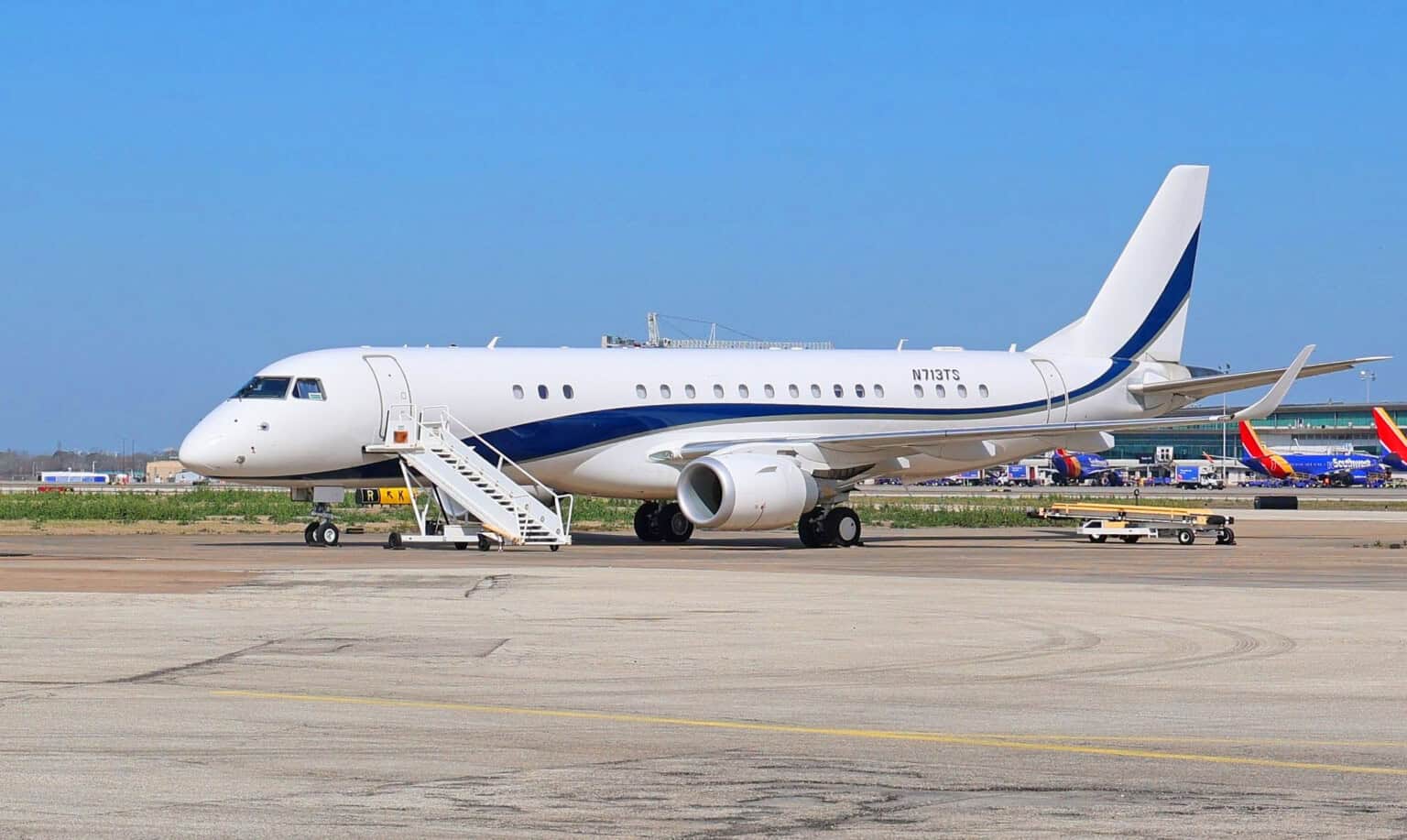
Travis Scott’s private jet was once a Las Vegas casino plane. Before it wore the Cactus Jack Airlines livery and the tail number N713TS, the Embraer Lineage 1000 that carries the Houston rapper across the world belonged to MGM Mirage, ferrying high-rollers between resort properties. Scott acquired it in December 2020, at the peak of a pandemic that had grounded most of aviation, and turned it into one of the most photographed and tracked private jets in the music industry. Planespotters meet it at airports on multiple continents. Its every departure from Van Nuys shows up on flight-tracker accounts within minutes.
The choice of aircraft is unusual for an artist at Scott’s level. Most celebrity private jet owners gravitate toward Gulfstream or Bombardier products. Scott chose the Lineage 1000, an ultra-long-range widebody derived from a regional airliner, which gives him a cabin that is meaningfully wider and taller than any traditional business jet. The tradeoff is range and operating cost: the Lineage 1000 burns more fuel per hour than a purpose-built VIP jet of similar range, a fact that placed Scott at the top of myclimate’s celebrity CO2 emissions list for 2023, ahead of every other artist tracked that year.
This article covers the full history of N713TS, from MGM Mirage to Cactus Jack Airlines, the complete specifications of the Embraer Lineage 1000 and what makes it different from conventional private jets, the carbon controversy and the short-hop flights that drove it, and the notable moments Scott’s jet has made headlines around the world.
Quick facts about Travis Scott’s private jet
Travis Scott’s Complete Private Jet Fleet
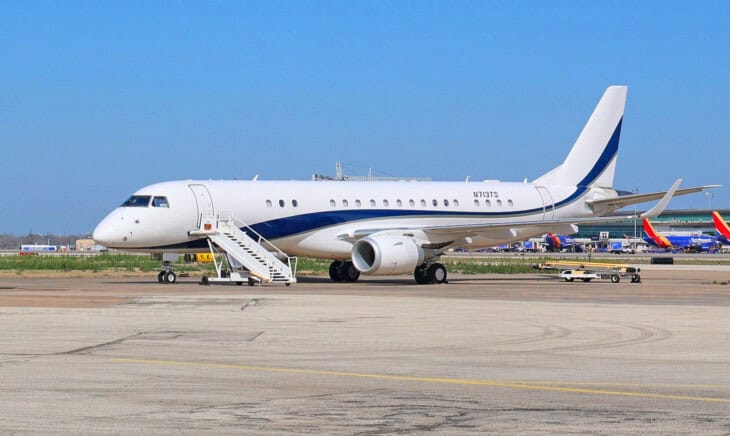
Travis Scott operates a single aircraft, registered to Cactus Jack Airlines, the corporate entity that also shares a name with his record label. The jet is an Embraer Lineage 1000, one of only approximately 28 ever produced before Embraer discontinued the type in August 2020.

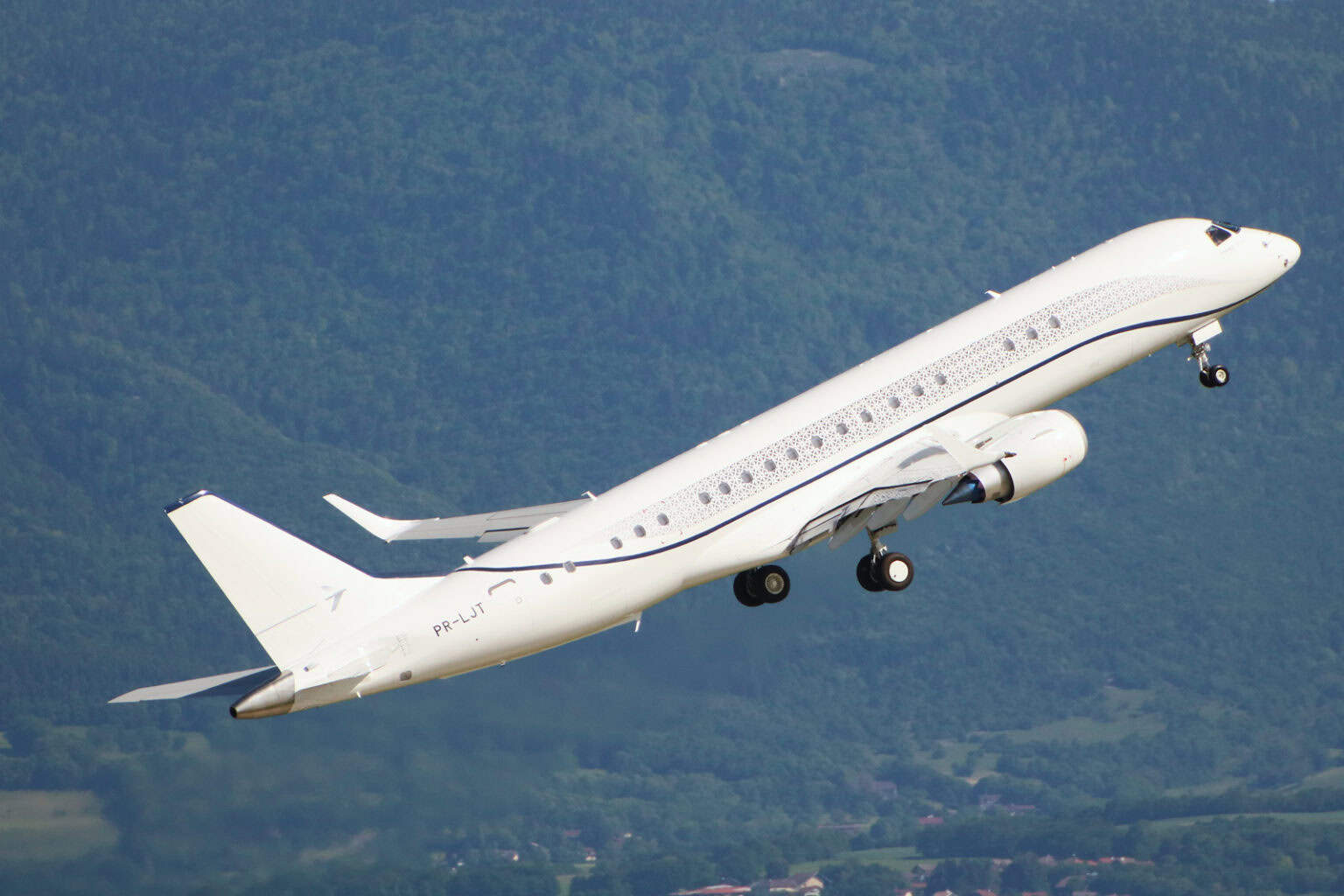
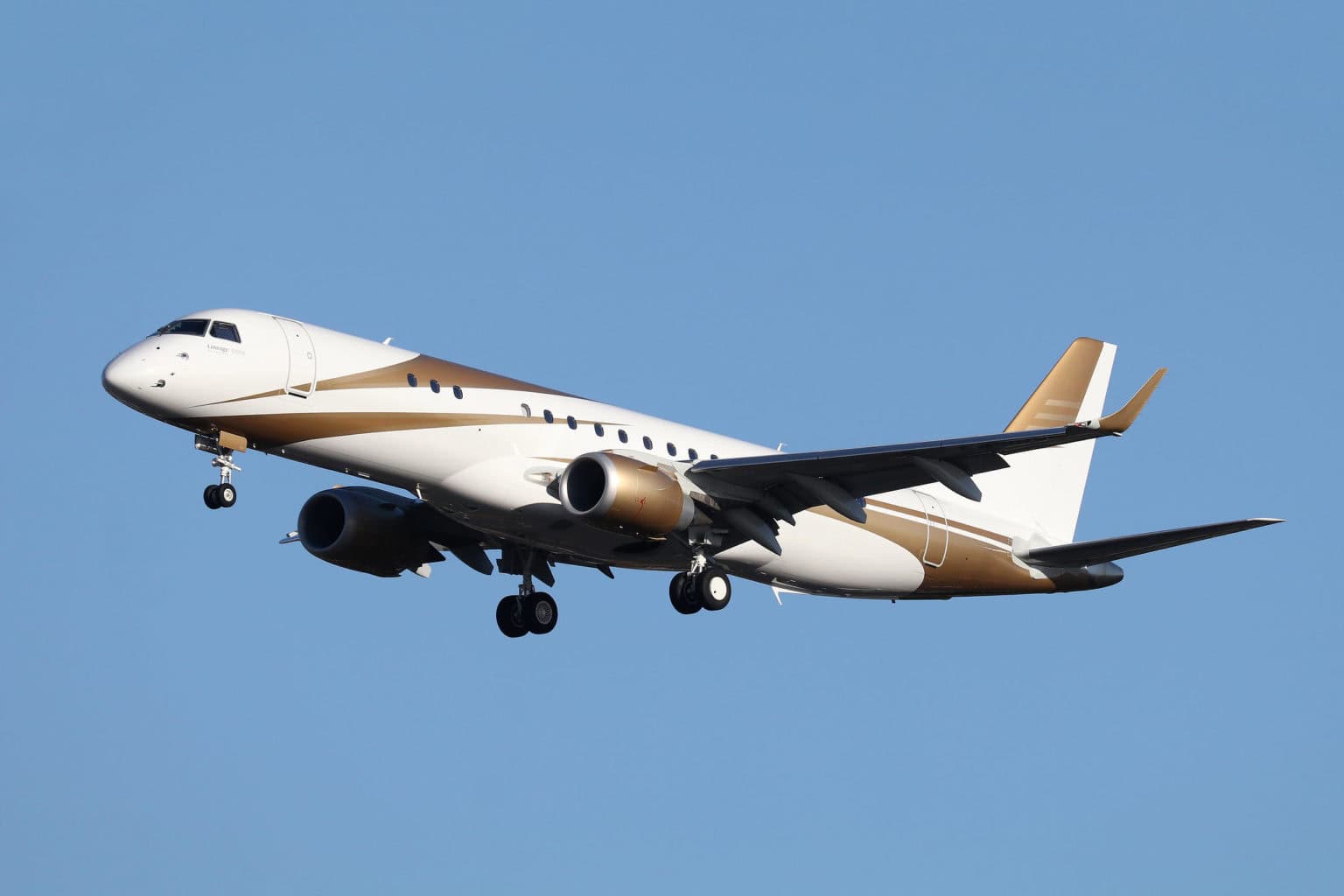
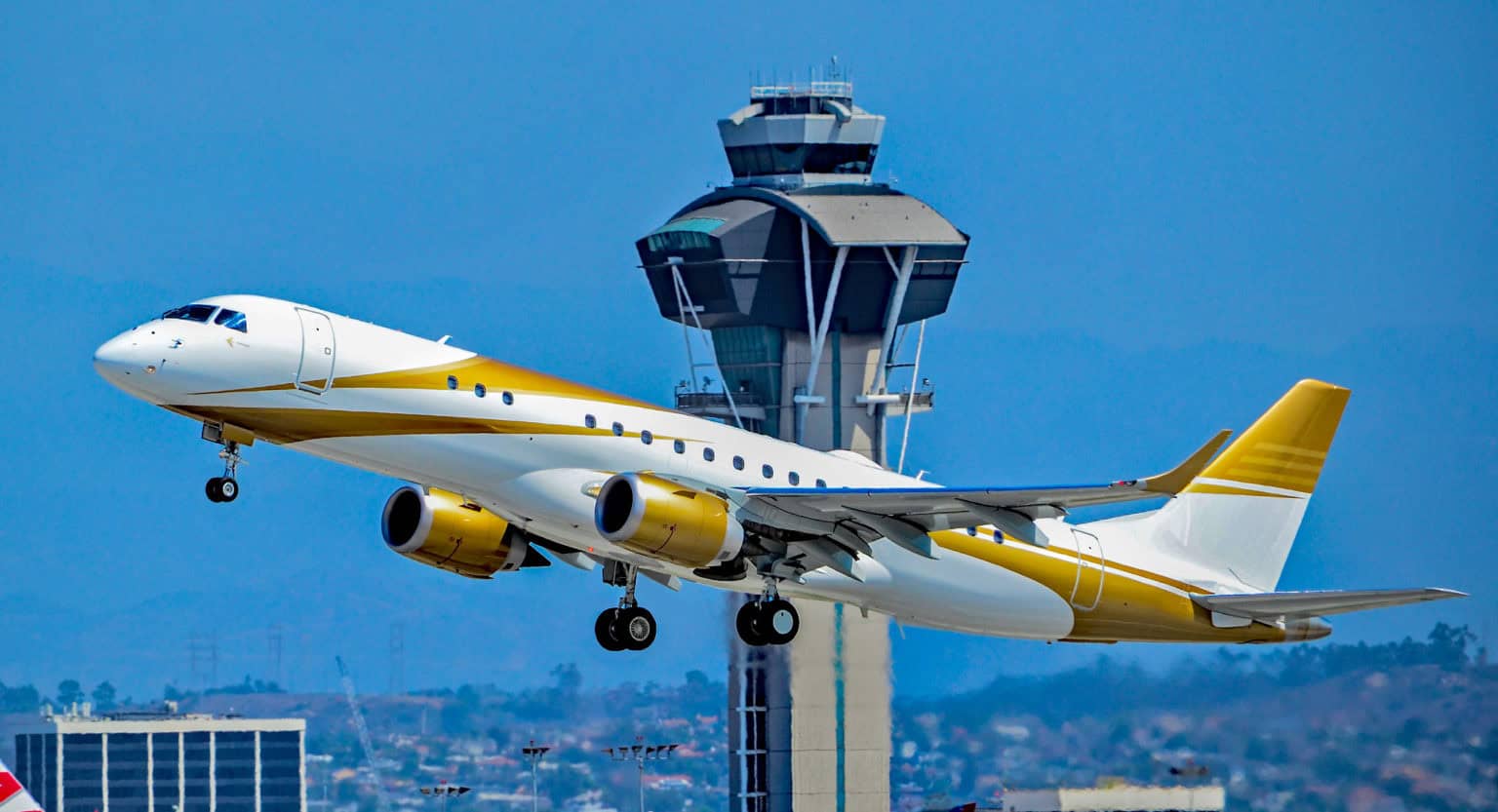
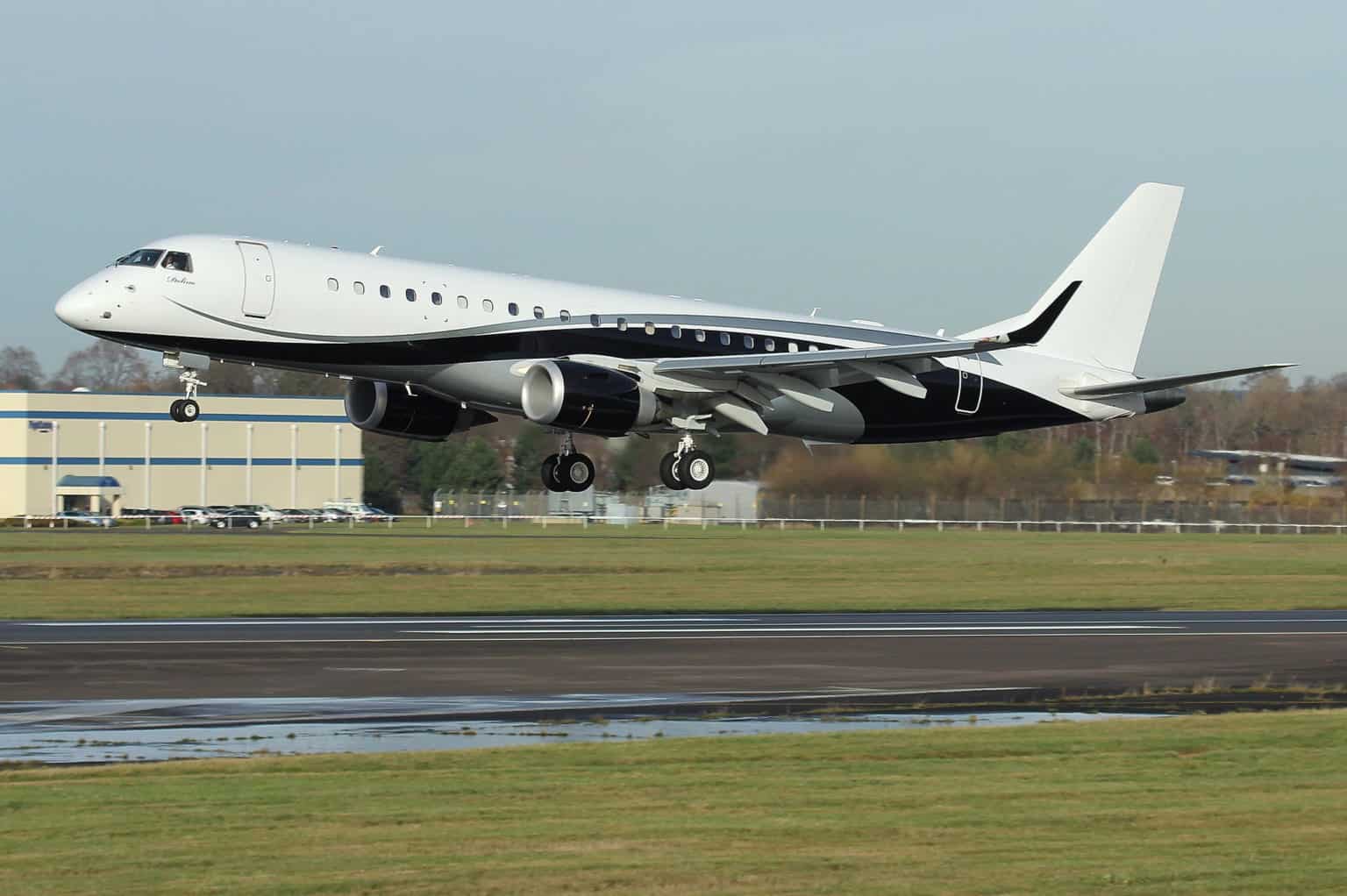
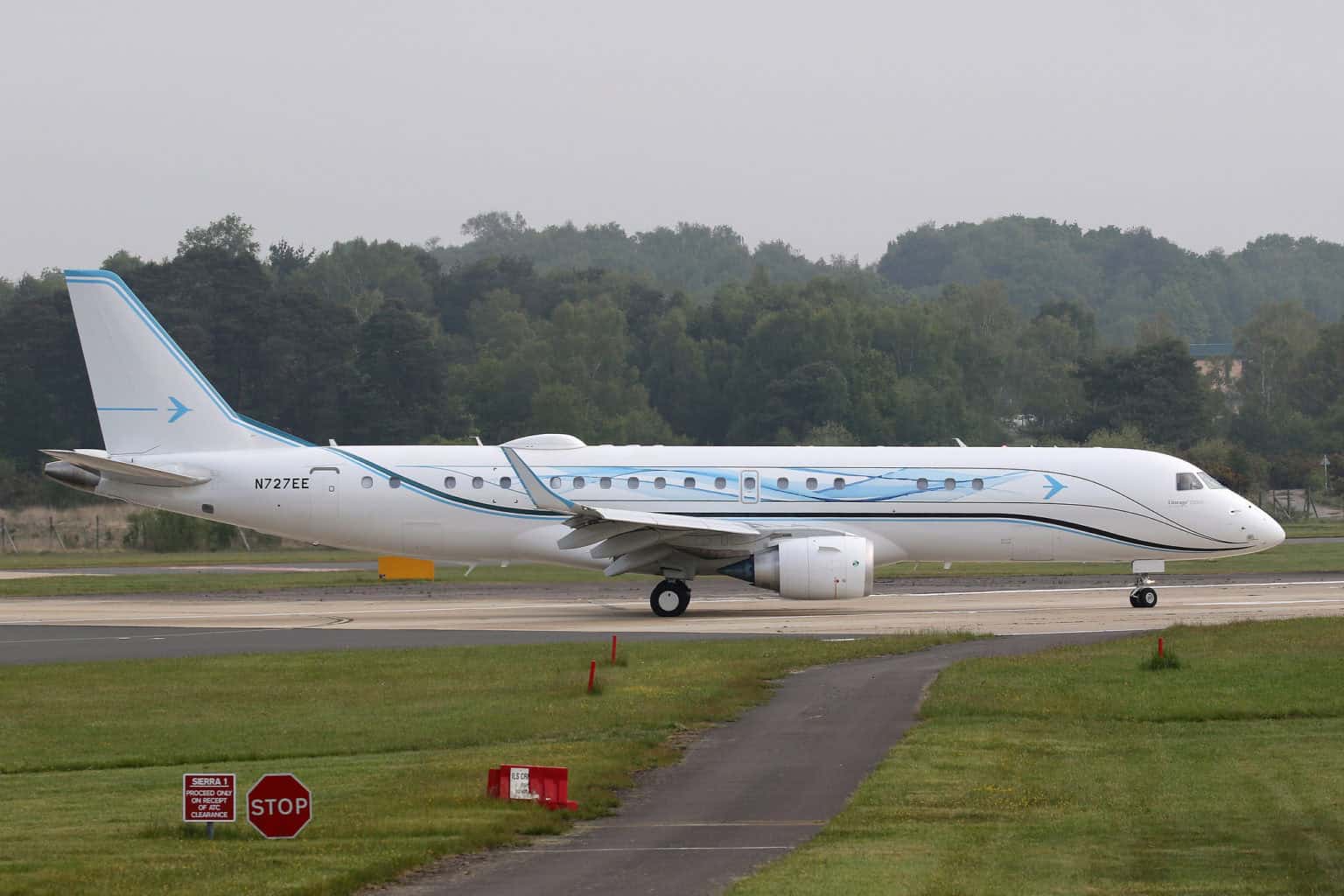

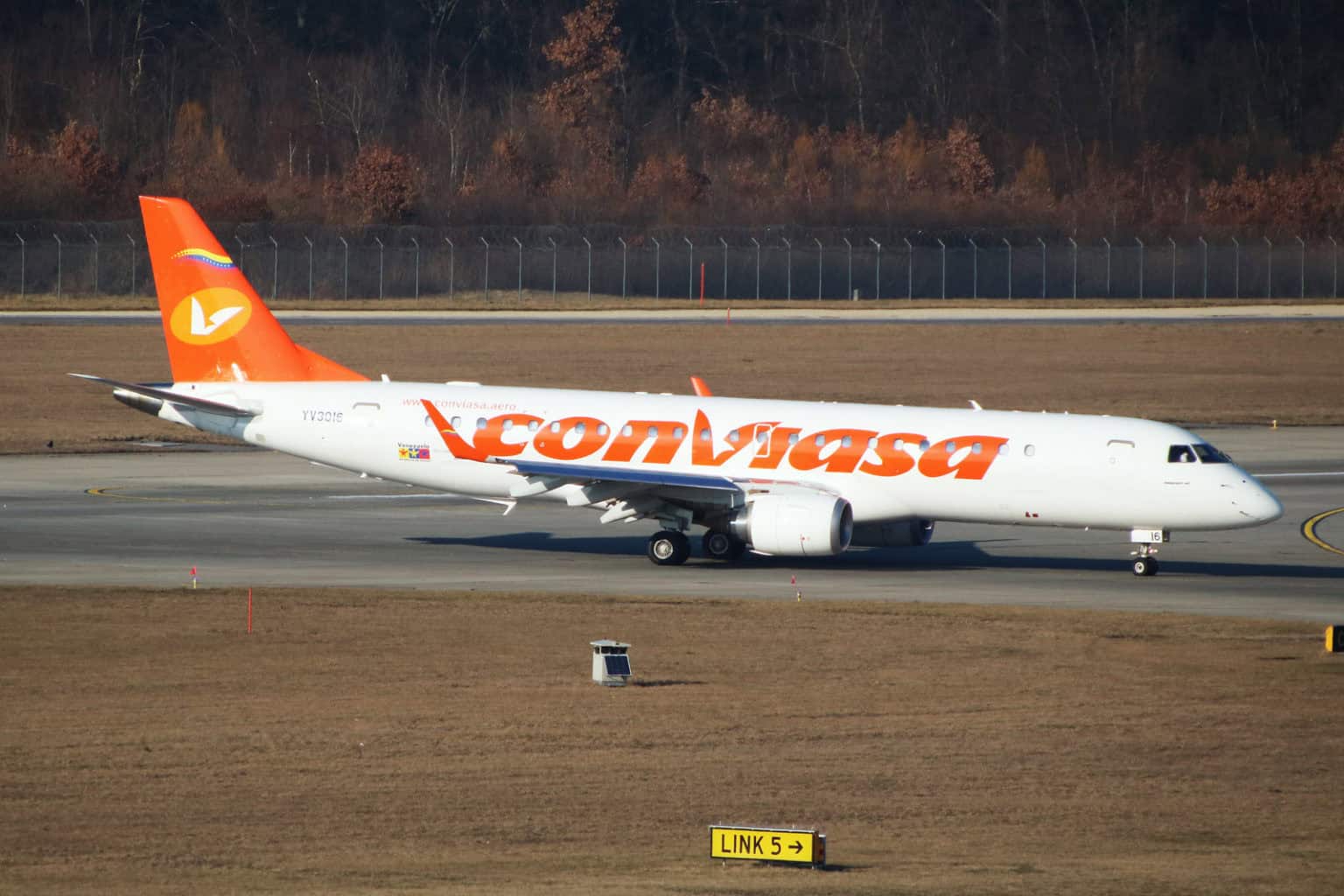

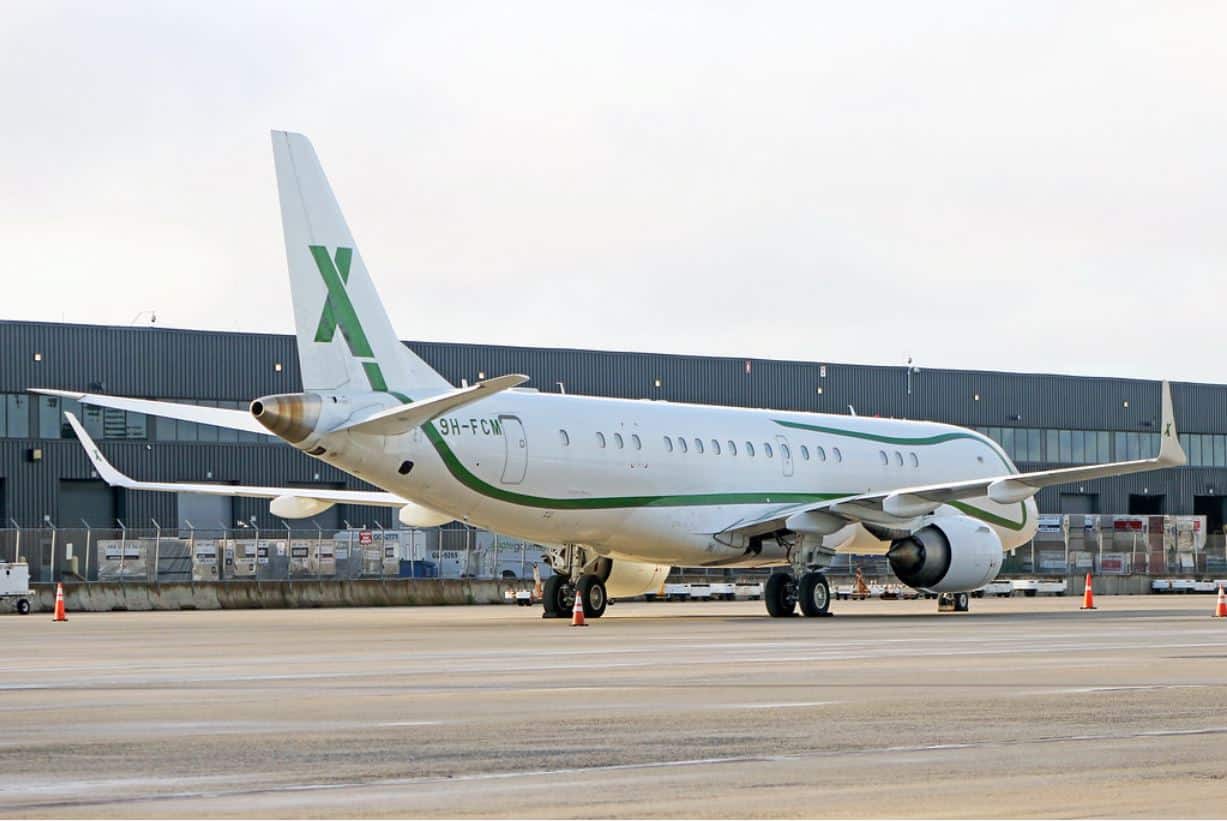
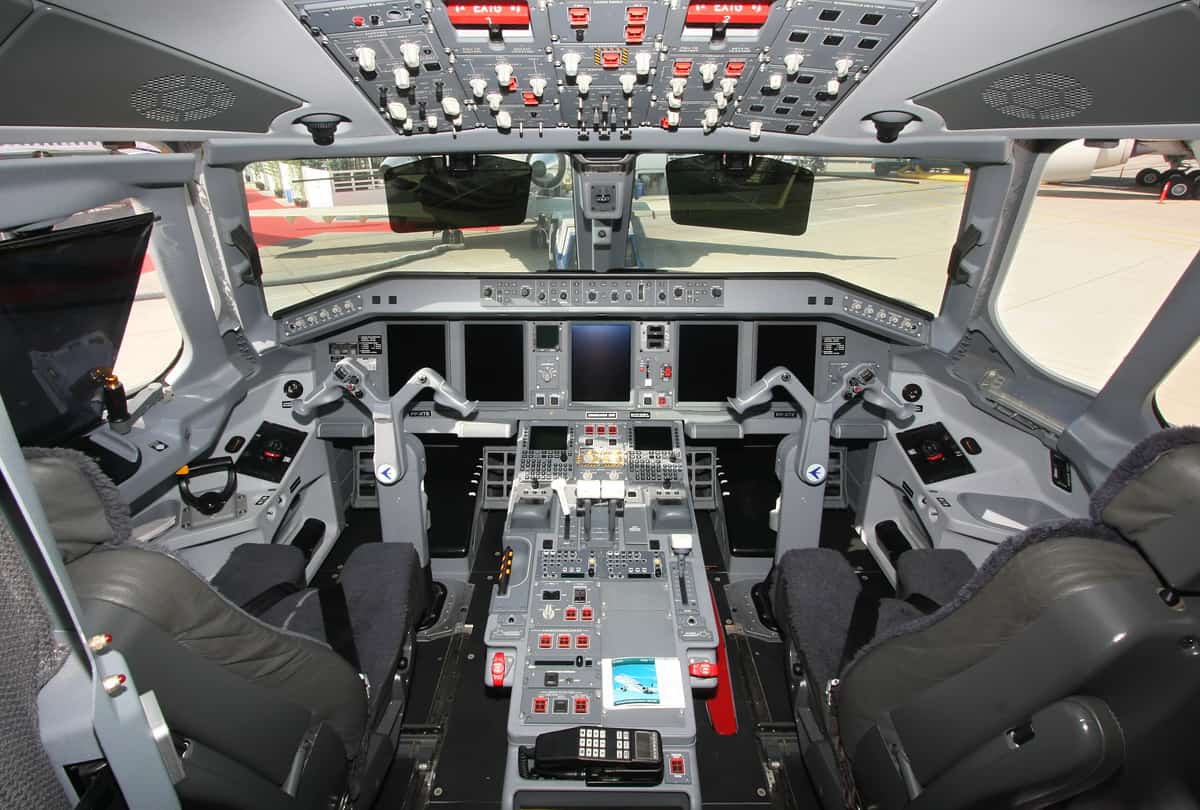
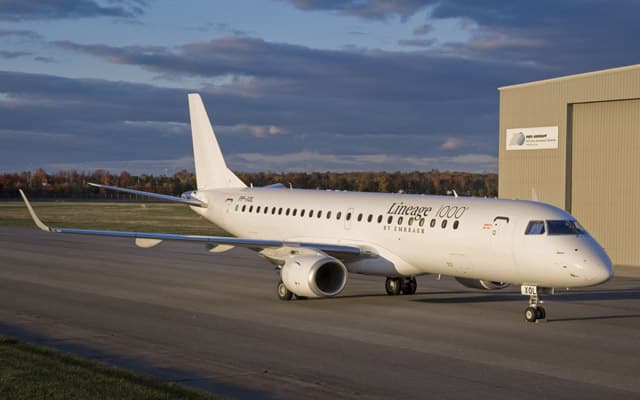
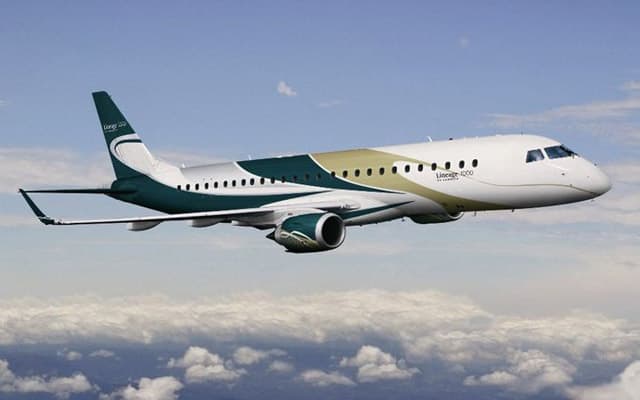

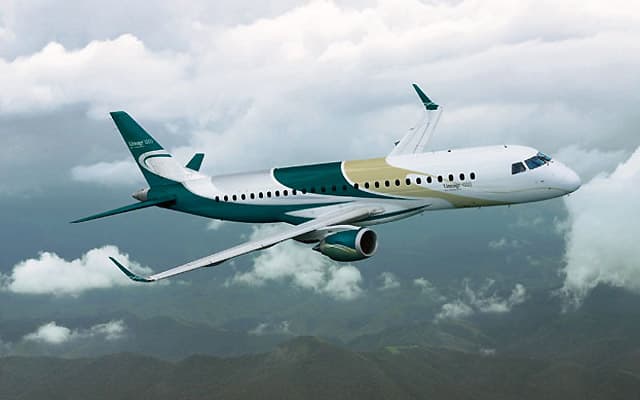
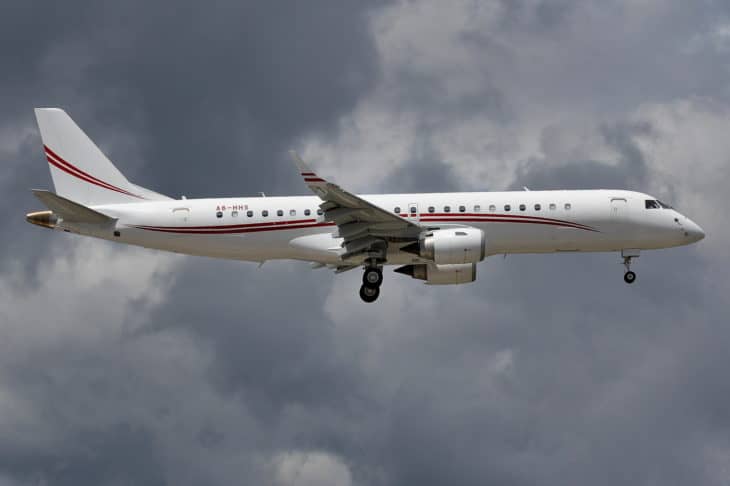
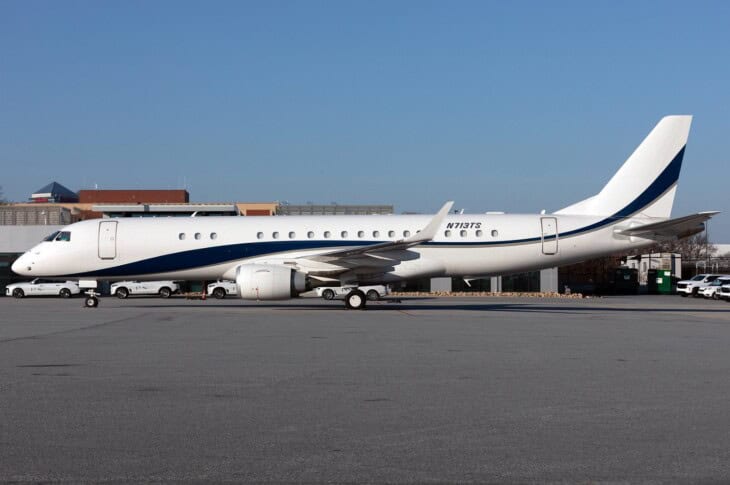
The tail number tells a story in itself. N713TS encodes two pieces of identity: “713” is the area code for Houston, Texas, Scott’s hometown, and “TS” stands for Travis Scott. The aircraft is registered to Cactus Jack Airlines, a corporate name that links the jet directly to the Cactus Jack imprint Scott founded in 2017. It flies predominantly between three hubs: Van Nuys Airport in Los Angeles, William P. Hobby Airport in Houston, and Miami-Opa Locka Executive Airport in Miami, with international legs added during tour cycles.
The Origin Story: From MGM Mirage to Cactus Jack Airlines
N713TS has one of the more interesting ownership histories of any celebrity aircraft. It spent the first five years of its life serving a Las Vegas casino before sitting dormant in a German airport during a pandemic-era aviation freeze, and then resurfacing under one of rap’s most prominent names.
2015
Built for MGM Mirage. The aircraft, serial 19000632, is manufactured by Embraer at its Sao Jose dos Campos facility and delivered to MGM Mirage Aviation, a travel division of the Las Vegas casino and resort group. It enters service as a corporate transport for the MGM portfolio.
2017
MGM sells the aircraft back to Embraer. As part of a fleet restructuring, MGM Mirage returns the Lineage 1000 to the manufacturer in January 2017. The aircraft re-enters the pre-owned market.
2018
GainJet Ireland acquires the aircraft. The Irish executive charter operator GainJet takes ownership in October 2018, registering it as EI-OBN for use in its managed charter fleet.
2019
Aircraft parked at Oberpfaffenhofen, Germany. From February 2019, the jet sits on the ground at EDMO outside Munich, effectively warehoused as GainJet restructures operations. It remains there for nearly two years.
2020
Travis Scott acquires N713TS through Cactus Jack Airlines. In December 2020, at the height of pandemic-era aviation disruption, Scott purchases the dormant Lineage 1000. It is re-registered as N713TS, with the 713 Houston area code and TS initials embedded in the tail number. Embraer also discontinues the Lineage 1000 type the same year, making this one of the last ever produced.
2023
Named the #1 celebrity CO2 emitter from private jet travel. Myclimate’s annual tracking places Travis Scott at the top of the celebrity private jet emissions list for 2023, with approximately 6,040 metric tons of CO2 emitted across 138 flights. The figure equals the annual carbon footprint of roughly 1,670 average people.
2024
153 flights and 450+ hours logged. N713TS maintains one of the highest utilization rates of any celebrity aircraft, logging 153 departures and nearly 450 flight hours for the year, with primary routes between Los Angeles, Houston, and Miami.
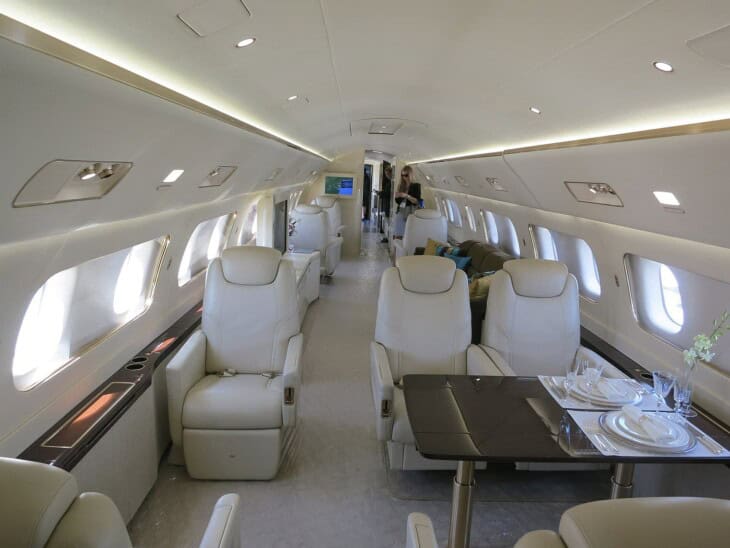
Inside the Embraer Lineage 1000: A Regional Jet Transformed
The Embraer Lineage 1000 is not a purpose-built business jet. It began life as an E-190 regional airliner, the same airframe used to carry up to 114 passengers on short-haul commercial routes. Embraer’s engineers modified it into an ultra-long-range VIP transport by installing additional fuel tanks in the underfloor cargo space, nearly doubling the range of the standard aircraft. The result is a jet with a cabin cross-section that no Gulfstream or Bombardier of comparable range can match.
That cabin cross-section is the Lineage 1000’s defining feature. The airliner fuselage gives passengers a cabin that is wider and taller than any traditional business jet, and the interior is typically divided into up to five separate zones. Operators have configured these zones as full bedrooms, bathrooms with running showers, dedicated lounge areas, and even walk-in luggage rooms. For an artist managing a world tour with crew, family, and production staff, the extra volume is a practical advantage, not just a luxury statement.
Performance
Airframe
Ownership
Power comes from two General Electric CF34 turbofan engines, each producing 18,500 pounds of thrust. These are the same engine family used on the commercial E-190, which means parts availability and maintenance infrastructure are well-established globally. The 4,600 NM range covers Los Angeles to London with a single fuel stop, or Houston to most of Western Europe nonstop. In practical terms for a touring artist, that means fewer stops on transcontinental legs and more flexibility for last-minute routing changes.
Why only 28 Lineage 1000s were ever built
Embraer discontinued the Lineage 1000 in August 2020 after producing approximately 28 aircraft. The type struggled to compete against purpose-built ultra-long-range jets like the Gulfstream G650 and Bombardier Global 7500, which offered greater range on a smaller, more fuel-efficient airframe. The Lineage 1000 appealed to operators who prioritized cabin volume over range efficiency. Travis Scott’s N713TS is among the last examples in service, making it a genuinely rare aircraft.
The Carbon Controversy: #1 Celebrity Emitter in 2023
In 2023, myclimate, a Swiss climate solutions organization, published its annual analysis of celebrity private jet emissions based on publicly traceable flight data. Travis Scott came in first. His Embraer Lineage 1000 emitted approximately 6,040 metric tons of CO2 across 138 flights, a figure equivalent to the annual carbon footprint of roughly 1,670 average people worldwide. No other musician or public figure with tracked flight data came close to that total for the year.
The figure is partly a function of the Lineage 1000’s fuel consumption. The aircraft burns more fuel per flight hour than a purpose-built business jet of comparable range, owing to its airliner heritage and the added weight of the underfloor fuel tanks. At 153 flights and 450+ hours in 2024, the annual operating pace does not appear to have slowed. Short-hop flights added to the controversy. Among Scott’s 2023 departures was a flight from Spa, Belgium to Liege, Belgium, a journey of roughly 25 miles that would take under 40 minutes by car. Flights like that generate significant emissions per nautical mile traveled, as the fuel-intensive takeoff and climb phases account for a disproportionate share of the total burn.
Sources: myclimate 2023 tracker (Scott); widely reported 2022 data (Swift). Average person figure from The Nature Conservancy. Years differ; included for scale only.
The short-hop problem
Private jets produce the most CO2 per nautical mile during takeoff and climb. A 25-mile flight like Spa to Liege may consume as much fuel as the first 200 miles of a transatlantic leg, because the aircraft never reaches its efficient cruise altitude and speed. Critics of celebrity jet use have focused on these short-hop flights as evidence that private aviation is being used for convenience rather than necessity.
Travis Scott’s Most Famous Private Jet Moments
The Astroworld Tour International Legs
N713TS has logged some genuinely long routes supporting Scott’s touring schedule. During international tour cycles, the aircraft has flown legs including Munich, Germany to Van Nuys, California, one of the longer transatlantic routes in its operating history. At 4,600 NM range, the Lineage 1000 can reach Europe from the US East Coast nonstop, but transatlantic legs from the West Coast require a fuel stop in Iceland or the Azores. Planespotters have photographed N713TS at airports across Europe, Australia, and Latin America during these tour cycles.

Brisbane to Auckland: Final Tour Leg
During Scott’s Australian and New Zealand tour dates, N713TS was photographed departing Brisbane Airport bound for Auckland, completing the final leg of that particular touring stretch. The transtasman flight of roughly 1,300 NM sits comfortably within the Lineage 1000’s range. Planespotters at BNE caught the departure on video, contributing to the aircraft’s reputation as one of the most-documented private jets in music.
The Spa-Liege Flight and the Emissions Backlash
Among the 138 flights logged in 2023 was a departure from Spa, Belgium, to Liege, Belgium, a distance of approximately 25 miles. The flight became a reference point in the wider conversation about celebrity private jet use when emissions analysts highlighted it alongside the annual CO2 total. Whether the flight carried Scott himself or served a logistics purpose for his team is not publicly documented, but the route, completable by road in under 40 minutes, attracted significant attention as an illustration of how private jets are sometimes used by high-profile clients.
Van Nuys as Home Base
Van Nuys Airport in Los Angeles’s San Fernando Valley is the most-visited airport in N713TS’s 2024 flight history. VNY is one of the busiest general aviation airports in the world and a hub for celebrity private aviation in the greater Los Angeles area. It handles significantly higher private jet volumes than LAX, with faster turnarounds, dedicated FBOs, and no commercial traffic to compete with for gate access. Scott’s primary Los Angeles-area residence makes VNY the effective home base for the aircraft.
Travis Scott’s Jet vs. Other Music Industry Aircraft
The Embraer Lineage 1000 is a distinctive choice in a peer group that tends toward Gulfstreams and Bombardiers. Here is how N713TS compares to the private jets of other major music industry figures.
| Artist | Aircraft | Range | Est. value |
|---|---|---|---|
| Travis Scott | Embraer Lineage 1000 | 4,600 NM | ~$30–40M |
| Drake | Boeing 767-200 (“Air Drake”) | ~6,600 NM | ~$185M est. |
| Taylor Swift | Dassault Falcon 7X + Falcon 7X | 5,950 NM | ~$40M each |
| Jay-Z | Bombardier Challenger 850 | ~2,800 NM | ~$40M |
Drake’s Boeing 767, branded “Air Drake” and operated in partnership with Cargojet, is the largest private jet in the music industry by a wide margin. The widebody airliner dwarfs the Lineage 1000 in both size and range. But the Lineage 1000 holds its own in cabin volume compared to anything short of a full widebody, and its operating costs and acquisition price are considerably lower than a retrofitted 767. Taylor Swift’s Dassault Falcon 7X fleet gives her greater range and fuel efficiency on transatlantic routes, while Jay-Z’s Challenger 850 is a shorter-range option better suited to domestic and trans-Atlantic hops than intercontinental touring legs.
The Lineage 1000's real competition
When Embraer launched the Lineage 1000 in 2009, it positioned it against the Gulfstream G650 and Dassault Falcon 7X. Both competitors had greater range and better fuel efficiency on a smaller airframe. The Lineage 1000 countered with raw cabin volume: a cross-section no traditional business jet could match. Operators who needed to configure multiple separate rooms chose it for that reason. The type’s commercial failure, just 28 built, suggests the market decided efficiency mattered more than space. Travis Scott disagrees.
FAQ
Get the Newsletter
The latest aviation news and stories sent to your inbox.
About the Author

Tim is the owner and lead editor of AeroCorner since 2019, overseeing aviation content covering aircraft, airlines, airports, and the broader aviation industry. Through years of researching, writing, editing, and publishing aviation-focused content, he has developed extensive practical knowledge of commercial aviation and air travel. Based in Asia and a frequent traveler himself, Tim also brings firsthand passenger experience to AeroCorner’s coverage. Outside of publishing, he has also explored aviation firsthand through hands-on flight training in New Zealand.