

Table of Contents
Vladimir Putin arrived at Shenzhen Bao’an International Airport on Nov. 18 local time for the APEC leaders’ meeting, according to Xinhua. TASS, working on Moscow time, dated the landing Nov. 17. His schedule includes the first three-way meeting with Donald Trump and Xi Jinping on Nov. 19.
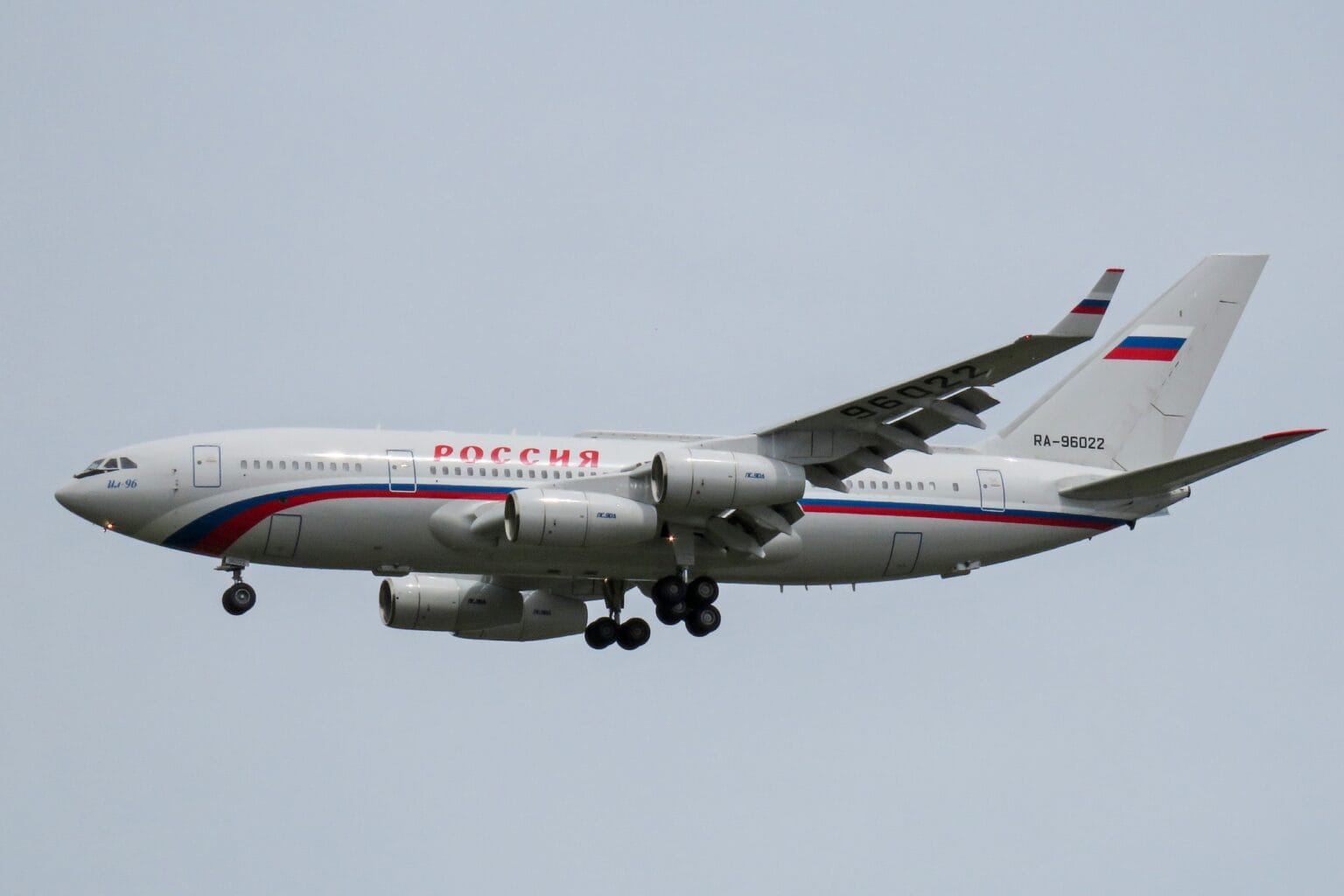
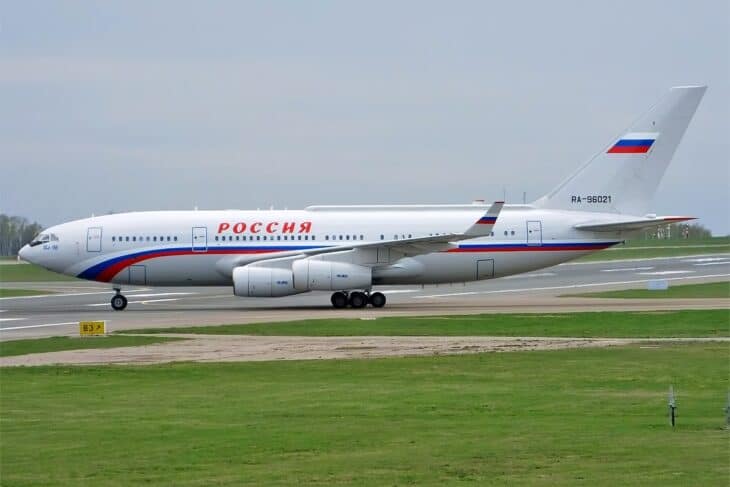
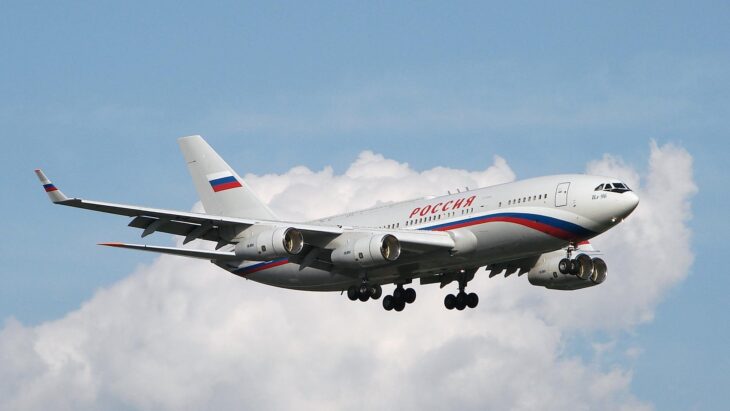
Putin’s plane is not a private jet in the usual sense. It is the Ilyushin Il-96-300PU, a four-engine wide-body built in Voronezh, Russia, and run by the state’s Rossiya Special Flight Detachment, nicknamed the “Flying Kremlin.” The Kremlin does not say which airframe flies a given trip, and no report we could find named the one used for Shenzhen.
What the public record does show is a fleet of near-identical airframes, a habit of sending more than one to a summit, and a flight map now shaped by closed European airspace and an international arrest warrant. Here is each of those, with registrations, specs and the flights that made headlines.
Quick facts about Putin’s plane
Putin’s Plane: The Il-96-300PU Fleet
The president’s long-haul aircraft belong to the Special Flight Detachment “Rossiya,” which flies from the government terminal Vnukovo-2 in Moscow. Since 2009 it has answered to the Presidential Property Management Directorate rather than to the Rossiya airline it grew out of.
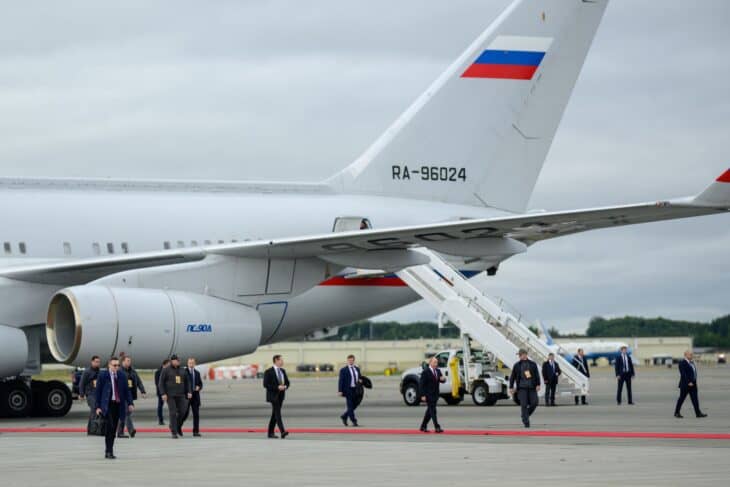
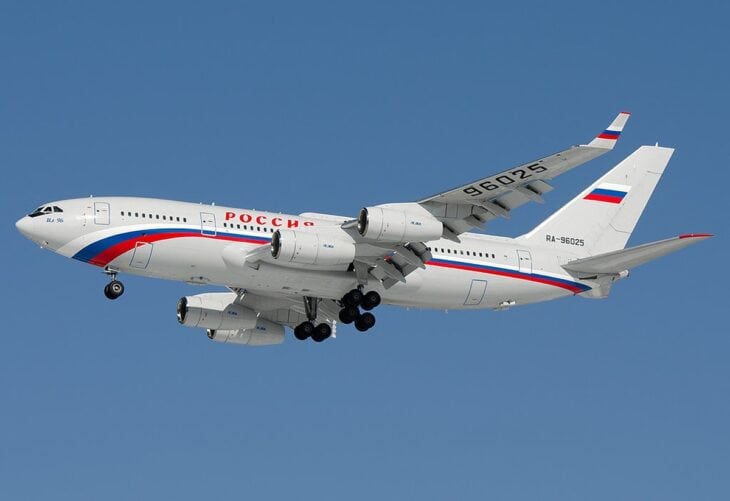
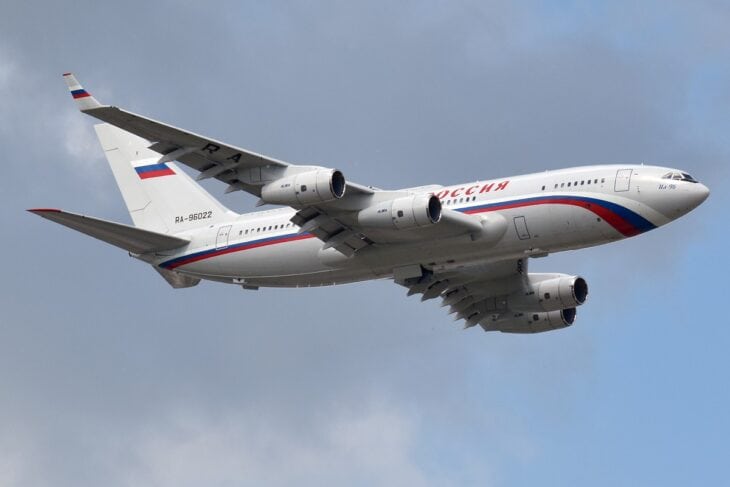
Simple Flying, citing Planespotters data in August 2025, counted about 11 Il-96s active with the unit. Not all are command-post aircraft: some, such as RA-96023, are VIP “Salon” versions of the standard Ilyushin Il-96-300. The cards below cover the command-post airframes that the public record ties to the presidency.




The Origin Story: From Yeltsin’s Il-96 to the 2021 Jets
The Il-96 is a Soviet design that found few buyers. It became the presidential aircraft in the 1990s, and Moscow kept ordering command-post versions after production for airlines ended and Aeroflot retired the type.
September 1988
The Il-96 flies for the first time. Ilyushin’s four-engine wide-body is a shortened, re-winged development of the Il-86, built in Voronezh.
1995
The first Il-96-300PU is built for Boris Yeltsin. It replaces the Il-62 that Yeltsin inherited from Mikhail Gorbachev.
April 21, 2003
RA-96016, built for Putin, makes its first flight. It is the second command-post Il-96.
August 2005
A fault strands Putin in Finland. He switches to a backup jet, and Russia grounds the whole Il-96-300 fleet on Aug. 22 over braking-system faults.
2009
The flight unit leaves the Rossiya airline. It moves under the Presidential Property Management Directorate and flies only officials named by the president.
2012 to 2016
Three new PU(M1) jets arrive. RA-96020 in December 2012, RA-96021 in January 2014 and RA-96022 in July 2016.
2021
RA-96024 and RA-96025 fly. First flights on April 9 and Aug. 5, two to three years later than the original delivery plan.
Feb. 27, 2022
The EU closes its skies. Russian-owned, registered or controlled aircraft may no longer land in, take off from or fly over EU territory.
March 2023
The ICC issues an arrest warrant for Putin. The charge is the war crime of unlawful deportation of Ukrainian children.
Nov. 18, 2026
Putin lands in Shenzhen for APEC. China is not a party to the court’s Rome Statute.
Inside the Il-96-300PU: Specs and the “Command Post”
From the outside, the PU looks almost like a standard Il-96-300. The giveaway is a long communications fairing on top of the fuselage, plus the Russian coat of arms or the Presidential Standard on the tail.
Inside, Russian sources describe three bars, a rest room with two beds and a 108-square-foot (10 m²) office. The PU equipment lets the president command the armed forces, nuclear forces included, from the air.
Airframe
Performance
Power
Those figures are for the Il-96-300 airliner. The range is quoted with a 30-ton payload; the command-post version’s own range has never been published, and Russian sources say only that modifications extended it somewhat.
The gold bathroom story
In 2007 a blog posted about 30 leaked photos said to show gold-trimmed bathrooms aboard a presidential Il-96. The Voronezh plant said the pictures showed the jet built for Boris Yeltsin, not Putin’s aircraft.
Why a Second Il-96 Usually Flies Along
Much of the coverage calls the second jet a “decoy,” an identical plane flying alongside so watchers cannot tell which one carries Putin. The reports that describe this in detail name no official or document as their source, so treat that version as unconfirmed.
What is on the record is plainer. A reserve aircraft follows the president’s plane, carrying staff and journalists, and a forward aircraft carries technicians and security officers, according to SlashGear’s account of the detachment’s practice.
The backup has been used for real. In August 2005 a mechanical fault on Putin’s Il-96 in Finland sent him home on the reserve jet, Radio Free Europe reported. Flight trackers also saw three government Il-96s (RA-96023, RA-96019 and RA-96018) fly from Moscow to Anchorage on Aug. 14, 2025, the day before the Alaska summit.
Shadow flights are not a Russian quirk. The U.S. sometimes flies its president on a smaller jet while the 747 flies elsewhere, as our report on the Air Force One decoy flight explains.
The Controversy: Sanctions, Closed Skies and an Arrest Warrant
Since Feb. 27, 2022, aircraft that are Russian-owned, registered or controlled may not land in, take off from or fly over the European Union. Every Il-96 in the presidential fleet carries a Russian RA- registration, so the shortest routes west are closed to it.
The arrest warrant matters more. The International Criminal Court issued it in March 2023, and every one of the court’s member states is obliged to arrest Putin if he lands on its territory.
The Mongolia test
Putin visited Mongolia, an ICC member, in September 2024 and was not arrested. On Oct. 24, 2024, the court’s Pre-Trial Chamber II found that Mongolia had failed to comply with its duty to arrest him and referred the matter to the Assembly of States Parties.
Shenzhen carries no such risk. China is neither a party to nor a signatory of the Rome Statute, and the route from Moscow does not need to cross EU airspace.
The airframes themselves are part of the sanctions story. Russia stopped building the Il-96-300 in 2009 after judging it inferior to Boeing and Airbus jets, yet Voronezh kept building command posts for the presidency. Since 2022, Moscow has talked of restarting Il-96 production for airlines, and in 2026 two retired Il-96s were reported restored to passenger service.
Putin’s Most Famous Plane Moments
Turku, 2005: the brakes that grounded a fleet
Russian sources say a brake-system fault kept Putin’s Il-96-300PU from taking off from Turku during an official visit to Finland on Aug. 2, 2005. He flew home on the backup, and on Aug. 22 Russia grounded every Il-96-300 in the country.
Helsinki, 2018: RA-96022 and the Estonian airspace row
On July 16, 2018, the day of Putin’s Helsinki summit with Trump, an Il-96 and an A319 from Russia’s state fleet entered Estonian airspace near Vaindloo island without permission. The Estonian paper Postimees matched the Il-96’s registration, RA-96022, to the jet that flew Putin to Helsinki.
Estonia’s air navigation service said Putin’s own aircraft did not pass through Estonian airspace that day. The defense forces said only that they did not know who was aboard.
Alaska, 2025: RA-96024 on a U.S. base
For the Aug. 15, 2025, summit with Trump, Putin stepped off Il-96 RA-96024 at Joint Base Elmendorf-Richardson outside Anchorage, AirLive reported.
Budapest, 2025: the flight that was never filed
When a Trump-Putin meeting in Budapest was floated in October 2025, the route became the story. On Oct. 21, Poland’s foreign minister Radosław Sikorski said he could not guarantee that a Polish court would not order a plane carrying Putin to be brought down and the suspect handed to The Hague.
Reaching Hungary without crossing another EU state meant flying in over Montenegro and Serbia, while Bulgaria said it would open its airspace. Moscow never said how Putin would travel.
How Putin’s Plane Compares to Air Force One
The American counterpart is a very different machine. The Air Force One VC-25A, a modified Boeing 747, is about 231 feet long against the Il-96-300PU’s roughly 181 feet, and each of its General Electric CF6-80C2B1 engines makes about 56,700 pounds of thrust.
The VC-25A can also take on fuel in flight through a receptacle in its nose. The Il-96-300PU cannot, so its range is set by the fuel it carries from the ground.
Trump’s personal aircraft, which he flew long before taking office, are covered in our guide to Donald Trump’s private jet.
FAQ
Sources and references used for research and fact-checking.
- Xinhua, Putin arrives in Shenzhen for APEC meeting
- TASS, Putin arrives in Shenzhen for APEC events
- Kyiv Post, Putin Arrives in Shenzhen Ahead of First Trilateral Summit With Trump, Xi
- Anadolu Agency, Putin arrives in China ahead of 1st trilateral talks with Trump and Xi
- Wikipedia, Ilyushin Il-96
- Wikipedia, Russian presidential aircraft
- Wikipedia (Russian), Special Flight Detachment Rossiya (Russian)
- Newsweek, Vladimir Putin's Plane: Five Facts About Russian Air Force One
- SlashGear, All You Need To Know About The Russian Air Force One
- bmpd, Взлетел новый Ил-96
- Simple Flying, Russian Il-96 Enters US Airspace for High-Level Alaska Talks
- AeroTime, Russian aircraft arrive in Alaska ahead of Trump-Putin talks
- AirLive, The warm welcome for Putin at Elmendorf Air Force Base
- Radio Free Europe/Radio Liberty, Russia: Ilyushin Planes Grounded After Putin Jet Suffers Glitch
- ERR News, Two Russian aircraft violate Estonian airspace near Vaindloo island
- Catalan News, European Union closes airspace to Russian airlines and private jets
- Notes from Poland, Poland cannot guarantee Putin would not be arrested if he flies through Polish airspace to Hungary
- Dawn, Mongolia failed to cooperate in Putin arrest: ICC
- RTV English, Putin's Flying Kremlin: Inside the Decoy Jets and Nuclear-Ready Aircraft Guarding Russia's President
- Wikipedia, States parties to the Rome Statute
Get the Newsletter
The latest aviation news and stories sent to your inbox.
About the Author

Tim is the owner and lead editor of AeroCorner since 2019, overseeing aviation content covering aircraft, airlines, airports, and the broader aviation industry. Through years of researching, writing, editing, and publishing aviation-focused content, he has developed extensive practical knowledge of commercial aviation and air travel. Based in Asia and a frequent traveler himself, Tim also brings firsthand passenger experience to AeroCorner’s coverage. Outside of publishing, he has also explored aviation firsthand through hands-on flight training in New Zealand.