


Table of Contents
Messi has operated two privately owned jets across his career: a large-cabin Embraer Legacy 650 during his Barcelona years, and the Gulfstream V that has carried him through a turbulent exit from Camp Nou, two seasons at PSG, a World Cup triumph in Qatar, and a new chapter in Miami. The aircraft has covered an extraordinary spread of routes: Buenos Aires to Paris, Doha to Rosario, Miami to Barcelona. After a comprehensive interior refit in 2023, the cabin now meets the standards of a modern long-range jet, with new leather seating, Corian countertops, and a flatbed configuration for up to eight passengers.
This article covers Messi’s full private aviation history: the Gulfstream V he flies today, the Embraer Legacy 650 that preceded it, the carbon emissions controversy that made headlines across France during his PSG years, and the flights that have defined his life off the pitch.
Quick facts about Lionel Messi’s private jet
Lionel Messi’s Private Jet Fleet
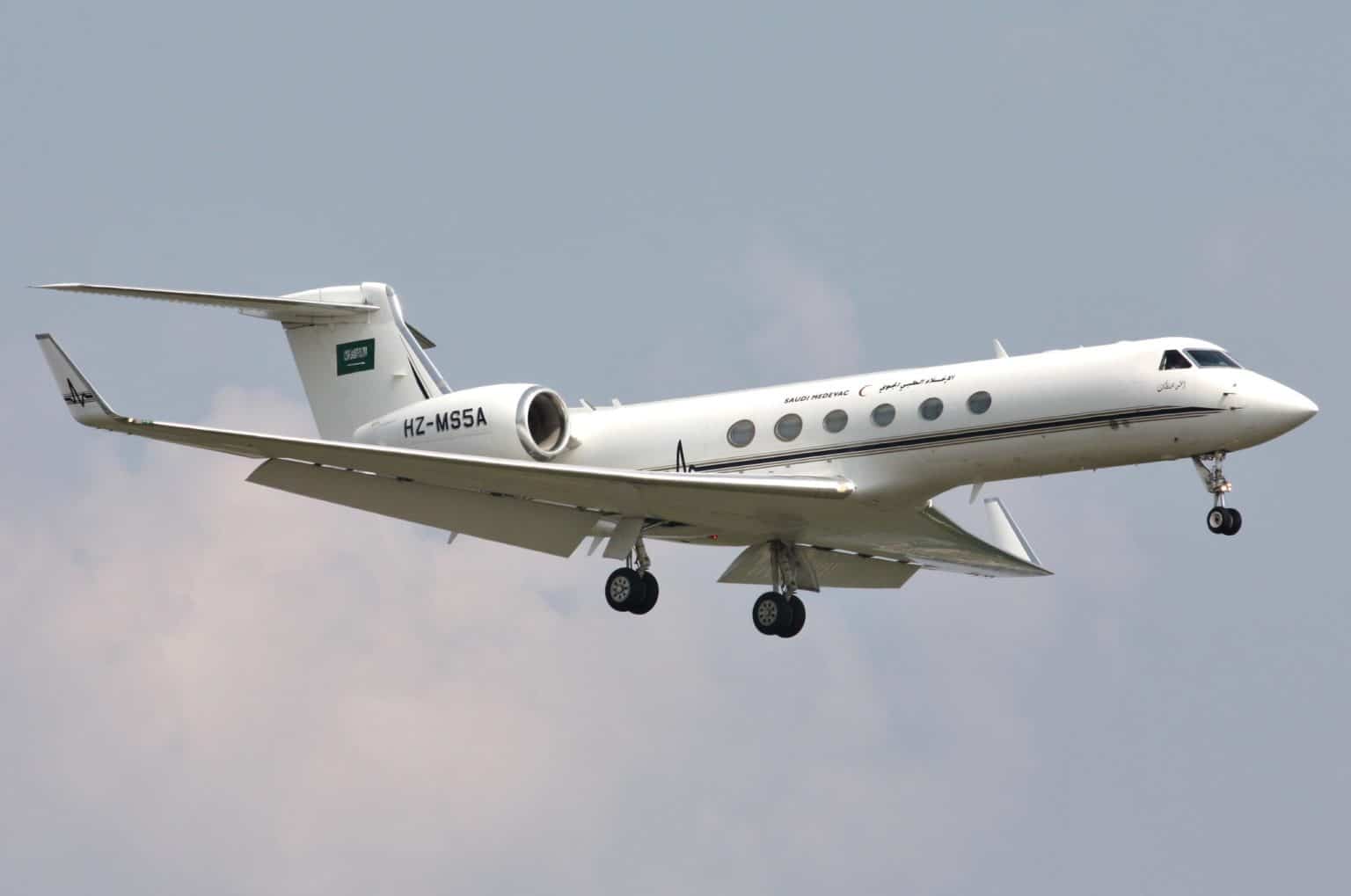
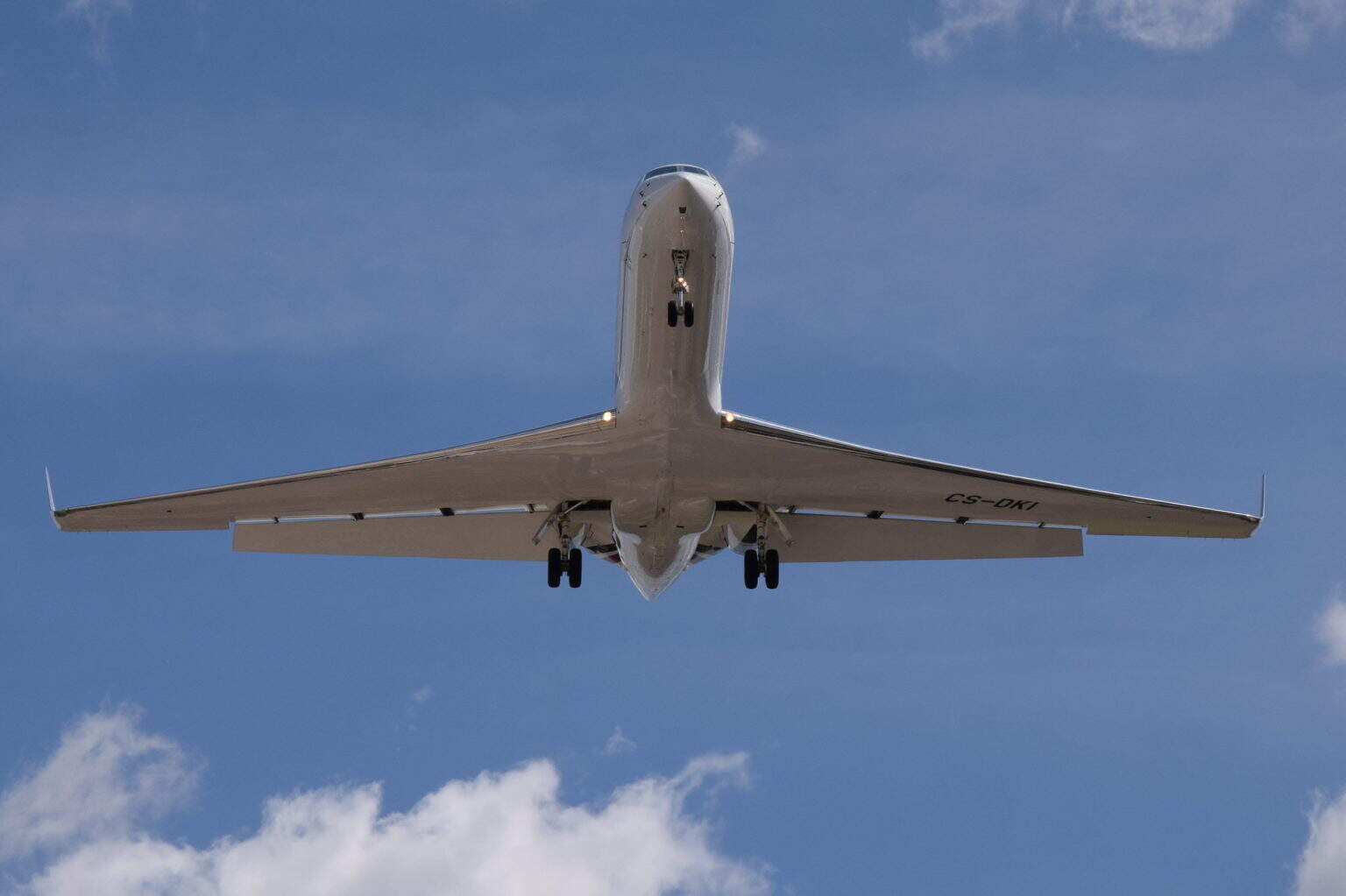
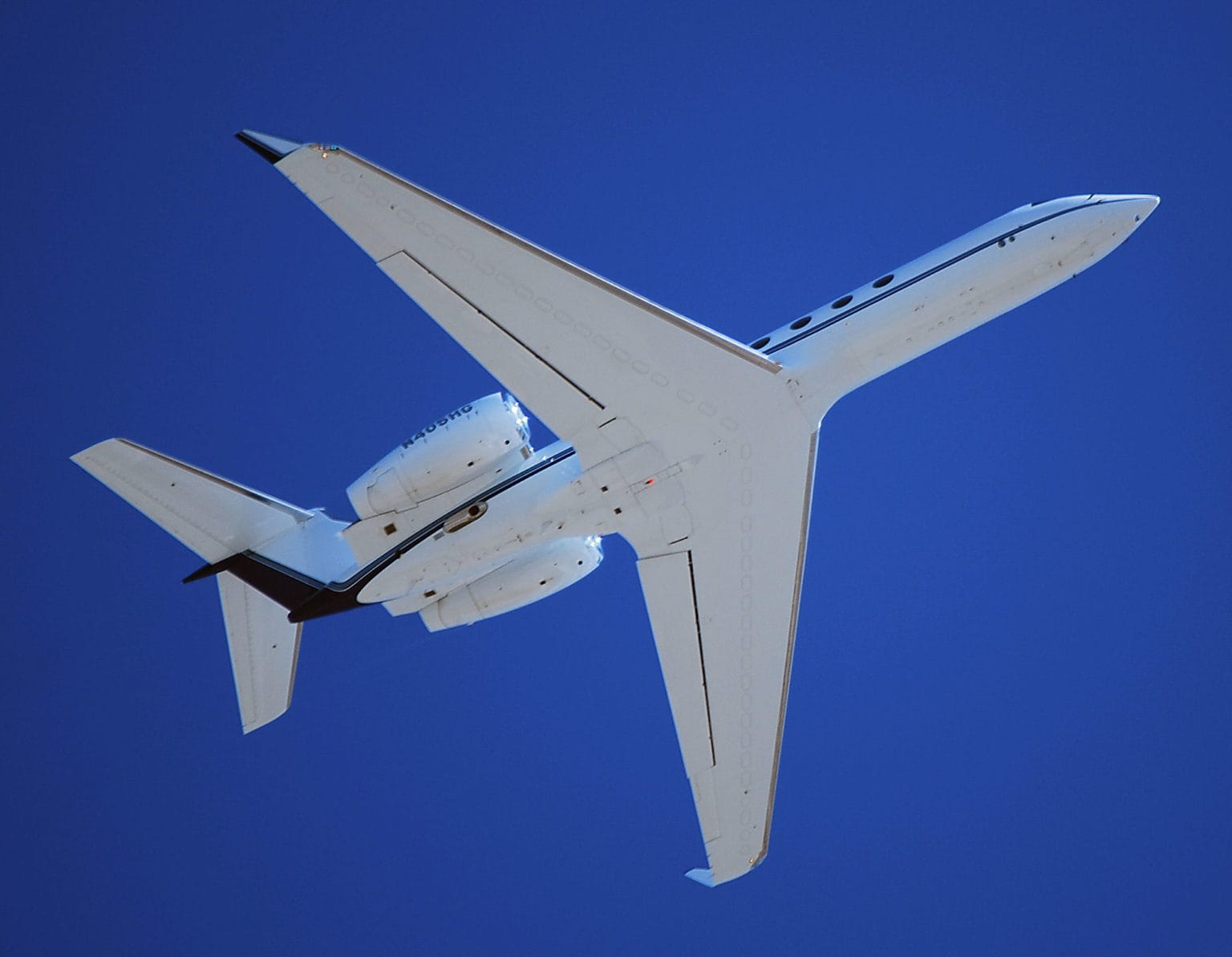
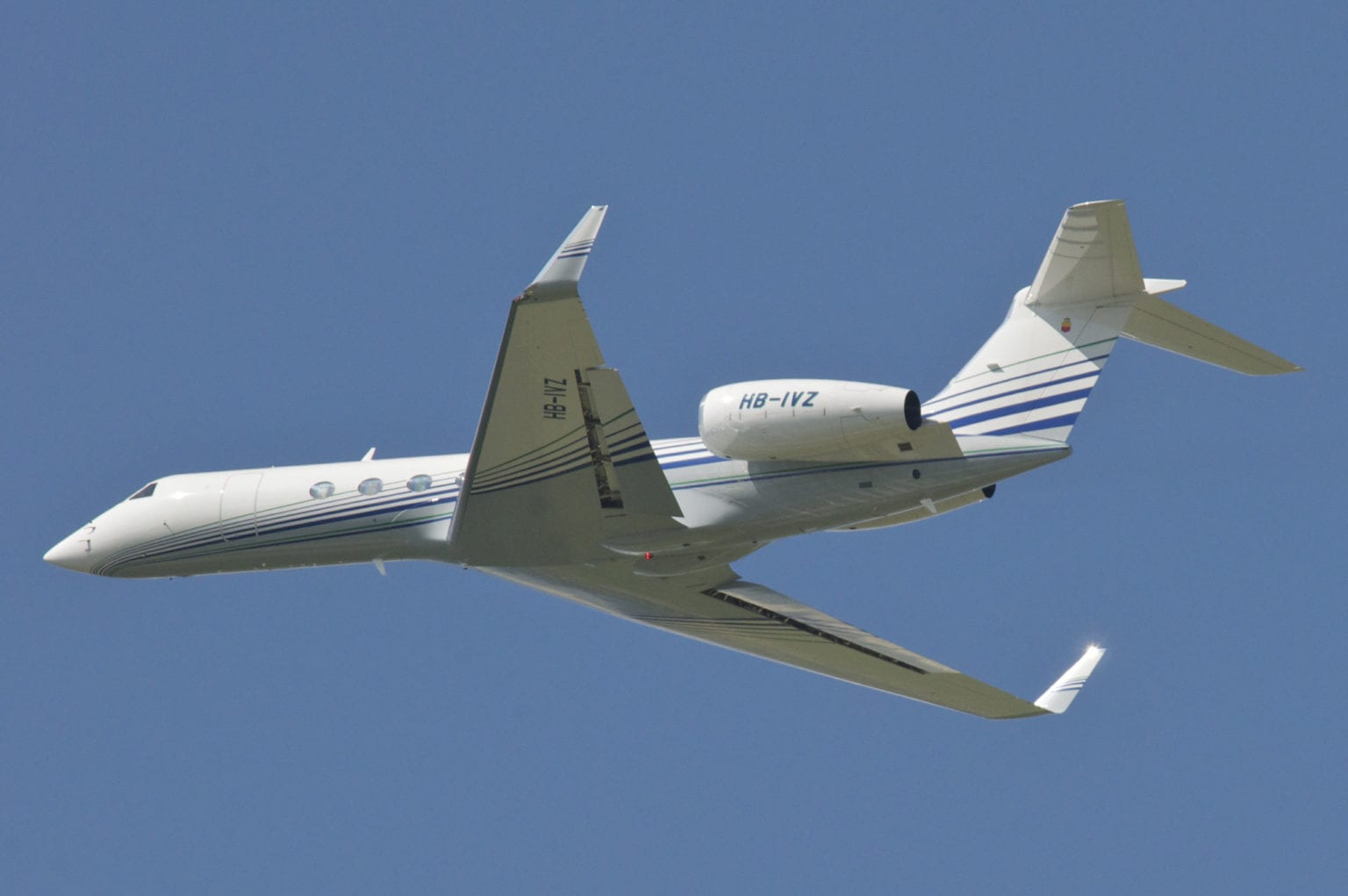
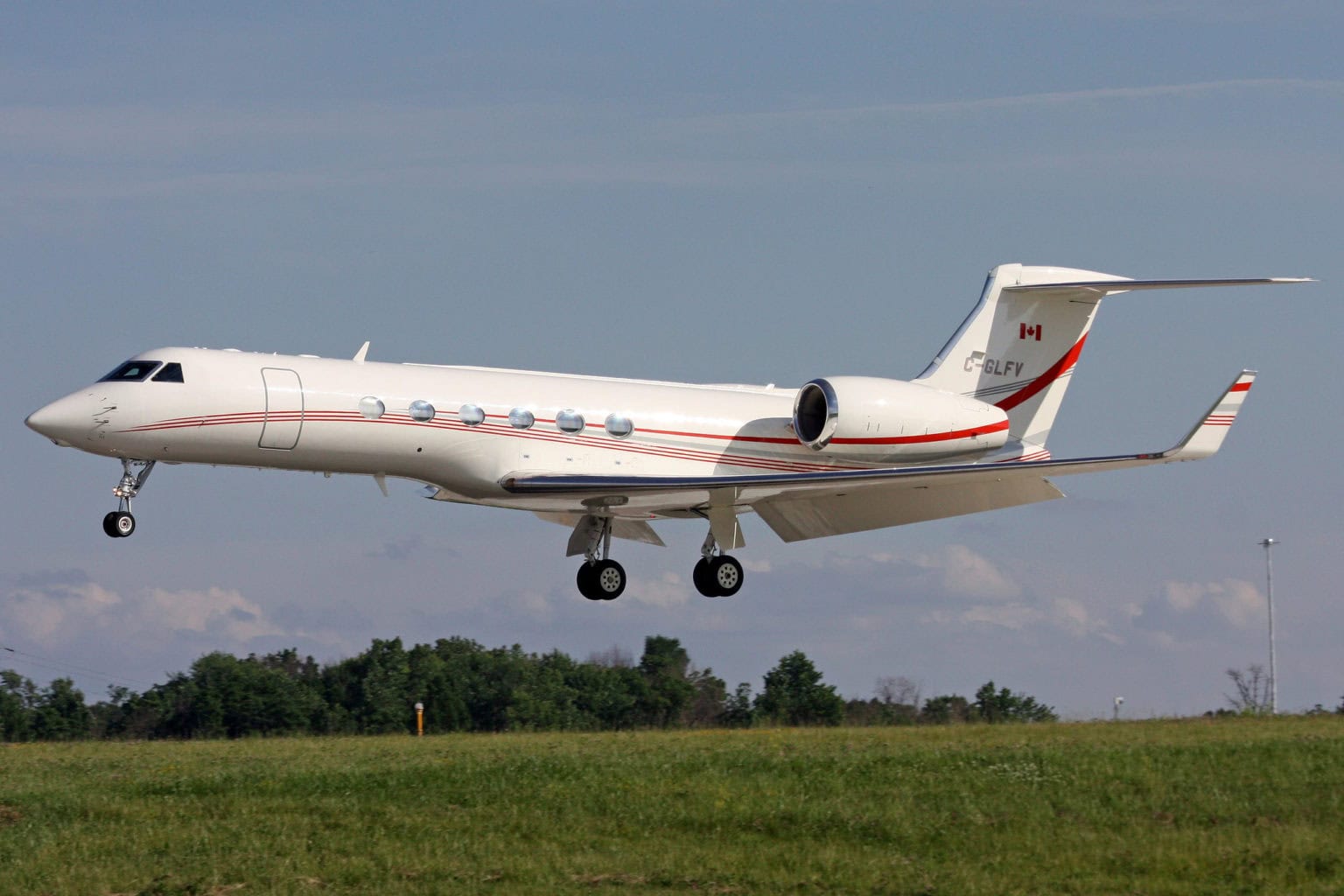
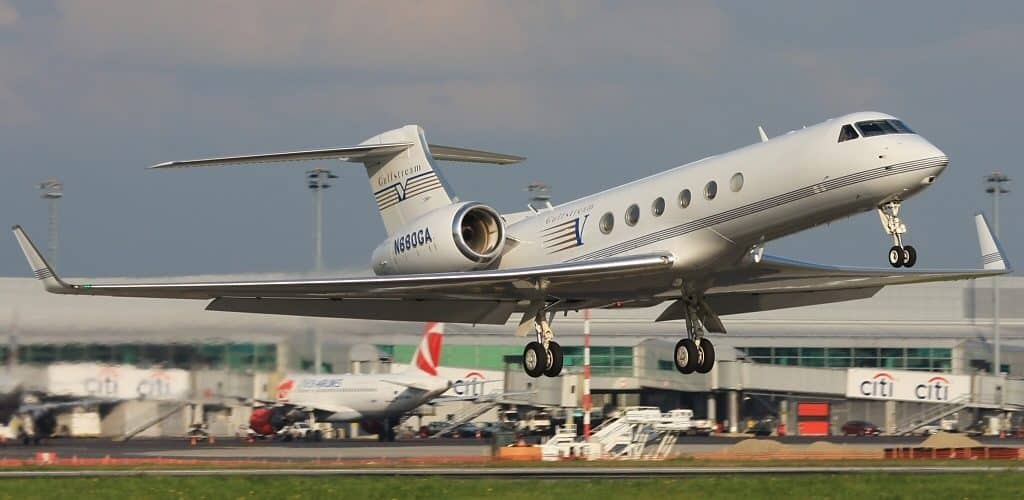
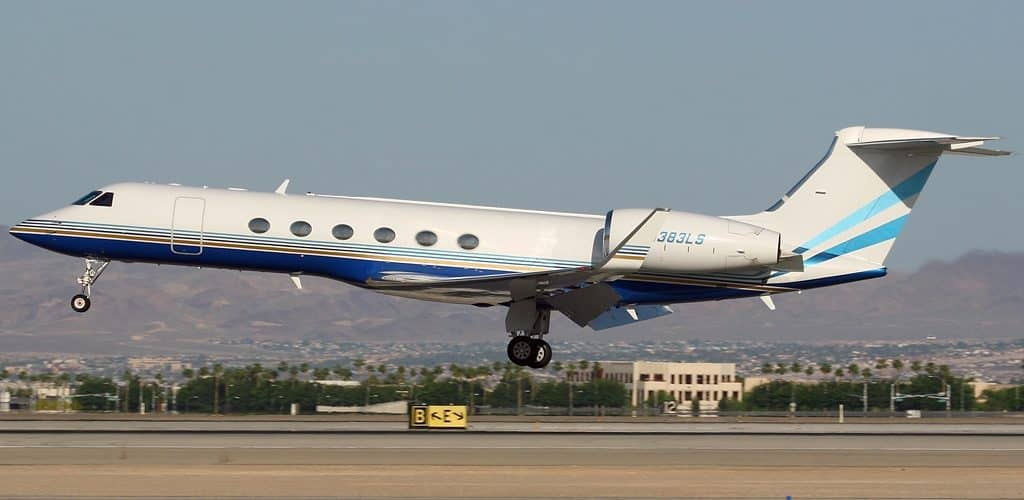
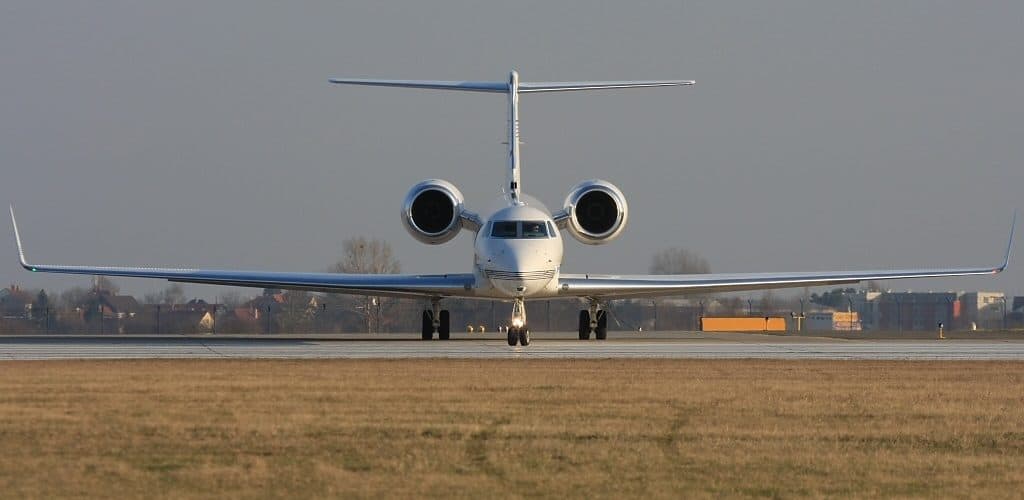
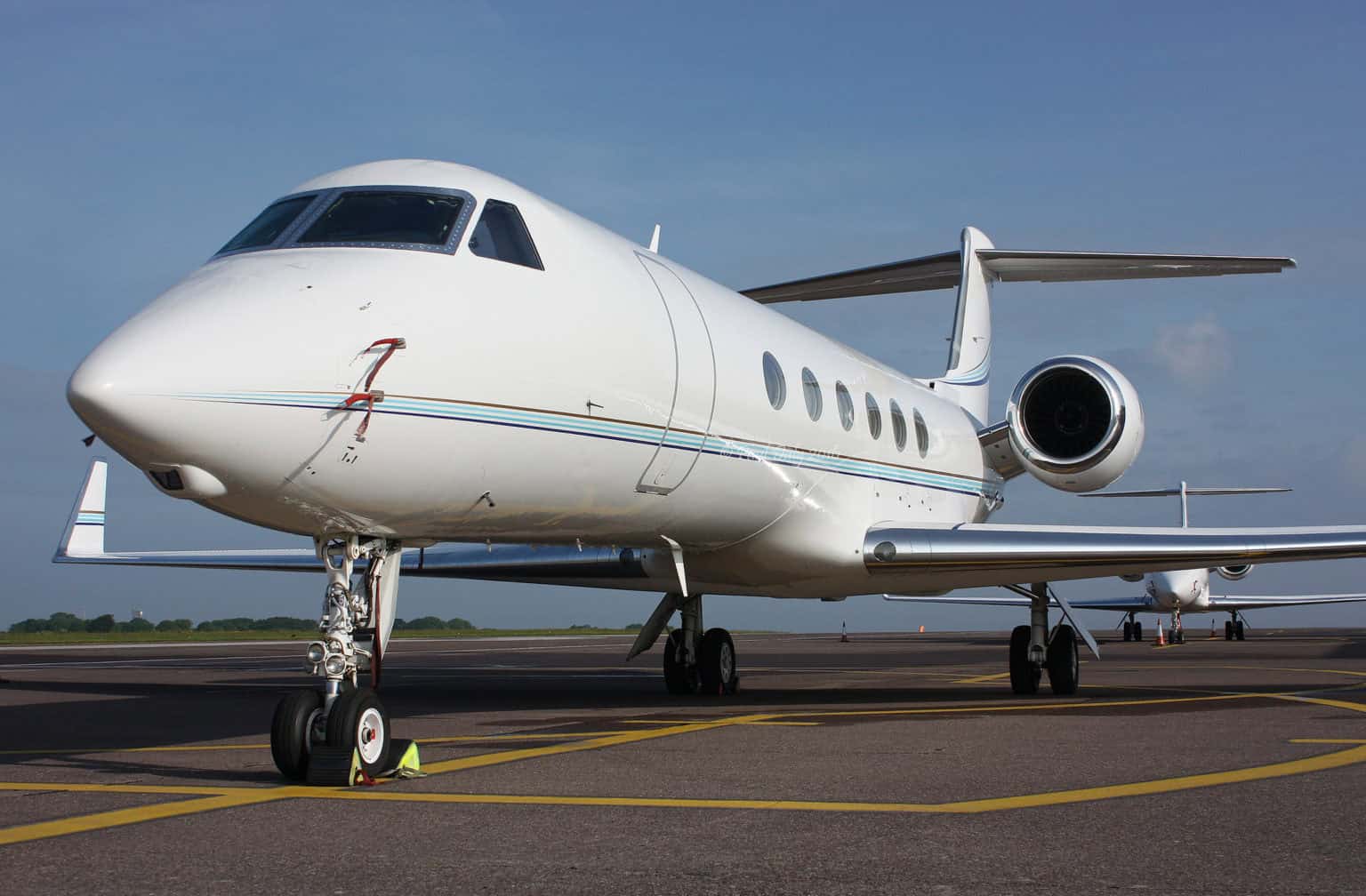
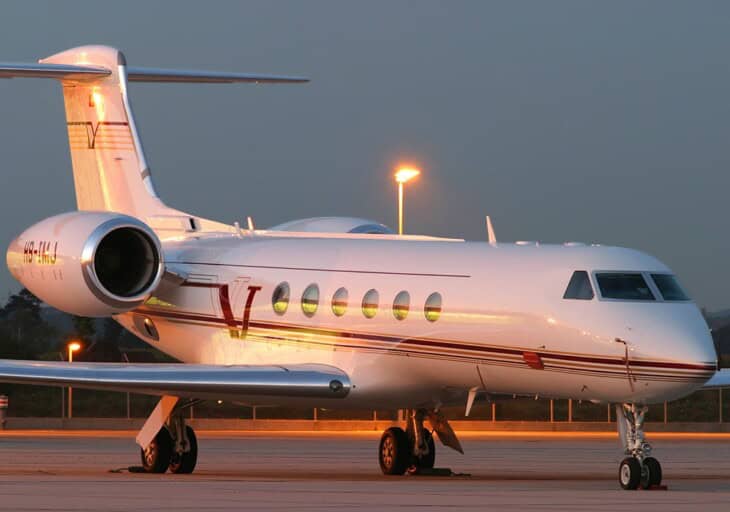
Messi has owned two private jets across his career. He currently operates a Gulfstream V registered LV-IRQ in Argentina. Before it, he flew an Embraer Legacy 650 throughout his Barcelona years. The upgrade from one to the other tells a clear story: more range, more capability, and the ability to reach Buenos Aires from anywhere in Europe without a fuel stop.















From La Masia to the World: Messi’s Private Jet Story
For most of his early career, Messi travelled on club-chartered aircraft alongside his Barcelona teammates. Private ownership came later, when his schedule as the world’s highest-profile footballer demanded a level of control and privacy that commercial and club travel could not provide.
~2014
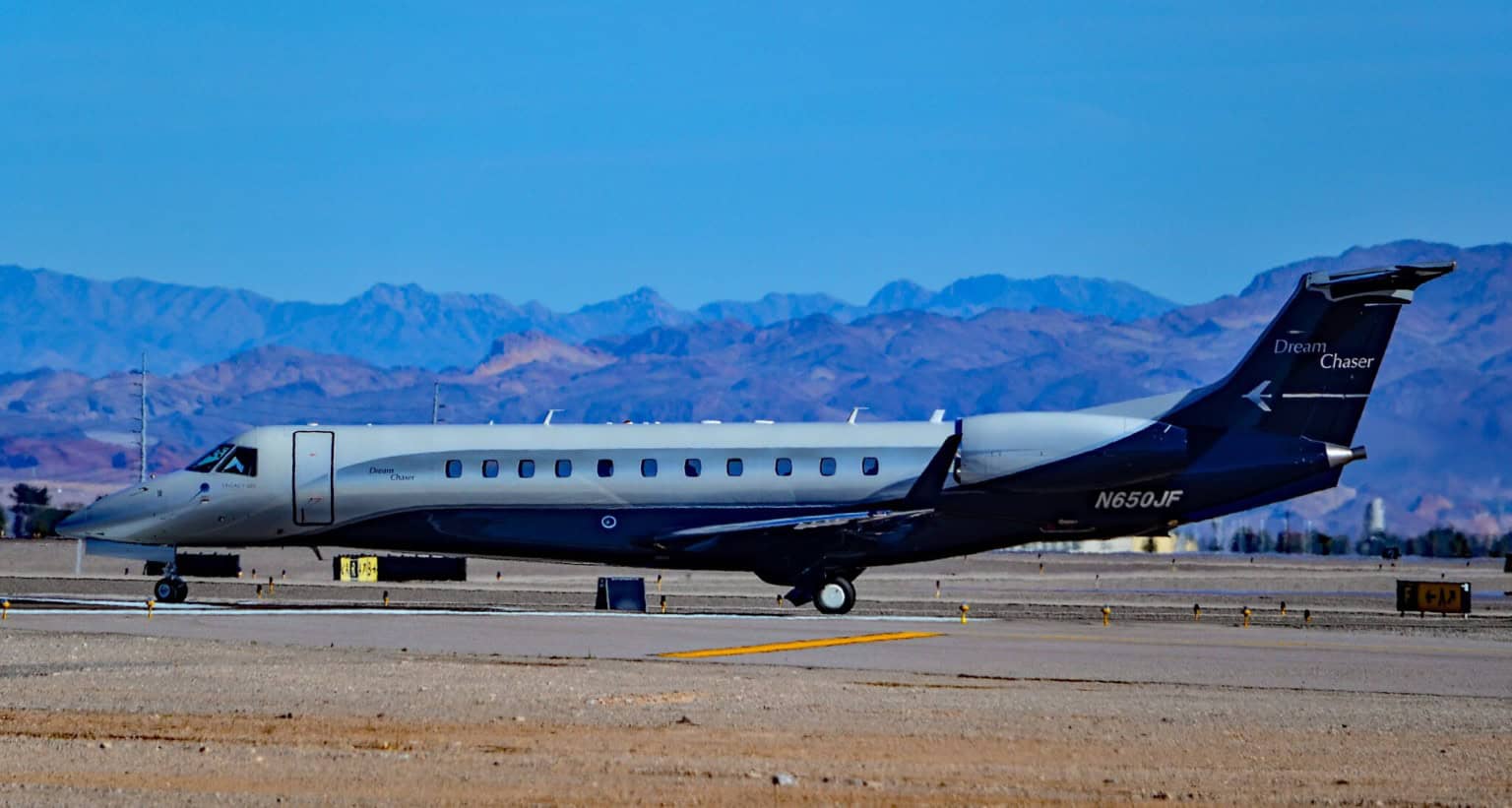
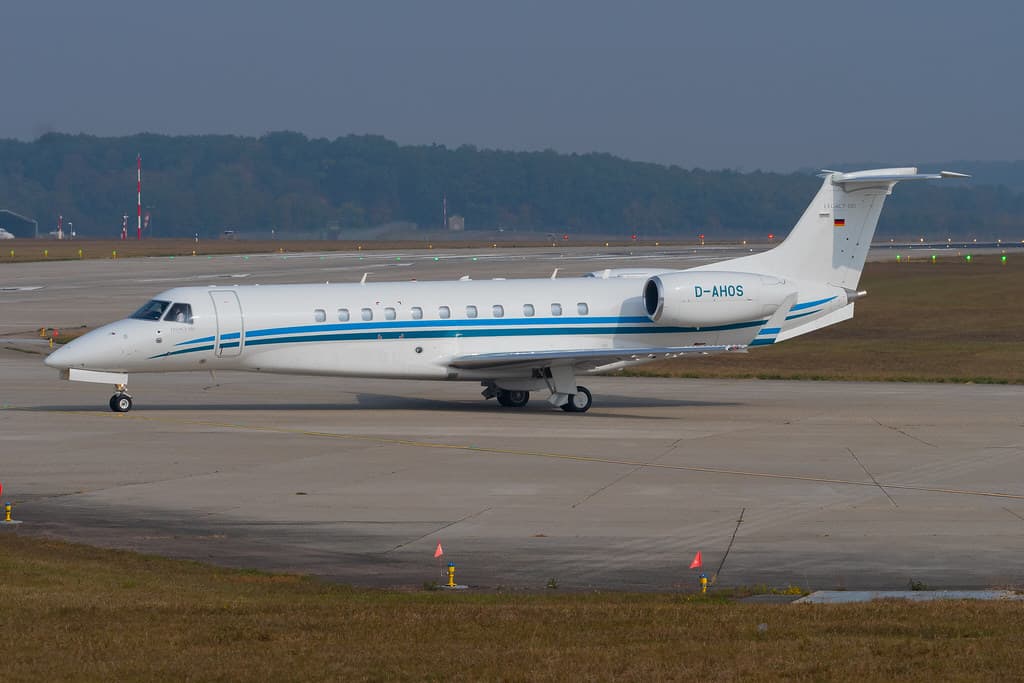
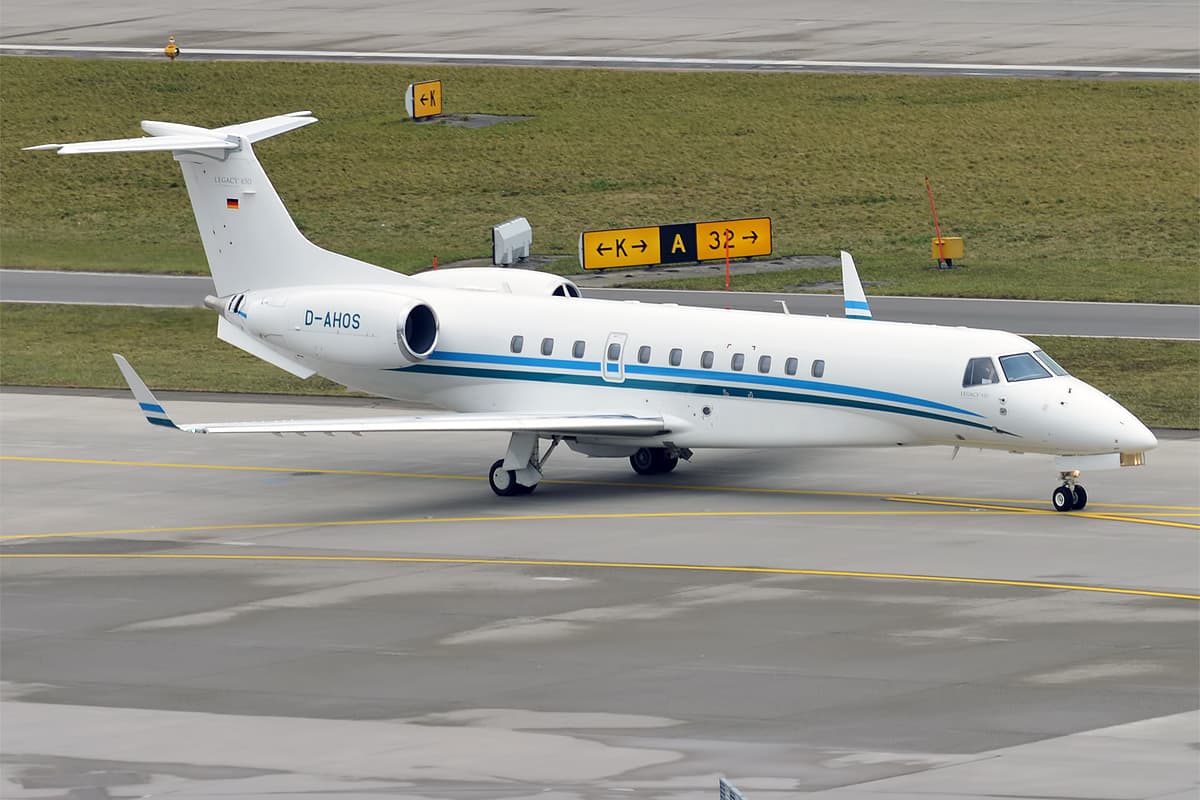
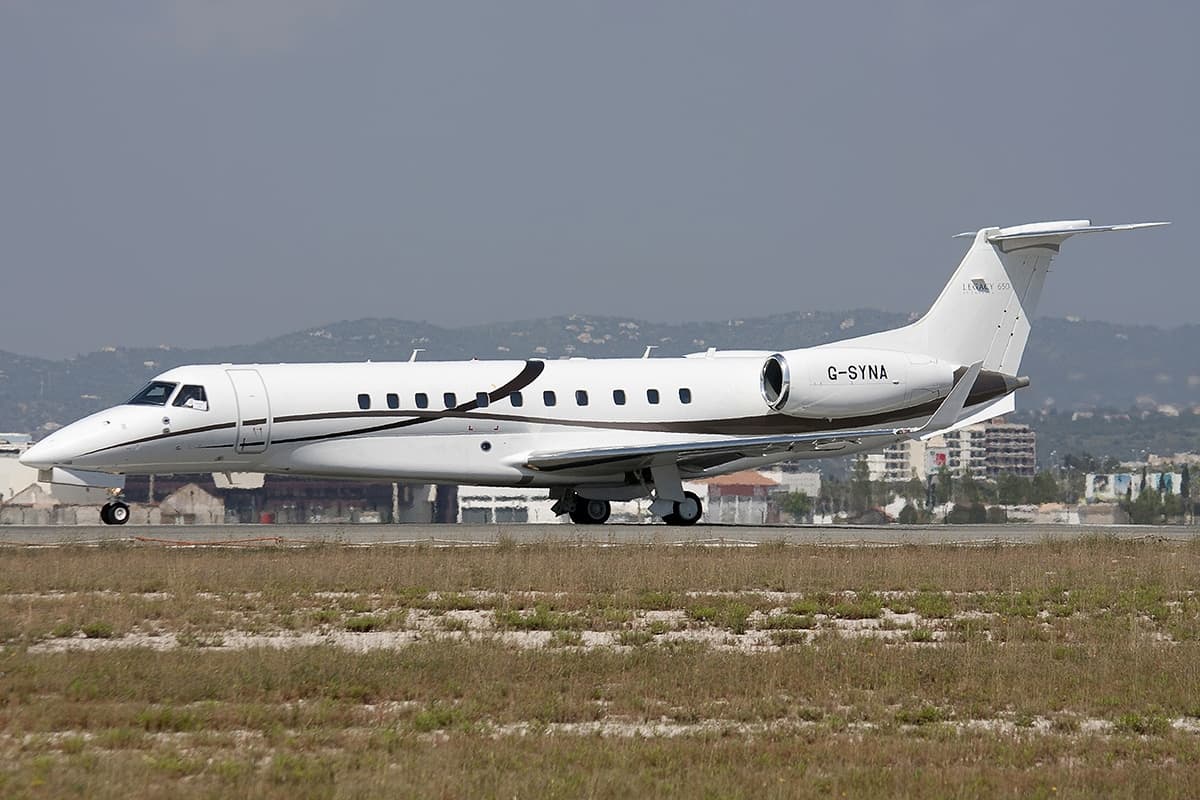
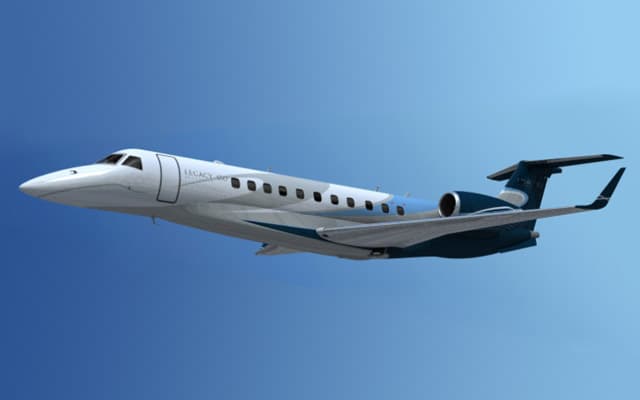
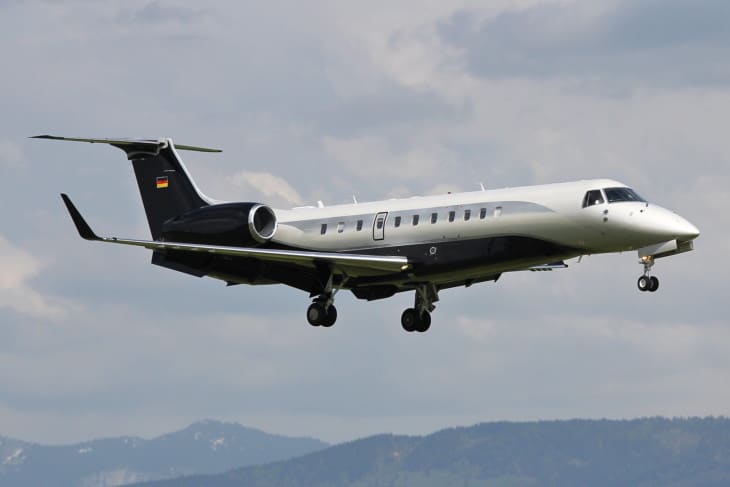
The first jet: Embraer Legacy 650. Messi acquires his first privately owned aircraft, a large-cabin Embraer with a range of 3,900 NM and space for up to 14 passengers. His jersey number 10 appears on the tail and the initials LMM are inscribed beneath the cockpit.
2018
Upgrade to the Gulfstream V, LV-IRQ. Messi acquires a pre-owned Gulfstream V for approximately $15 million. The aircraft, serial number 699, was built in 2002 and is registered under Argentine operator Flyzar S.A. at San Fernando Airport near Buenos Aires. The number 10 migrates to the new tail; the names of his wife and three sons are engraved on the airstairs.
2021
Barcelona exit, the Paris chapter begins. An emotional departure from Camp Nou places new transatlantic demands on LV-IRQ. Paris-to-Buenos Aires runs of over 6,000 NM push the aircraft near the published range limit of the GV, with some legs requiring a fuel stop in Dakar or the Azores.
2022
Carbon controversy and World Cup glory. French media reports 52 LV-IRQ flights in just three months, producing a reported 1,502 tonnes of CO2. In December of the same year, the aircraft becomes part of one of football’s most celebrated moments: carrying Argentina’s World Cup winners home to Buenos Aires.
2023
Inter Miami, new corridor, new cabin. Messi signs with Inter Miami CF, establishing a Miami-to-Buenos Aires run as the jet’s primary route. A comprehensive interior refit delivers new leather seating, Corian countertops, and updated cabin finishes, bringing the 2002-built interior up to modern standards.

Inside Messi’s Gulfstream V: The World’s Most Famous Private Jet
The Gulfstream V was Gulfstream’s flagship aircraft from its first flight in 1995 until it was succeeded by the G550 in 2003. Serial number 699, built in 2002, represents one of the later production examples, benefiting from refinements made across nearly a decade of build experience. The GV introduced transcontinental performance to the large-cabin segment: with 6,500 nautical miles of range and a service ceiling of 51,000 feet, it can overfly most weather systems and connect Buenos Aires to Miami, or Paris to nearly any destination in the Americas, without a scheduled fuel stop.

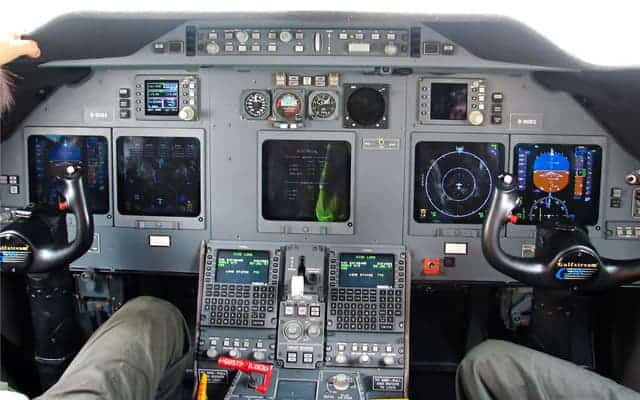
Messi’s cabin configuration seats up to 16 passengers, with all seating converting into eight full-length flatbeds for overnight flights. A forward galley carries commercial-grade equipment: convection oven, microwave, coffee maker, refrigerator, and a sink. Two lavatories, fore and aft, give the cabin a level of privacy unusual even in large-cabin jets. The personalization extends beyond the tail number: the airstairs are engraved with the names Antonela, Thiago, Mateo, and Ciro, his wife and three sons, each passenger on every flight reminded exactly who this aircraft belongs to.
2023 Interior Refit
After five years of heavy use across South America, Europe, and North America, the cabin of LV-IRQ received a full refresh in 2023. New full-grain leather seating, Corian countertops, updated carpets, and modernized cabin finishes brought the interior up to contemporary standards. The refit addressed the visible wear that comes with a private jet used as intensively as Messi’s: the aircraft has been tracked making dozens of transatlantic crossings in single years.
Performance
Cabin
Aircraft
At 6,500 nautical miles, the Gulfstream V sits among the longest-range private jets of its era. It can reach Buenos Aires from Miami in around nine hours, or connect Paris to most South American capitals without diverting for fuel. That range capability was a significant factor in Messi’s upgrade from the Embraer Legacy 650: the Legacy’s 3,900 NM range meant that a flight from Paris to Buenos Aires, a route Messi was making regularly during his PSG years, required at least one fuel stop. The GV eliminated that constraint.
The Embraer Legacy 650: Messi’s First Privately Owned Jet
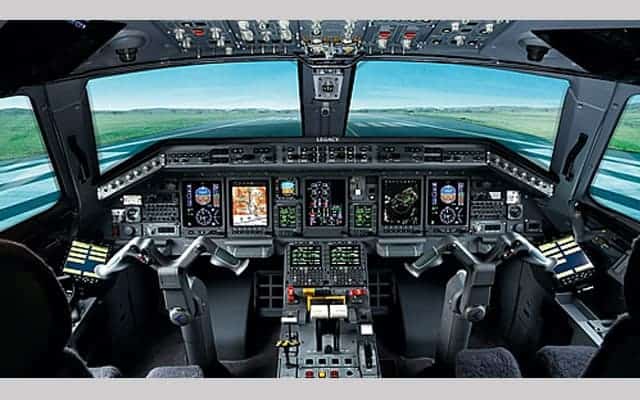
Before the Gulfstream V, Messi flew an Embraer Legacy 650, a large-cabin aircraft that was among the most capable jets in its class when new. Embraer developed the Legacy 650 as a long-range evolution of its earlier Legacy family, stretching the cabin, adding fuel capacity, and equipping it with two Rolls-Royce AE 3007A1E turbofan engines producing 9,220 lbf of thrust each. The result was an aircraft capable of flying up to 14 passengers over 3,900 nautical miles: enough for transcontinental European routes, but short of the Buenos Aires-Paris corridor that Messi’s schedule would later demand.
Messi’s Legacy 650 carried several of the same personal touches that would later appear on the Gulfstream V: the number 10 on the tail and the initials LMM inscribed beneath the cockpit. The aircraft was reportedly valued at around $35 million at the time of his ownership. When Messi traded up to the Gulfstream V in 2018, the Legacy 650 was sold, and the number 10 found a new home on the tail of LV-IRQ.
Why the Range Mattered
The Legacy 650’s 3,900 NM range works comfortably for European routes and intra-South American travel. Buenos Aires to Paris, however, is approximately 6,870 NM. By the time Messi joined PSG in 2021, the Gulfstream V’s 6,500 NM range was the difference between a direct flight with a full cabin and a mandatory fuel stop. For someone making that crossing multiple times a season, the upgrade paid for itself in time and operational simplicity.
52 Flights in Three Months: The Emissions Controversy
In September 2022, French newspaper L’Equipe published a flight-tracking report that drew intense scrutiny to Messi’s private aviation habits. Between June 1 and August 31 of that year, LV-IRQ had made 52 recorded flights, including 30 intercontinental legs and 14 transatlantic crossings. The routes ranged from Miami and Buenos Aires to Montevideo, Barcelona, and Brazil, reflecting the extraordinary logistical complexity of Messi’s life during his first full season at PSG.
1,502 Tonnes of CO2 in Three Months
Over the 52 flights tracked between June and August 2022, LV-IRQ generated approximately 1,502 tonnes of CO2. That figure, cited by L’Equipe and subsequently picked up by international media, was described as equivalent to the carbon footprint that the average French citizen accumulates over 150 years of normal life. Messi did not issue a public response to the reports.
The scale of the emissions figures reflects the physics of long-range private aviation rather than any unique profligacy on Messi’s part. A Gulfstream V burns approximately 220 to 260 gallons of jet fuel per hour; a transatlantic crossing of 8 to 10 hours produces around 50 to 60 tonnes of CO2 per flight. Fourteen such crossings in three months accumulates quickly. The context matters: Messi was commuting between continents during a period when his family remained partly based in Spain while he played in France, a geographic split with no clean aviation solution.
The controversy was part of a broader wave of celebrity private jet scrutiny in 2022, fueled by publicly available flight-tracking data from sources like FlightRadar24 and ADS-B Exchange. Several public figures faced similar reports in the same period. The debate over private aviation emissions has since prompted renewed discussion about sustainable aviation fuel as a potential mitigation tool for high-frequency private flyers, though adoption in the private jet sector remains limited.
Lionel Messi’s Most Notable Private Jet Moments
The World Champion Comes Home: Qatar to Buenos Aires
On December 18, 2022, Argentina defeated France on penalties to claim the FIFA World Cup in Lusail, Qatar. For Messi, the win was the one trophy that had eluded him throughout a career of unprecedented individual achievement. LV-IRQ was part of what followed: the return of Argentina’s squad to Buenos Aires triggered the largest street celebrations the country had seen in decades, with millions lining the streets to welcome the champions. The aircraft, already well-documented by flight trackers, was among the most watched registrations in global aviation in the days surrounding the tournament’s final week.
The PSG Shuttle: Two Years of Transatlantic Life
Between August 2021 and July 2023, Messi played for Paris Saint-Germain while maintaining a family home in Spain and close ties to Argentina. LV-IRQ tracked a punishing schedule during this period: flights between Paris-Le Bourget and Argentina’s Islas Malvinas International Airport in Rosario were documented throughout the two seasons, sometimes with turnarounds of just a few days between legs. The flight-tracking data that generated the 2022 controversy was a direct product of this period: 52 flights in 90 days is less remarkable when you consider that Messi was effectively maintaining a life on three continents simultaneously.
Miami Arrival: LV-IRQ at Opa-Locka
In June 2023, Messi confirmed his move to Inter Miami CF, bypassing reported interest from Barcelona and Al-Hilal to join the MLS club co-owned by David Beckham. LV-IRQ was spotted at Opa-Locka Executive Airport, the general aviation hub north of Miami that serves as the practical gateway to South Florida for private aviation, shortly before the announcement became official. Messi’s debut at Chase Stadium on July 21, 2023, drew a global television audience and was watched by a constellation of celebrities including LeBron James, Serena Williams, and Kim Kardashian. LV-IRQ has since become a familiar presence in Miami’s general aviation circuit, with its Buenos Aires-to-Miami corridor now among the most documented private jet routes on flight-tracking platforms.
Messi vs. Ronaldo: Two GOATs, Two Very Different Jets
The Messi-Ronaldo comparison has defined football conversation for fifteen years. In private aviation, the contrast is striking. Messi flies a 2002-built Gulfstream V acquired for approximately $15 million. Cristiano Ronaldo, as detailed in our full guide to Ronaldo’s private jet fleet, has operated some of the most expensive private aircraft in the world, most recently leasing a Bombardier Global Express XRS reportedly worth $73 million.
The Numbers Side by Side
Messi’s Gulfstream V: built 2002, ~$15M purchase price, 6,500 NM range, Mach 0.885 top speed. Ronaldo’s Bombardier Global Express XRS: ~$73M value, 6,000 NM range, Mach 0.90 top speed. Messi’s aircraft is significantly older and cheaper; Ronaldo’s is newer, larger, and roughly five times the price. Both are capable of transatlantic travel, but they represent very different philosophies of private aviation spending.
The price gap between the two jets is not simply a matter of taste. Ronaldo’s successive upgrades have tracked his commercial brand strategy: the jet is a visible asset, photographed and tracked by a global fanbase. Messi’s approach is quieter. The Gulfstream V is a known and capable aircraft, but it is a pre-owned platform from two decades ago rather than a contemporary flagship. For a player with a net worth estimated at over $600 million, the $15 million purchase price represents a deliberate choice toward utility over statement. The family names on the airstairs tell a similar story: this jet is primarily a home for his family in transit, not a symbol of wealth for external consumption.
Both athletes have attracted carbon emissions controversy, a reality for any public figure whose schedule requires frequent private flight. The difference is scale: Ronaldo’s newer, heavier aircraft burns more fuel per hour, while Messi’s older GV burns somewhat less but has been used more intensively. Either way, the scrutiny of high-frequency private aviation is unlikely to diminish, and both camps have so far declined to comment on the environmental dimension of their travel choices.
FAQ
Sources and references used for research and fact-checking.
- Inside The Luxurious World Of Lionel Messi's Private Jet - Simple Flying
- Barcelona forward Lionel Messi has acquired a Gulfstream V private jet - Aviation24.be
- 52 trips in 3 months: Lionel Messi's excessive private jet use revealed - South China Morning Post
- Lionel Messi's private jet use under scrutiny over eye-watering carbon emissions - JOE.co.uk
- What Private Jet Does Lionel Messi Have? - The Aviation Hub
- Lionel Messi's Embraer Legacy 650: The Soccer Legend's Flying Sanctuary - Aircraft Marketplace
Get the Newsletter
The latest aviation news and stories sent to your inbox.
About the Author

Tim is the owner and lead editor of AeroCorner since 2019, overseeing aviation content covering aircraft, airlines, airports, and the broader aviation industry. Through years of researching, writing, editing, and publishing aviation-focused content, he has developed extensive practical knowledge of commercial aviation and air travel. Based in Asia and a frequent traveler himself, Tim also brings firsthand passenger experience to AeroCorner’s coverage. Outside of publishing, he has also explored aviation firsthand through hands-on flight training in New Zealand.