

Table of Contents
At Vanguardia airport in Villavicencio, Colombia, the airline ALLAS loads its Douglas DC-3s with motorcycles, washing machines and food for jungle towns no road reaches. On some of those flights, passengers ride in the same cabin as the freight.
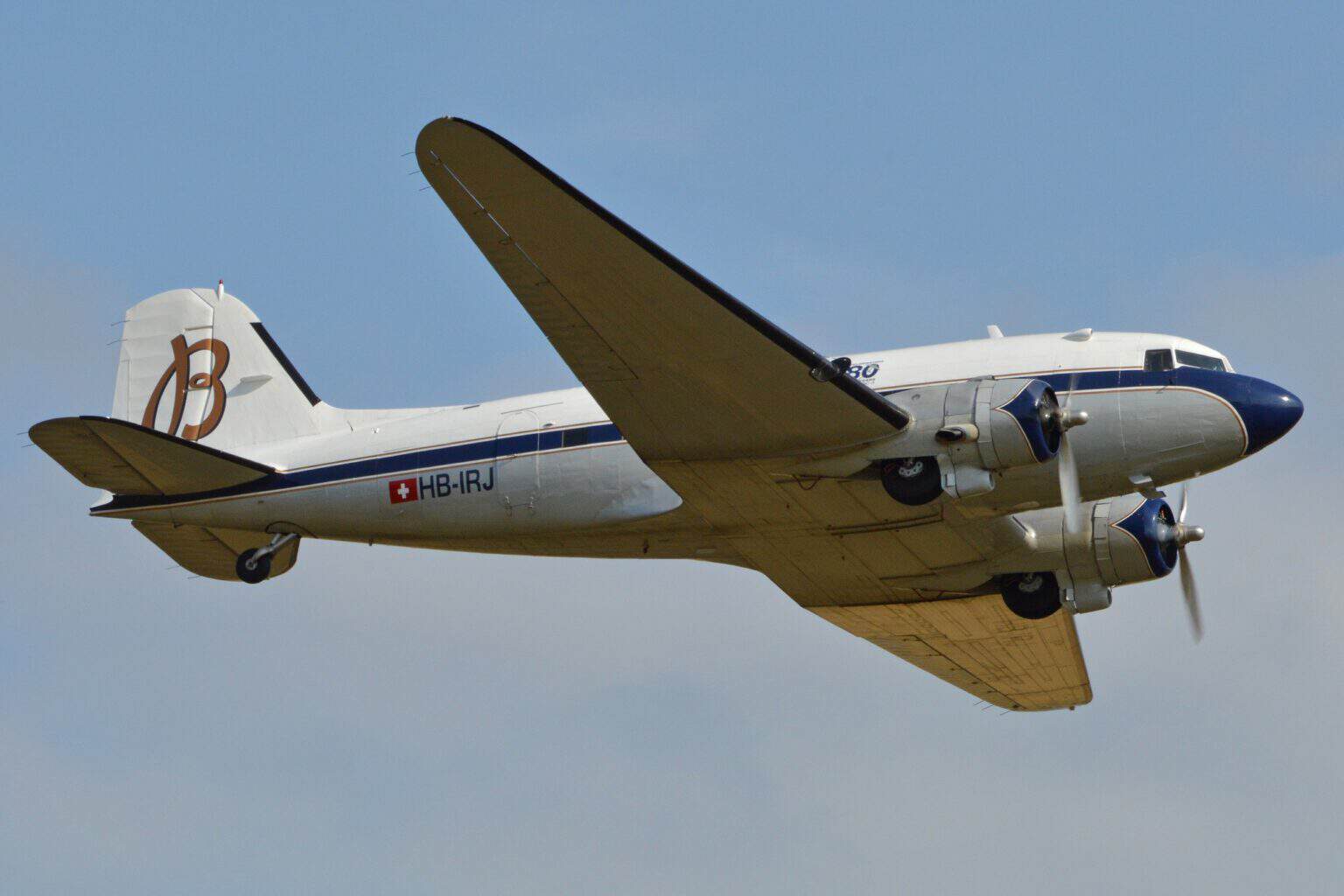
Very few DC-3s still work like that. The most recent worldwide count, compiled by DC-3 researcher Coert Munk for the DC-3 Appreciation Society and published by Simple Flying in November 2023, found an estimated 164 DC-3s of all variants flying regularly. That is about 1 in every 100 of the 16,079 ever built.
How Many DC-3s Are Still Flying?
About 160. Munk’s tally of 164 covers every variant still flying regularly, including military C-47s and Dakotas as well as commercially operated aircraft. Roughly a third of them no longer have piston engines at all: they are turboprop conversions.
No newer census has been published, and the trend is down. Munk’s previous count, early in 2020, stood at 172. His fellow researcher Michael Prophet told the Royal Aeronautical Society that the figure shifts as aircraft are retired, crash or, now and then, return to flight.
The DC-3 count at a glance
164 DC-3s of all variants flying regularly (Coert Munk for the DC-3 Appreciation Society, 2023). 172 in the same researcher’s early-2020 count. 16,079 built in all, counting military and licence-built versions. About one third of the survivors are turboprop conversions, and 89 are in the United States.
Where the Last DC-3s Fly
The 2023 census also split the survivors by country. More than half are in the United States, and Canada, South Africa and Colombia account for most of the rest.
| Country | DC-3s active, 2023 | Note |
|---|---|---|
| United States | 89 | Registrations thought to be active |
| Canada | 19 | |
| South Africa | About 16 | Registered as active |
| Colombia | 16 | 17 registered, 16 active |
| Thailand | 7 | Confirmed in existence |
| Australia | 6 | |
| United Kingdom | 3 | |
| Bolivia, China, France, India, Mauritania, New Zealand | 1 to 3 each | Together, the remaining 8 of the 164 |

Most of the American aircraft are not airliners any more. The DC-3 no longer flies regular passenger service in the US, but it still carries sightseers, skydivers and air show crowds, SlashGear reported in 2025.
Canada’s survivors earn their keep in the north. Buffalo Airways of Yellowknife once had as many as 14 DC-3s in service; by 2020 it was down to one, hauling freight on two daily 45-minute legs between Hay River and Yellowknife, according to the Royal Aeronautical Society.
Why the Numbers Differ
Search for this question and you will see figures from 150 to 2,000. They are not all wrong. They count different things, at different times.
| Year | Figure | What it counted | Where it comes from |
|---|---|---|---|
| 2013 | 2,000 | DC-3s and military derivatives “still flying” | BBC, quoted in Wikipedia’s DC-3 article |
| 2013 | At least 400 | DC-3s still in the air | Smithsonian Magazine, quoted by SlashGear |
| 2017 | More than 300 | DC-3s still flying | Popular Mechanics, quoted in Wikipedia |
| 2020 | 172 | All variants flying commercially | Coert Munk, via the Royal Aeronautical Society |
| 2023 | 164 | All variants flying regularly, military included | Coert Munk for the DC-3 Appreciation Society, via Simple Flying |
| 2023 | About 150 | DC-3s still flying | Wikipedia’s DC-3 article |
The first difference is definition. A loose “still flying” figure can sweep in airframes that are merely intact, while Munk’s census counts aircraft known to be in regular use. The second is date: every year a few more DC-3s are retired or written off, so a 2013 figure describes a fleet that no longer exists.
The 2,000 figure is the one to drop
It still opens Wikipedia’s DC-3 article and tops search results, but it dates from 2013. No count since has come close: estimates were down to about 300 by 2017, and the researchers who track individual aircraft found 172 in 2020 and 164 in 2023.
Then there is the claim El Tiempo printed in July 2025: that ALLAS operates “the only two” DC-3s still flying in Colombia and South America. That cannot be a count of every variant. Colombia’s air force and national police both fly the Basler BT-67 turboprop version, and the 2023 census found 16 active DC-3s in Colombia alone.
The narrower reading is the defensible one: ALLAS runs the last DC-3s in Colombia that still mix paying passengers with cargo. Even that rests on a newspaper’s wording rather than a register, so treat “only two in South America” with care.
The Turboprop DC-3s Count Too
About a third of the survivors have lost their original radial engines. Basler Turbo Conversions of Oshkosh, Wisconsin, rebuilds the airframe and fits two Pratt & Whitney Canada PT6A-67R turboprops of 1,281 shp each, creating the Basler BT-67.
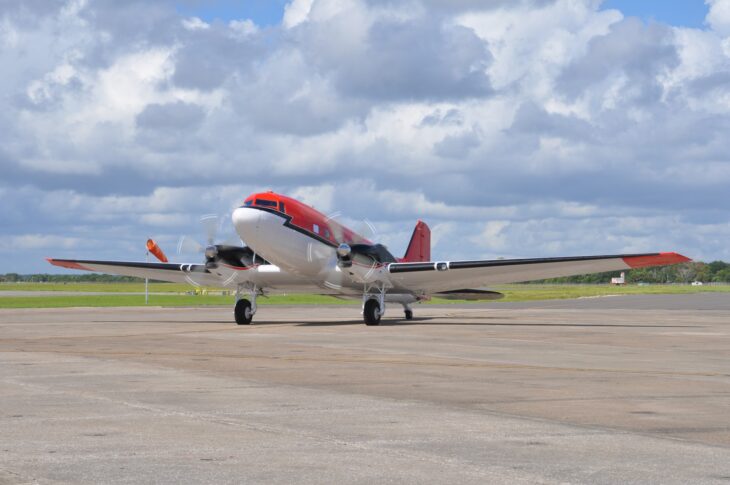

Basler’s 67th conversion was due to roll out in mid-2020, and Wikipedia’s article on the type lists 70 built. At that point the company said it knew of another 150 to 200 airframes that were candidates for conversion.
The BT-67 works at the hard end of the fleet. Its operators include polar research programs from Australia, China and Germany, Kenn Borek Air in Canada, the US Forest Service, and air forces from Colombia to Thailand, where the Royal Thai Air Force uses them for cloud seeding.
Where You Can Still Ride a DC-3
Simple Flying’s 2023 census found no DC-3 in regular scheduled passenger service, only charter and enthusiast flights. Colombia is the exception that comes closest.
In November 2024 a Spotterguide writer flew from Villavicencio to Guerima and Barranco Minas and back on HK-1315, a 1942 ALLAS DC-3, beside indigenous passengers, logging workers, an NGO team and a hold full of cargo.
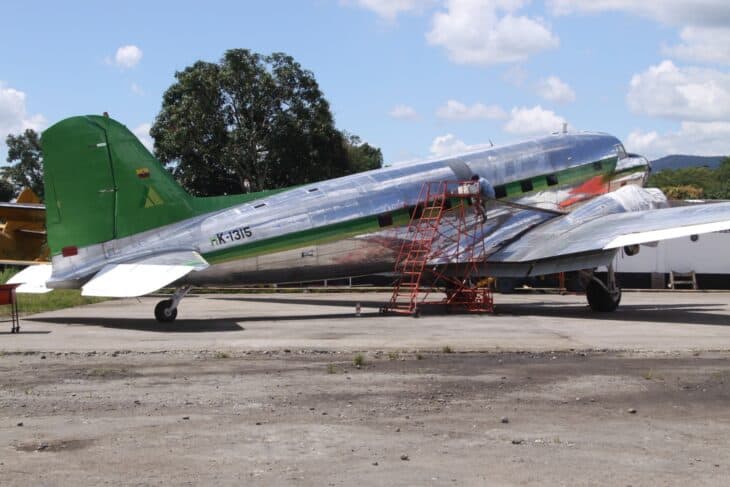

He paid the equivalent of about $400 for the round trip and waited three days for a seat, because the flights run when there is a load rather than on a weekly timetable.
That 1942 airframe is why HK-1315 sits near the top of our ranking of the oldest commercial passenger planes still flying.
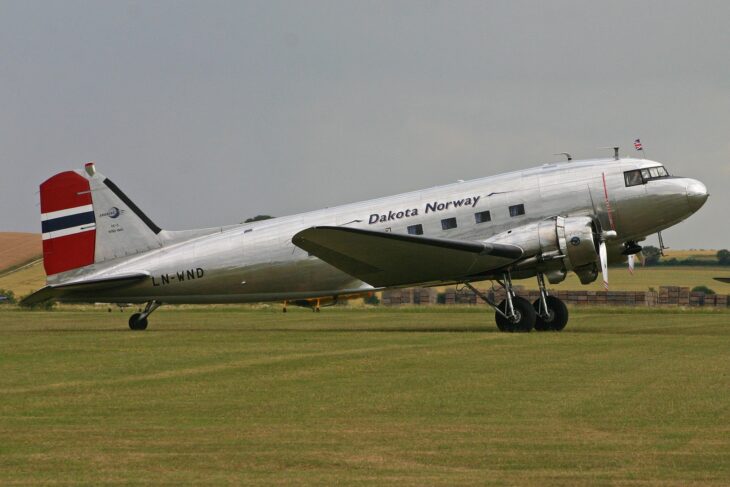
In Europe, Dakota Norway sells tickets on selected tours in its DC-3 LN-WND. It announced on October 17, 2026 that its 2026 season was over, so the next chance is the 2027 season.

One DC-3, 2,620 trips
Dakota Norway’s LN-WND has flown 2,620 trips and 1,526 hours since it arrived in Norway about 25 years ago, the association says.
Further afield, Simple Flying listed FlyDC3 in New Zealand, which offered scenic flights around Auckland and the Hauraki Gulf in “Betsy”, a 1944 DC-3, as of 2023. In the US, the Flagship Detroit Foundation flies what Wikipedia calls the oldest DC-3 still flying to air shows and airport visits.
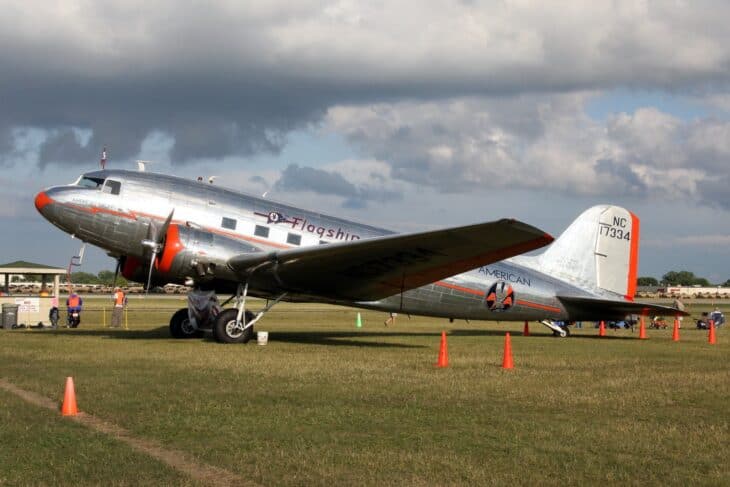
Every one of these depends on volunteers, donors or a niche cargo market, and the list gets shorter. The Dutch Dakota Association ended its weekend sightseeing flights in April 2023. The bigger wartime types have thinned even faster: only three B-17s still fly.
How Many DC-3s Were Built?
The 1-in-100 survival rate looks less grim against the production total. Wartime demand turned a 1935 airliner into a military workhorse, and most of the 16,079 were built as military transports.
| Version | Built | Where |
|---|---|---|
| Military C-47, C-53 and other derivatives | 10,048 | Douglas, United States |
| Lisunov Li-2 | 4,937 | Licence-built in the USSR, 1939 to 1950 |
| Civil DC-3 and DST | 607 | Douglas, United States, to 1943 |
| Showa and Nakajima L2D | 487 | Licence-built in Japan, 1939 to 1945 |
| Total | 16,079 |
Only 607 were built as civil airliners, and civilian production ended in early 1943.
FAQ
Sources and references used for research and fact-checking.
- Simple Flying, How Many DC-3s Are Still Flying?
- Royal Aeronautical Society, The immortal DC-3
- SlashGear, How Many Douglas DC-3 Aircraft Are Still Flying Today?
- Wikipedia, Douglas DC-3
- Wikipedia, Basler BT-67
- El Tiempo, DC-3, los eternos camperos del aire
- Spotterguide, Into the jungle with a legend: flying Colombia's DC-3
- Dakota Norway, LN-WND fra Finland til Norge
- Dakota Norway, Bestill billetter
- Dakota Norway, Dakota Norway
Get the Newsletter
The latest aviation news and stories sent to your inbox.
About the Author

Tim is the owner and lead editor of AeroCorner since 2019, overseeing aviation content covering aircraft, airlines, airports, and the broader aviation industry. Through years of researching, writing, editing, and publishing aviation-focused content, he has developed extensive practical knowledge of commercial aviation and air travel. Based in Asia and a frequent traveler himself, Tim also brings firsthand passenger experience to AeroCorner’s coverage. Outside of publishing, he has also explored aviation firsthand through hands-on flight training in New Zealand.