

Table of Contents
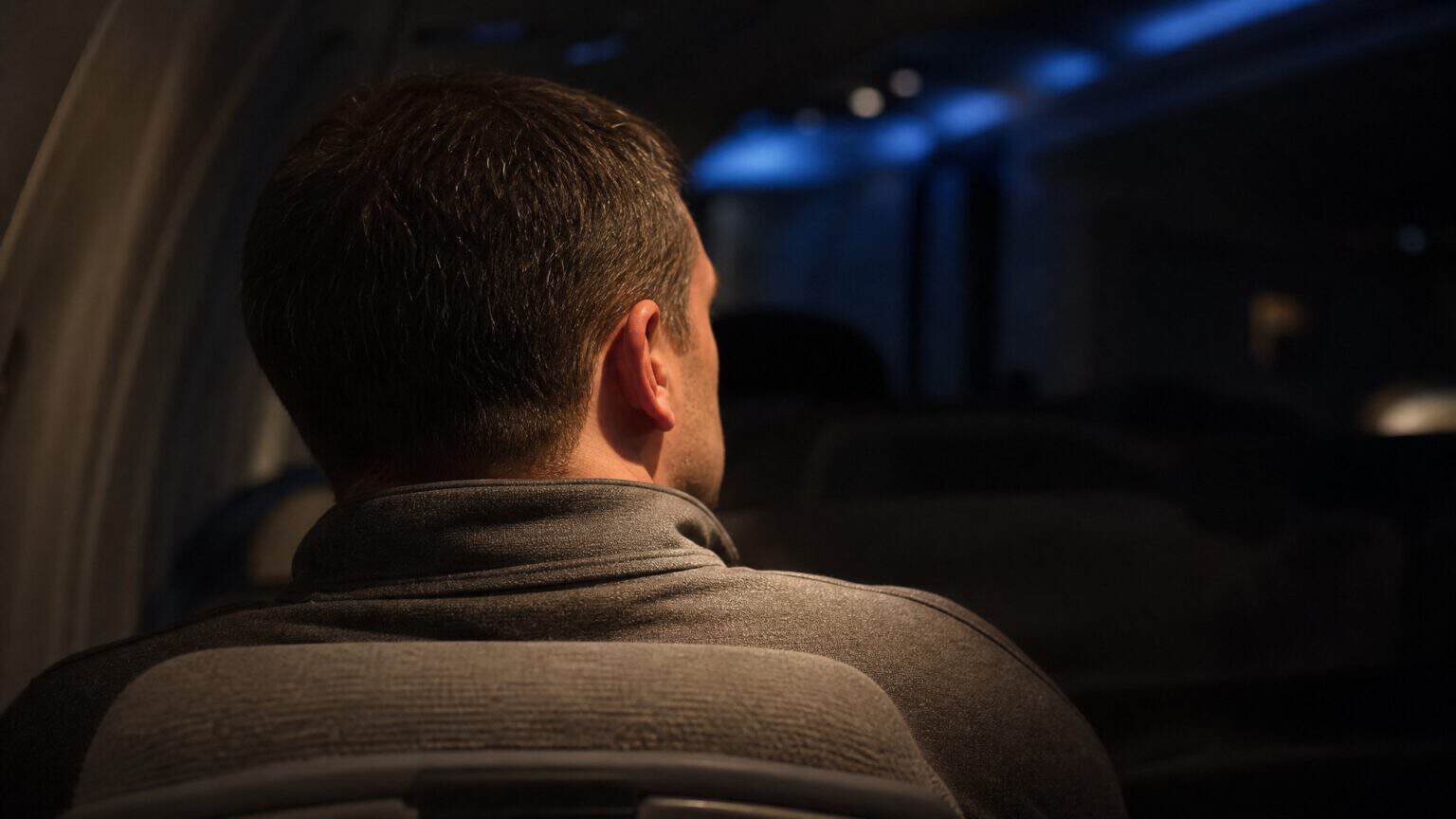
Somewhere between the jet bridge and row 34, plenty of passengers play the same quiet game. Which one of these people is the air marshal? The fit guy in the aisle seat who waved off the drinks cart, or the woman who boarded early and never looked up from her paperback?
The Transportation Security Administration answered the question in a widely shared Facebook post: “You’d never know.” That is true, and it is the point. It also sidesteps the bigger question, which is whether anyone on your flight is an air marshal at all.
On most flights, nobody is. Here is what is actually public about the Federal Air Marshal Service, why the government refuses to say how many flights it covers, and why simple arithmetic still gives the answer away.
Is There an Air Marshal on Every Flight?
No. Federal law lets TSA put air marshals on every passenger flight of a US airline, but it only requires them on flights the TSA Administrator determines present high security risks. Everything else is a question of money and people.
TSA will not say how many marshals it employs or how many flights they fly, and even its budget request to Congress leaves the headcount out. What is public, from that budget, government audits and a few rounds of investigative reporting, is enough to show that the large majority of flights carry no marshal.
The answer at a glance
No. US airlines fly about 29,000 scheduled commercial flights a day (FAA, fiscal 2024), and reporting puts the air marshal workforce at 2,000 to 3,000 people. TSA withholds the real figures as Sensitive Security Information. By our estimate, even on generous assumptions marshals could cover no more than about one flight in 14, weighted toward long-haul and higher-risk flights. A flight without a marshal may still carry an armed pilot or an armed police officer.
The Secret Goes All the Way Down to the Headcount
The Federal Air Marshal Service (FAMS) is the law enforcement arm of TSA, and its budget is public. Congress enacted $808.9 million for it in fiscal 2024, and the administration requested $866.3 million for fiscal 2026, according to TSA’s budget justification.
The number of people that money pays for is not public. A note in the same document says the positions and full-time staff in the air marshal budget line are designated Sensitive Security Information and are left out.
Sensitive Security Information is a label for unclassified material that could compromise aviation safety if released. Government auditors run into the same wall. The public version of GAO’s 2016 review of air marshal deployment omits the specific numbers of air marshals, which TSA had marked secret or sensitive.
So the best outside figures come from reporting. NPR said in 2015 that there were reportedly more than 3,000 marshals. CNN reported in July 2025 that TSA employs between 2,000 and 3,000.
The closest TSA ever came to a coverage number was in 2008. A CNN investigation, built on interviews with more than a dozen marshals and pilots, found that fewer than 1 percent of the 28,000 daily US commercial flights had a marshal aboard, possibly as few as 280.
A senior air marshal official told CNN that figure “grossly understates coverage by an order of magnitude,” and that the true number was “four digits.” TSA’s public rebuttal said marshals covered “thousands per day.” Marshals told CNN their own managers had told them at least 5 percent of flights were covered.
Take TSA’s side of that argument at face value and the conclusion does not change. Thousands of flights out of 28,000 still leaves most of them without a marshal.
The Maths Says Most Flights Have No Marshal
You do not need the classified numbers to see the shape of the answer. Start with demand: the FAA counted 10.7 million scheduled commercial flights in fiscal 2024, which works out to roughly 29,000 a day.
Now supply. Take the top of CNN’s range, 3,000 marshals. GAO found that in 2019 marshals got eight regular days off in each 28-day roster period, so at most about 2,100 are available on any given day, before training, leave and ground assignments.
Marshals tend to work in teams, and the pilots’ union ALPA notes there are frequently several on one flight. Assume pairs, each flying two flights a shift, an out-and-back that fits the 6.5 to 7.5 hour average domestic shift GAO found in FAMS’s own reports. That gives roughly 2,100 flights a day.
That is about one flight in 14, and it is a ceiling, not an estimate. International missions tie up a team far longer than a domestic hop, and GAO found their shifts sometimes ran past 18 hours. Marshals also work ground duties at airports and national events.
Real coverage is lower than the ceiling, and it is spread unevenly. That squares with TSA’s 2008 claim of thousands of flights a day, and with the marshals who told CNN the real figure was far smaller.
How Marshals Pick Which Flights to Board
Coverage is not random, although parts of it are made deliberately unpredictable. GAO’s 2016 review describes a category of flights with “known risk,” where TSA or FAMS knows of an increased threat, that get priority.
One is Special Mission Coverage: a flight on which a known or suspected terrorist is ticketed. Another is a surge after a specific threat, like the extra coverage of US-bound flights after the August 2006 liquid explosives plot. Large planned events, such as presidential inaugurations, also draw marshals.
Until 2018, the law also named nonstop, long-distance flights, the kind targeted on September 11, 2001, as a priority. Congress struck that clause and asked instead for a risk-based deployment strategy.
For international flights, FAMS uses software called Intelligent Randomization in Scheduling to scramble which flights it covers so no pattern emerges.
Abroad, marshals also need the host country’s consent. Since a 2018 law, agreements with foreign governments on marshals flying to and from the US must be in writing, with a narrow exception.
GAO’s critique was pointed. When splitting its annual resources between domestic and international flights, FAMS weighed its travel budget and headcount but not risk, and tried to maximize the total number of flights it could cover. By August 2024, GAO said FAMS and TSA had implemented 17 of the 20 recommendations it had made since 2016.
“Covered” Does Not Always Mean an Air Marshal
A flight has more ways to carry an armed, trained person than a marshal in the cabin. The most common one sits up front.
Since 2003, volunteer airline pilots deputized as Federal Flight Deck Officers have carried firearms on the flight deck, a program we explain in can pilots carry guns. Their authority stops at the cockpit door. ALPA says they fly about 1 million missions a year, which is roughly 2,700 flights a day.
They are also far cheaper, at least by the union’s count. ALPA’s aviation security chair put the cost of armed-pilot coverage at $22 to $25 per mission, against $3,000 to $3,500 per mission for each federal air marshal.
Then there are police officers and federal agents flying armed on duty. Under 49 CFR 1544.219, they must tell the airline at least an hour before departure, the airline must tell the captain where each one is sitting, and no one may serve them alcohol.
The same rule requires the airline to tell every armed officer aboard where the others are sitting, air marshals included. The other armed officers on your flight may know exactly where the marshal is. You never will.
Whether any of this counts toward TSA’s coverage figures is murky. Marshals and pilots told CNN in 2008 that the agency treated a flight as “covered” whenever an armed, trained person was aboard, armed pilots included. The TSA official CNN interviewed said “covered” meant a marshal was on board.
From 18 Sky Marshals to Thousands
The size and focus of the service have swung with each era’s threat, and with whatever else Washington needed marshals for.
1961
The first sky marshals. After the first hijacking of a US airliner on May 1, 1961, President Kennedy assembles a first cadre of 18 sky marshals.
1970
A mass expansion. With hijackings to Cuba on the rise, the US Customs Service launches a greatly expanded sky marshal program with 1,784 agents.
1974
The FAA takes over. The Customs sky marshals are phased out, and the job passes to specially trained FAA personnel.
September 2001
33 marshals. On the day of the attacks, the service has 33 air marshals, and according to ProPublica none of them fly domestic routes.
After 9/11
The hiring surge. More than 4,000 air marshals are hired for the newly created TSA.
2006
The dress code goes. Marshals are released from a rule requiring jackets and collared shirts, which they said blew their cover.
2019 to 2023
Border duty. TSA lends marshals to Customs and Border Protection. The DHS inspector general counts 1,114 deployed to the southwest border.
April 2020
The pandemic. As airline schedules collapse, the number of flights marshals cover falls 90% against the pre-pandemic monthly average, then recovers by June.
June 2025
Quiet Skies ends. DHS scraps a TSA program that flagged travelers who were not on watchlists for enhanced screening by air marshals, citing a $200 million annual cost.
Mid-2025
Deportation flights. CNN reports that about 200 marshals have been redeployed to guard ICE flights since June. TSA said the move had not affected marshal deployment on commercial flights.
Each of those detours raised the same question, and neither side could settle it with public numbers. In 2024, the DHS inspector general found no evidence in flight data that border deployments had cut coverage. The marshals it surveyed felt that they had.
The Myth: Someone Is Always Watching
The myth
Every flight has an air marshal, and a sharp-eyed passenger can spot one. Neither is true. Most flights carry no marshal at all. Marshals have been free to dress to blend in since 2006, and a 2004 law orders the service to protect their anonymity.
Spotting them used to be easier. Until 2006, marshals had to wear jackets and collared shirts, and a veteran marshal told NPR the rule made them “stand out like sore thumbs” to passengers and to anyone watching for them.
A December 2004 law directs the service to keep protecting marshals’ anonymity, and TSA does not confirm whether one is on any particular flight. The confident passenger who “always knows” is usually guessing.
That uncertainty is the real product. A hijacker cannot know which flights carry a marshal, an armed pilot or an armed officer, so every flight carries the risk of one. ALPA makes the same case for armed pilots: an attacker “can never know for sure” whether one is aboard.
Critics say deterrence is all the program has ever been able to show. In 2015, Rep. John Duncan told NPR he believed that at their height marshals made four arrests in one year, which he put at over $200 million per arrest.
Duncan, quoting a former member of Congress, argued that the fix that mattered was locking the cockpit door, the change behind the reinforced cockpit doors fitted after 9/11. In 2024, GAO’s Tina Won Sherman told a House panel that it has been difficult to understand the marshals’ ability to be effective as a security countermeasure.
Both sides are arguing about something nobody can measure: the attack that never happened. It is also why TSA guards the coverage number so closely. Its stated reason for the secrecy is not to “tip our hand to terrorists,” because a published figure would tell an attacker their odds.
So the next time you catch yourself sizing up the quiet man in 3C, the odds say he is just a quiet man. Your flight is protected far more reliably by a locked cockpit door, perhaps an armed pilot you will never see, and flight attendants trained to be ready the instant something goes wrong.
And if a marshal is aboard, you will not know. That is the one part of the program that works exactly as designed.
Sources and references used for research and fact-checking.
- U.S. Department of Homeland Security, Transportation Security Administration Budget Overview, Fiscal Year 2026 Congressional Justification
- U.S. Government Accountability Office, Federal Air Marshal Service: Actions Needed to Better Incorporate Risk in Deployment Strategy (GAO-16-582)
- U.S. Government Accountability Office, Aviation Security: Federal Air Marshal Service Has Taken Steps to Address Workforce Issues, but Additional Actions Needed (GAO-20-125)
- U.S. Government Accountability Office, Federal Air Marshal Service: Recommendations to Address Organizational Performance and Workforce Challenges Largely Implemented (GAO-24-107824)
- U.S. Government Accountability Office, From Hijacking to COVID-19: 60 Years of the Federal Air Marshal Service
- Federal Aviation Administration, Air Traffic by the Numbers, FY2024
- CNN, Sources: Air marshals missing from almost all flights
- CNN, Air Marshals, reassigned from commercial flights, serve sandwiches and check lice on ICE deportation flights
- NPR, Should We End The Controversial Air Marshal Program?
- NPR, Air Marshals Go More Casual with Dress Code
- Air Line Pilots Association, The Last Line of Defense
- Legal Information Institute, Cornell Law School, 49 CFR 1544.219 - Carriage of accessible weapons
- Legal Information Institute, Cornell Law School, 49 U.S. Code 44917 - Deployment of Federal air marshals
- ProPublica, History of the Federal Air Marshal Service
- Wikipedia, Federal Air Marshal Service
- U.S. Department of Homeland Security, Secretary Noem Ends Politicized TSA Watchlist Program
- House Committee on Oversight and Government Reform, Letter to DHS and TSA on the Quiet Skies program
- Government Executive, TSA hasn't assessed whether deploying air marshals to the border negatively impacts air security, IG says
- FEDagent, Air Marshal Association Renews Push to Separate from TSA
- Yahoo, TSA reveals how to spot an air marshal on your flight
Get the Newsletter
The latest aviation news and stories sent to your inbox.
About the Author

Tim is the owner and lead editor of AeroCorner since 2019, overseeing aviation content covering aircraft, airlines, airports, and the broader aviation industry. Through years of researching, writing, editing, and publishing aviation-focused content, he has developed extensive practical knowledge of commercial aviation and air travel. Based in Asia and a frequent traveler himself, Tim also brings firsthand passenger experience to AeroCorner’s coverage. Outside of publishing, he has also explored aviation firsthand through hands-on flight training in New Zealand.