

Table of Contents
Mexico’s full-service flag carrier and the low-cost airline that now flies the most US-Mexico seats are moving in opposite directions, on exactly the flights Americans take.
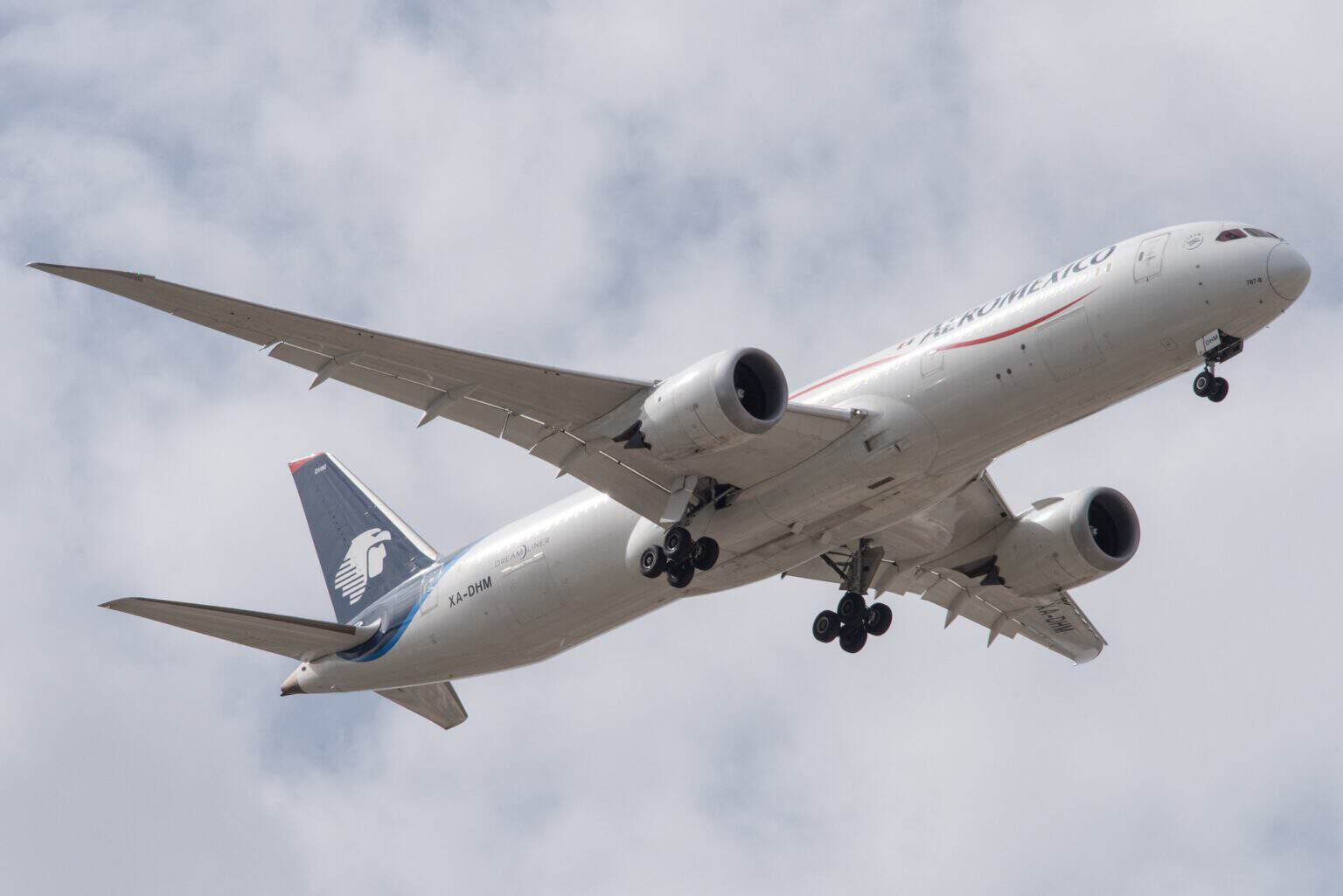
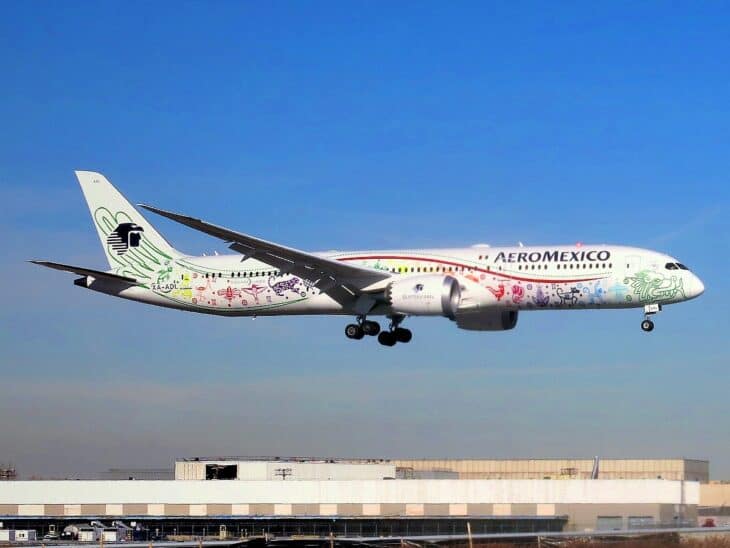
Aeromexico unveiled new Premier One Suites, with sliding doors, and its first premium economy cabin for the Boeing 787-9 on Nov. 19, 2026. The first refitted jet is due in 2029.
Volaris went the other way, and it is winning on volume. It flew more seats between the US and Mexico than any other airline in summer 2026, and in the third quarter its average passenger paid $55 in base fare while the airline collected $61 per passenger in extras.
So which Aeromexico vs Volaris ticket is worth it depends on one thing: how much you are carrying, and how much your time is worth.
Why Aeromexico is spending on suites while Volaris sells seats bare
Aeromexico’s money increasingly comes from the front of the plane. Premium cabins brought in 42% of its passenger revenue in the third quarter of 2026, a point higher than a year earlier, according to its results and FlightGlobal.
CEO Andres Conesa announced the new cabins at the APEX FTE Expo in Singapore. The standard suite is built on Recaro’s R7 seat platform in a 1-2-1 layout, with direct aisle access and 19-inch screens, and the London and Atlanta studio NewTerritory designed the cabin.

The front row becomes Premier One Suites Plus, where the footwell turns into a second seat and the table seats two. Behind it comes Premier, a premium economy cabin of about 25 seats with more legroom and 16-inch 4K screens.
Volaris runs the opposite business. Its Zero fare includes only a personal item that fits under the seat; “carry-on and checked baggage are not included in this fare,” Volaris says.
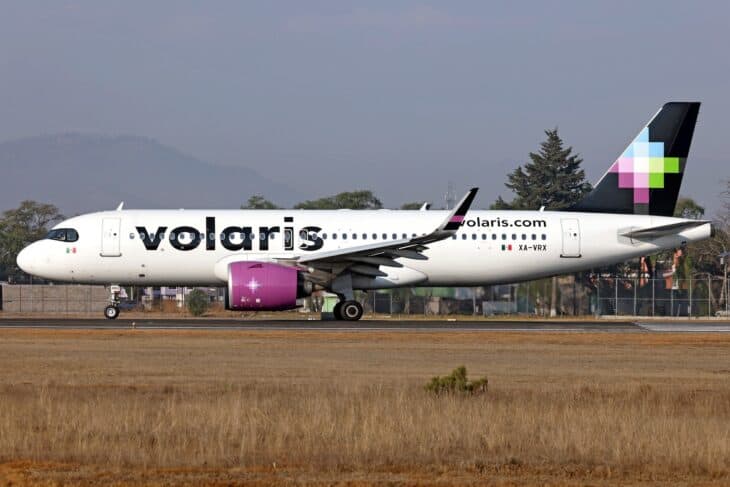
That is the ultra-low-cost model in its purest form. The fare buys the seat, and almost everything else is sold separately, which is why extras made up 52.8% of Volaris’ operating revenue in the third quarter.
Every Volaris seat is economy. It has no business class to refit, and its 154 jets average 201 seats each.
Aeromexico vs Volaris by the numbers
The measures below come from each airline’s third-quarter 2026 results, its fare rules, and Cirium’s on-time data. Fees are the published maximums and change by route, season and when you pay.
| Measure | Aeromexico | Volaris |
|---|---|---|
| Fleet (Sept. 30, 2026) | 170 (136 mainline plus 34 E190s at Aeromexico Connect) | 154, all Airbus A320 family |
| Passengers, Q3 2026 | 6.16 million (down 3.2%) | 8.98 million (up 14.3%) |
| Load factor, Q3 2026 | 88.3% | 85.7% |
| Cabins | Business and economy (premium economy from 2029) | Economy only |
| Carry-on in the cheapest fare | Included, carry-on plus personal item up to 22 lb (10 kg) | Not included on Zero; up to $100 at booking or $140 at the airport, US-Mexico |
| On-time | 90.02% of flights in 2025, world’s most on-time global airline | 85.32% in Oct. 2025, fifth in Latin America |
Volaris is carrying more people and growing faster. Its 8.98 million passengers in the quarter beat Aeromexico’s 6.16 million, and Aeromexico’s total fell 3.2% as it held capacity back while jet fuel hit record highs.
The cross-border market is where Volaris broke through. OAG schedule data cited by Aviation Week gave it 21.4% of US-Mexico seats in summer 2026, about 5.45 million two-way seats, ahead of American at 19.6% and United at 16.6%.
A year earlier Volaris was second. It grew about 12% while the overall US-Mexico market shrank 6.7% to roughly 25.5 million seats.
Punctuality is Aeromexico’s clearest edge. Cirium counted 90.02% of its 2025 flights arriving within 15 minutes of schedule, its second straight year as the world’s most on-time global airline, and its third-quarter 2026 on-time departure rate was 90.9%.
Which one is actually cheaper for a US-Mexico trip
The headline fare is the wrong number to compare. Volaris’ average base fare of $55 sat beside $61 per passenger in other revenue in the third quarter, so the typical Volaris traveler paid more for everything else than for the seat.
A traveler with one full-size cabin bag pays the difference on Volaris. On a Zero fare between Mexico and the US, Upgraded Points lists that bag at up to $100 at booking and up to $140 if it is added at the airport or gate.
Aeromexico includes a carry-on of about 22 x 16 x 10 inches (55 x 40 x 25 cm) plus a personal item on its cheapest fare, up to 22 pounds (10 kg) combined. Checked bags are a different story: on US-Mexico flights, Aeromexico economy fares other than Premier include none, and Classic fares pay $30 for the first.
Volaris’ Plus fare closes most of that gap. It bundles a carry-on, a checked bag up to 55 pounds (25 kg) and unlimited flight changes, so a family hauling luggage should price Plus, not Zero.
The rule of thumb is simple. With only a backpack, Volaris Zero is very hard to beat on price; with a roller bag, a tight connection or a meeting at the other end, Aeromexico’s included bag and 90% on-time record are worth real money.
What changes next for both airlines
Aeromexico’s refit is slow. Its 17 787-9s get the suites, and the eight 787-8s inherit the reverse-herringbone seats now on the 787-9 plus their own premium economy, with One Mile at a Time reporting the work running from 2029 to 2031.
Premium seats on each refitted Boeing 787-9 rise from 36 to 61, a 69% jump. Aeromexico expects 30 787s by the end of the decade, 22 of them 787-9s, and its joint venture with Delta survived after a federal appeals court vacated the DOT order ending it on Aug. 20, 2026.
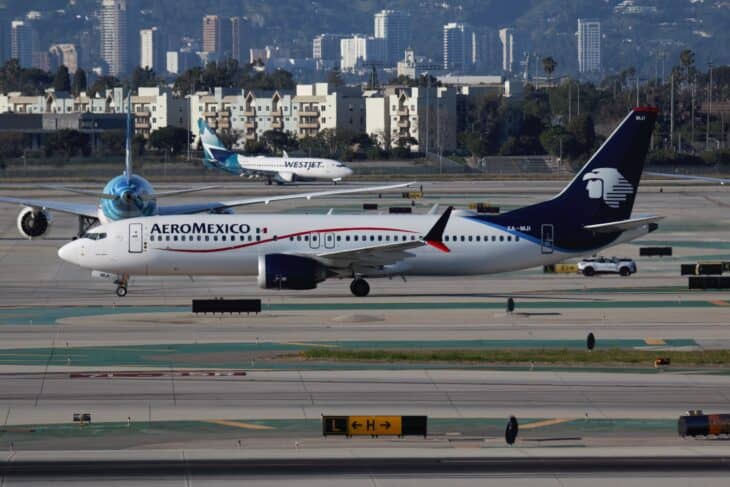
Until 2029, the business cabin a US flyer gets is today’s, and most of the fleet never carried a suite at all: 111 of Aeromexico’s 136 mainline jets are 737s, led by 47 Boeing 737 MAX 8s. For where the new suite could land against rivals, see our ranking of the best business class airlines.

Volaris is still digging out of Pratt & Whitney engine inspections that keep part of its Airbus A320neo family on the ground. In February it expected about 25 jets still grounded at the end of 2026, and planned to shrink to 149 aircraft by December even as the number it can actually fly rises.
The bigger change is ownership. Volaris and Viva Aerobus agreed a merger of equals in December 2025, keeping both brands, and in its third-quarter 2026 results Volaris still expected the deal to close in 2026, subject to regulators in Mexico, the US and Colombia.
The US has eased its side too. On Oct. 16, 2026, the DOT lifted the freeze on new Mexico City routes that had blocked plans by Aeromexico, Volaris and Viva, so both airlines can file again.
That leaves the cross-border market split in two. One airline is betting that Americans will pay for a door on a seat, and the other is already proving that millions will pay for nothing but the seat.
Sources and references used for research and fact-checking.
- FlightGlobal, Aeromexico to introduce premium economy and business-class suites with 787-9 refresh
- One Mile at a Time, Aeromexico 787s Get Makeover With New Business Class, Premium Economy
- Grupo Aeromexico via Finviz, Aeromexico Reports Unaudited Third Quarter 2026 Results
- CAPA Centre for Aviation, Aeromexico offsets high fuel prices with moderated capacity deployment in 3Q2026
- Volaris via Finviz, Volaris Reports Financial Results for the Third Quarter 2026
- Volaris, Fare types
- Upgraded Points, Volaris Baggage Fees
- Upgraded Points, Aeromexico Baggage Fees
- CabinZero, Aeromexico Airlines Baggage Allowance Guide
- Aviation Week, Volaris Builds Guadalajara Network As Mexico-U.S. Share Grows
- The Points Guy, The most on-time airlines (and airports) in the world in 2025
- Aviacionaldia, Cirium: most punctual airlines in October 2025
- FlightGlobal, Volaris expects fewer GTF-related aircraft groundings
- DLA Piper, Volaris-Viva Aerobus merger
Get the Newsletter
The latest aviation news and stories sent to your inbox.
About the Author

Tim is the owner and lead editor of AeroCorner since 2019, overseeing aviation content covering aircraft, airlines, airports, and the broader aviation industry. Through years of researching, writing, editing, and publishing aviation-focused content, he has developed extensive practical knowledge of commercial aviation and air travel. Based in Asia and a frequent traveler himself, Tim also brings firsthand passenger experience to AeroCorner’s coverage. Outside of publishing, he has also explored aviation firsthand through hands-on flight training in New Zealand.