Passenger Turbo Props
Short to medium range airliner introduced in 1951
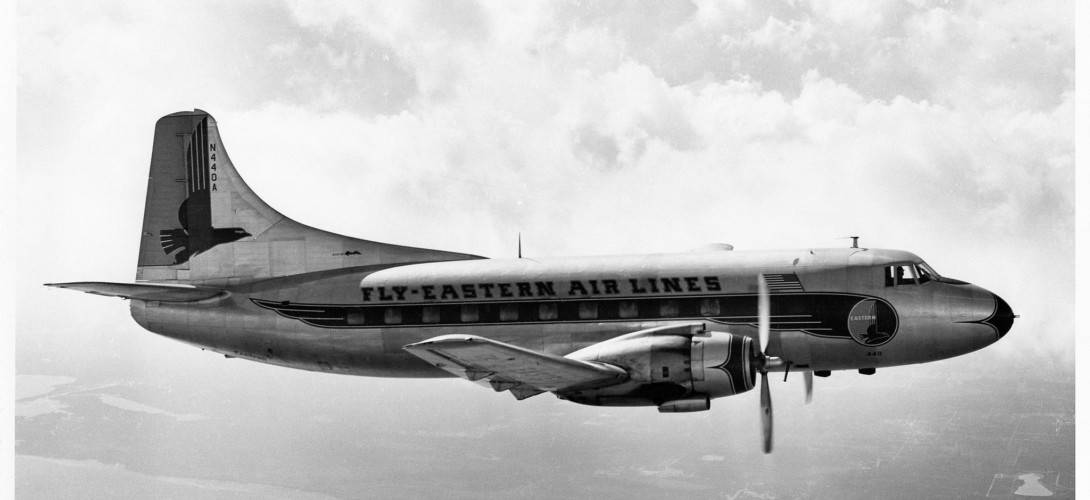
The Martin 4-0-4 was designed and built by the Glenn L. Martin Company as a pressurized passenger short to medium range airliner introduced in 1951. It was developed from the Martin 2-0-2 and was produced from 1951 to 1953. On October 21, 1950, Martin 4-0-4 conducted its maiden flight, and aside from being an airliner, it was also used by the United States Coast Guard and the United States Navy by the designation RM-1G.
Live Fleet Activity (M404)
Fetching live data…
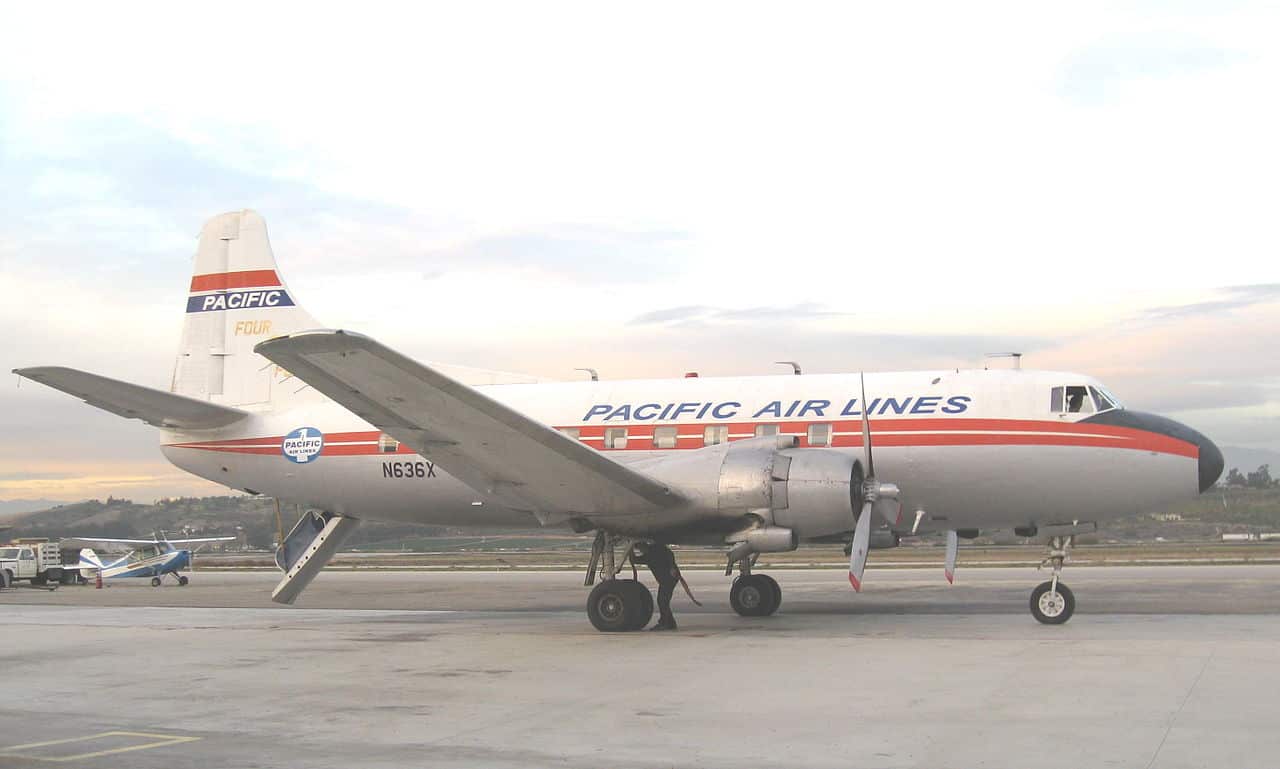
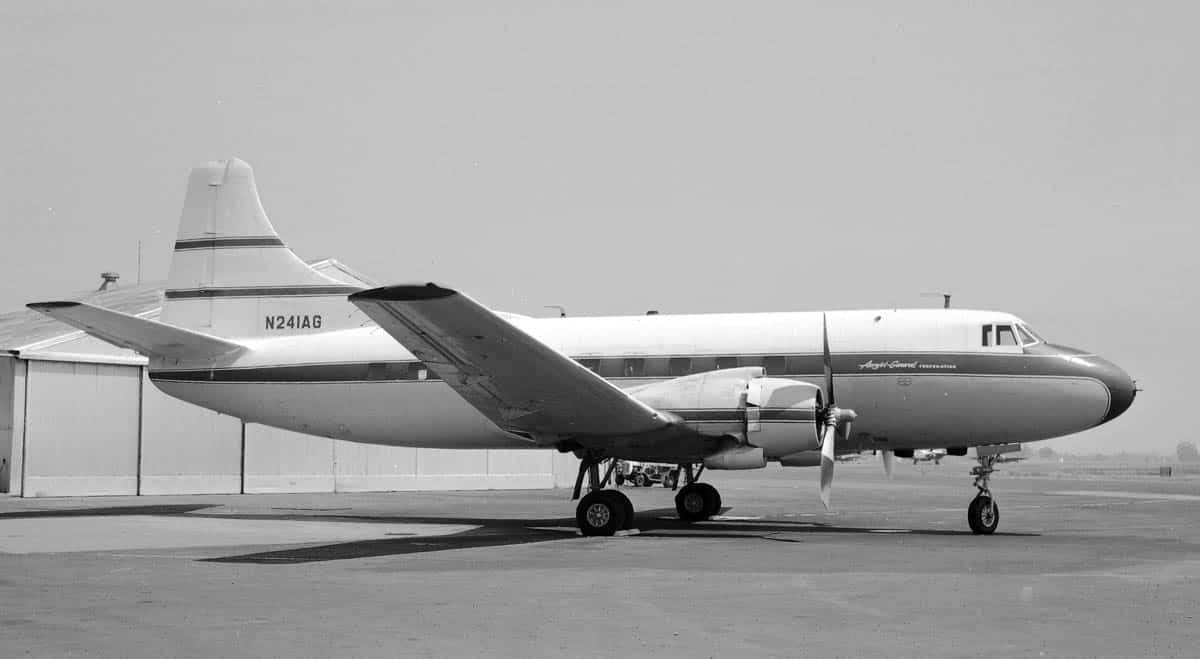


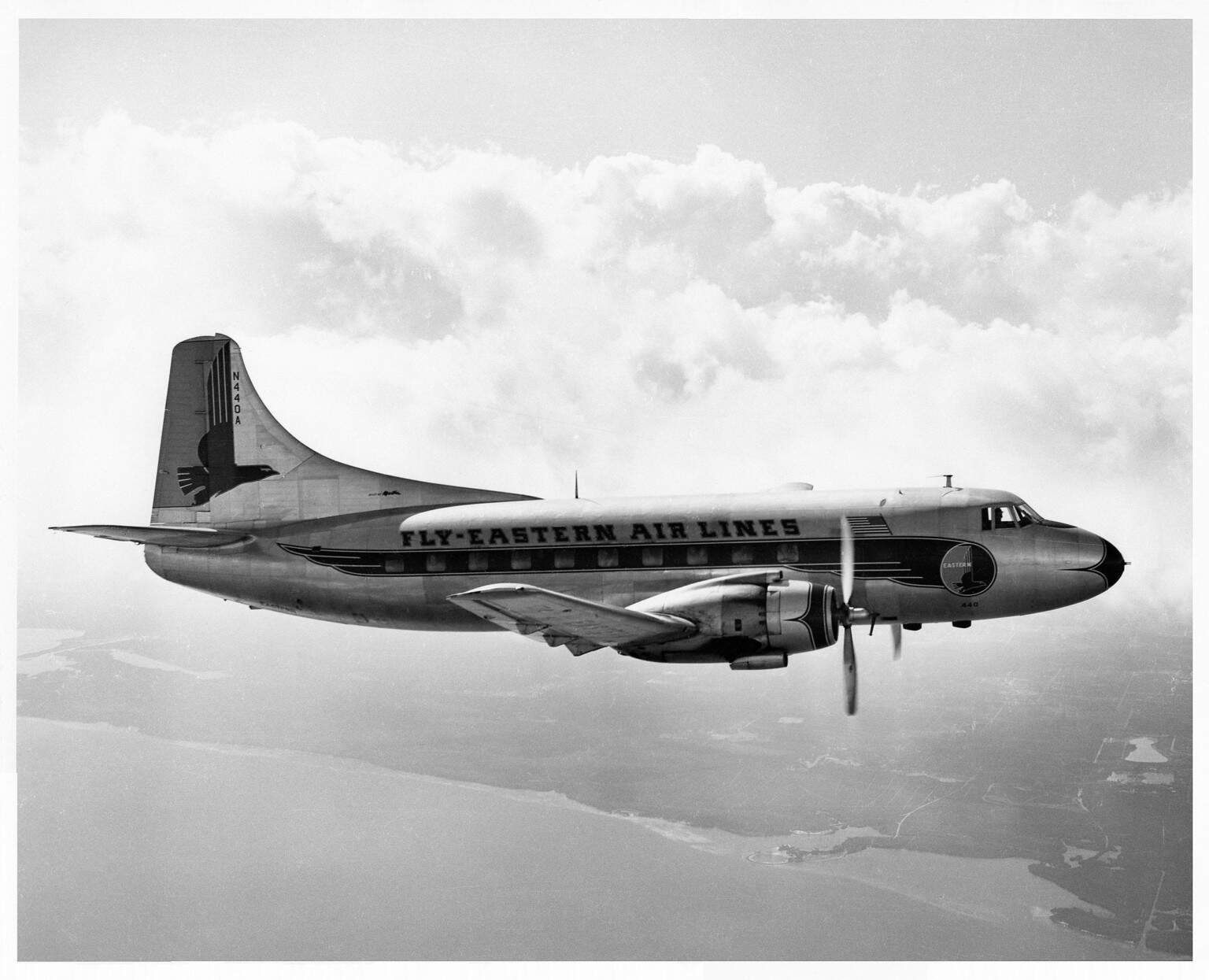
The Martin 4-0-4 emerged out of the Martin 2-0-2, but with pressurization, restrengthened wings, and a longer fuselage. Similar to its antecedent, the 4-0-4 was built as a cantilever monoplane fitted with a cantilever tail unit. It was also equipped with an airstair located in the lower tail section so the passengers may board and alight the aircraft easily. On October 21, 1950, the aircraft took to the air for the first time. It was produced from 1951 to 1953 with a total of 103 4-0-4s built.
The Martin 4-0-4 can accommodate three to four crew members and up to forty passengers. It has an exterior length of 22.73 meters, an exterior height of 4.7 meters, a tail height of 8.6 meters, and a fuselage width of 2.9 meters. The retractable undercarriage has a wheelbase of 7.3 meters. It has a wingspan of 28.42 meters and a wing area of 80.3 square meters. The empty weight is 13,211 kg and the maximum takeoff weight is 20,366 kg. It has a maximum landing weight of 18,231 kg, a maximum payload of 4,050 kg, and a fuel tank capacity of 2,000 kg.
The Martin 4-0-4 is fitted with two Pratt and Whitney R-2800-CB16 eighteen cylinder two-row air-cooled radial engine with 2,400 horsepower of takeoff thrust each and 1,800 horsepower for normal thrust. The engine drives a three-bladed Hamilton Standard 2H17K3-48R propeller. The aircraft has a maximum speed of 271 knots at 14,500 feet, a cruise speed of 240 knots at 18,000 feet, and a stall speed of 70 knots at sea level. It has a travel range of 940 nautical miles and a ferry range of 2,300 nautical miles. The Martin 4-0-4 can fly up to 29,000 feet and can climb at a rate of 1,905 feet per minute. The takeoff and landing distance to and from 15 meters is 600 meters and 530 meters, respectively.