Twin Turboprops
Beechcraft King Air C90gti
ICAO: BE9L
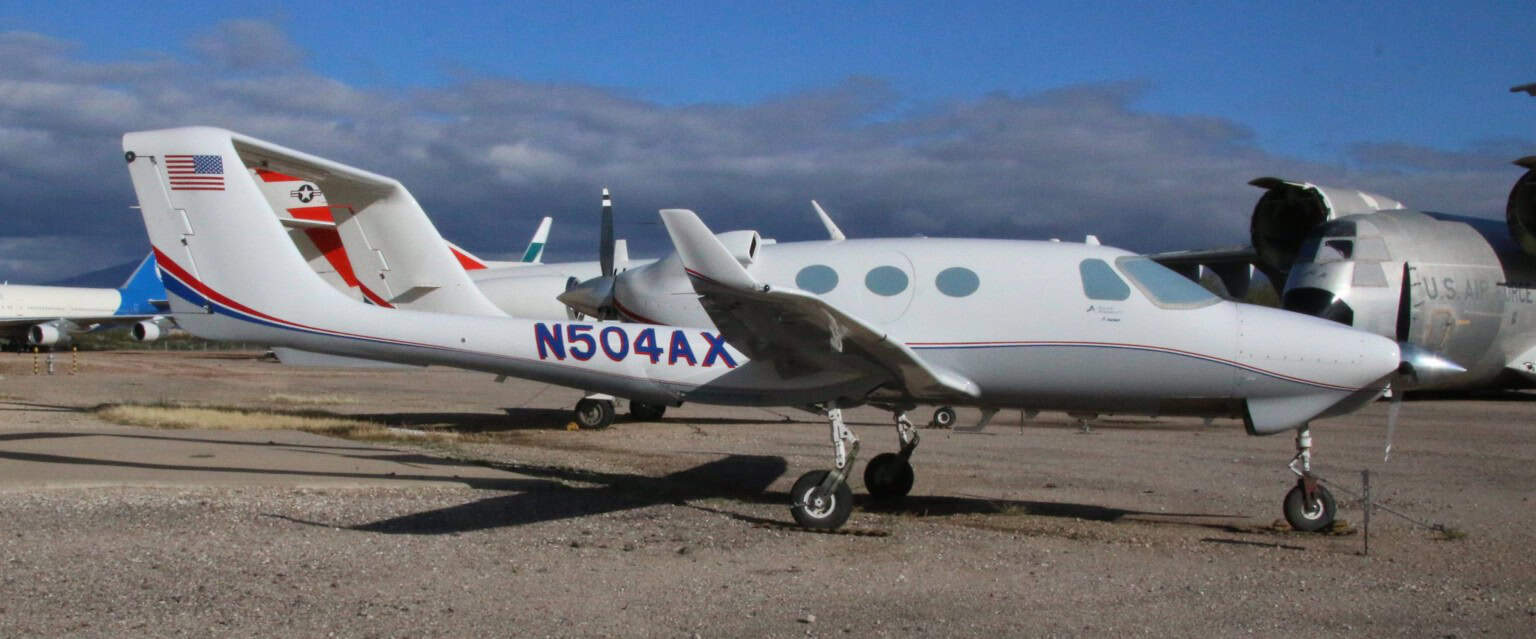
The twin-engine push-pull aircraft built with a composite centerline configuration.
The latest aviation news and stories sent to your inbox.
The Adam A500 was a composite twin-engine aircraft designed with a centerline thrust layout. Introduced in the early 2000s, it aimed to combine redundancy with aerodynamic efficiency. The program ended before large-scale production.
Live Fleet Activity (A500)
Fetching live data…
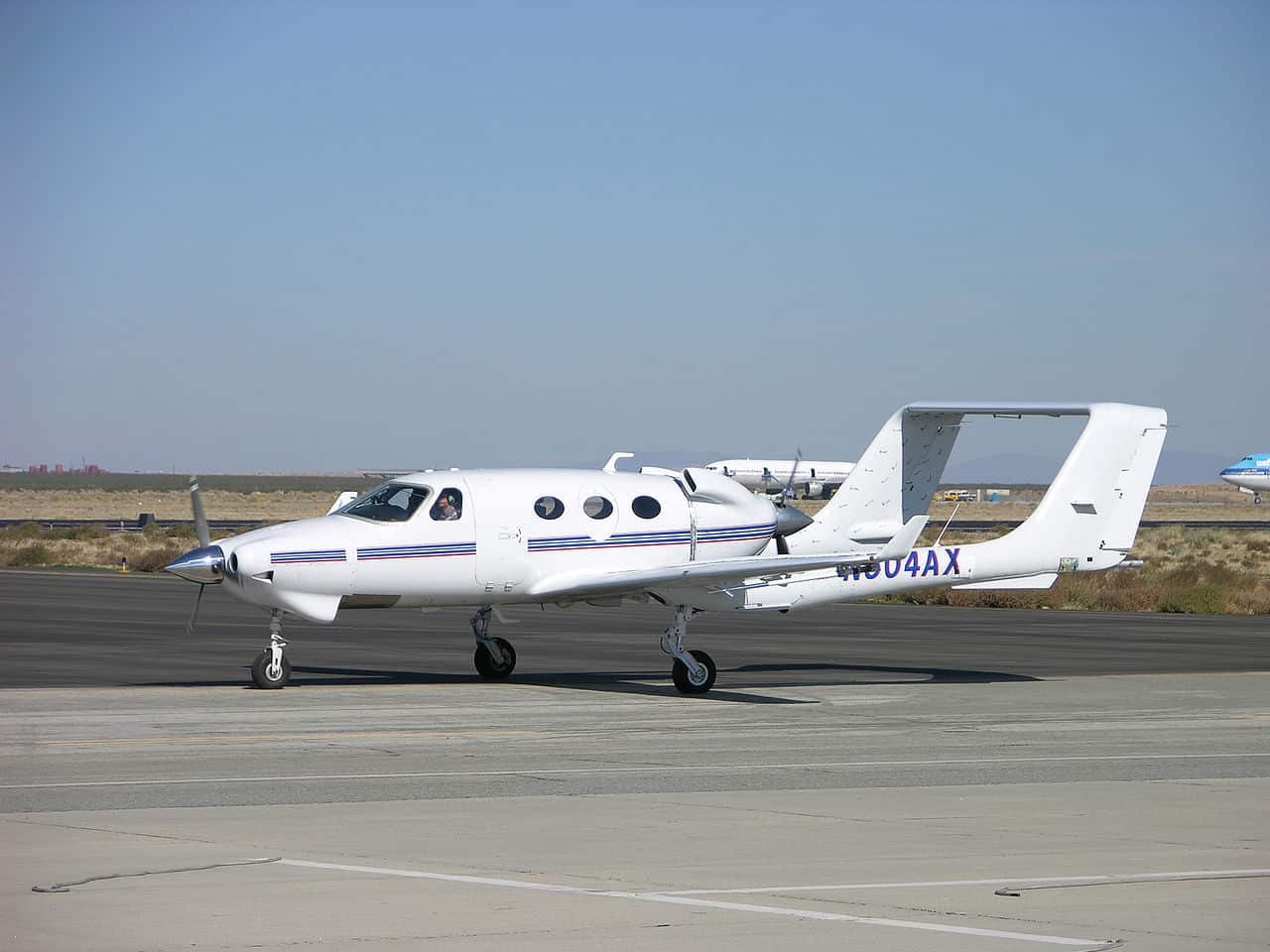
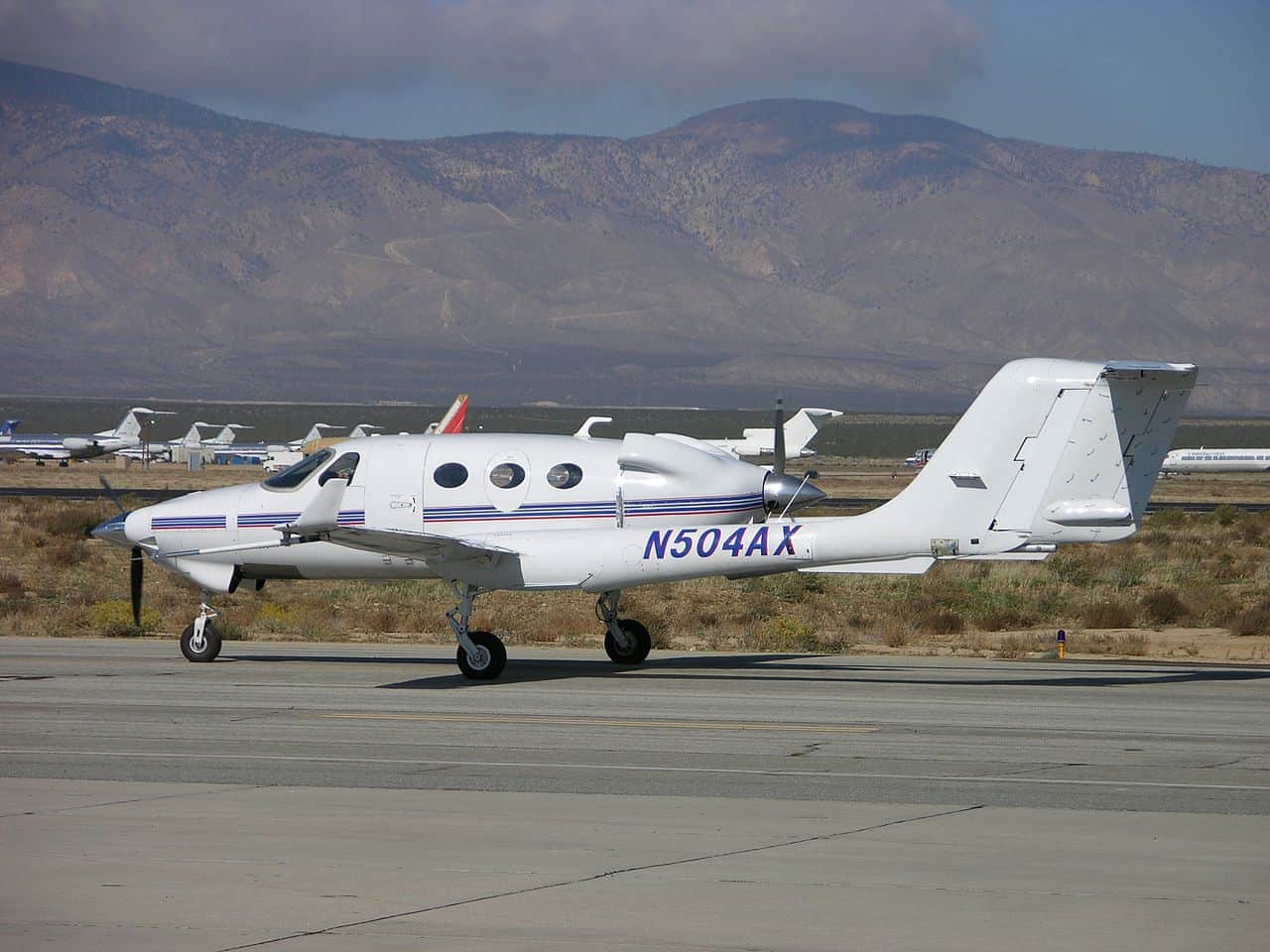
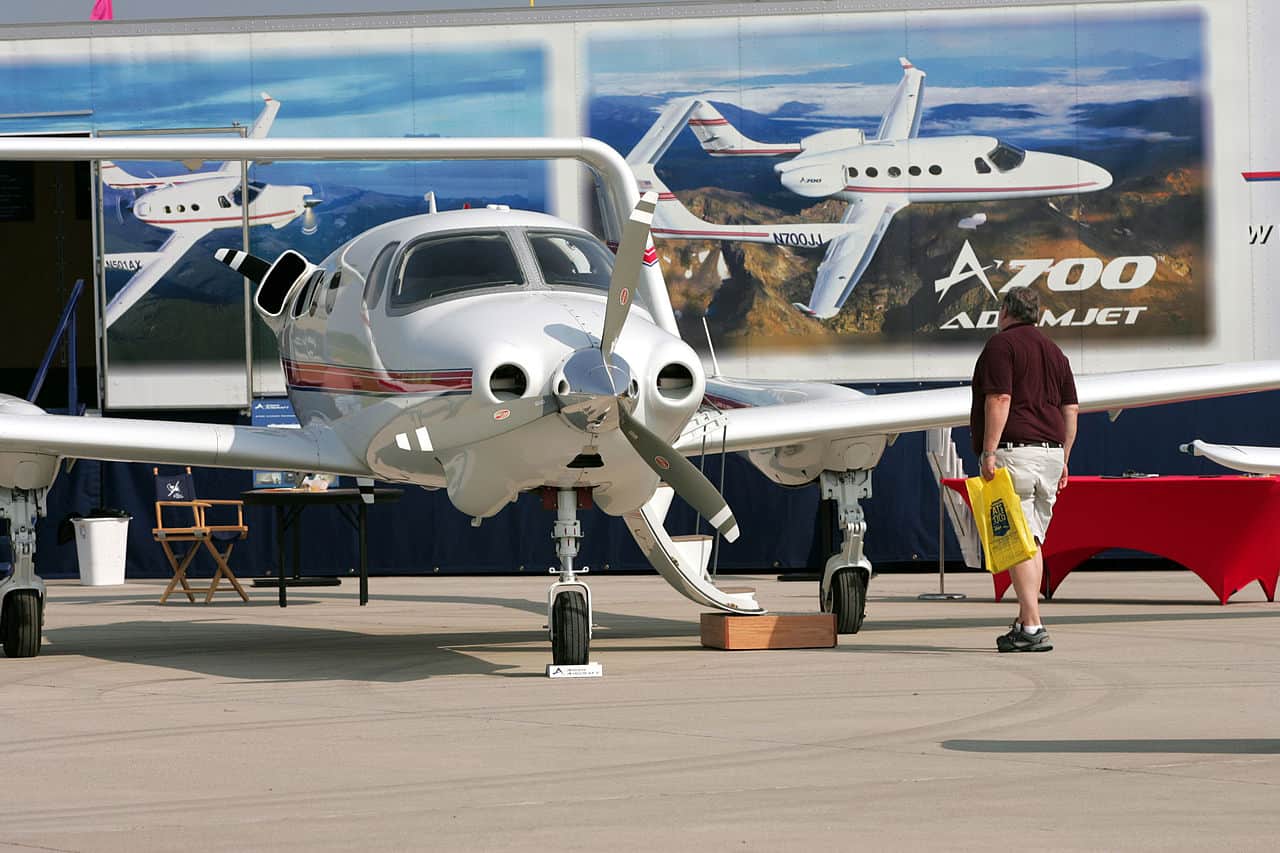
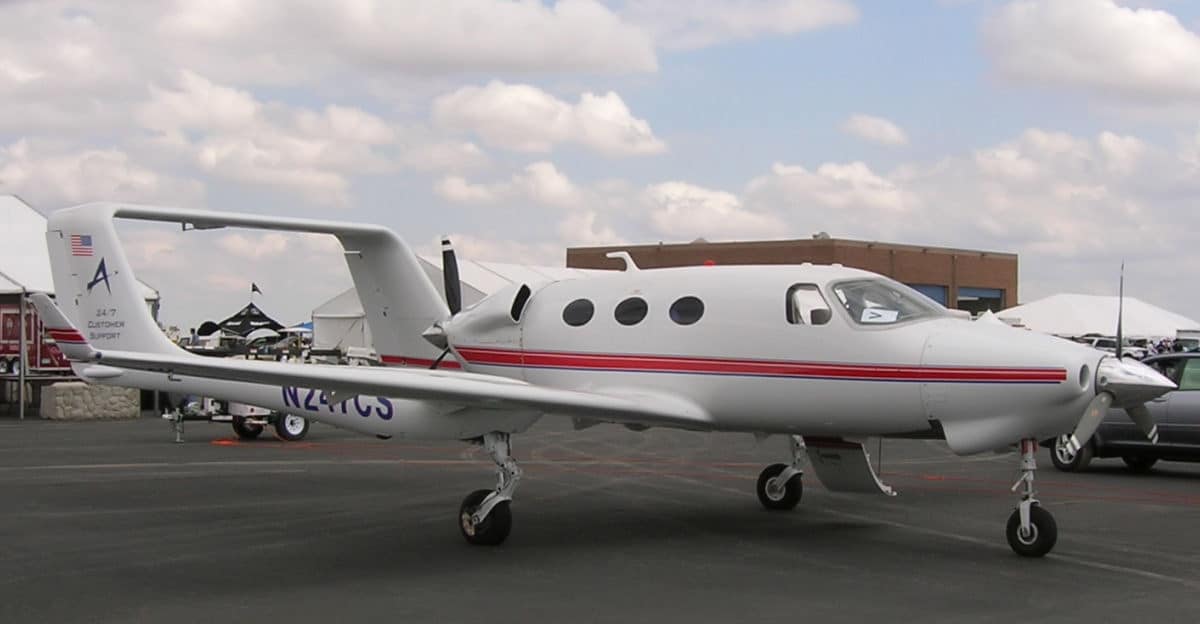
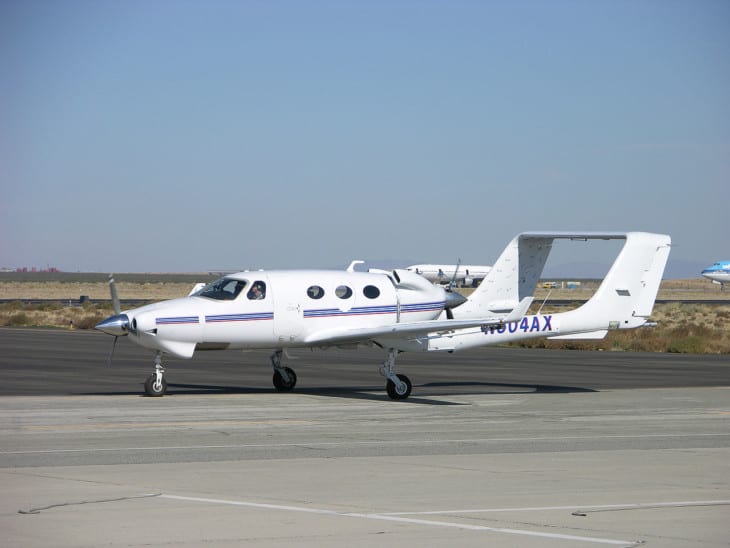
The A500 first flew in 2002 and entered limited production in the mid-2000s. It featured a push-pull engine configuration similar to earlier centerline thrust designs. The aircraft employed composite construction and modern avionics for its time.
Powered by two Continental IO-550 piston engines producing approximately 310 horsepower each, the A500 cruises at around 230 knots (425 km/h). Maximum takeoff weight is roughly 4,350 pounds (1,973 kg). The cabin seats four to six occupants depending on configuration.
Financial difficulties led to the manufacturer’s bankruptcy in 2008. Only a small number of aircraft were completed. The A500 remains a notable example of innovative general aviation design during the composite aircraft era.
Design work for the A500 began with intent to produce a comfortable, high-performance personal transport that combined twin-engine redundancy with simplified single-engine handling. The project grew out of a small company effort to enter the higher end of the general aviation market with a distinctive configuration intended to reduce asymmetric control issues associated with conventional twin layouts.
Prototypes underwent flight test programs focused on validating the centerline propulsion arrangement and the composite airframe manufacturing methods. Test objectives emphasized handling characteristics during single-engine scenarios, cooling and airflow for aft-mounted powerplants, and acoustics within the pressurized cabin. Flight testing also examined certification compliance for systems redundancy and occupant safety.
Program planners faced the combined challenges of certifying an unconventional configuration and establishing a production supply chain for composite assemblies. Tooling and process control for large molded components proved critical to achieving repeatable structural properties. The development timetable included iterative refinements to systems routing and engine installation driven by test findings.
By the time the design entered limited series manufacture, the program had accumulated a body of aerodynamic, systems, and structural data intended to support continued refinement. The development phase left a clear record of practical lessons about integrating multiple novel elements into a single light aircraft program, including the need for early supplier engagement and rigorous production quality assurance.
The A500 employs a twin-boom tail with a central fuselage pod to optimize rearward visibility and to accommodate passenger and baggage volumes within a relatively compact planform. The landing gear is configured as retractable tricycle gear, with the main legs stowed into the booms to preserve fuselage volume and to minimize drag when retracted. Control surfaces include conventional elevators and a stabilator connecting the twin booms.
The airframe structure emphasizes bonded and co-cured composite assemblies for the fuselage and control surfaces, with metal substructures used where repeated loading or attachment points required metallic strength. The composite approach reduces part count and allows smoother external contours for drag reduction. Fuel tanks are integral to wing structures and incorporate baffling to limit free surface effects.
Avionics philosophy for the A500 centers on an integrated glass cockpit appropriate to its market segment, pairing primary flight displays with engine-monitoring instrumentation and multiple redundancy paths for critical sensors. Pilot ergonomics were a design priority, with central control placement and sightlines arranged to accommodate single-pilot operation in cross-country flight profiles while providing dual controls for training or dual-pilot crews.
Distinctive features include the centerline propulsion arrangement with fore and aft propellers and a cabin layout that places payload and occupants near the aircraft center of gravity to minimize trim changes with varying loads. Noise and vibration mitigation received attention through structural isolation and insulation, particularly around the aft propulsion installation and transmission of airflow between the fuselage and the rear propeller.
Flight handling emphasizes straight-line stability with benign stall characteristics and reduced yaw in asymmetric thrust conditions due to the centerline engine placement. Cruise performance in the aircraft’s intended altitude band is supported by laminar-flow shaping and relatively high aspect ratio wings, yielding efficient long-range cruise capability for personal transport missions.
Climb characteristics balance rate with cabin comfort, using engine power management and propeller pitch settings to moderate accelerations during routine departures. The aircraft’s operational ceiling is suitable for typical cross-country missions and provides a margin above most weather systems encountered in its market, supporting efficiency at higher cruise altitudes while remaining within piston-engine oxygen limitations.
Operational endurance supports extended perimeter flights and multi-leg itineraries when configured with standard fuel loads. Payload flexibility allows combinations of four to six occupants or equivalent baggage and equipment for business travel and personal use. Limitations include increased access and maintenance considerations for the rear installation, where ground servicing requires attention to clearances and cooling airflow paths.
Routine operational constraints include attention to engine cooling during ground operations and preservation of propeller and aft cowling surfaces. Maintenance schedules emphasize inspection of composite bonding lines, control system runs between the pod and booms, and the integrity of the fuel and venting systems integral to wing structures. Flight crews must be familiar with the particular emergency and abnormal procedures associated with a centerline twin.
A small fleet entered service primarily as owner-flown personal transports and business aircraft. Operators selected the type for its cabin comfort and perceived safety advantage of two engines without pronounced asymmetric control challenges. Flight activity concentrated on cross-country and personal transport missions rather than airline or heavy charter use.
Operational experience reported by owners highlighted favorable cruise efficiency and a roomy cabin relative to the aircraft’s external dimensions. At the same time, some operators noted logistical issues associated with obtaining spares and specialized maintenance expertise for composite repairs and for the propulsion installations located at nonstandard positions.
Fleet support in the years after initial deliveries varied with the availability of aftermarket suppliers and third-party maintenance facilities willing to service the unique layout. Airworthiness directives and service bulletins issued for the design addressed routine inspection items and component life limits discovered in operational service, reflecting normal maturation of a novel aircraft type in active use.
Training for flight crews emphasized differences in startup, shutdown, and single-engine procedures compared with conventional twins. Some operators adopted specific operating techniques to manage engine cooling and propeller synchronization during climb and descent phases, while maintenance organizations developed dedicated inspection intervals for composite structures and for powerplant accessories mounted in restricted aft spaces.
The A500 demonstrates both the potential and the practical challenges of combining unconventional propulsion configurations with advanced composite manufacturing in light aircraft. The program contributed empirical data on aerodynamic interactions between fore and aft propellers and on structural methods for large molded fuselage components.
Lessons from production and support efforts inform later programs about the need for robust supply chains and maintenance networks when introducing nonstandard layouts. The type illustrated the importance of aligning certification, production readiness, and long-term support plans for aircraft that depart from established design conventions.
Technically, the aircraft provided case studies in acoustic treatment, aft-engine cooling strategies, and load distribution for twin-boom arrangements. Engineers and program managers later reference these technical outcomes when evaluating tradeoffs for centerline propulsion and for integrating composite work packages into small-series manufacturing environments.
Sources and references used for research and fact-checking.