

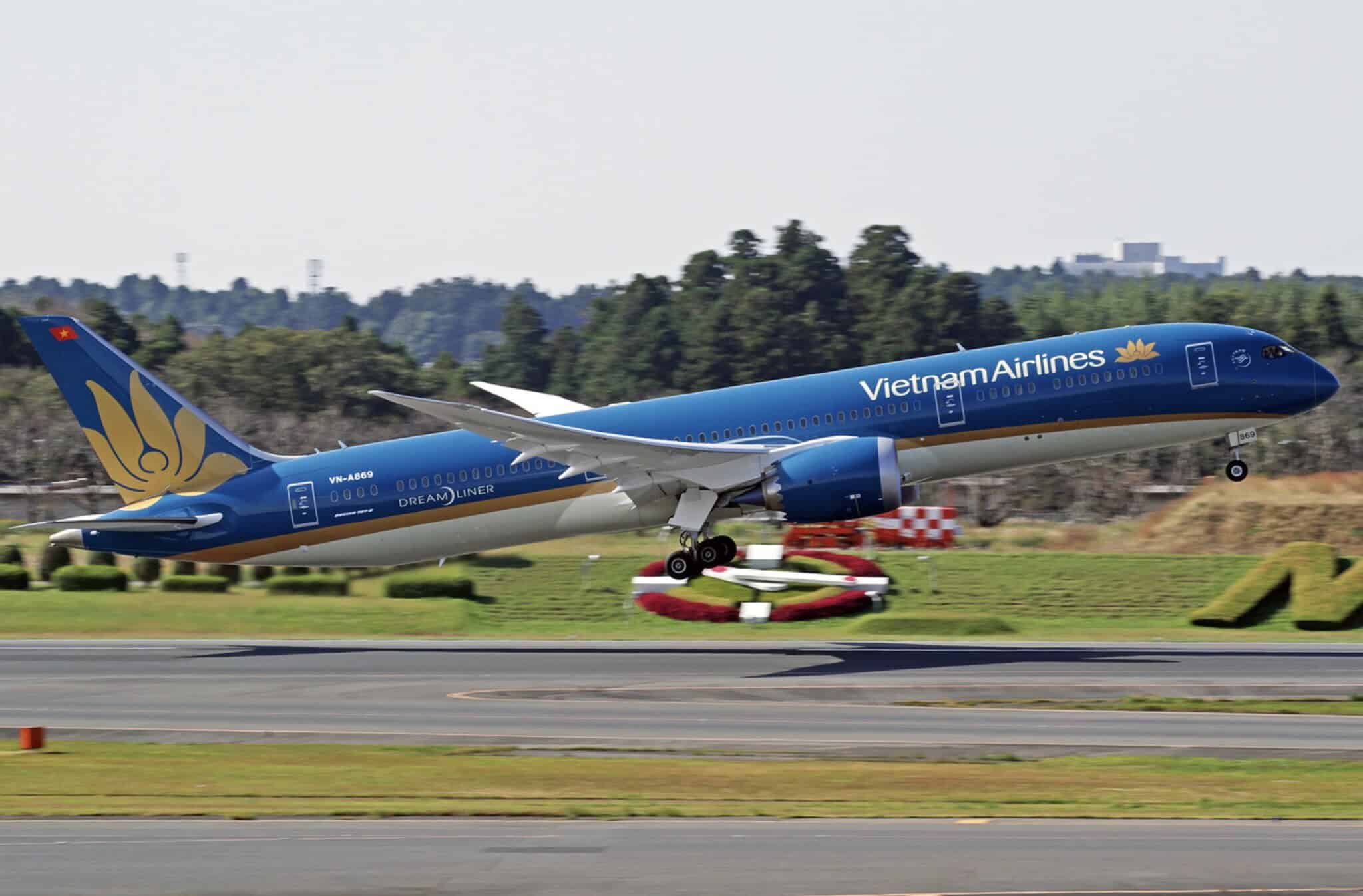
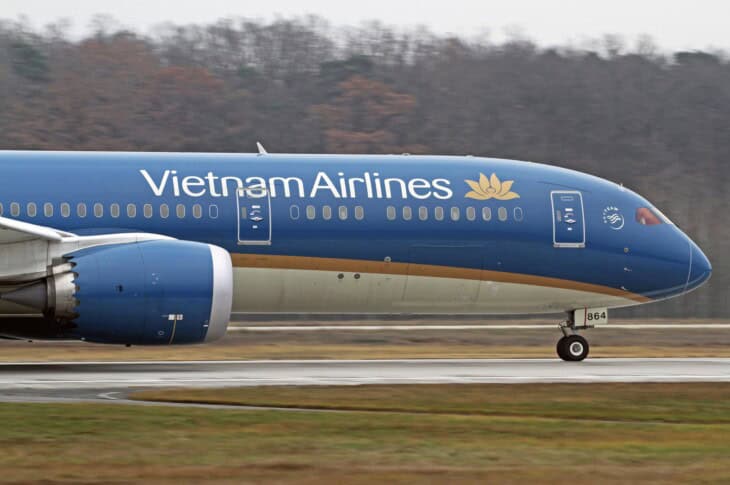
On August 15, 2026, a Vietnam Airlines Boeing 787-9 bound for Hanoi struck its tail on the runway during a badly delayed takeoff from Munich, then suffered a second runway excursion nearly two hours later when it circled back to land. No injuries have been reported.
A Takeoff That Used the Whole Runway
Flight VN34, registered VN-A867, began its takeoff roll on Munich’s 13,123-foot (4,000 m) runway 26L at 1:45 p.m. local time, according to a preliminary account from the Aviation Herald. The 10-year-old 787-9 used nearly the entire runway before lifting off, becoming airborne roughly 400 feet (120 m) past the paved surface, already over the grass near the approach lights.
As the nose pitched up late, the tail struck the ground, AeroInside reported, kicking up a visible cloud of dust caught on video by spotters at the airport.
Once airborne, the crew reported a tire-pressure warning and told air traffic control they needed to dump fuel before attempting to land again, Aviation24.be reported. The jet climbed to roughly 10,000 feet and held near the airport for about 90 minutes to burn down to a safer landing weight.
The 787 then flew two low passes over runway 26R so ground crews and the tower could check it for visible damage, before landing on that runway almost two hours after its original departure.
It overran the runway end on touchdown, damaging approach lights, and came to a stop with its left main gear trailing smoke, closing runway 26R, according to One Mile at a Time’s review of tracking data.
Two runway events, one flight
VN34 struck its tail leaving the runway on departure, then overran the runway again nearly two hours later on its return landing, a rare double excursion on a single flight.
Why a Late Rotation Turns Into a Tailstrike
A tailstrike happens when a jet’s tail drags the ground because it pitches up too early, too late, or too steeply for its weight and speed at that moment. Airlines calculate the exact rotation speed and pitch target from the aircraft’s weight and balance for that specific flight, then load those numbers into the flight computer before every departure.
If a crew rotates later than that target speed calls for, the jet eats up far more runway before it can climb away, which is what ground video from Munich appears to show.
Investigators typically start by checking whether the correct weight and thrust settings were used at all, since a wrong number in the flight computer can throw off the whole calculation.
Why Dump Fuel and Circle for 90 Minutes?
A 787-9 is certified to land at a lower maximum weight than it can take off at, since the airframe and landing gear absorb less energy during a smooth climb-out than they do slamming down on a runway.
A crew that suspects tire or gear damage, as VN34’s did, wants that landing weight as low as possible, so dumping fuel before circling back is standard practice on a widebody like the 787.
What is not yet confirmed
Vietnam Airlines, Munich Airport, and German investigators have not issued an official statement. The cause of the late rotation, and whether Germany’s BFU has formally opened an investigation, remain unconfirmed pending further reporting.
Germany’s Federal Bureau of Aircraft Accident Investigation, the BFU, typically leads inquiries into accidents on German soil, working alongside Vietnamese authorities as the operator’s home regulator and the Boeing 787 Dreamliner’s US-based manufacturer.
A tailstrike alone does not always ground an aircraft, but the combination of tail damage, tire damage, and a second runway excursion makes a lengthy inspection at Munich Airport likely before VN-A867 flies again.
Get the Newsletter
The latest aviation news and stories sent to your inbox.
About the Author

Tim is the owner and lead editor of AeroCorner since 2019, overseeing aviation content covering aircraft, airlines, airports, and the broader aviation industry. Through years of researching, writing, editing, and publishing aviation-focused content, he has developed extensive practical knowledge of commercial aviation and air travel. Based in Asia and a frequent traveler himself, Tim also brings firsthand passenger experience to AeroCorner’s coverage. Outside of publishing, he has also explored aviation firsthand through hands-on flight training in New Zealand.