

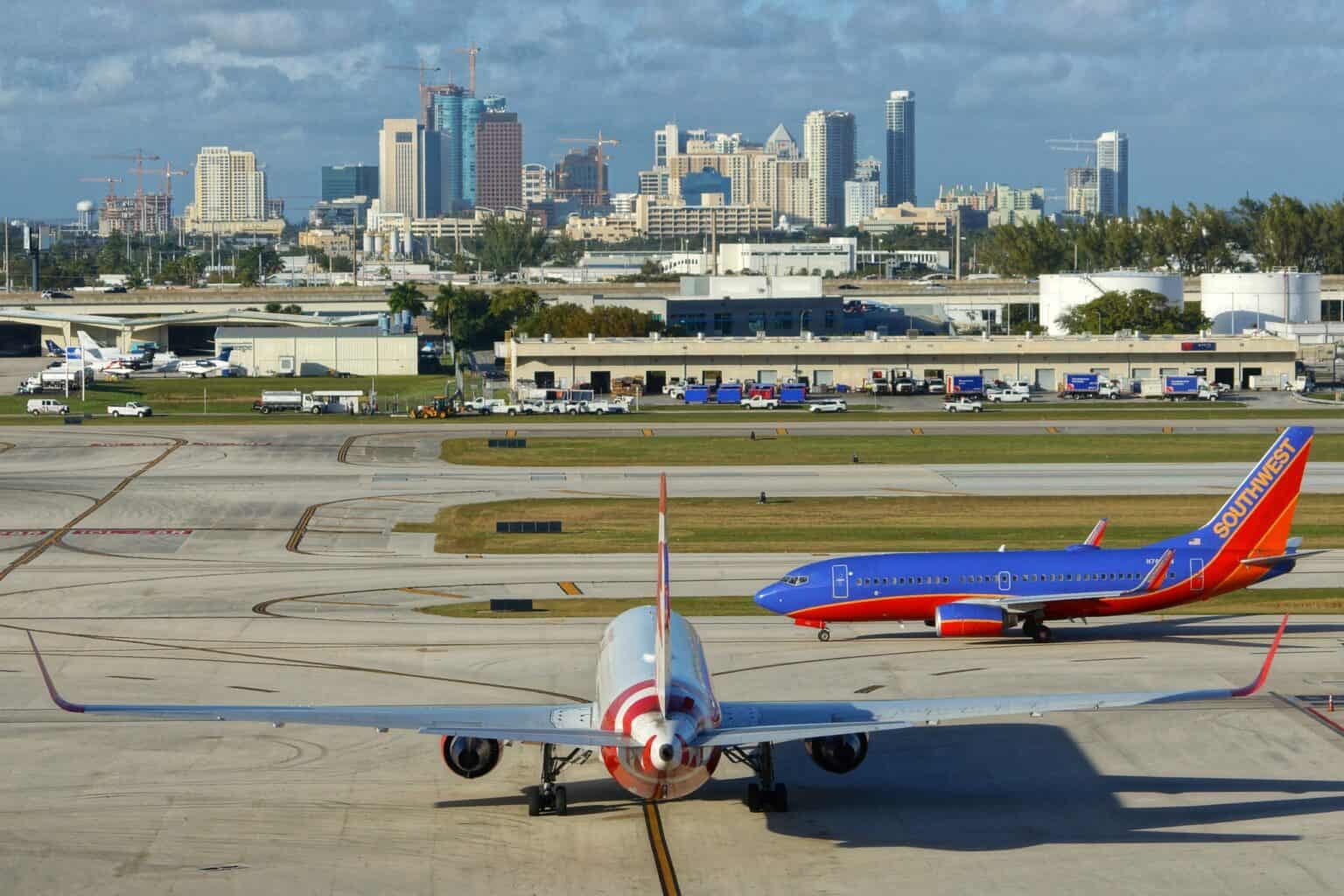
FAA traffic programs slowed flights at San Francisco, Newark and a string of Florida airports on Sunday, November 29, 2026, the day the TSA expected to be the busiest of the Thanksgiving travel period. At 3:15 p.m. EST, the FAA’s NAS Status page showed a wind ground stop and a ground delay program at San Francisco, an airspace flow program into Newark averaging 3 hours 13 minutes, and volume stops on departures across Florida.
Earlier in the day the FAA had also stopped flights into Austin-Bergstrom for wind and into West Palm Beach for traffic volume. Both stops had been lifted by 3 p.m. EST.
| Airport | FAA program | Reason | Delay shown |
|---|---|---|---|
| San Francisco (SFO) | Ground stop, 11:29 a.m. to 12:45 p.m. PST, plus a ground delay program all day | Wind | Average 1 h 36 min, maximum 3 h 33 min |
| Newark (EWR) | Airspace flow program, 1:37 p.m. Sunday to 1:59 a.m. EST Monday | Airport volume | Average 3 h 13 min |
| Naples (APF), Stuart (SUA) | Departure ground stops attributed to Jacksonville Center | Volume | 2 h 1 min to 2 h 15 min |
| Fort Myers (RSW) | Ground stop and spacing attributed to Jacksonville Center | Volume | 46 min to 1 h |
| Opa-locka (OPF), Orlando (MCO) | Departure stops | Volume | 31 min to 1 h 15 min |
| Fort Lauderdale (FLL) | Departure stop, cleared by 3:15 p.m. EST | Volume | 15 to 29 min before clearing |
| Sarasota (SRQ), Tampa (TPA) | Departure delays | Compacted demand | 31 min to 1 h 30 min |
| Austin (AUS) | Ground stop, 11:53 a.m. to 12:37 p.m. CST | Wind | Lifted |
| West Palm Beach (DJT) | Ground stop, 2:00 to 2:57 p.m. EST | Volume | Lifted |
Florida’s northbound rush
NAS Status gave volume, not weather, as the reason for the Florida delays. It listed departure delays of more than two hours at Naples (APF) and at Witham Field (SUA) in Stuart, both under ground stops attributed to the FAA’s Jacksonville Center (ZJX).
Southwest Florida International in Fort Myers (RSW) showed delays of 46 minutes to an hour under a Jacksonville Center ground stop and extra spacing between flights. Opa-locka Executive near Miami showed up to 1 hour 15 minutes and Orlando (MCO) less, while the stop at Fort Lauderdale (FLL) had dropped off the list by 3:15 p.m. EST.
Sarasota-Bradenton (SRQ) and Tampa (TPA) listed “compacted demand,” the FAA’s term for flights bunched into the same window. Each airport’s figure is the latest the FAA had posted for it, timed between noon and 2:50 p.m. EST.
The FAA’s Command Center listed “high snowbird volume” as a national en route constraint in its operations plans. From 7:30 a.m. to 3 p.m. EST, it also capped some flights between Florida and airports in the Southeast and Mid-Atlantic at or below 23,000 feet, citing volume in the higher altitudes.
West Palm Beach’s President Donald J. Trump International Airport, which changed its FAA identifier from PBI to DJT in July, got its own volume ground stop at 2:00 p.m. EST. It covered flights departing from nine en route centers between Texas and New England and was canceled at 2:57 p.m., with a warning that flights could still receive new departure times.
San Francisco and Austin: wind
San Francisco’s ground delay program ran from 8:30 a.m. to 11:59 p.m. PST, for wind, and covered flights from every airport in the contiguous US plus Vancouver, Calgary and Edmonton. It allowed 36 arrivals an hour for most of the day.
At 11:29 a.m. PST the FAA added a ground stop on SFO-bound flights from the Los Angeles, Oakland, Salt Lake City and Seattle centers, set to end at 12:45 p.m., with a medium chance of extension. NAS Status showed arrivals landing “in trail” on Runway 19L, one behind another on a single runway, at a rate of 28 an hour.
Because aircraft land into the wind, wind decides which runways an airport can use, and a setup with fewer landings per hour means fewer arrivals.
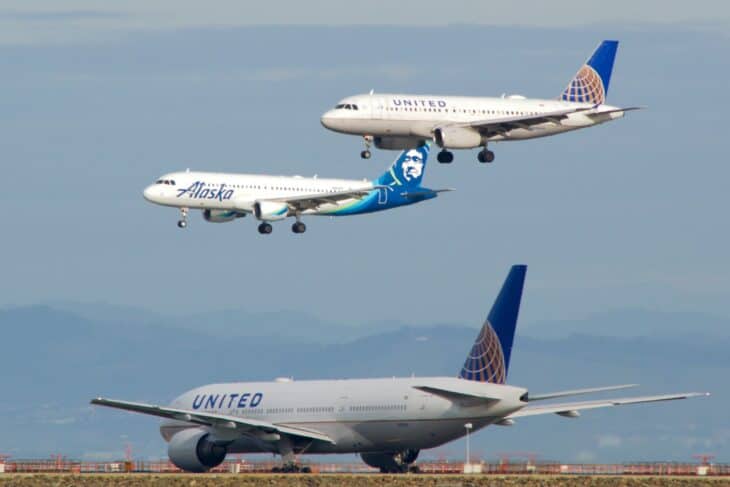
Austin-Bergstrom’s wind ground stop was internal to Houston Center, so it held only flights departing from within that center’s airspace. It began at 11:53 a.m. CST and was canceled at 12:37 p.m. with “objectives met.”
Newark: an airspace flow program and a staffing step-down
Newark’s program was an airspace flow program, which meters flights through a defined block of sky instead of to one airport. It surrounds Newark from the surface to 60,000 feet, and the advisory gave a maximum delay of 420 minutes.
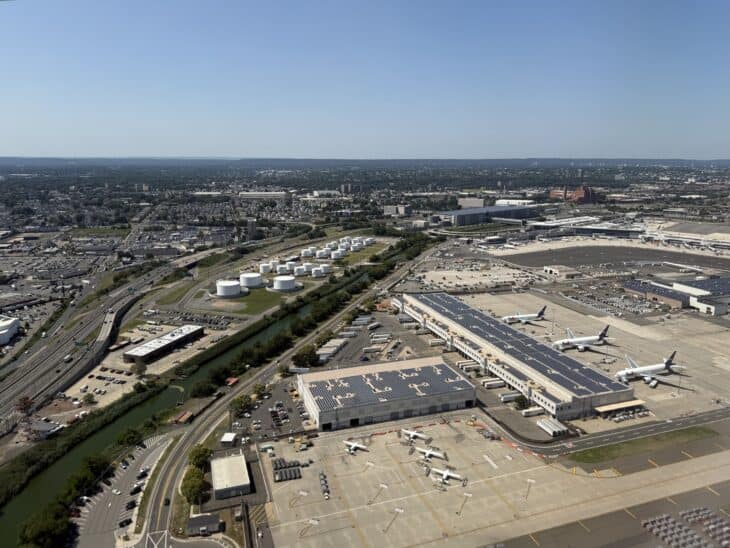

Its hourly rate steps down from 40 flights to 20 through the evening. The advisory tied those step-downs to “PHL Area C staffing constraints”: Area C of the Philadelphia TRACON is the unit that, in the FAA’s words, “directs aircraft in and out of Newark.”
The Command Center’s plan carried a staffing trigger for that area from 6:30 p.m. to 11 p.m. EST and listed a Newark ground stop or delay program as possible. On Monday the FAA briefly halted flights into O’Hare over air traffic control staffing.
What it means for travelers
A ground stop holds flights bound for an airport at their departure airports. A ground delay program or airspace flow program instead gives each affected flight an expected departure clearance time, so the wait is taken on the ground before takeoff, as AeroCorner’s guide to ground stops and flow control explains.
The day’s problem was delays more than cancellations. At about 3:05 p.m. EST, FlightAware counted 3,624 delays and 75 cancellations on flights within, into or out of the United States, far fewer cancellations than on Thanksgiving Day, when a coastal storm canceled hundreds.
A record day, if TSA’s projection holds
The TSA projected that more than 3 million people would pass through its checkpoints on Sunday, and about 17.6 million from Tuesday, November 24, through Monday, November 30. Its daily checkpoint figures show the record is 3,134,613, set on the Sunday after Thanksgiving last year, November 30, 2025.
No day in 2026 has reached 3 million so far: the year’s high is 2,988,204 on June 18. The TSA screened 2,739,418 people on Saturday, and it publishes Sunday’s count on Monday.
Sources and references used for research and fact-checking.
- FAA, NAS Status: airport status information and airport events
- FAA ATCSCC, ATCSCC ADVZY 050 SFO/ZOA 11/29/2026 CDM Ground Delay Program
- FAA ATCSCC, ATCSCC ADVZY 088 SFO/ZOA 11/29/2026 CDM Ground Stop
- FAA ATCSCC, ATCSCC ADVZY 083 FCAP93 11/29/2026 CDM Airspace Flow Program
- FAA ATCSCC, ATCSCC ADVZY 079 and 082 AUS/ZHU 11/29/2026 Ground Stop and cancellation
- FAA ATCSCC, ATCSCC ADVZY 085 and 094 DJT/ZMA 11/29/2026 Ground Stop and cancellation
- FAA ATCSCC, ATCSCC ADVZY 073 and 080 DCC Operations Plans; ADVZY 075 ZJX capping/tunneling
- FAA, FAA Statements on Newark Liberty International Airport
- TSA, TSA ready for Thanksgiving passenger volumes, urges travelers to plan ahead (Nov 24, 2026)
- TSA, TSA checkpoint travel numbers
Get the Newsletter
The latest aviation news and stories sent to your inbox.
About the Author

AeroCorner News is the aviation news desk of AeroCorner.com. It covers accidents and incidents, safety rulings, airline and airport disruption, and new aircraft. It works from primary sources such as the NTSB, FAA, EASA and the manufacturers' own announcements.