

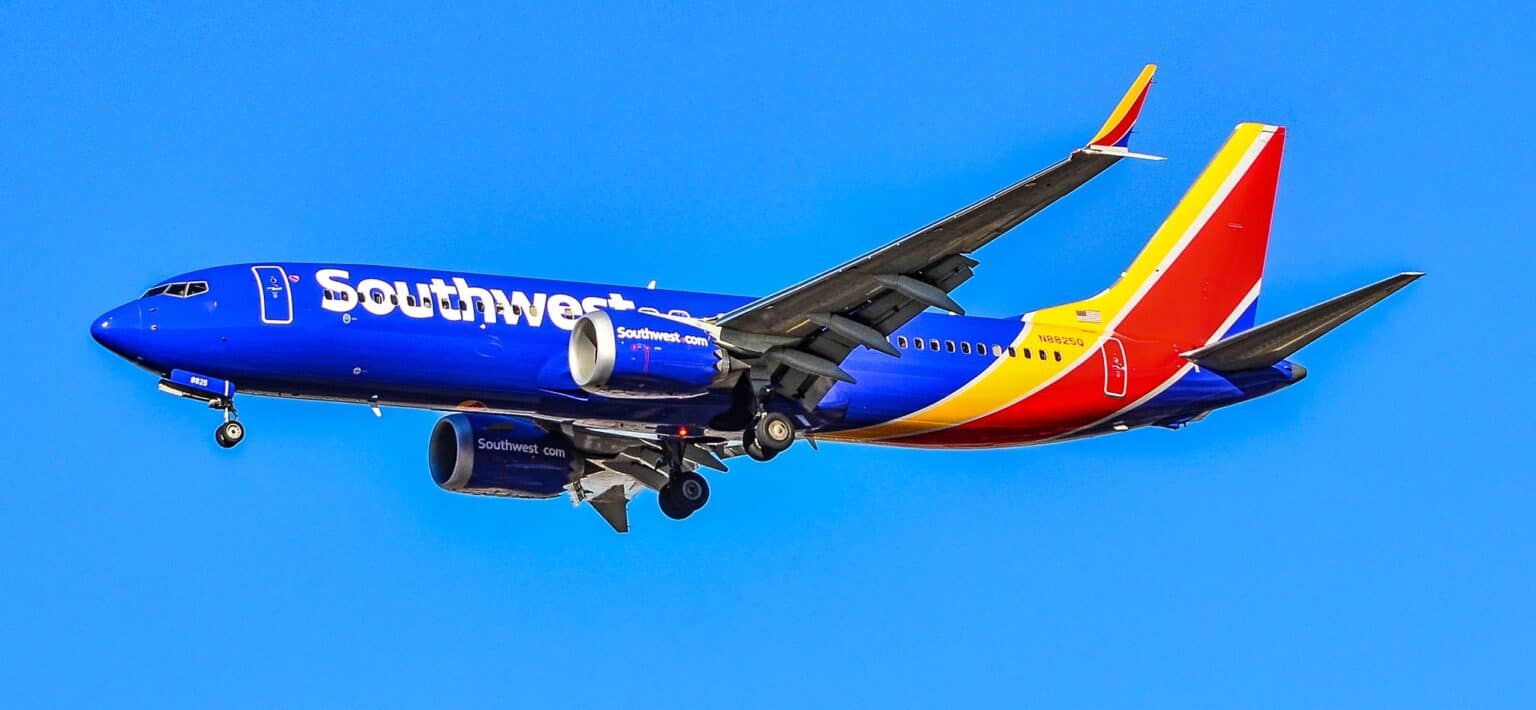
The National Transportation Safety Board has closed its investigation into Southwest Airlines flight WN746, the Boeing 737 MAX 8 that went into a Dutch roll between Phoenix and Oakland in May 2024. Its final report, published on November 5, 2026, finds that the rudder anomaly began with wind damage suffered while the jet sat parked in a thunderstorm nine days earlier.
The NTSB also faults a maintenance check that should have caught the damage, a Boeing manual with no wind speed trigger for a post-storm inspection, and the lack of an adequate Southwest process to flag parked jets caught in extreme wind.
What happened on flight 746
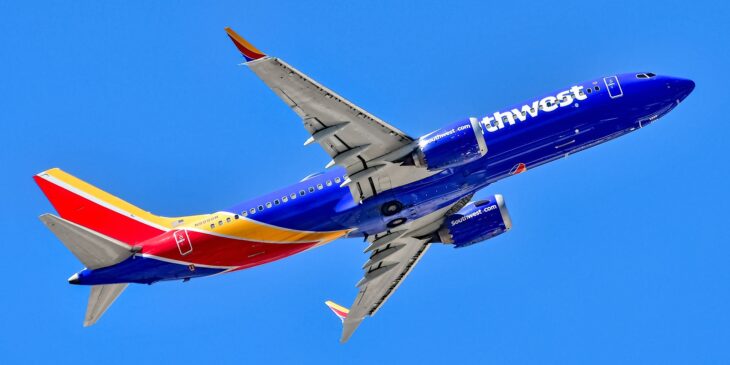
Flight 746 left Phoenix for Oakland on the morning of May 25, 2024, with 175 passengers and 6 crew on board the 737 MAX 8, registered N8825Q. Shortly after reaching cruise at 34,000 feet, in light turbulence, the captain felt what he called “a small amount of Dutch roll.”
The first officer described the tail moving back and forth, with slight rudder movement left and right, and both pilots felt the rudder pedals move. The autopilot stayed engaged, no warning lights came on, and the oscillations returned after a descent to 32,000 feet.
The jet landed normally in Oakland and nobody was hurt, according to the report. Flight data showed rudder oscillations of about 0.75 degrees either way, in bursts of about 20 seconds, with no significant change in heading or bank angle.
Mechanics found the damage behind it inside the tail. The vertical stabilizer’s trailing edge ribs above and below the standby rudder power control unit (PCU), the backup hydraulic actuator that drives the rudder, were damaged, along with the PCU’s forward support bracket.
One rib had fractured with signs of overload, and the NTSB classed the damage as substantial.
A storm in New Orleans, then a check that missed it
On the night of May 16, 2024, the aircraft was parked on a remote stand at New Orleans International Airport as a squall line passed through. The airport’s weather station recorded gusts of up to 73 knots, about 84 mph (135 km/h), under a tornado watch.
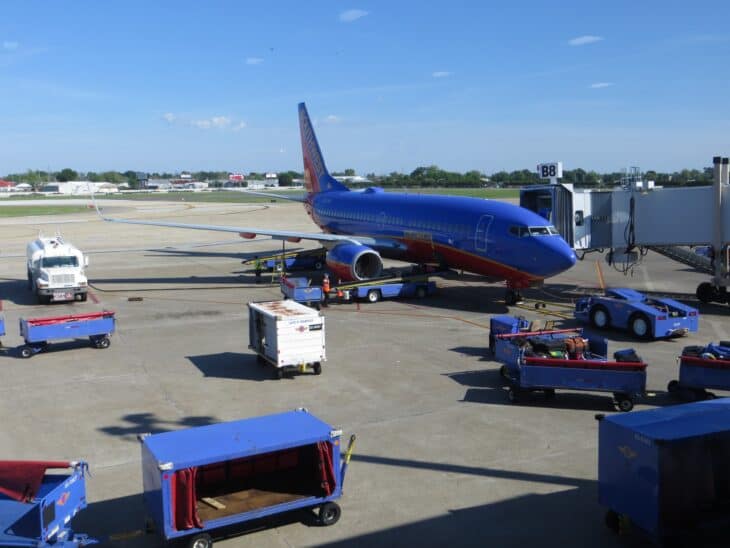

The 737’s rudder has no gust lock, the NTSB notes. The main rudder PCU damps gusts so they cannot slam the rudder into its stops, but the standby PCU has no such function, and investigators concluded the wind likely moved the rudder hard enough to damage the ribs that hold the standby unit.
May 16, 2024
Storm at New Orleans. N8825Q sits parked overnight as gusts reach 73 knots. Maintenance control is not told.
May 17-23, 2024
38 flights. The jet returns to service with no reported rudder or yaw damper problems.
May 23, 2024
Scheduled check in Houston. The standby hydraulic test is signed off as passed, though hangar video shows the rudder moving right but not left.
May 24, 2024
Yaw damper write-up. On the day’s fourth flight, the crew disconnects a yaw damper they say is overcorrecting. It is deferred, then cleared after a functional test.
May 25, 2024
Flight 746. The 44th flight since the storm; the Dutch roll appears at 34,000 feet.
Nov. 5, 2026
Final report. The NTSB publishes its probable cause.
At the time, Boeing’s 737 maintenance manual described extreme high wind events as tornadoes and microbursts, with signs such as an aircraft moving over its chocks. It set no wind speed that would require the inspection, and Southwest had no process to tell maintenance control that a parked jet had been through such a storm, so the check that could have found the damage was never done.
The second chance came on May 23 at Houston Hobby, during a scheduled “A Core Check.” The standby hydraulic test requires a mechanic to watch the rudder swing to each stop, which would have shown a rudder that did not return to neutral.
Hangar security video showed the rudder travel right but not left, and nobody was at the tail to watch, the report says. Southwest maintenance signed the test off as passed anyway, and the jet went back into service.
The probable cause
The NTSB determined the probable cause to be “damage to the standby rudder power control unit connection to the vertical fin due to an extreme high wind event while the airplane was parked, which remained undetected and resulted in anomalous operation of the standby rudder power control unit.”
Three factors contributed to the damage going unnoticed: the improper standby hydraulic test by Southwest mechanics, the lack of a wind speed threshold in Boeing’s manual, and the absence of an adequate Southwest process for flagging parked aircraft hit by extreme wind.
Why the yaw damper made it visible
Dutch roll is a coupled motion in which the nose yaws and the wings rock in a repeating cycle. The 737 has a natural tendency toward it, which its yaw damper suppresses with small automatic rudder inputs, limited to 3 degrees of rudder travel.
Flight data showed every oscillation happened with the yaw damper engaged, and none when it was switched off or deferred. After the Houston check, yaw damper commands also lined up with rudder pedal movement, which they had not done before, and normal yaw damper inputs do not move the pedals.
That is why the May 24 crew blamed the yaw damper. The real fault was the damaged mounting of the standby rudder PCU, which the NTSB says led to that unit’s anomalous operation.
Reality check
The NTSB’s probable cause is wind damage on the ramp that went undetected. It names a test done improperly and gaps in Boeing’s manual and Southwest’s procedures, and it does not cite a design defect in the rudder system as a cause.
What has changed since
According to the report, Southwest inspected the rudder PCU mountings on all of its 737 MAX aircraft and found nothing anomalous. It also replaced the one-line instruction for the standby hydraulic test with a step-by-step work card that each assigned mechanic signs.
The airline now notifies maintenance control when parked aircraft go through an extreme wind event. Boeing revised the 737 manual so the high wind inspection is triggered at 75 mph, or 65 knots (121 km/h).
The gusts recorded at New Orleans, 73 knots, were above that threshold. The full investigation docket is on the NTSB’s site.
Sources and references used for research and fact-checking.
Get the Newsletter
The latest aviation news and stories sent to your inbox.
About the Author

AeroCorner News is the aviation news desk of AeroCorner.com. It covers accidents and incidents, safety rulings, airline and airport disruption, and new aircraft. It works from primary sources such as the NTSB, FAA, EASA and the manufacturers' own announcements.