

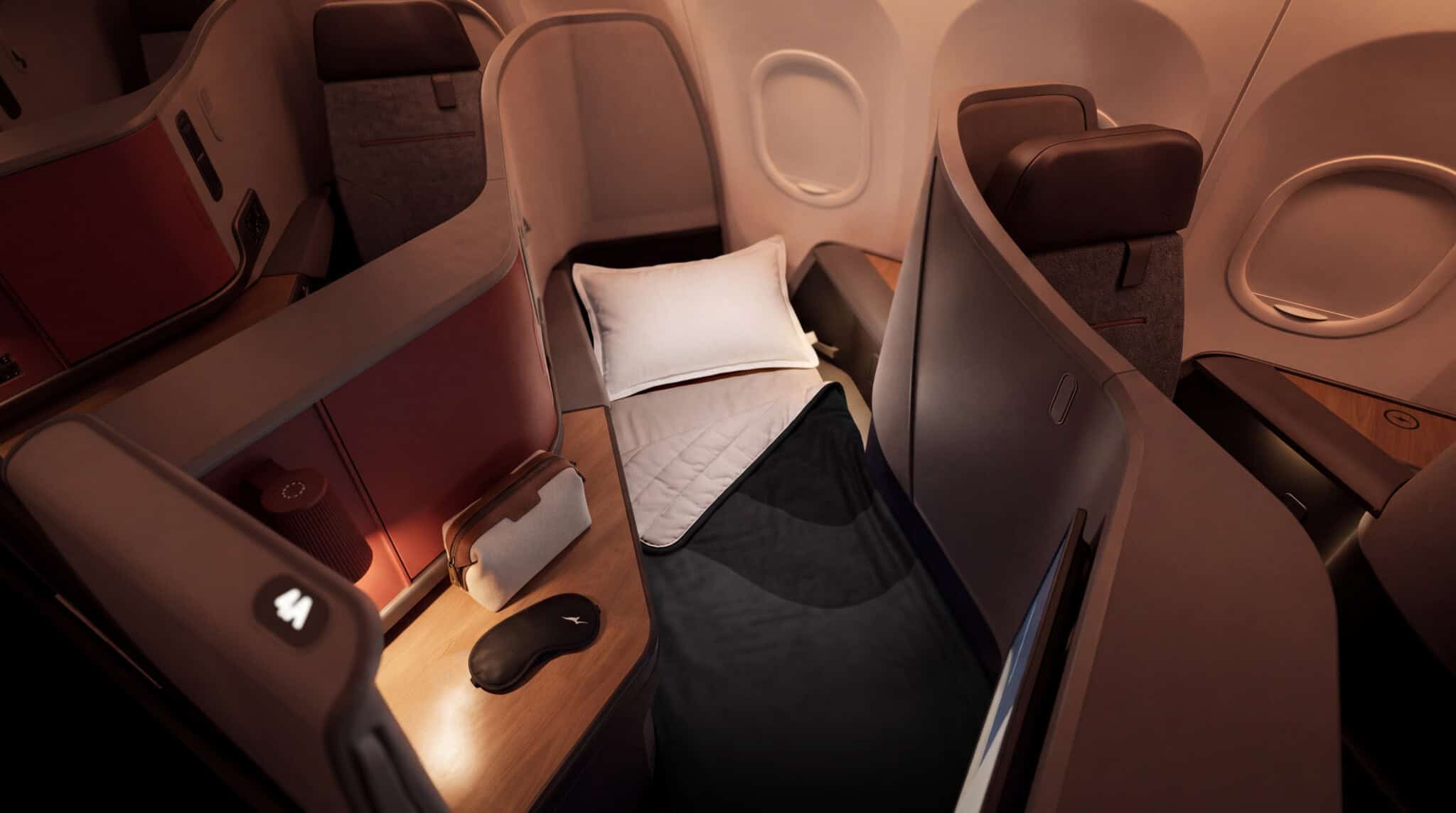
On August 27, 2026, Qantas unveiled a new business class suite for the Airbus A321XLR, the first lie-flat bed the airline has offered on a single-aisle aircraft. Sixteen of the narrowbody jets will get the suite, with the first due to enter service in 2028. Qantas also revealed an updated business suite for four incoming Boeing 787-9 Dreamliners.
What the new suites look like
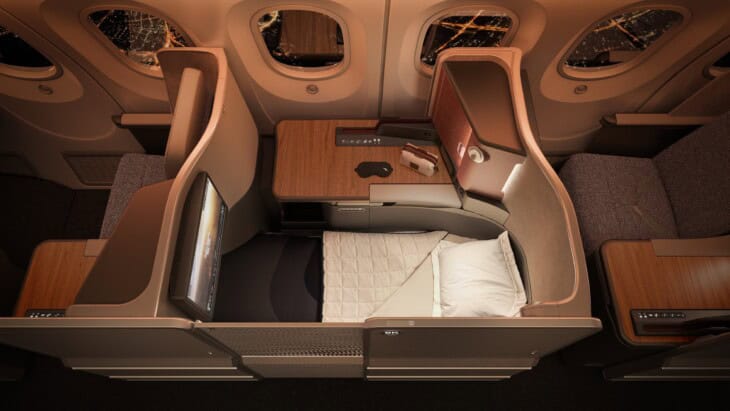
The A321XLR business cabin will hold 16 suites in a 1-1 angled herringbone layout across eight rows, built on the Thompson Aero VantageSOLO seat. Every passenger gets direct aisle access, a sliding privacy door, a 19-inch screen, wireless and USB-C charging, and free Wi-Fi. It is essentially a widebody business seat fitted into a fuselage a little over 12 feet (3.7 m) wide.
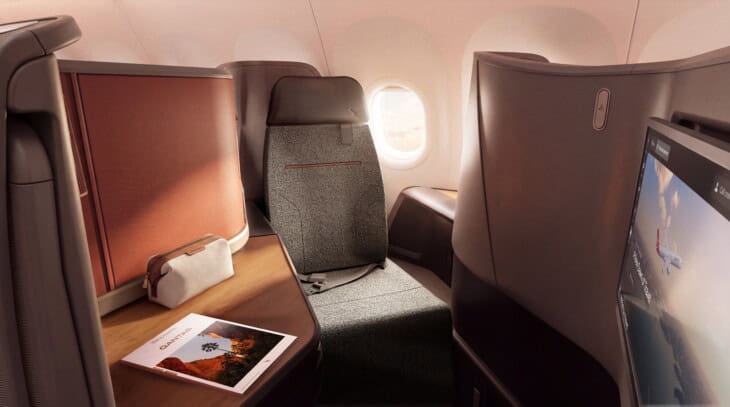
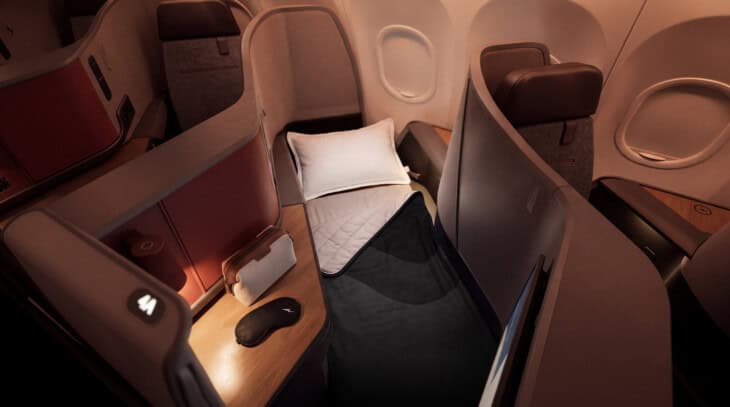
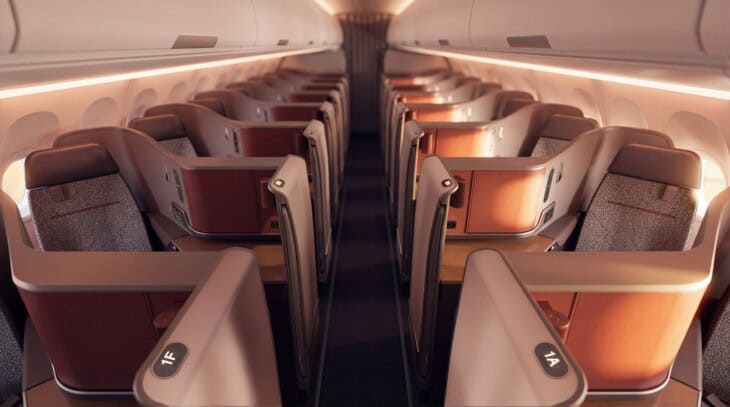
The Boeing 787-9 suite keeps the current count of 42 per aircraft but adds a sliding privacy door for the first time on a Qantas Dreamliner. It also gains an 80-inch lie-flat bed, a larger footwell, and restyled storage. Qantas said the four aircraft carrying it arrive from the 2028 financial year, and it has not announced a retrofit for the 14 Dreamliners already flying.
Why a narrowbody is getting a widebody cabin
The A321XLR’s appeal is range. Airbus quotes about 4,700 nautical miles, enough to fly routes that once needed a widebody but do not fill one. Qantas has close to 50 A321XLRs on order and is using them to replace aging Boeing 737-800s.
The problem is that a bare single-aisle cabin is a hard sell on a six or eight hour flight. Qantas already flies A321XLRs in a domestic layout with no lie-flat seats and no seatback screens. The premium fit is what lets the airline put the type on longer transcontinental services to Perth and on international routes into Southeast Asia and the Pacific.
The upgrade also closes a gap in Qantas’s own network. Its current long-haul business class, the David Caon-designed suite on the A330 and 787, is the standard travelers expect on a Qantas international ticket. A comparable seat on the A321XLR lets the airline move flying onto the smaller jet without asking premium customers to accept less.
Other carriers are making the same calculation. United is about to begin its first international A321XLR flights, and American has designed a doored flagship suite for its own XLRs. The narrowbody is quietly becoming a long-haul aircraft, and a credible business cabin is the price of entry.
This is separate from the Airbus A350-1000s Qantas is preparing for Project Sunrise, its planned nonstop flights from Sydney and Melbourne to London and New York. Those aircraft carry their own cabin built for flights of up to about 20 hours.
The trade-off
A 1-1 herringbone suite on a narrowbody gives every passenger a door and aisle access, but less shoulder and foot room than the same layout on a widebody. Qantas is betting that the privacy and the flat bed matter more to premium flyers than raw width.
Sources and references used for research and fact-checking.
Get the Newsletter
The latest aviation news and stories sent to your inbox.
About the Author

Tim is the owner and lead editor of AeroCorner since 2019, overseeing aviation content covering aircraft, airlines, airports, and the broader aviation industry. Through years of researching, writing, editing, and publishing aviation-focused content, he has developed extensive practical knowledge of commercial aviation and air travel. Based in Asia and a frequent traveler himself, Tim also brings firsthand passenger experience to AeroCorner’s coverage. Outside of publishing, he has also explored aviation firsthand through hands-on flight training in New Zealand.