

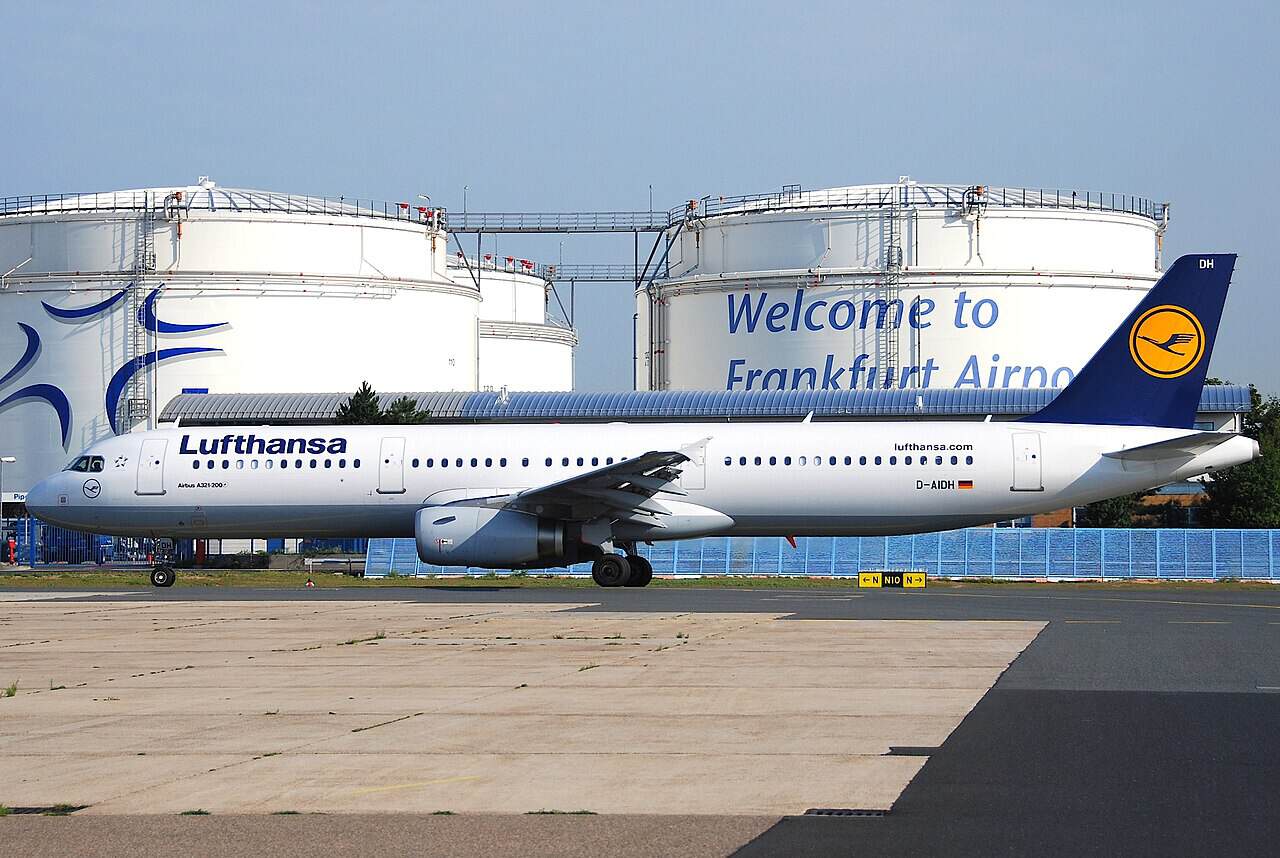
On October 14, 2026, Lufthansa confirmed that jet fuel supply at Frankfurt Airport may be restricted, and said aircraft on selected routes are loading extra fuel before they depart for its main hub. The airline told dpa it does not expect to cancel flights.
The instruction to pilots was first reported by Bild. Frankfurt’s operator, Fraport, says the airport’s operations are not affected.
What Lufthansa told its crews
According to Bild’s account of the internal instructions, as relayed by dpa and airliners.de, pilots on certain flights are to take on more fuel than the trip to Frankfurt requires. The aim is to reduce how much fuel the aircraft need after landing there.
The measure mainly covers short and medium-haul flights, with some long-haul routes included, and runs until further notice. Flight planning is meant to make sure the extra weight does not force passengers or cargo off.
Bild cited an eight-tonne (about 17,600-pound) figure for the Airbus A320 family. Outlets relaying the memo describe it differently: airliners.de as a cap on the extra fuel, and 20 Minuten as the most an A320-family jet may carry on arrival.
Swiss, part of the Lufthansa Group, told SRF it is carrying fuel for the return leg on its Zurich and Geneva flights to Frankfurt until further notice. A spokesperson said the airline expects to stop doing so in the foreseeable future.
A pipeline, a river, and two explanations
Lufthansa blames reduced capacity on the pipeline connection to the airport. Fraport said a scheduled maintenance of a pipeline that also supplies the airport was under way, and that other supply routes and large storage tanks mean it expects no shortage.
On October 15, a spokesperson for the operator of the Rhein-Main-Rohrleitung (RMR) pipeline told airliners.de the line was back in normal operation. The maintenance had taken place over recent days, the spokesperson said, but fuel could reach Frankfurt at all times.
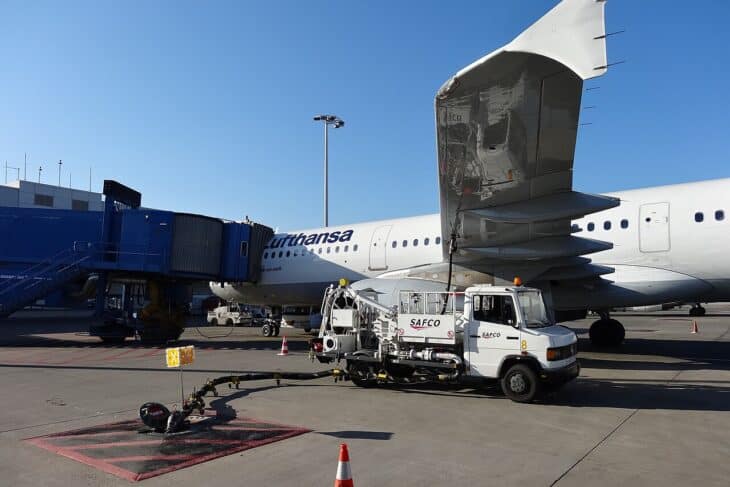
Bild also pointed to the Rhine. Tankers carrying fuel from the Rotterdam area up the Rhine and Main to the port of Kelsterbach can only sail part-loaded when the river is low.
The river is very low. The federal waterways gauge at Kaub read 9 cm (about 3.5 inches) on the evening of October 15, according to provisional raw data on Pegelonline.
That is well under the 25 cm (about 10 inches) recorded there on October 22, 2018, the benchmark low cited in German reporting this summer. A gauge reading is a reference height, not the depth of the river.
How Frankfurt gets its fuel
Frankfurt receives its jet fuel only by pipeline, according to airliners.de. Five lines feed it: two from BP’s tank farm at Gustavsburg near Mainz, one from a depot at Raunheim, and two from the Kelsterbach port.
Raunheim and Gustavsburg connect to the RMR system, which runs to the port of Rotterdam. River barges are therefore one way into the airport’s supply network, not the only one.
Germany uses about 9 million metric tons of jet fuel a year and imports about two-thirds of it, including from the Amsterdam, Rotterdam and Antwerp refining area, the industry group en2x told airliners.de in April. The publication stresses that this week’s maintenance and low water are unrelated to the Iran war and the tight global oil market.
What tankering costs
Tankering means carrying more fuel than the next flight needs, trip fuel plus reserves, so the aircraft can refuel less or not at all at its destination. The practice is usually about price, buying fuel where it is cheaper; here the aim is to protect stocks at the hub.
The penalty is weight, because a heavier jet burns more fuel on every leg. SRF cites estimates that 2.5 to 4.5 percent of the surplus is burned just to carry it.
Across Europe, a 2019 EUROCONTROL study estimated that tankering would burn 286,000 metric tons of extra fuel a year and add 901,000 metric tons of CO2. It also estimated a net saving of 265 million euros a year for airlines.
Does the EU's anti-tankering rule apply?
Since January 1, 2025, the ReFuelEU Aviation regulation has required an airline to uplift at least 90% of the trip and taxi fuel it needs each year for departures from each qualifying EU airport at that airport. The test is a yearly total per airport, not a per-flight ban, and an airline can request a temporary exemption on routes under 850 km (528 miles) for serious refueling difficulties or structural supply problems at an airport.
At the time of writing, Lufthansa says it expects no cancellations, Fraport says operations are unaffected, and the RMR pipeline is running again. Lufthansa has not said how long its crews will keep carrying extra fuel.
Fuel logistics has already hit one hub this autumn: in late September, a nor’easter kept jet fuel ships from reaching Boston Logan.
Sources and references used for research and fact-checking.
Get the Newsletter
The latest aviation news and stories sent to your inbox.
About the Author

Tim is the owner and lead editor of AeroCorner since 2019, overseeing aviation content covering aircraft, airlines, airports, and the broader aviation industry. Through years of researching, writing, editing, and publishing aviation-focused content, he has developed extensive practical knowledge of commercial aviation and air travel. Based in Asia and a frequent traveler himself, Tim also brings firsthand passenger experience to AeroCorner’s coverage. Outside of publishing, he has also explored aviation firsthand through hands-on flight training in New Zealand.