

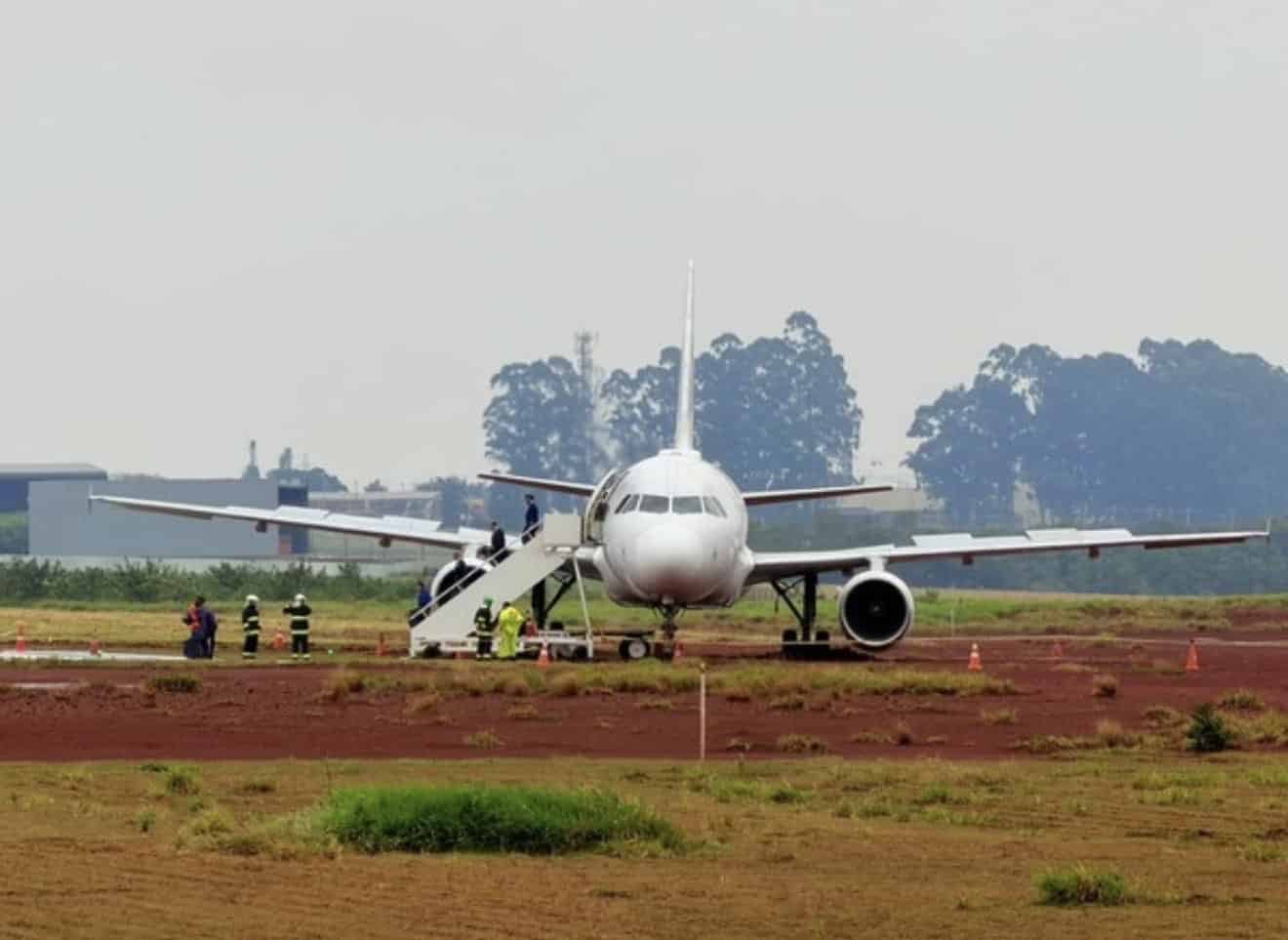
A LATAM Airlines Brasil Airbus A320 ran off the side of the runway at Cascavel Airport in southern Brazil on the morning of August 31, 2026, shortly after landing in heavy rain. All 145 passengers and six crew on Flight LA3858 from Sao Paulo/Guarulhos left the aircraft without injury.
The jet came to rest on soft ground beside the runway, its landing gear partly sunk into mud. Cascavel Airport, in western Parana state, closed for the rest of the day while crews worked out how to move it.
What happened
The aircraft, an Airbus A320-214 registered PR-MYO, touched down on runway 15 at about 9:45 a.m. local time. Cascavel Airport has no full-length parallel taxiway, so the crew had to backtrack along the runway to reach the terminal.
By the account compiled by The Aviation Herald, the jet had slowed to roughly 15 knots and was turning to backtrack when it veered off the paved surface short of the runway end. LATAM described the event as an overrun during the final stage of the landing, and said everyone on board evacuated safely. The airline canceled the return service, LA3859, and rerouted those passengers through nearby Foz do Iguacu.
Weather at the time was poor. Airport observations recorded thunderstorms and rain with visibility down to about two miles (3 km). Standing water on a runway sharply cuts braking friction and can let tires ride up on a film of water, a condition called hydroplaning.
Avión de LATAM salió de pista en el Aeropuerto de Cascavel (Brasil).
— GaboAir (@GaboAir) August 31, 2026
Un Airbus A320 de LATAM salió de pista durante la maniobra de aterrizaje, en condiciones de lluvia intensa.
Ocurrió esta mañana, 31 de agosto, en el Aeropuerto de Cascavel.
En el segundo video 📹, se relata… pic.twitter.com/kud6D3rCgE
Early information, not a finding
The sequence here is drawn from the airline’s short statement and from tracking and weather data compiled by specialist outlets. No official report has been published. Brazil’s accident investigation authority, CENIPA, examines events like this, and its conclusions can differ from the first-day picture.
Why a slow-speed excursion still matters
Most people picture a runway accident as a jet racing off the far end at speed. This was not that. The available accounts point to a low-speed veer-off during a turn, with the aircraft nearly stopped. The forces involved, and the risk to people on board, are far lower at 15 knots than at 100, which is why the outcome here was an inconvenience rather than an emergency.
Even so, runway excursions are the single most common category of commercial aviation accident worldwide, and a wet or contaminated runway is a recurring factor. Backtracking adds its own small hazard: the usable width for a turn is limited, the pavement edge drops off to grass, and heavy rain can leave that grass soft enough to trap a 75-ton aircraft that strays a few feet too far.
That is also why recent safety work targets this exact phase of flight. European regulators this year certified a runway overrun alerting system for Embraer’s E2 jets, and landing excursions keep filling accident dockets, including a July overrun that sent an Embraer regional jet off the runway at Benin with all 68 aboard unhurt. The Cascavel excursion looks minor by comparison, but it lands in the same statistical column.
Sources and references used for research and fact-checking.
Get the Newsletter
The latest aviation news and stories sent to your inbox.
About the Author

Tim is the owner and lead editor of AeroCorner since 2019, overseeing aviation content covering aircraft, airlines, airports, and the broader aviation industry. Through years of researching, writing, editing, and publishing aviation-focused content, he has developed extensive practical knowledge of commercial aviation and air travel. Based in Asia and a frequent traveler himself, Tim also brings firsthand passenger experience to AeroCorner’s coverage. Outside of publishing, he has also explored aviation firsthand through hands-on flight training in New Zealand.