

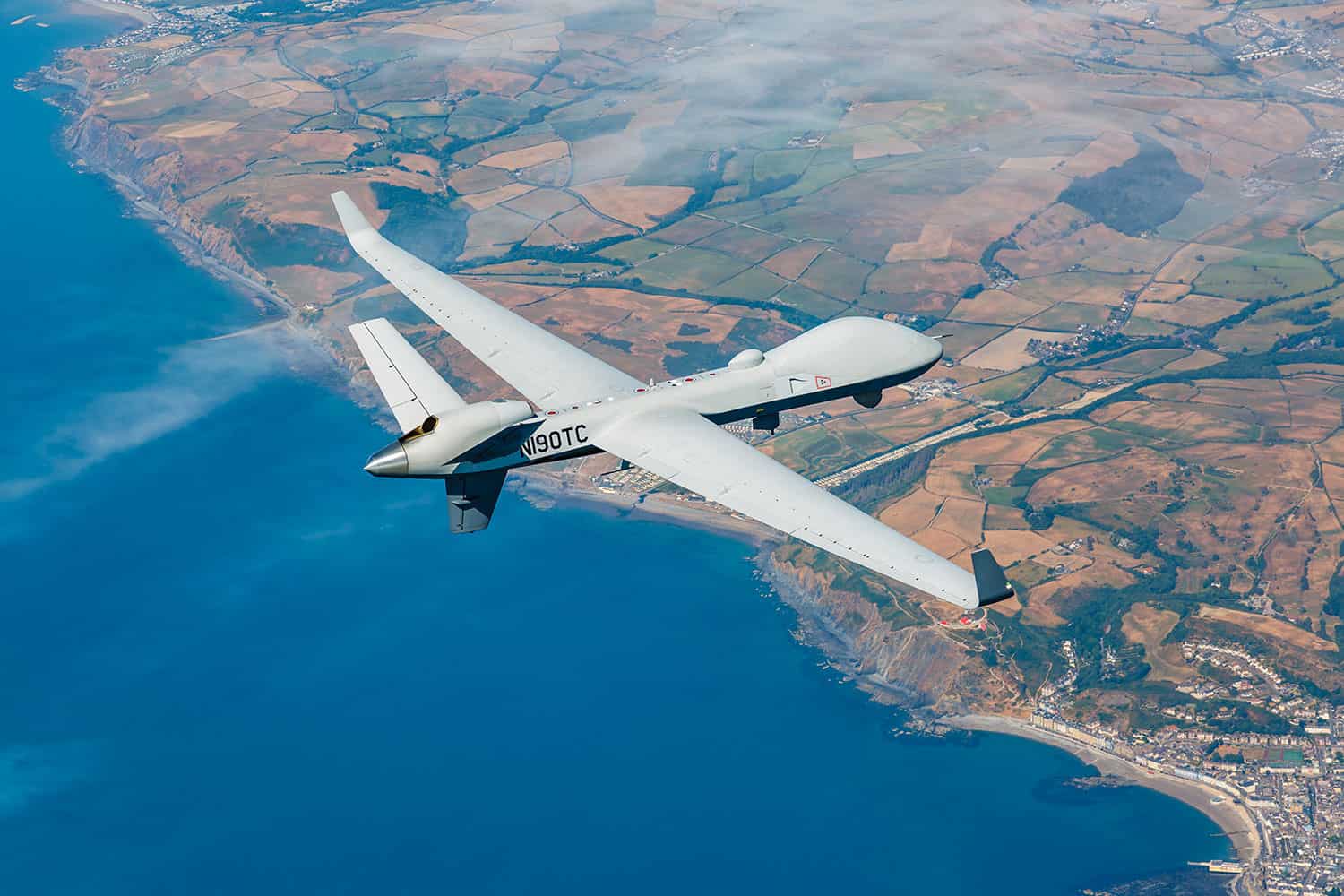
On August 17, 2026, India’s Ministry of Defence signed a 1,943-crore-rupee (about $203 million) contract with General Atomics Aeronautical Systems to lease two more MQ-9B Sea Guardian surveillance drones for the Indian Navy. The 30-month lease temporarily doubles the Navy’s fleet of the aircraft, from two to four.
What the Sea Guardian actually does
The MQ-9B Sea Guardian is built off the same Predator B airframe as the armed MQ-9 Reaper, but this variant is unarmed and configured purely for maritime patrol. It carries Leonardo’s SeaSpray 7500E radar and sonobuoy processing gear for submarine detection.
Endurance is the point
The Sea Guardian can stay airborne for more than 40 hours at a time above 40,000 feet, giving the Navy near-continuous radar coverage of shipping lanes across the Indian Ocean without rotating crewed patrol aircraft.
Bridging a gap before a bigger order arrives
India already committed to a much larger purchase: 31 MQ-9B Sea and Land Guardians under a deal signed in October 2024, split between the Navy, Army, and Air Force. Deliveries from that order are still years out.
Meanwhile, the Navy’s original two MQ-9A Sea Guardians have been leased since November 2020, and that lease runs out in early 2027. The new two-aircraft lease overlaps with the older pair for several months, so surveillance coverage does not lapse while the purchased fleet is still being built.
Leased, not armed
A defense source told ThePrint the newly leased Sea Guardians will not carry weapons, unlike the aircraft India is buying outright, which are expected to be fitted with the domestically developed NASM-SR anti-ship missile.
The fleet’s one mishap so far
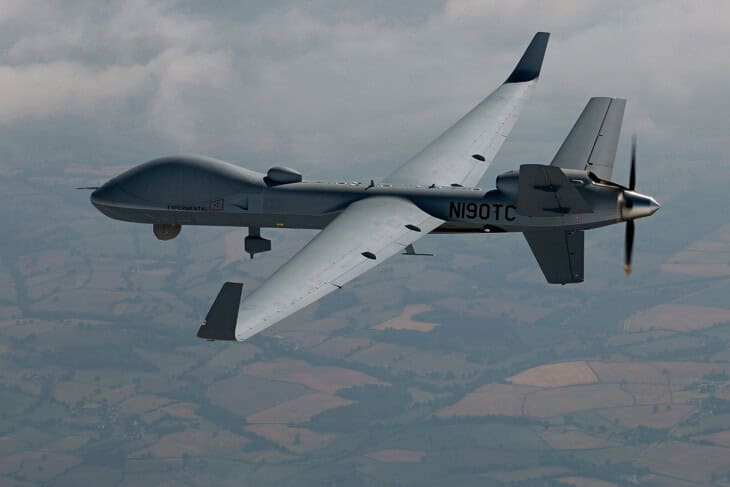
The existing lease has already tested that arrangement once. On September 18, 2024, one of the Navy’s two MQ-9As suffered a technical failure while flying from INS Rajali in Tamil Nadu and was deliberately ditched into the Bay of Bengal off Chennai, as The Week reported at the time.
No one was aboard the uncrewed aircraft. Under the lease terms, General Atomics, not the Navy, bore responsibility for replacing the lost drone, and a replacement arrived by February 2025.
That arrangement, a contractor-owned, contractor-operated model, is part of what makes leasing attractive while India waits on aircraft it will eventually own and maintain itself. The Navy gets continuous coverage and a guaranteed replacement if something breaks, without carrying the maintenance overhead of aircraft it does not yet operate at scale.
The Navy’s push for more persistent maritime surveillance dates to around 2015, as China expanded its naval presence in the Indian Ocean. India has separately been building out its own airborne options, including its long-running pursuit of fighter aircraft such as the Rafale jets it is negotiating to buy from France, but the Sea Guardian lease addresses a different need: hours of unglamorous, uninterrupted watch over open water that crewed aircraft cannot sustain as cheaply.
Sources and references used for research and fact-checking.
Get the Newsletter
The latest aviation news and stories sent to your inbox.
About the Author

Tim is the owner and lead editor of AeroCorner since 2019, overseeing aviation content covering aircraft, airlines, airports, and the broader aviation industry. Through years of researching, writing, editing, and publishing aviation-focused content, he has developed extensive practical knowledge of commercial aviation and air travel. Based in Asia and a frequent traveler himself, Tim also brings firsthand passenger experience to AeroCorner’s coverage. Outside of publishing, he has also explored aviation firsthand through hands-on flight training in New Zealand.