

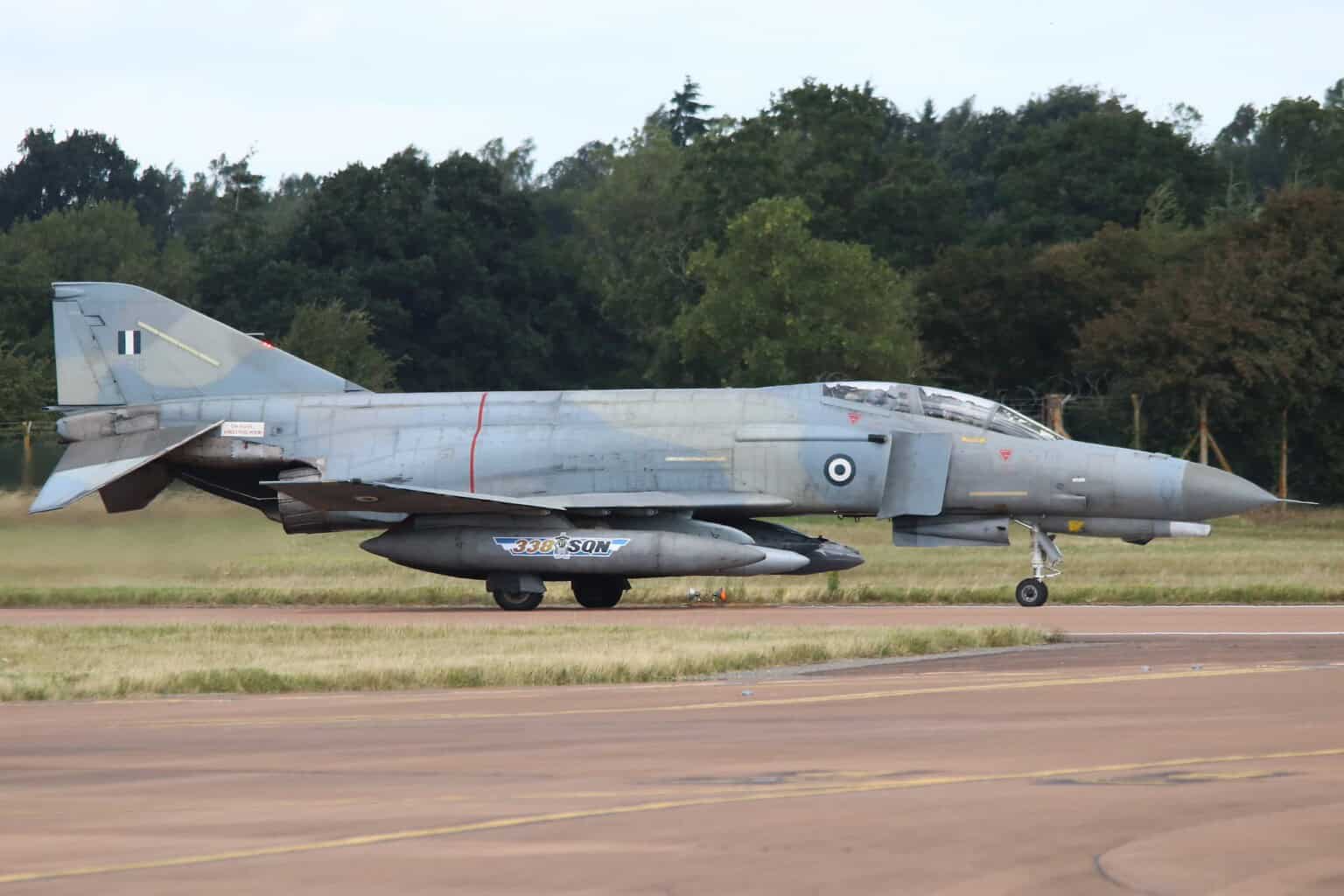
A Hellenic Air Force F-4E Phantom II crashed during a flying display at Athens Flying Week on Saturday, September 5, 2026, killing both crew members. The jet went down at 2:55 p.m. local time about 3 nautical miles southeast of Tanagra Air Base, roughly 40 miles (60 km) north of Athens, the Hellenic Air Force General Staff said.
What happened
The Phantom was flying with 338 Squadron of the 117 Combat Wing, normally based at Andravida in the western Peloponnese, and had deployed to Tanagra for the show. According to the air force, it crashed within the first minutes of its routine while flying a low-altitude maneuver.
The Hellenic Air Force General Staff identified the crew only by rank and initials: a squadron leader and a flight lieutenant, both rated pilots. Neither ejected. Video shared online shows the aircraft in a nose-low attitude before it struck open ground and exploded.
The impact started a fire that spread into nearby brush. About 85 firefighters and 11 water-dropping aircraft and helicopters were sent to contain it, and an evacuation alert went out to residents near the base. No spectators were hurt, though Eleftheros Typos reported that two workers near the crash site were taken to a hospital in Chalkida with minor injuries from debris.
NEW: A Hellenic Air Force F-4E Phantom II has crashed while performing a solo display at Athens Flying Week in Tanagra, Greece.
— Tabz (@TabzLIVE) September 5, 2026
No parachutes were visible following the crash, and there is no official confirmation regarding the condition of the crew. pic.twitter.com/zrCHC8g3vl
Organizers cancelled the rest of the weekend’s flying, and Defense Minister Nikos Dendias declared three days of mourning for the armed forces. “The sense of grief is widespread, and our thoughts are with the families of the two pilots we lost,” Prime Minister Kyriakos Mitsotakis said in remarks reported by The Associated Press.
It was the second fatal aviation accident near Athens this summer, after two firefighting helicopters collided over a wildfire west of the capital in August.
What is not yet known
The cause has not been established. A Hellenic Air Force board of inquiry is examining the wreckage, flight data, maintenance records and radio traffic. Early accounts of the final seconds come from spectator video, not official findings, and may change.
Why Greece still flies a 1960s fighter
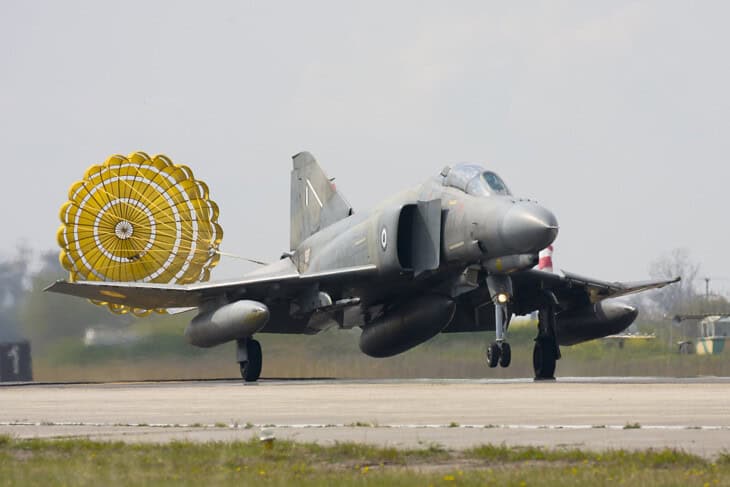
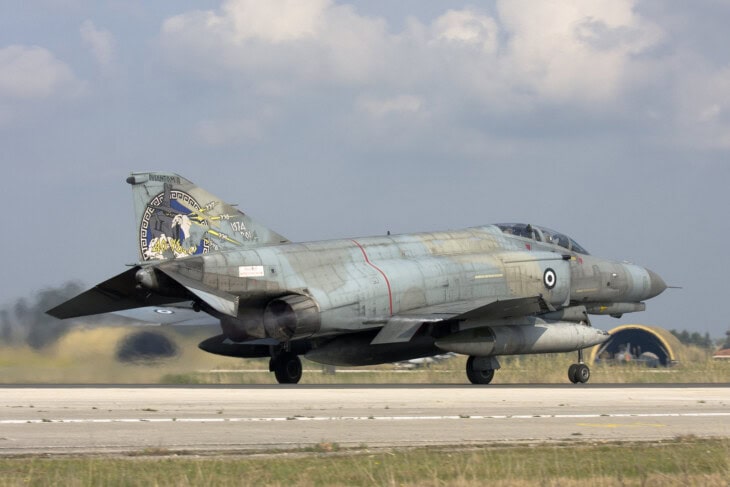
The F-4 Phantom II, built by McDonnell Douglas, first flew in 1958 and became one of the defining fighters of the Cold War. Greece received its first Phantoms in 1974 and today operates one of only two military Phantom fleets left in the world, alongside Turkey.
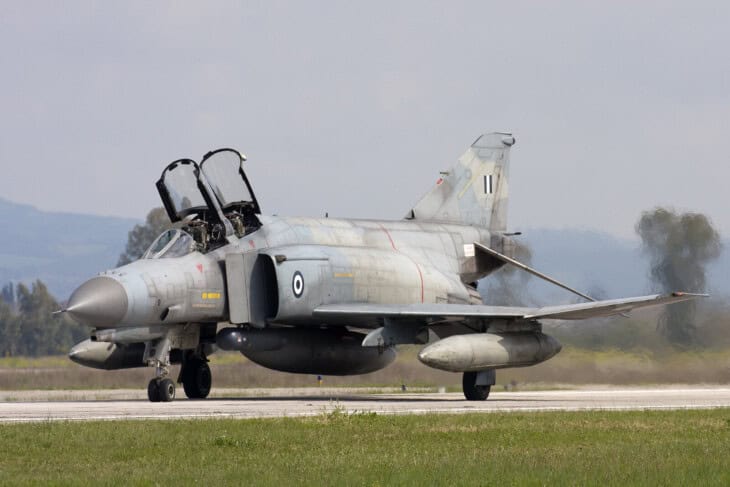
About 18 aircraft remain airworthy, all with the 117 Combat Wing at Andravida. They were rebuilt in the late 1990s and early 2000s under a German-led upgrade that added a modern radar, new cockpit displays and a new mission computer, keeping a 50-year-old airframe useful well past its design life.
Greece plans to retire the type as its new Rafale fighters and, later, F-35s come online. Saturday’s loss takes one more flyable example out of a shrinking fleet of an aircraft that once served a dozen air forces.
The narrow margins of display flying
Air show accidents tend to happen low and slow, where there is little room to recover a mistake or a malfunction. Display routines are flown to briefed minimum heights and speeds for that reason, and investigators typically start by asking whether the aircraft was where its profile called for it to be.
Ejection seats also have limits. They need enough height and a survivable aircraft attitude to carry a crew clear and get parachutes open. A fighter pointed at the ground at low altitude can be below that envelope even with a modern seat, which is the likely reason neither Greek pilot escaped. Past air show disasters have turned on the same few seconds.
The Hellenic Air Force has not said whether it suspects a technical failure, a bird strike, or a flight-path error, and cautioned that the investigation is at an early stage. A preliminary account is expected in the coming weeks, with a full report later.
Sources and references used for research and fact-checking.
Get the Newsletter
The latest aviation news and stories sent to your inbox.
About the Author

Tim is the owner and lead editor of AeroCorner since 2019, overseeing aviation content covering aircraft, airlines, airports, and the broader aviation industry. Through years of researching, writing, editing, and publishing aviation-focused content, he has developed extensive practical knowledge of commercial aviation and air travel. Based in Asia and a frequent traveler himself, Tim also brings firsthand passenger experience to AeroCorner’s coverage. Outside of publishing, he has also explored aviation firsthand through hands-on flight training in New Zealand.