


On October 22, 2026, the FAA released draft Advisory Circular 150/5390-4, Vertical Flight Aircraft Infrastructure Design, a single set of design standards for the landing sites used by helicopters, eVTOL air taxis and other vertical takeoff aircraft.
Once final, it replaces both the current heliport design guide and the separate engineering brief written for vertiports. The FAA is taking comments until January 11, 2027.
What the draft does
Today a heliport is designed to AC 150/5390-2D, Heliport Design, issued on January 5, 2023. A vertiport for eVTOL aircraft adds Engineering Brief 105A, a supplement to that circular dated December 27, 2024.
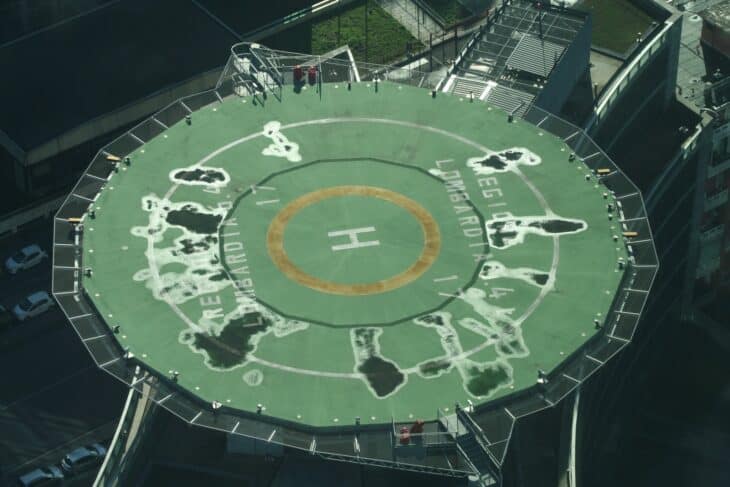

The draft folds both into one document. In its letter to industry, the FAA’s Airports Engineering Division says the guidance is based on FAA research into how different vertical flight aircraft actually perform, and that it moves toward performance-based design for helicopters and powered-lift aircraft alike.
The FAA’s announcement groups the content into five areas: the core layout of landing and approach areas, lighting and markings, fueling and electric charging, fitting vertical flight infrastructure into existing airports, and rooftop or elevated sites.
“The next generation of aircraft is here, and we are ensuring we have the infrastructure built to support safe takeoffs and landings for them across the National Airspace System,” FAA Administrator Bryan Bedford said.
The changes that matter most
A shallower approach for powered-lift aircraft. Where the critical aircraft at a site is powered-lift, one of the categories eVTOL aircraft are being certified in, the draft sets the approach surface at 15:1 or shallower. Engineering Brief 105A used 8:1 for vertiports, the same slope heliports use.
Both surfaces run 4,000 feet (1,219 m) out from the landing area. At 8:1 the protected airspace has climbed 500 feet (152 m) by its far end; at 15:1 it has climbed only about 267 feet (81 m), so buildings and towers along the path have less room beneath it.
There is a catch the draft spells out. The FAA evaluates obstructions only against the 8:1 surface in its Part 77 rules, so a shallower slope is not checked by the FAA or considered in charting when someone plans a new object. Sponsors are told to record any shallower slope in the FAA’s Airport Data and Information Portal.
Fewer heliport categories. The Transport Heliport category goes. Hospital heliports and vertiports keep their own distinctions where specialized guidance applies.
Landing areas sized by research. Touchdown and liftoff areas are resized using landing scatter research and are tied to rotor diameter, so the sizing works across different lifting configurations, from a conventional helicopter rotor to multi-rotor eVTOL layouts.
Rotor wash zones for everyone. Engineering Brief 105A already asked vertiports to mark a downwash and outwash caution area wherever the wind from an aircraft could reach 34.5 mph (55.5 km/h). The draft carries that standard into the combined document, which also covers pads for civilian helicopters.
Airports without a new pad. The draft expands guidance on aiming points, a marked spot that gives an arriving aircraft a visual target, as an alternative to building a dedicated helipad at an airport under specified conditions. It also updates the separation between on-airport helipads and runways, including wake turbulence.
The FAA says data from its eVTOL Integration Pilot Program will inform later revisions.
Who has to follow it
An advisory circular is guidance, but not always optional. The draft says its standards are mandatory for projects at federally obligated airports and heliports funded through the Airport Improvement Program, under Grant Assurance 34, and for projects funded by Passenger Facility Charges.
That is the same grant-assurance lever that came up in the Burke Lakefront fight in Cleveland: federal money brings federal conditions. Outside those cases, the draft says, conformity is voluntary and the circular is not legally binding in its own right.
The draft also restructures the text into Standards, Recommended Practices, Design Considerations and Requirements, so designers can tell what the FAA requires from what it merely suggests.
How this fits the longer road
The FAA has tried vertiport standards before. A 1991 vertiport circular based on civil tiltrotors was cancelled in 2010, according to Engineering Brief 105A. The tiltrotors it was written for were never used commercially.
Its return began with Engineering Brief 105 in 2022. When the revised 105A arrived, AIN reported in January 2025 that the FAA had dropped a stand-alone vertiport circular in favor of a unified vertical lift circular due by June 30, 2027.
That is the document now in draft. The FAA says it will publish the final standards in summer 2027. It is one piece of a wider push on powered-lift aircraft that also includes MOSAIC’s light-sport path for personal eVTOLs.
1991
First vertiport circular. Written for civil tiltrotors; cancelled in 2010.
2022
Engineering Brief 105. Interim vertiport design guidance for eVTOL aircraft.
January 5, 2023
AC 150/5390-2D. The current heliport design circular.
December 27, 2024
Engineering Brief 105A. Recasts vertiports as a type of heliport.
October 22, 2026
Draft AC 150/5390-4. One document for all vertical flight facilities.
January 11, 2027
Comment deadline. Final standards expected in summer 2027.
How to comment
The draft, an industry letter and an Excel comment matrix are on the FAA’s draft advisory circulars page. The FAA wants comments in that matrix, with a reason for each, sent to [email protected] by January 11, 2027.
A virtual Industry Day follows on November 10, 2026, from 10:00 a.m. to 1:30 p.m. EST. Questions for that session are due by November 2, and taking part does not replace a written comment.
Sources and references used for research and fact-checking.
- FAA, FAA Releases Draft Design Standards for Vertical Flight Facilities
- FAA, Draft Advisory Circulars (Office of Airports)
- FAA, Industry Letter for Draft AC 150/5390-4
- FAA, Draft AC 150/5390-4, Vertical Flight Aircraft Infrastructure Design
- FAA, Engineering Brief 105A, Vertiport Design
- FAA, AC 150/5390-2D, Heliport Design
Get the Newsletter
The latest aviation news and stories sent to your inbox.
About the Author

AeroCorner News is the aviation news desk of AeroCorner.com. It covers accidents and incidents, safety rulings, airline and airport disruption, and new aircraft. It works from primary sources such as the NTSB, FAA, EASA and the manufacturers' own announcements.