

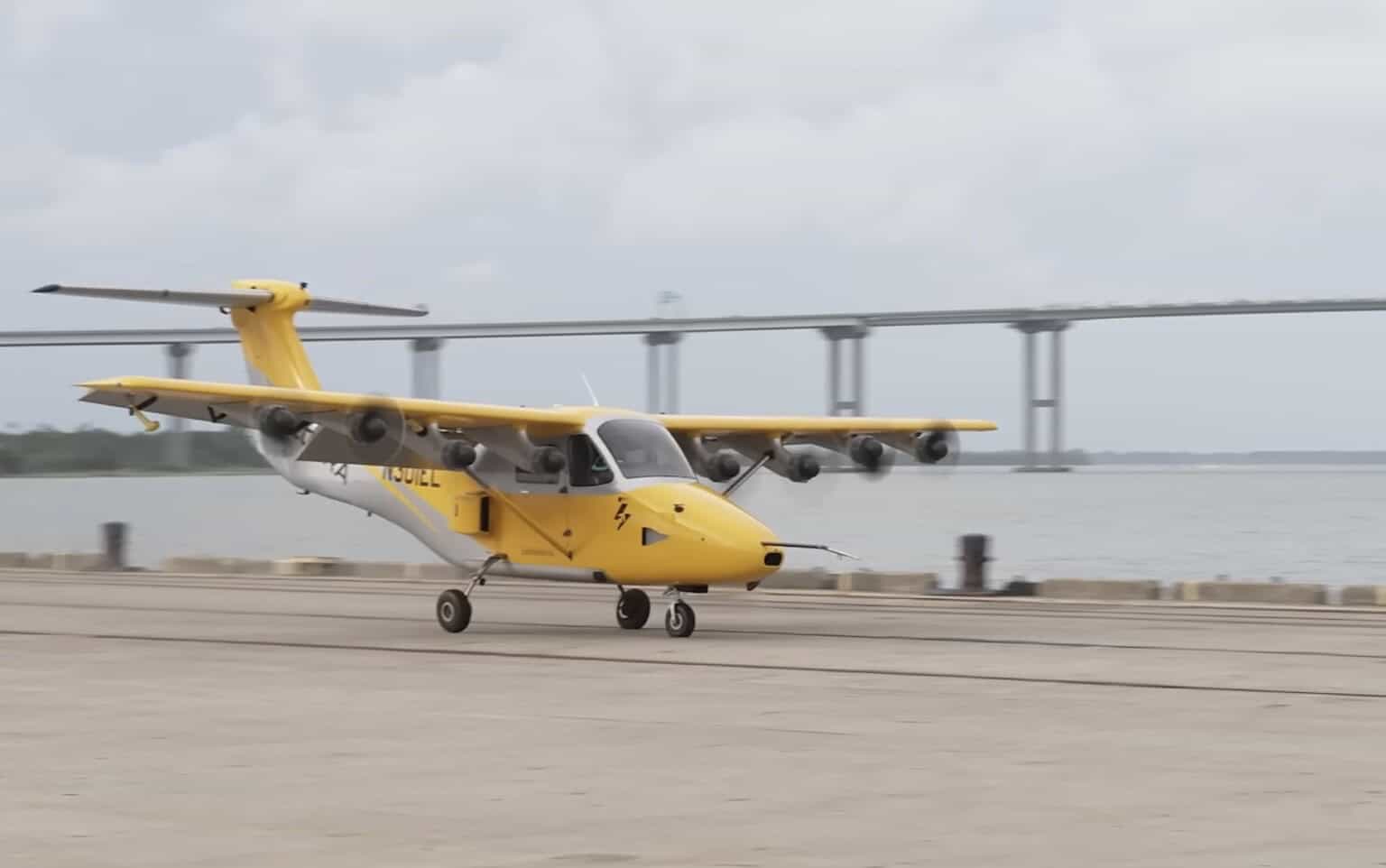
On August 18, 2026, Electra flew a hybrid-electric prototype from Philadelphia’s Tioga Marine Terminal to North Philadelphia Airport, a short demonstration flight meant to show regulators and local officials what an aircraft that needs almost no runway can do.
A Plane That Takes Off Like an Elevator
The aircraft, Electra’s two-seat EL2 technology demonstrator, carries eight propellers along its wing’s leading edge and a turbogenerator that converts jet fuel into electric power for them, according to WHYY. Electra says the design needs 150 feet or less to take off and land, a fraction of what a conventional fixed-wing aircraft requires.
“Most passengers have described flying the airplane as like being on an elevator,” Electra senior vice president J.P. Stewart said, according to WHYY. “It takes off and lands in six or seven seconds.”
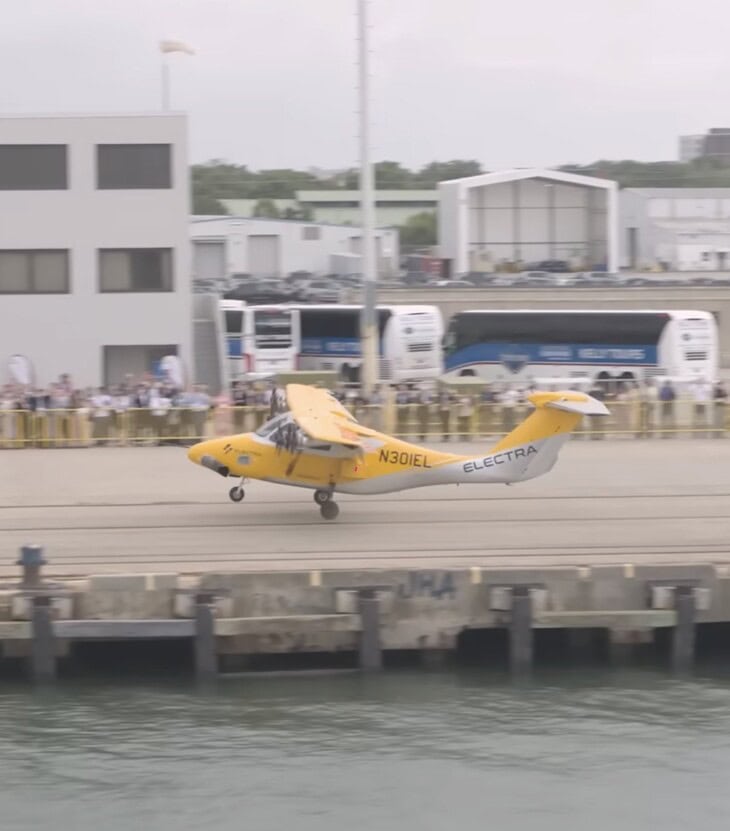
Pennsylvania state and Philadelphia city officials attended the demonstration, and NBC10 Philadelphia reported that Electra is eyeing short regional routes such as Philadelphia to State College, or Atlantic City to New York, once the technology reaches commercial service.
Not the same as an air taxi
Electra’s aircraft is a fixed-wing plane that flies conventionally once airborne. It is not a vertical takeoff eVTOL like the air taxis being developed by other companies; the short-field trick comes from blowing propeller wash directly over the wing to generate lift at very low speed.
A Federal Program Built to Fast-Track This
The flight is part of Pennsylvania’s project inside the FAA’s Electric Vertical Takeoff and Landing and Advanced Air Mobility Integration Pilot Program, or eIPP, which the FAA and Transportation Secretary Sean Duffy announced on March 9, 2026.
Eight projects across 26 states were selected to run real-world tests of next-generation aircraft, Duffy said, so the US can “lead the way in safely leveraging next-gen aircraft to radically redefine personal travel, regional transportation, cargo logistics, emergency medicine and so much more.”
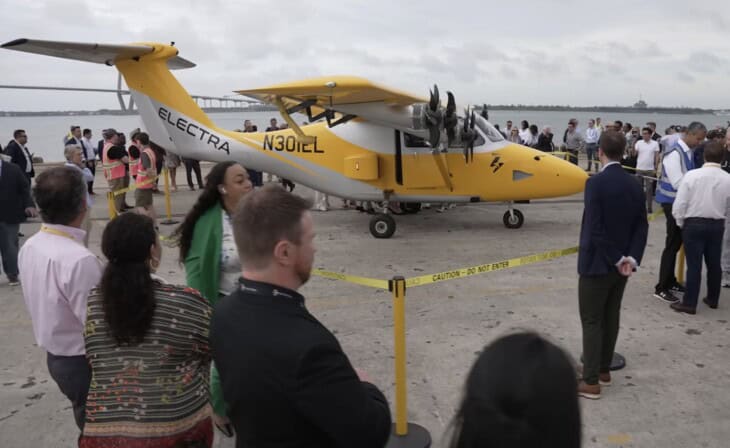
Pennsylvania’s project pairs the state’s Department of Transportation with New Jersey’s, aiming at short hops between the two states and into New York, Electra said in a separate release. The pilot program lets states and manufacturers work out ground infrastructure and operating rules before a wider commercial rollout, rather than certifying an aircraft first and figuring out routes later.
The two-seat EL2 that flew in Philadelphia is a scaled-down proof of concept. Electra’s actual production aircraft, the nine-passenger EL9, is still in development, with FAA certification targeted for 2029 and commercial flights expected in 2030.
Still years from a ticket you can buy
Route ideas and fares like a projected $250, 1 hour 45 minute hop between New York and Washington are Electra’s own planning estimates, not confirmed schedules. The EL9 has not been certified, and the eIPP program itself is still in its first year.
Electra is one of several manufacturers racing to fill the gap between driving and a conventional airline flight for trips of roughly 50 to 500 miles, a category that also includes vertical-takeoff air taxis. Boeing’s sale of its Wisk eVTOL unit to Archer Aviation earlier this month was part of the same broader push toward short-hop electric flight.
Sources and references used for research and fact-checking.
Get the Newsletter
The latest aviation news and stories sent to your inbox.
About the Author

Tim is the owner and lead editor of AeroCorner since 2019, overseeing aviation content covering aircraft, airlines, airports, and the broader aviation industry. Through years of researching, writing, editing, and publishing aviation-focused content, he has developed extensive practical knowledge of commercial aviation and air travel. Based in Asia and a frequent traveler himself, Tim also brings firsthand passenger experience to AeroCorner’s coverage. Outside of publishing, he has also explored aviation firsthand through hands-on flight training in New Zealand.