

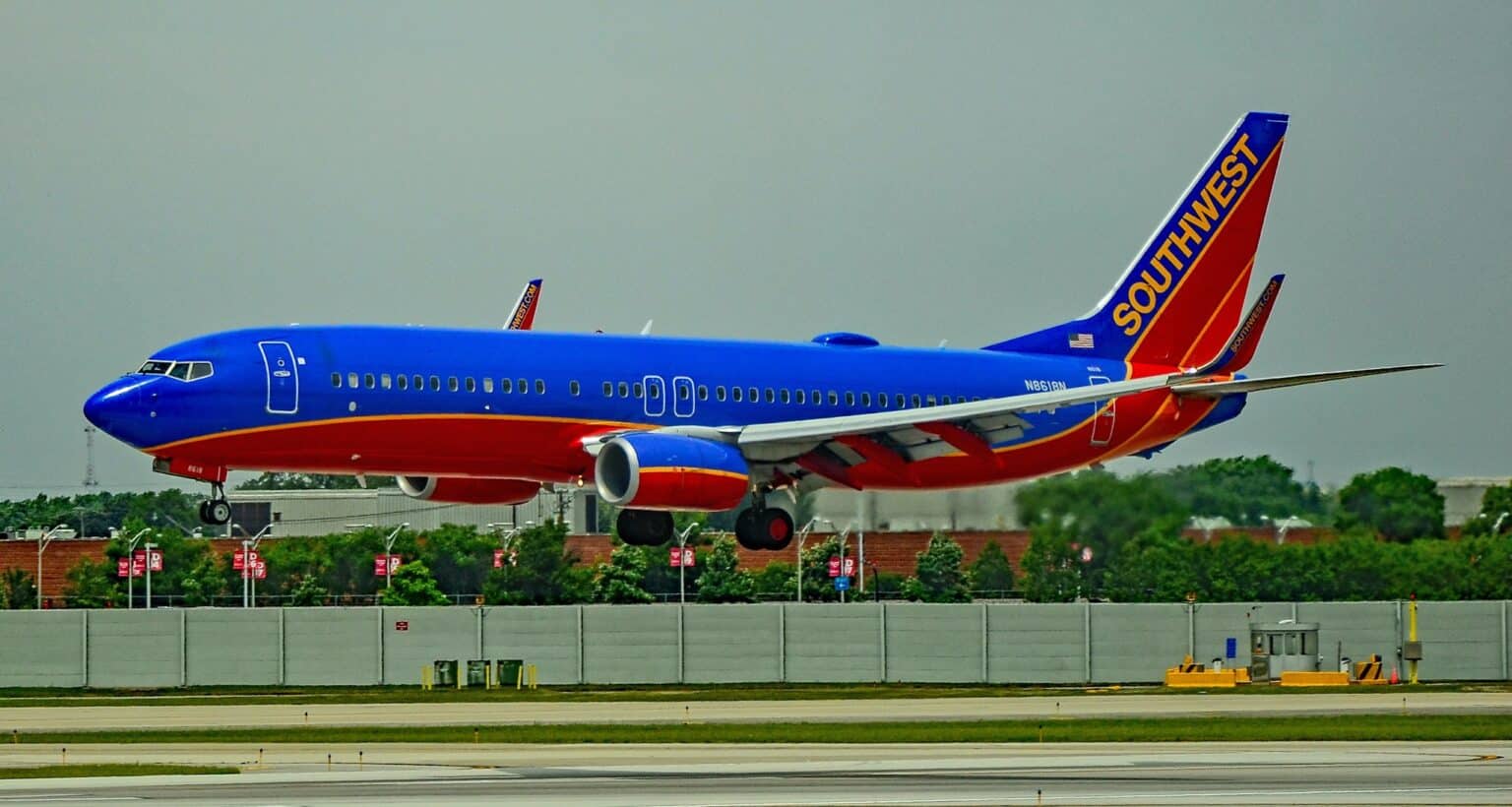
The Chicago Department of Aviation (CDA) closed Runway 22L at Chicago Midway International Airport to arrivals and departures on Monday, October 19, 2026. It warned that the shutdown could cause flight delays and cancellations until repairs finish, which it expects by mid-November.
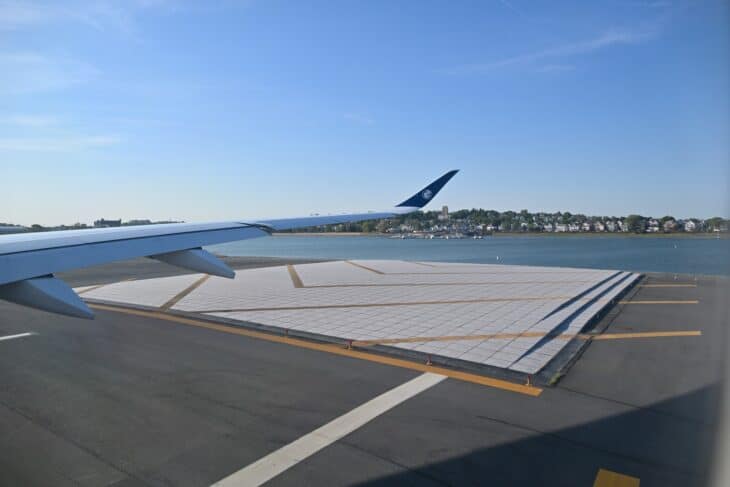
The work is on the runway’s Engineered Materials Arresting System (EMAS), a crushable bed past the runway end that is built to stop a jet that runs off it. City officials said the system was damaged by recent aircraft activity, including jet blast, WGN reported.
What the city said, and what it did not
CDA Commissioner Michael McMurray said that “safety is the top priority at Chicago’s airports” and that the department is “working to complete these repairs safely and promptly.” He added that the CDA is coordinating with the FAA and the airlines to reduce disruption, according to CBS Chicago.
The damage is at the departure end of the runway, ABC7 Chicago reported. The statement as reported names no aircraft, flight or date for it, and it does not describe a jet running into the bed.
The FAA’s public list of EMAS stops, whose latest entry is an April 2026 overrun at Teterboro, includes none at Midway.
How much travelers feel it will vary with airline schedules and the weather, the CDA said, especially wind direction, which governs how Midway’s four runways can be used. It told passengers to check their flight status and to work with their airline on any rebooking.
Why the wind decides how bad it gets
Only two of Midway’s four runways are open to its airline traffic. FAA airport data published by AirNav lists 4R/22L at 6,445 feet (1,964 m) and 13L/31R at 6,522 feet (1,988 m).
The other two, 4L/22R and 13R/31L, are shorter, and the same data says neither is available for scheduled passenger flights with more than nine seats. Those runway numbers are compass headings, so 22L points roughly southwest and its reverse, 4R, northeast.
With 22L shut, 13L/31R is the only other runway cleared for that airline traffic, unless the opposite direction of the same strip, Runway 4R, stays in use. The CDA’s statement as reported did not address 4R.
Airliners take off and land into the wind where they can, so the day’s wind decides which runway directions work. The FAA data also lists 22L as Midway’s preferred departure runway from 10 p.m. to 7 a.m., so the closure also removes its preferred night departure runway.
Midway handled about 2.1 million passengers and 20,423 takeoffs and landings in July 2026, the CDA’s traffic summary shows. The CDA did not name the airlines it expects to be hit.
Since leaving O’Hare, Southwest Airlines flies all of its Chicago service from Midway. It stopped flying from O’Hare after June 3, 2026, and a spokesperson said at the time that it could serve Chicagoland through its “strongly-held position at Chicago Midway,” AeroXplorer reported.
Why Midway has arrestor beds at all
EMAS is the FAA’s answer for airports that cannot fit a standard runway safety area, a cleared zone that the agency says often extends 1,000 feet beyond each runway end. A jet’s tires sink into the lightweight material, and the FAA says a standard bed stops most aircraft overrunning at 70 knots (about 80 mph).

Midway found out why it mattered on December 8, 2005. Southwest Airlines flight 1248, a Boeing 737-700, landed in snow and ran off the departure end of the runway then designated 31C, through a blast fence and the perimeter fence and onto a roadway, where it struck a car.
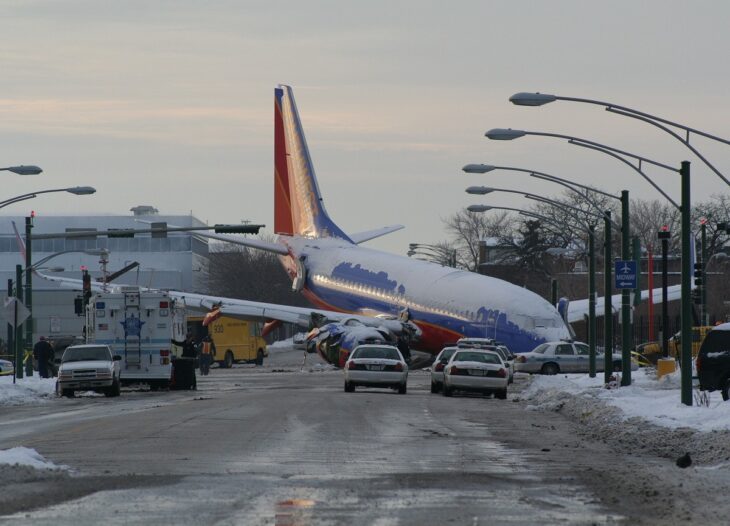

A child in the car was killed, according to the NTSB. The board found the safety area beyond 31C ran just 82 feet against a 1,000-foot standard. The FAA had judged a full one impracticable, since it would mean relocating Central Avenue, 55th Street and many businesses and homes.
The NTSB’s probable cause was the pilots’ failure to use reverse thrust in time. It listed the absence of EMAS as a contributor to the severity, and the EMAS manufacturer, modeling the crash for the board, found that a shorter, nonstandard bed would have stopped the 737 before it left airport property.
After the crash the FAA approved nonstandard beds at the ends of 31C, 13C, 4R and 22L. Why that stopping margin matters is the subject of AeroCorner’s look at how long a runway needs to be.
Runway Safe, which the FAA names as the sole maker of EMAS meeting its standard, says it replaced Midway’s arrestor systems from 2014, installing the world’s first greenEMAS, a foamed silica bed made from recycled glass, there that year. FAA data puts the bed beyond the departure end of 22L at 346 feet (105 m) long and 170 feet (52 m) wide.
Crain’s Chicago Business, which reported the closure as emergency repairs, put it at about a month. At the time of writing, early on October 20, the FAA’s airspace status page listed no delay program at Midway.
Sources and references used for research and fact-checking.
- NTSB, Runway Overrun and Collision, Southwest Airlines Flight 1248, Chicago Midway International Airport, December 8, 2005 (AAR-07/06)
- FAA, Engineered Material Arresting System (EMAS) fact sheet
- Chicago Department of Aviation, Midway International Airport operations, passengers, cargo summary, July 2026
- Runway Safe, MDW - Chicago Midway International Airport reference
Get the Newsletter
The latest aviation news and stories sent to your inbox.
About the Author

AeroCorner News is the aviation news desk of AeroCorner.com. It covers accidents and incidents, safety rulings, airline and airport disruption, and new aircraft. It works from primary sources such as the NTSB, FAA, EASA and the manufacturers' own announcements.