

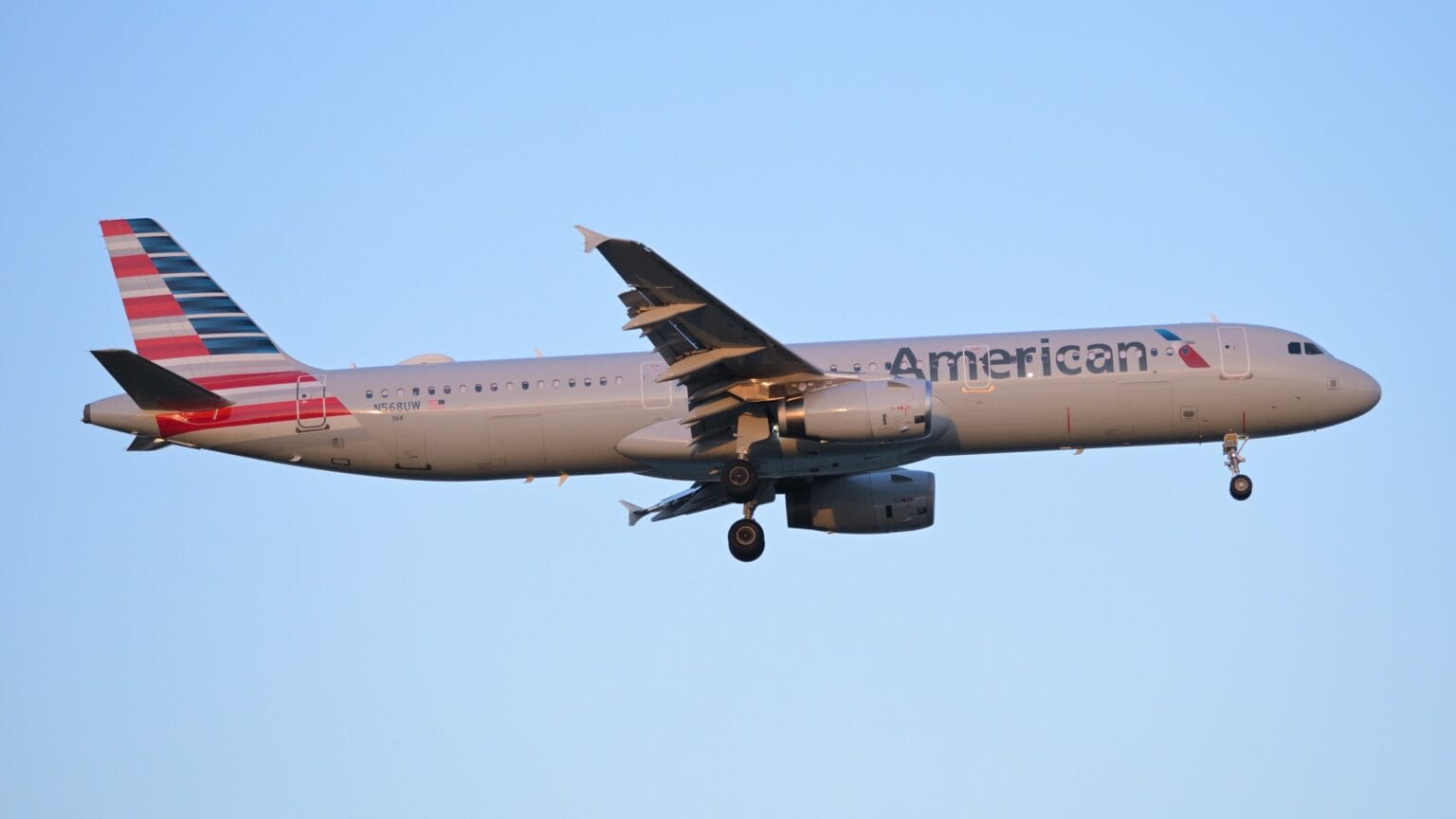
American Airlines flight AA1494 from San Diego to Chicago O’Hare diverted to Phoenix Sky Harbor International Airport early on Wednesday, November 25, 2026, after the crew reported a passenger disturbance on board. The FAA said the flight landed safely around 1 a.m. local time and that it will investigate.
Passenger video aired by local stations shows a man struggling with flight attendants, and a passenger said others on board helped restrain him. A man was detained after the diversion, ABC15 Arizona reported.
What happened on AA1494
AA1494 is a late-evening departure from San Diego that is scheduled to reach O’Hare before dawn. Flightradar24 data shows the Tuesday night flight departed San Diego at 10:53 p.m. Pacific time, against a 10:45 p.m. schedule, and logged about 1 hour 6 minutes of flight time before it landed in Phoenix.
That lines up with the FAA’s “around 1 a.m.” landing, because Arizona does not use daylight saving time and runs an hour ahead of California in winter. Phoenix sits about 300 miles (480 km) east of San Diego, close to the direct line toward Chicago.
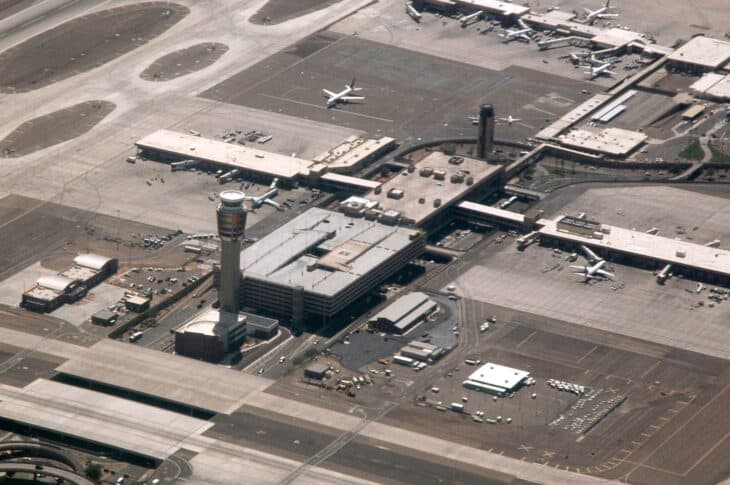

The same tracking data lists the aircraft as N568UW, an Airbus A321 in American’s fleet. Neither the FAA nor American has confirmed the tail number or said how many people were on board.
ABC15 reported that air traffic controllers reported a “Level 3 threat” aboard the plane. The FAA’s own statement, as quoted by ABC7 Chicago, says only that the crew reported a passenger disturbance.
Passenger Sean Bennett told ABC7 Chicago that “everyone sprang into action to restrain this man” and that the flight attendants were “remarkably orderly and calm.” He said the plane landed safely and no one on board was hurt.
What the man did to set off the disturbance has not been officially described. American Airlines had not commented publicly, and no police statement naming the passenger or any charge had been released at the time of writing.
The jet did not stay in Phoenix for long. Flightradar24 shows the same A321 leaving Phoenix for O’Hare at about 5:50 a.m. local time, roughly five hours after it landed.
What a “Level 3” threat means
US crews sort trouble in the cabin with the “Common Strategy,” a four-level scale developed with the TSA, the FAA, airlines and crew members after the 2001 Aviation and Transportation Security Act. The FAA sets it out in Advisory Circular 90-103.
Level 1 is disruptive behavior that is suspicious or threatening, such as verbal harassment or drunkenness. Level 2 is physical abuse, such as pushing, kicking, hitting or grabbing.
Level 3 is life-threatening behavior. The FAA’s examples include a weapon shown or used, credible bomb or hijacking threats, sabotage of aircraft systems, and deadly hand-to-hand moves such as choking. Level 4 is an attempted or actual breach of the flight deck.
The level matters because it is what the pilots pass to air traffic control. The circular asks crews to report the level of interference, whether they want priority handling and whether they plan to divert, and controllers then share the event on the FAA’s Domestic Events Network, which links the FAA, the TSA and other agencies in real time.
The FAA’s facility report on that network is meant to carry the flight number, aircraft type, nearest major city, altitude, transponder code and level of disturbance. That gives agencies on the ground the picture before the jet lands.
What the passenger could face
The FAA says it has a zero-tolerance policy on unruly passengers and investigates the cases crews report to it. It can propose fines of up to $43,658 per violation, and a single incident can produce several violations.
The agency has civil authority only, so criminal charges are a separate track. The FAA says it refers cases to the FBI when warranted, and that unruly behavior can also cost a passenger TSA PreCheck eligibility or a place on an airline’s internal no-fly list.
American has dealt with a similar case recently. In October, American flight AA339 turned back to Miami after a passenger allegedly threatened flight attendants.
Sources and references used for research and fact-checking.
Get the Newsletter
The latest aviation news and stories sent to your inbox.
About the Author
AeroCorner News is the aviation news desk of AeroCorner.com. It covers accidents and incidents, safety rulings, airline and airport disruption, and new aircraft. It works from primary sources such as the NTSB, FAA, EASA and the manufacturers' own announcements.