

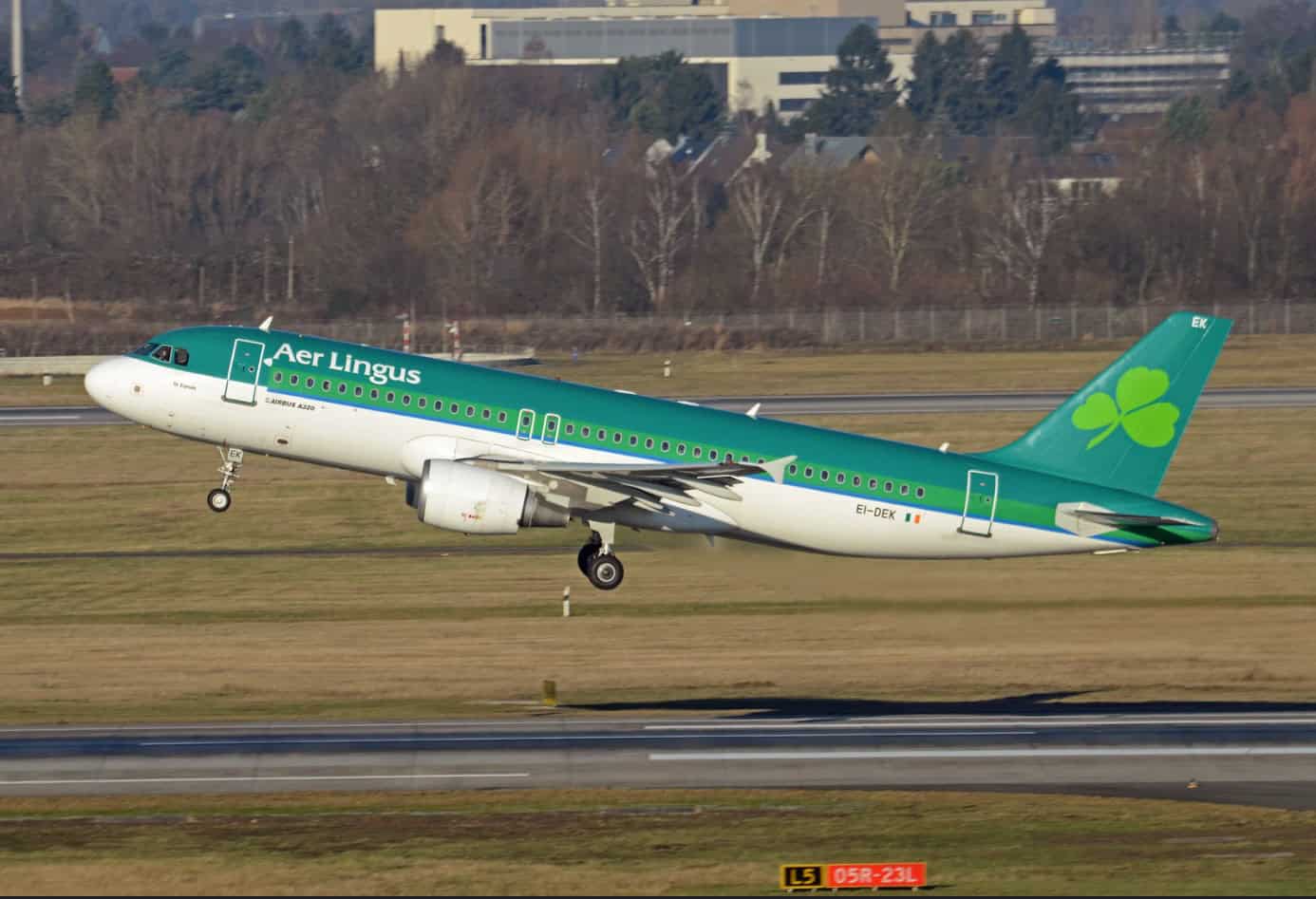
Ireland’s Air Accident Investigation Unit published its final report on July 31, 2026 into a January 14, 2025 incident involving an Aer Lingus Airbus A320. The report also revealed that Aer Lingus did not notify investigators of the incident until March 18, 2025, two months after it happened, well past the 72-hour window EU rules require.
By the time the AAIU learned what had happened, the aircraft’s cockpit voice and flight data recorders had already recorded over the flight in question. Investigators had to rebuild the sequence of events from radar tracks, air traffic control communications, and crew interviews instead.
What happened on the approach to Dublin
The A320, registration EI-DEE, was completing a flight from Faro, Portugal with 140 passengers and six crew aboard. On approach to Dublin, the commander believed a shortcut to the runway would still allow a stable descent and disconnected the autopilot to fly it manually.
The aircraft stayed high through the approach. Correcting for it, the crew banked to 44 degrees, well past the roughly 33-degree limit of a normal turn, and the airspeed dropped below the minimum protected speed twice.
What stopped it from going further
The A320’s flight control computers will not let the aircraft stall on their own. When speed drops toward the protected limit, the system automatically adds thrust and limits how far back the pilot can pull, the same protection that intervened here.
The crew abandoned the approach and flew a go-around, climbing back to about 4,200 feet before lining up for a second attempt roughly ten minutes later. The AAIU found the commander later said he had slept poorly the night before and may have been tired, listed as a contributing factor.
Why the 72-hour window matters
EU occurrence-reporting rules give an airline 72 hours to notify its national investigation authority of a serious incident. Aer Lingus has said it initially judged the event did not meet that threshold, then reversed course two months later.
Cockpit voice recorders keep only a rolling loop of the most recent flying, as little as two hours on older airframes, before taping over it. A gap of weeks all but guarantees the recording of the actual event is gone, which is exactly what happened here.
No safety recommendations followed
The AAIU closed the investigation without issuing safety recommendations, citing safety actions Aer Lingus had already taken. The airline said in a statement that it “acknowledges the publication of the AAIU report and the fact that there are no safety recommendations arising from it.”
That outcome sits somewhat apart from the reporting failure itself. The AAIU’s finding on the flight’s cause draws no formal criticism of Aer Lingus beyond the reporting delay, but the delay is the reason investigators had to reconstruct rather than simply replay what happened in the cockpit.
It is a familiar problem for AeroCorner readers: a British Airways A320 approaching Heathrow set off similar low-speed protections earlier this year, in a case reported promptly and with full recorder data intact.
“The sole objective of AAIU safety investigations and final reports is the prevention of accidents and incidents,” the agency said in its statement, a goal that depends on evidence reaching investigators before it disappears.
Sources and references used for research and fact-checking.
Get the Newsletter
The latest aviation news and stories sent to your inbox.
About the Author

Tim is the owner and lead editor of AeroCorner since 2019, overseeing aviation content covering aircraft, airlines, airports, and the broader aviation industry. Through years of researching, writing, editing, and publishing aviation-focused content, he has developed extensive practical knowledge of commercial aviation and air travel. Based in Asia and a frequent traveler himself, Tim also brings firsthand passenger experience to AeroCorner’s coverage. Outside of publishing, he has also explored aviation firsthand through hands-on flight training in New Zealand.