
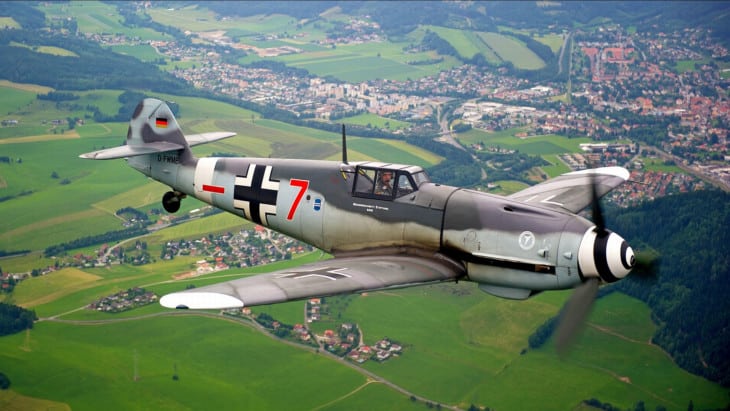
The P-40 Warhawk and the Bf 109 were World War II’s most famous fighter planes. Though they were used in various roles, they each had strengths and weaknesses. This blog post will look closely at the P-40 Warhawk and Bf 109 to see how they compare.
Curtiss P-40 Warhawk
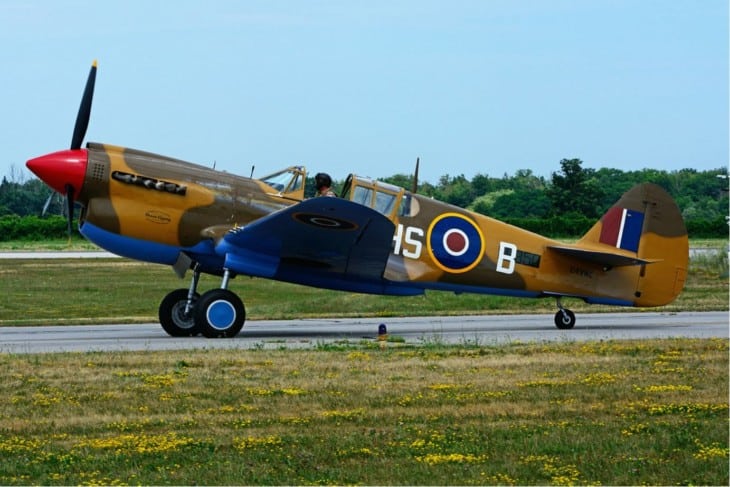
The P-40 Warhawk was an American single-engine, a single-seat fighter plane that first flew in 1938. It was used by the US Army Air Corps (USAAC) and many other Allied forces during World War II.
The P-40 was notable for its rugged construction, long-range, and maneuverability. However, it was not as fast or powerful as some of its counterparts, such as the Bf 109.
Why was it developed and built?
The P-40 Warhawk was an American aircraft developed and built during World War II. Designed initially as a pursuit aircraft, it served in fighter squadrons worldwide, fighting on the frontlines and in the air over occupied territories.
What purpose did it serve?
While other fighters of the era were specialized for specific mission types, the P-40 could perform a range of different roles, making it ideal for use by pilots in diverse operational contexts.
Whether defending against dive bombers or attacking enemy troop formations on the ground, there was no other aircraft quite like it! Despite its effectiveness on the battlefield, however, the P-40 Warhawk has mainly been forgotten by history.
Messerschmitt Bf 109
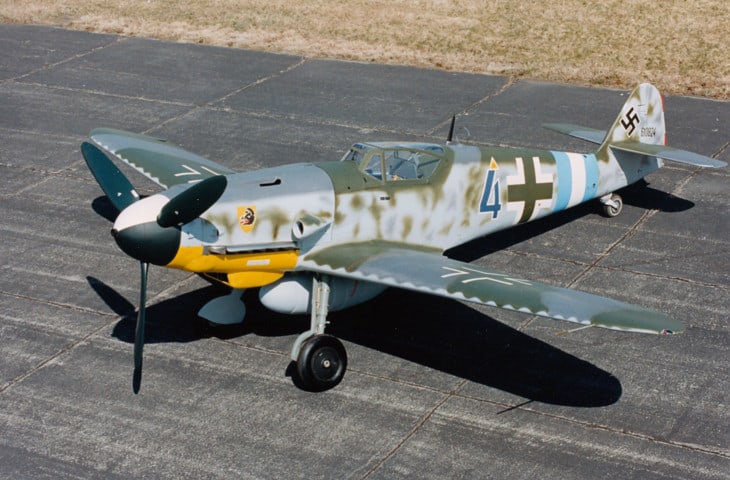
The Bf 109 was a German single-engine, a single-seat fighter plane that first flew in 1935. It saw action in all theaters of World War II and was one of the most produced aircraft in history.
The Bf 109 was known for its speed, agility, and strength. It could outmaneuver most enemy aircraft, but it did have some weaknesses, such as a short range and a tendency to overheat.
Why was it developed and built?
The Bf 109 was developed and built shortly after the outbreak of World War I. At that time, aircraft technology was still in its infancy, and there was a pressing need for new and more advanced planes that could help to give Germany a strategic advantage over its enemies.
The designers at Messerschmitt recognized this demand and set out to create an aircraft that would meet these specific needs. It had many advanced features, including an innovative cockpit design that allowed the pilot to get into position much more quickly than other planes.
What purpose did it serve?
The Bf 109 served as a fighter plane and was used in all theaters of World War II. It was one of the most versatile aircraft of the time and was used in various roles, including as a dive bomber, a ground-attack plane, and even as a night fighter.
Despite its successes, the Bf 109 is best remembered for its role in the Battle of Britain.
How are the P-40 Warhawk and Bf 109 different?
The P-40 Warhawk and the Bf 109 are two very different aircraft used in combat during WWII. It was known as one of the most maneuverable fighter planes of its time, with a powerful engine and a distinctive shark mouth painted on its nose.
Nonetheless, it was also heavy and underpowered, which made it less agile than the smaller and sleeker Bf 109. In contrast, the Bf 109 was fast and sleek, with a powerful engine that allowed it to tackle air and ground targets.
However, it lacked armor and self-sealing fuel tanks, which meant it was more vulnerable to enemy fire than the P-40. These two aircraft embodied many key differences between American and German military technology during WWII.
Despite their differences, they both played essential roles in helping their respective countries achieve victory during this crucial historical period.
How are the P-40 Warhawk and Bf 109 similar?
Though they were designed for different purposes, these two planes share some key similarities.
- For one thing, both the P-40 and the Bf 109 feature sleek, aerodynamic designs that make them fast and agile in the air.
- Both planes were armed with heavy-duty machine guns and cannons, allowing them to take down enemy aircraft at long range.
- Both were well-loved by their pilots and crews, who appreciated their speed and maneuverability in combat situations.
Overall, despite their differences in design and function, the P-40 Warhawk and the Bf 109 can be seen as two sides of a coin: dynamic fighters that helped shape the course of WWII.
What’s better about the P-40 Warhawk?
There is no question that the P-40 Warhawk was a truly remarkable aircraft. Not only did it perform superbly on the battlefield, but it also helped to pave the way for future innovations in military aviation.
At its core, this aircraft was defined by its durability, high speed, and exceptional maneuverability. In addition, its rugged design allowed it to withstand incredible amounts of damage without sustaining critical injuries.
Furthermore, the Warhawk’s performance on the battlefield set new standards for aerial combat. It repeatedly proved capable of taking on even the most feared enemy aircraft from any direction or angle with deadly accuracy and accuracy.
Truly, this aircraft represents a significant milestone in military aviation history that few others have managed to match. As such, it is clear that the P-40 Warhawk truly is remarkable.
What’s better about the Bf 109?
One aircraft that stands out from the rest is the Bf 109; a German fighter plane used extensively during World War II. The Bf 109 was smaller and faster than other warplanes of its time, making it incredibly versatile in combat situations.
With its sleek aerodynamic design, powerful engine capabilities, and impressive maneuverability, this legendary World War II-era aircraft has gained a reputation for being one of the best military planes ever created.
Many aspects make the Bf 109 an impressive machine, but perhaps the most significant is its incredible versatility. Whether engaging in heavy dogfights during intense aerial battles or simply performing routine training exercises, the Bf 109 can easily handle many conditions.
Additionally, this plane was built to be easy and enjoyable; even novice pilots can quickly grow accustomed to its unique handling characteristics and get up to speed quickly.
Conclusion
The P-40 Warhawk and the Bf 109 were iconic fighter planes during World War II. Though they had their strengths and weaknesses, they were widely used by Allied forces throughout the war. In the end, each plane had unique capabilities that suited it for different battlefield roles.