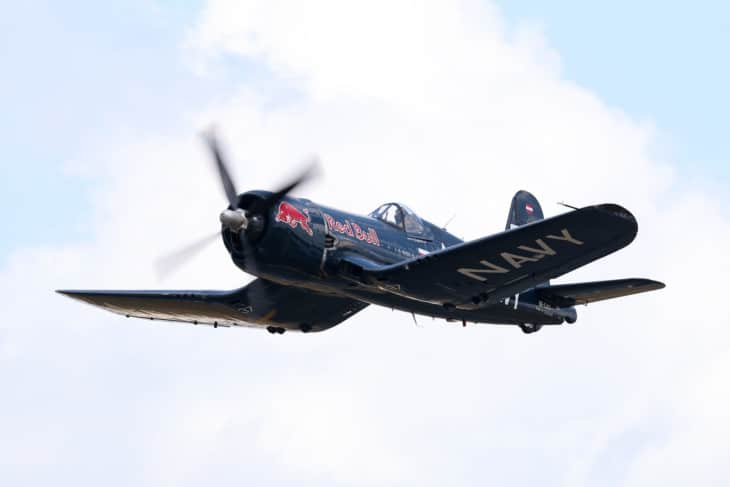

In the skies over Korea in the early 1950s, two aircraft came to dominate the battle for air superiority. On one side was the F4U Corsair, a powerful, fast American fighter plane. On the other side was the MiG 15, a nimble, agile Soviet fighter. This blog post will look at F4U Corsair vs MiG 15 strengths and weaknesses and see how they fared in combat against each other.
Vought F4U Corsair
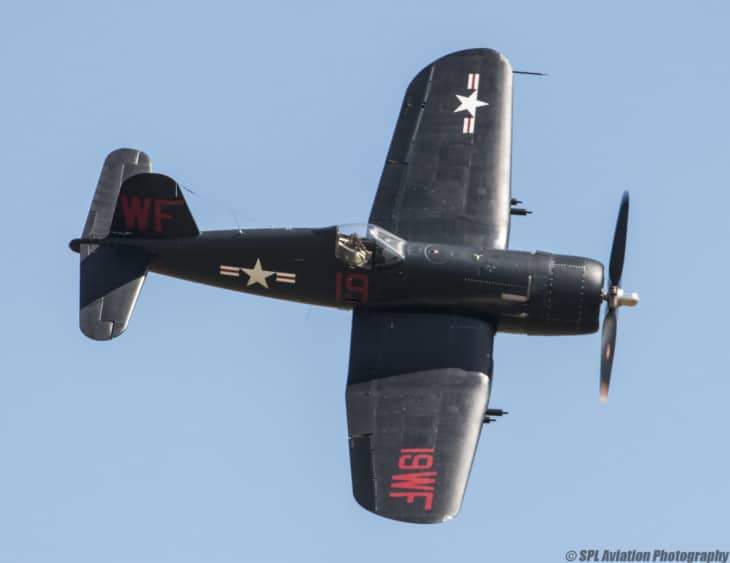
The F4U Corsair was one of World War II’s most successful fighter planes. With its unique inverted gull-wing design, the Corsair could easily take on enemy fighters and bombers. The Corsair was fast, maneuverable, and heavily armed. It could also take a lot of punishment and keep on flying.
Why was it developed and built?
In the early 1940s, the US Navy wanted a new fighter plane to replace the aging F4F Wildcat. The Corsair was developed to meet this need. It was designed by aircraft designer Keith Ferris and built by the engineering team at the Chance Vought Aircraft Company. The first Corsair flew in 1940, and it quickly became clear that this was an exceptional aircraft.
What purpose did it serve?
It first saw action in the Pacific Theater, where it quickly became feared and respected by friends and foes alike. The aircraft would go on to see action in every theater of World War II and became one of the most feared opponents of the Japanese Zero fighter. Thanks to its unique design, the Corsair could out-climb, out-maneuver, and out-gun any aircraft of its day.
About the MiG 15
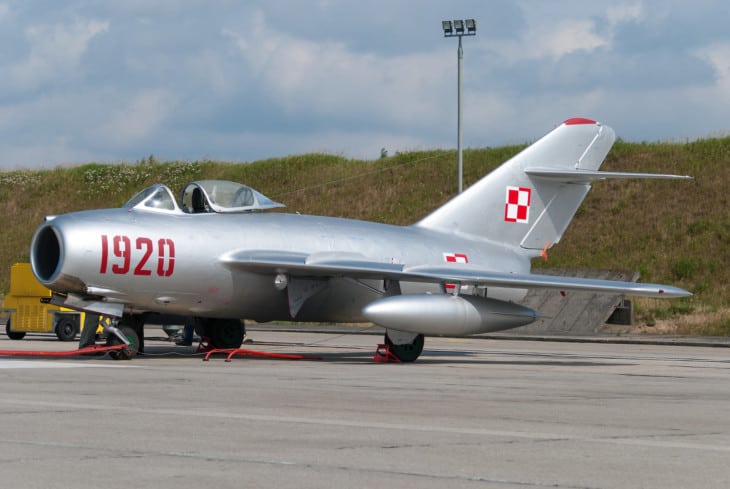
The MiG 15, on the other hand, was designed specifically to counter the American B-29 Superfortress bomber. It first saw action during the Korean War, where it quickly proved to be a match for any allied fighter plane. The MiG 15 was fast, maneuverable, and had a deadly array of weapons. It was also very rugged and could take a lot of punishment.
Why was it developed and built?
The Mikoyan-Gurevich MiG-15 is a jet fighter aircraft developed by the Soviet Union. The MiG-15 is powered by a single turbojet engine and is armed with two 23 mm cannons. It has a top speed of around 446 km/h and a ceiling of 12,600 m.
What purpose did it serve?
The MiG-15 was one of the first jet fighters to see combat in the Korean War, and it was also used by the Soviet Union, China, North Korea, and other communist countries during the Cold War. It was designed as an interceptor aircraft, but it was also used as a ground-attack aircraft and a fighter bomber.
How are the F4U Corsair and MiG 15 different?
The main difference between the two planes was their durability; the Corsair could take more damage and keep flying, while the MiG 15 tended to be more fragile and would often break apart in midair if damaged too severely. A few other differences include the following:
- The Corsair was designed as a carrier-based fighter, while the MiG 15 was designed for use from land-based airfields.
- The Corsair is significantly larger than the MiG 15, with a wingspan of almost 12 meters compared to just over 9 meters for the MiG 15.
- The Corsair is also powered by a more powerful engine, which gives it a higher top speed and rate of climb.
- The most significant difference between these two aircraft is in their armament.
- The Corsair is armed with six .50 caliber machine guns, while the MiG 15 has four 23mm cannons. These different weapons give each aircraft different strengths and weaknesses in combat.
- The two planes had different engines; the Corsair had a radial engine, while the MiG 15 had an inline engine.
- The Corsair also had a unique “inverted gull” wing design, while the MiG 15 had a more traditional straight wing.
Despite their differences, both planes were successful in combat and helped to secure air superiority for their respective side during the war. Overall, the Corsair is a more capable fighter than the MiG 15, but the MiG 15 is more agile and easier to fly.
How are the F4U Corsair and MiG 15 similar?
F4U Corsair vs MiG 15 both planes had their strengths and weaknesses but were evenly matched in speed, maneuverability, and firepower. They were fast and maneuverable and heavily armed with machine guns and cannons.
- The Corsair was designed by the American company Chance Vought, while the MiG 15 was designed by the Soviet Union’s Mikoyan-Gurevich bureau.
- The Corsair was faster than the MiG 15, but the MiG had a higher rate of climb. Both planes could reach altitudes of over 40,000 feet and had a range of over 1,000 miles.
- The Corsair was primarily used by the US Navy, while the MiG 15 was flown by the Soviet Air Force.
- Finally, they were considered highly effective fighters and played a significant role in the war’s outcome.
What’s better about the F4U Corsair?
There are many reasons why the F4U Corsair is considered one of the best fighter planes ever made. One key advantage was its superior speed and agility. The Corsair could reach over 400 miles per hour, outclassing most other fighter planes. It was also highly maneuverable, making tight turns and loops easily.
Another key advantage was its long range. The Corsair could stay in the air for hours, giving it a significant advantage over shorter-range competitors. Additionally, the Corsair was armed with six .50-caliber machine guns, making it a formidable dogfighter force.
What’s better about the MiG 15?
The MiG 15 was faster and more maneuverable than its predecessors and was armed with more powerful weapons.
It soon became the mainstay of the Soviet Air Force, and it saw action in several wars, including the Korean War. These aircraft are popular among aviation enthusiasts for many reasons.
- First, they are highly maneuverable, making them a joy to fly.
- Second, their unique design sets them apart from other aircraft.
- And finally, they have a long and storied history, having been flown by some of the world’s most famous pilots.
Conclusion
In the end, the F4U Corsair and MiG 15 were excellent aircraft that served their respective countries well. In combat against each other, they were evenly matched; only their different durability gave one side an advantage over the other.