

Table of Contents
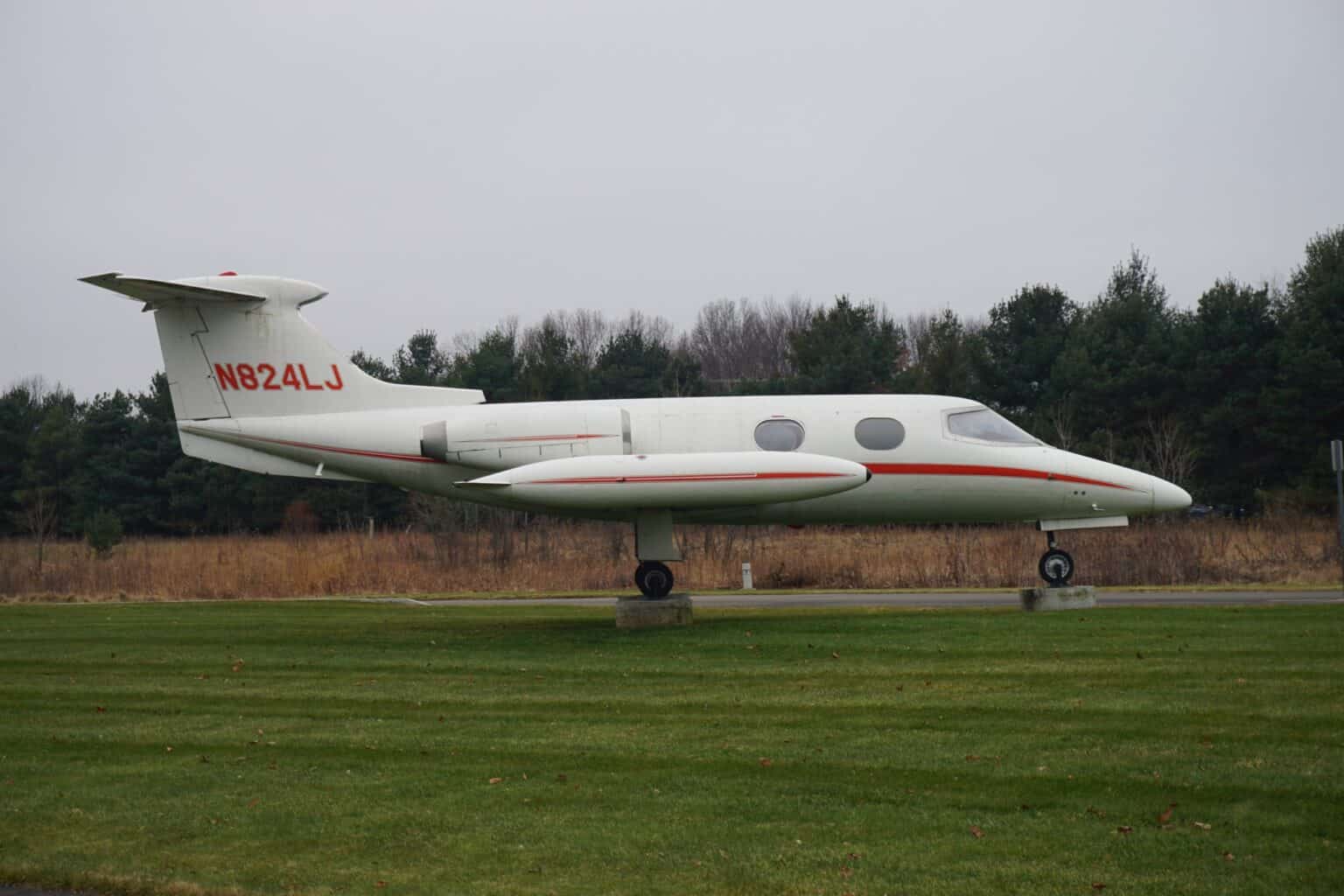
Frank Sinatra’s private jet was a six-seat Learjet 23, serial number 031, registered N175FS and named Christina II after his youngest daughter. He flew it for two years, from 1965 to 1967, and it logged more than 1,500 hours carrying him, the Rat Pack and a long list of famous friends.
Its most famous passengers were not Sinatra at all. In the early hours of May 1, 1967, Elvis Presley and Priscilla Beaulieu slipped out of Palm Springs on Sinatra’s Learjet, married in Las Vegas that morning, and flew back to Palm Springs on it afterward.
This guide covers the jet, the airliner and the Gulfstream that came before and after it, the Elvis flight and the airframe’s strange afterlife. We checked the story against the FAA’s own registry, and it corrects two things most retellings get wrong: which Learjet it was, and where it ended up.
Quick facts about Frank Sinatra’s private jet
Frank Sinatra’s Private Jet Fleet
Sinatra owned three aircraft that the record names, in this order: a converted Martin airliner, the Learjet and a Gulfstream II. The Learjet is the one that made history, so it gets the most space here.



The Origin Story: From a Flying Piano Bar to N175FS
The Learjet’s name only makes sense once you know there was a first Christina. Here is the record, from the airliner to the jet’s current registration.
Before 1965
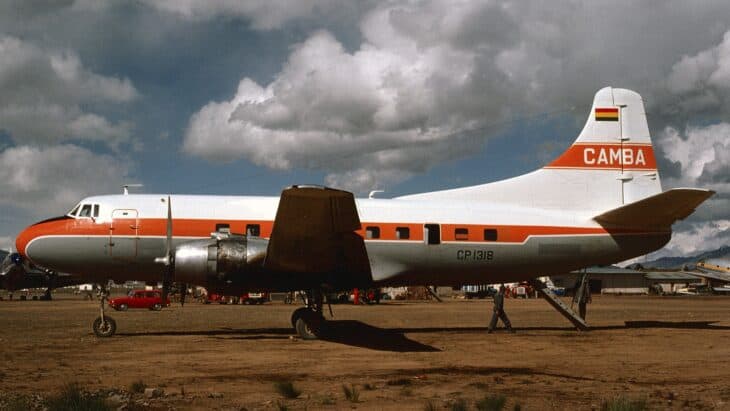
The Martin 4-0-4. Sinatra flies a customized twin-prop Martin airliner with a piano and a long central bar, first called El Dago and later renamed Christina after his younger daughter.
1964
The Learjet contract. Sinatra signs to buy one of Learjet’s first-generation business jets. The first production Learjet 23 is delivered on October 13, 1964.
June 1965
Christina II arrives. Serial 031, registered N175FS, becomes Sinatra’s jet. It seats six and has no bar.
July 4, 1965
Newport. Sinatra headlines the Newport Jazz Festival with the Count Basie Orchestra, about a week after taking the jet, according to Asia Times.
1966
The Sands. The Learjet flies him to Las Vegas for his show with Count Basie at the Sands Hotel, which opened with Come Fly with Me.
May 1, 1967
The Presley wedding. Elvis and Priscilla fly from Palm Springs to Las Vegas on Christina II, marry at the Aladdin, and fly back on it afterward.
June 1967
Sold. Sinatra trades up to a Gulfstream II, which has room for a bar.
March 11, 1969
New airworthiness date. The date the FAA file carries today for serial 031, which it now lists as a Learjet 24A.
January 6, 1977
A family tragedy. A different Learjet, a chartered 24B, crashes after leaving Palm Springs for Las Vegas, killing Sinatra’s mother, Dolly, and three others.
After 1967
New owners, new tail numbers. The jet passes to Thomas Friedkin and then Bernie Little as N777TF and N477BL, then to owners in Illinois and California.
2005
Found. Ronnie Powers of Atlanta Air Salvage buys an abandoned Learjet in California for $45,000 and finds the paperwork tying it to Sinatra.
April 27, 2024
Back on the register. The FAA issues a registration certificate for N175FS, serial 031, to Jet Set 1 LLC of Kalispell, Montana, valid until April 30, 2031.
Inside Christina II: Frank Sinatra’s Learjet 23
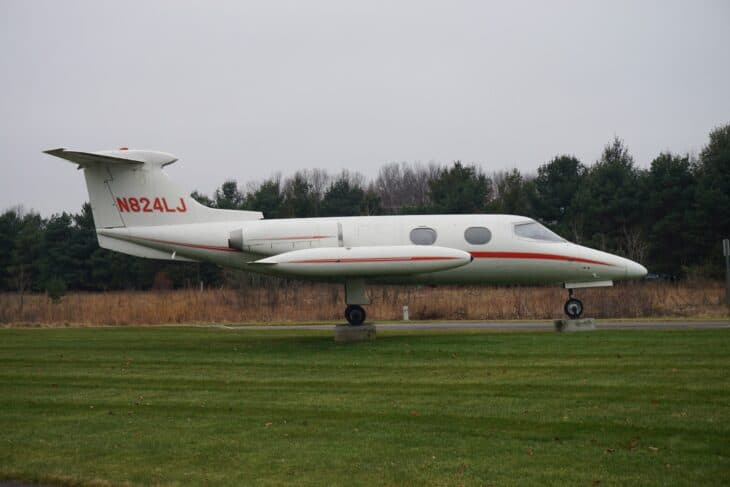
The Learjet 23 was the first Learjet model. It first flew on October 7, 1963, and only 101 were made between 1964 and 1966, so serial 031 was one of the early ones.
It was small and very fast. Two General Electric CJ610-4 turbojets pushed it to a 518 mph (834 km/h) cruise at 40,000 feet, and GE Aerospace’s own history says it could allegedly outclimb an F-86 fighter.
Comfort was another matter. The cabin seated six, and The Daily Beast notes it had no bar, a real step down from the airliner Sinatra had been flying.
The Airframe
Performance
Sinatra’s Use
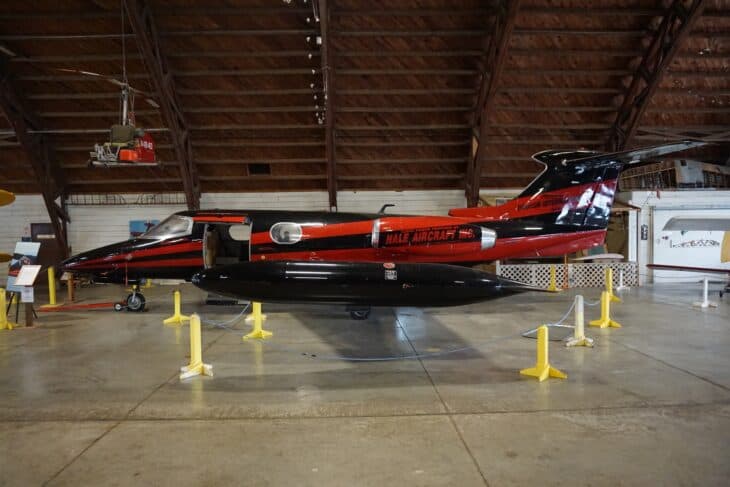

The jet was based with Clay Lacy Aviation at Van Nuys, according to Vintage Aviation News, and Sinatra lent it out freely. When it was busy, Lacy’s own early Learjet, N464CL, filled in.
Business Jet Traveler says the Learjet carried Sinatra, the Rat Pack and other entertainers to film locations, Las Vegas and Palm Springs. It also calls the jet his getaway car after nights of heavy drinking and brawling.
Learjet 23 or 24A? The Answer Is Both
Sources split on the model. Asia Times, GE Aerospace and Vintage Aviation News call Sinatra’s jet a Learjet 23, while the FAA registry and the sites that copy it list N175FS as a Learjet 24A.
Both are right, for different years. Serial 031 falls inside the 101-aircraft Learjet 23 run, and the 24A was a standard that existing Learjet 23s were converted to, first certified by the FAA on November 9, 1966.
The FAA file for serial 031 carries an airworthiness date of March 11, 1969, two years after Sinatra sold it. That fits a later upgrade, so the jet Elvis rode in was a Learjet 23, and the airframe on the register today is recorded as a 24A.
Why Christina II, not Christina
Sinatra had already used the name. His Martin 4-0-4 airliner, first called El Dago, was renamed Christina after his younger daughter, so the Learjet that replaced it became Christina II.
May 1, 1967: The Night Elvis Borrowed Sinatra’s Learjet
The wedding was planned to dodge the press. Shortly after midnight, Elvis and Priscilla went over the back wall of his Palm Springs home to waiting cars, which took them to the airport and Sinatra’s Learjet, according to Vintage Aviation News.
Six seats were not enough for a wedding party of 14, so a second chartered aircraft carried the rest. The couple got their license in the early hours and married just before 10 a.m. at the Aladdin Hotel, in a ceremony that took 18 minutes.
Then the newlyweds climbed back aboard Christina II and flew to Palm Springs for their honeymoon. “Frank had offered us the plane so that we could keep everything low-key and keep it private,” Priscilla later told Vanity Fair, as Cheat Sheet reported.
Elvis kept flying Clay Lacy’s Learjets after that. Years later he bought aircraft of his own, the Convair 880 Lisa Marie and a JetStar, covered in our guide to Elvis Presley’s private jets.
The Gulfstream II That Replaced It
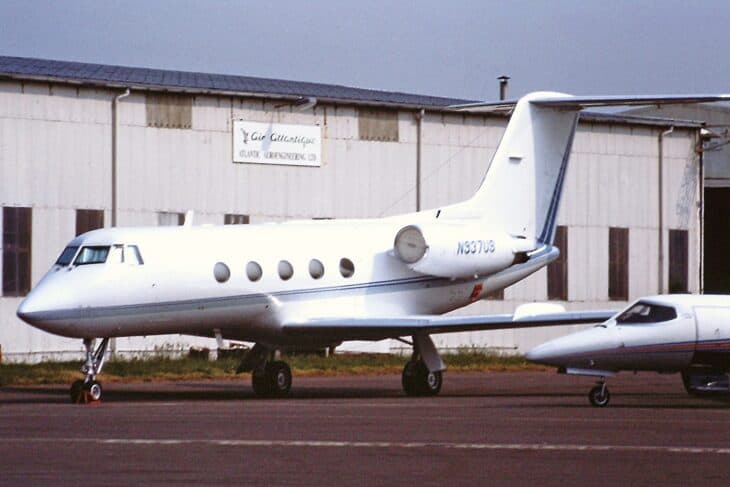
Sinatra sold the Learjet in June 1967 and moved up to a Grumman Gulfstream II, a far bigger jet that first flew on October 2, 1966. The Daily Beast notes that this one did have room for a bar, though a smaller one than the Martin’s.
That airframe had a long second life. A 2013 press release says a 1968 Gulfstream II once owned by Sinatra, and later by Harrison Ford, was donated to the Western Suffolk BOCES aviation maintenance program at Republic Airport on Long Island.
Ford learned to fly in the 1990s after buying a used Gulfstream II, as we cover in Harrison Ford’s private jet guide. The release does not give a registration, so we could not trace the Sinatra Gulfstream in the FAA files.
Where Frank Sinatra’s Learjet Is Now
Two stories keep circulating. One says Sinatra’s jet sits in the Palm Springs Air Museum, and the other reads a 2021 Asia Times headline, “Curtain closes on the storied Learjet of the stars,” as news that the airframe was gone.
Neither holds up. The Asia Times piece was about Bombardier ending Learjet production in 2021, and the Learjet that Vintage Aviation News places in the Palm Springs collection is N464CL, Clay Lacy’s jet, not Sinatra’s.
What the FAA registry shows
In the FAA’s November 2026 releasable database, N175FS is a valid registration on serial 031, a 1965 Learjet 24A with GE CJ610 engines. The certificate was issued on April 27, 2024, to Jet Set 1 LLC of Kalispell, Montana, and expires on April 30, 2031.
So the airframe survives, and it carries its original Sinatra tail number again. Getting there took decades: the jet flew as N777TF for Thomas Friedkin and N477BL for Bernie Little, according to a 2014 history of the airframe.
The same account says it was restored in 1985, then dropped out of sight after its owner, a California doctor, was jailed for insurance fraud. In 2005 Atlanta Air Salvage’s Ronnie Powers bought it, abandoned, for $45,000 and found papers tying it to Sinatra.
By 2014 it sat in a California warehouse with its wing and horizontal stabilizer removed, cared for by aviation historian Jeff Thomas, who called it “fully restorable.” A valid registration does not prove it flies, and we found no public report of its condition since.
Frank Sinatra’s Most Famous Private Jet Moments
The Newport comeback
Sinatra headlined the Newport Jazz Festival with Count Basie’s orchestra in 1965. Asia Times says he flew there about a week after taking delivery of the Learjet, and calls the show the one that resurrected his singing career.
Come Fly with Me at the Sands
In 1966 the jet carried him to Las Vegas for his show with Basie at the Sands Hotel, according to Business Jet Traveler. The set opened, fittingly, with Come Fly with Me.
Mia Farrow and the civil rights march
GE Aerospace’s history says Sinatra and Mia Farrow took their first date in the jet, and that it flew Marlon Brando and Sammy Davis Jr. to Mississippi to join Martin Luther King Jr. on a civil rights march. Business Jet Traveler describes the Farrow years as a globe-trotting romance.
The Learjet Crash That Killed Sinatra’s Mother
A decade after he sold Christina II, a Learjet brought the family its worst day. On January 6, 1977, Dolly Sinatra and her friend Anna Carbone took a chartered Learjet 24B, N12MK, from Palm Springs to see her son perform in Las Vegas.
Shortly after takeoff it struck a 9,700-foot ridge on San Gorgonio Mountain. Dolly Sinatra, Anna Carbone and the two pilots, Donald Weier and Jerald Foley, were killed, and the NTSB investigated the accident in report AAR-77-08.
Darkness, freezing temperatures and rugged terrain meant it took days to recover everyone aboard. Dolly Sinatra is buried at Desert Memorial Park in Cathedral City, near her husband Marty.
How Sinatra’s Jet Compares to Other Legends’ Aircraft
Sinatra’s Learjet is the opposite of the flying palaces that followed. Elvis’s Lisa Marie was a converted Convair 880 airliner, and Hugh Hefner’s Big Bunny DC-9 carried an oval bed and a disco.
Christina II was a six-seat sports car by comparison. It mattered because it was early: a star with a jet of his own in 1965, less than a year after the first Learjet 23 reached a customer.
Sinatra did have his airliner phase, though it came first. The Martin 4-0-4 with the piano and the bar was the big plane, and the Learjet was the upgrade in speed, not in size.
FAQ
Sources and references used for research and fact-checking.
- Federal Aviation Administration, Aircraft Inquiry (releasable aircraft database, November 2026 release): N175FS
- Airport-Data.com, N175FS aircraft record
- Asia Times, Curtain closes on the storied Learjet of the stars
- GE Aerospace, Come Fly Away: GE-powered Frank Sinatra and Elvis Presley
- Vintage Aviation News, Elvis and the Learjet
- Business Jet Traveler, Stars in the Sky
- The Daily Beast, Frank Sinatra and the Birth of the Jet Set
- Grasshoppair, Frank Sinatra and his Lear Jet N175FS
- Cheat Sheet, Frank Sinatra lent Elvis and Priscilla Presley his plane after their wedding
- AviationPros, JFI Jets owner donates Frank Sinatra aircraft to Long Island vocational academy
- Wikipedia, Learjet 23
- Wikipedia, Learjet 24
- Wikipedia, Dolly Sinatra
- National Transportation Safety Board, Aircraft Accident Report: Jet Avia, Ltd. Learjet LR24B, N12MK, Palm Springs, California, January 6, 1977 (AAR-77-08)
- HistoryNet, The Martin Four-Oh-Four
- Jazz Is Discovery, #Sinatra100: When Frankie met Basie
Get the Newsletter
The latest aviation news and stories sent to your inbox.
About the Author

Tim is the owner and lead editor of AeroCorner since 2019, overseeing aviation content covering aircraft, airlines, airports, and the broader aviation industry. Through years of researching, writing, editing, and publishing aviation-focused content, he has developed extensive practical knowledge of commercial aviation and air travel. Based in Asia and a frequent traveler himself, Tim also brings firsthand passenger experience to AeroCorner’s coverage. Outside of publishing, he has also explored aviation firsthand through hands-on flight training in New Zealand.