

Table of Contents
Browse any empty leg aggregator and the aircraft listings can feel like a foreign language. Phenom 300. Citation XLS. Challenger 350. Global 6000. If you are new to private aviation, these names tell you nothing about how much space you will have, how far the aircraft can fly, or whether a particular deal is suited to your route.
This guide breaks down the main aircraft categories you will find on empty leg deals, explains what each one actually offers, and covers why some categories generate far more available flights than others. If you want a primer on how empty legs work before diving into aircraft types, the article on what an empty leg flight actually is covers the basics.
Latest Empty Leg Deals
To see which aircraft categories are currently listed on repositioning deals, the AeroCorner empty leg deals page updates in real time and lets you filter by route and aircraft type.
Why aircraft category matters
Private jets are grouped into categories by size, range, and cabin configuration. These categories are not marketing labels: they describe meaningful differences in how far an aircraft can fly non-stop, how many passengers it carries, and how much space you have once you are seated.
For an empty leg passenger, the category matters for two practical reasons. First, it determines whether the aircraft can actually complete your intended route. A light jet with a range of 1,500 nautical miles cannot fly non-stop between New York and London. Second, it shapes the experience in the cabin: ceiling height, seat pitch, baggage space, and whether the aircraft has a full galley and enclosed lavatory all vary significantly by category.
The empty leg market is not evenly distributed across categories. Light and midsize jets dominate the available deals, simply because those aircraft make up the largest share of most charter fleets. Understanding the distribution helps you search more efficiently and set realistic expectations about what you are likely to find on any given route.
Light jets: the most common category
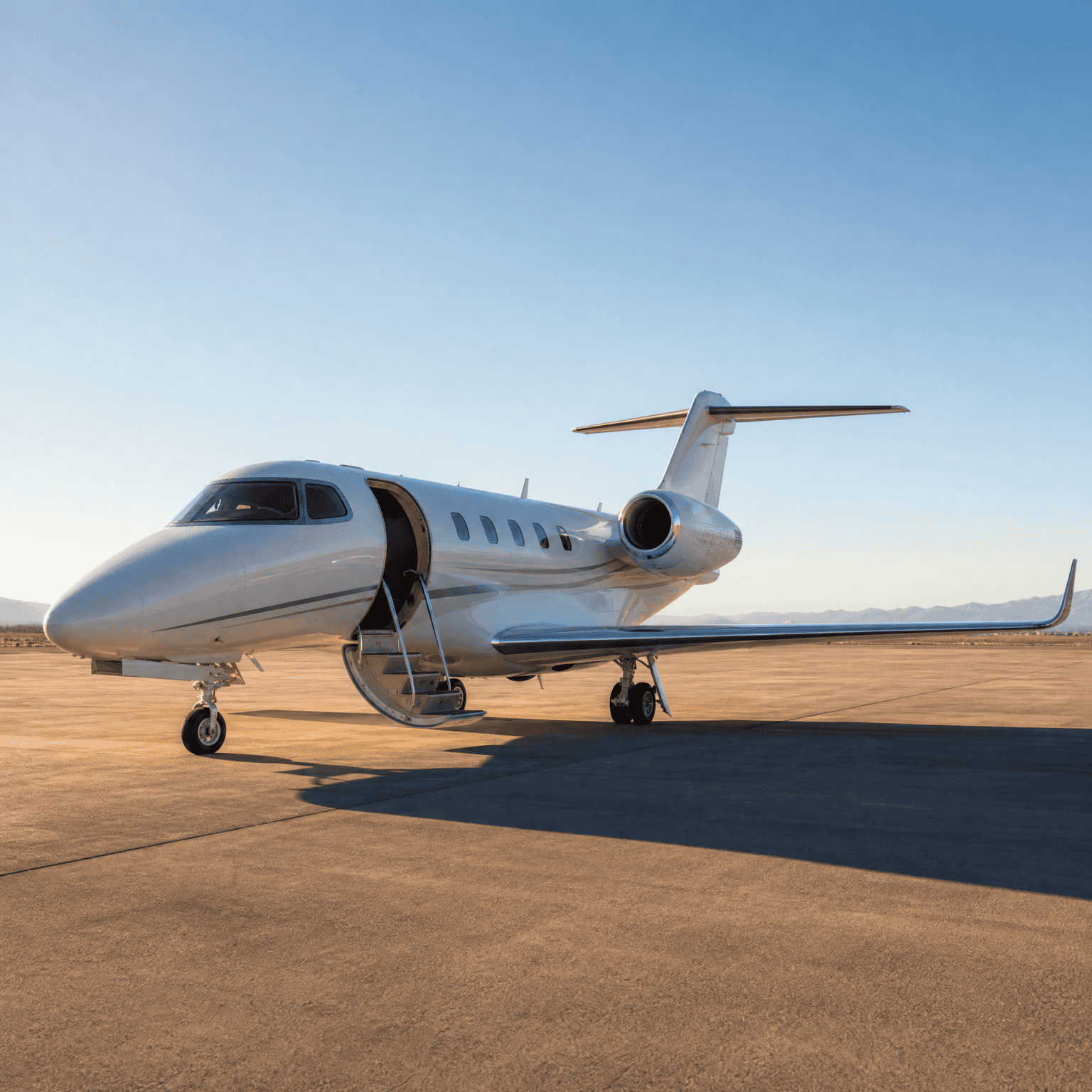
Light jets are the workhorses of the charter market, and they generate more empty leg flights than any other category. They typically seat four to seven passengers, cruise efficiently over short to medium sectors, and are cheaper to operate than larger aircraft. This makes them attractive to operators and popular with charter clients who do not need long range, which means they fly frequently and reposition frequently.
The cabin on a light jet is compact. Ceiling height is typically four to four and a half feet, which means most adults cannot stand upright. Baggage space is limited to a rear compartment and usually a small nose hold. On a one- or two-hour flight, none of this presents a significant problem: you are seated throughout, the ride is smooth, and the time passes quickly. On a three-hour sector, the limited space becomes more noticeable, particularly if you are travelling with luggage.
Common models you will see on empty leg platforms include the Embraer Phenom 300, the Cessna Citation CJ3 and CJ4, and older Learjet variants. The Phenom 300 in particular appears frequently across the market: it combines strong range for its category, a modern cabin, and relatively low operating costs, making it a fleet staple for many operators worldwide.
The Phenom 300: the aircraft you will see most
The Embraer Phenom 300 is consistently among the most delivered business jets in the world, year after year. It seats up to eight passengers in a pinch, but is typically configured for six. It has a modern glass cockpit, decent range for a light jet, and low operating costs compared to larger aircraft. If you are searching light jet empty legs, there is a good chance you will encounter a Phenom 300 or its updated variant, the Phenom 300E.
Midsize jets: the reliable middle ground
Midsize jets seat seven to nine passengers and can fly sectors of roughly 2,500 to 3,000 nautical miles without stopping. The cabin is noticeably more comfortable than a light jet: many midsize cabins offer a near-stand-up or full stand-up ceiling, a proper enclosed lavatory, and enough floor space to move briefly during flight.
Common midsize models on empty leg platforms include the Citation XLS and XLS+, the Hawker 800XP, and the Learjet 60. These aircraft are frequent in charter fleets, particularly in North America and Europe, which means they generate a consistent supply of repositioning flights. A New York to Miami sector, a London to Geneva repositioning, or a Dallas to Los Angeles route will often involve a midsize or light jet depending on what the operator has available on the day.
Super-midsize jets: range and comfort together
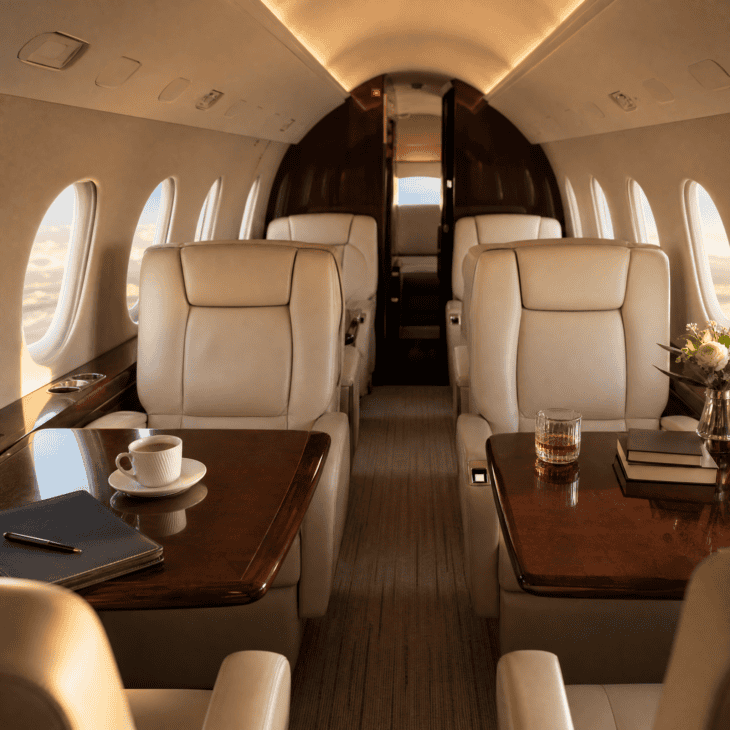
Super-midsize jets are the first category where you reliably get a full stand-up cabin, meaningful range (typically 3,500 to 4,500 nautical miles), and enough space to work comfortably or sleep on a longer sector. They seat eight to ten passengers and carry enough fuel to cover US coast-to-coast routes and many intra-European long-haul sectors without stopping.
Models common on empty leg platforms include the Bombardier Challenger 350, the Cessna Citation Longitude, and the Gulfstream G280. These are popular charter aircraft precisely because they bridge the gap between cabin comfort and operating economics: they cost more to fly than a midsize jet but significantly less than a full heavy jet, making them competitive for clients who need range without the cost of a large aircraft.
Super-midsize empty legs on longer domestic routes represent some of the better value available in the market. The cost of repositioning one of these aircraft across a continent produces deals that are significantly below the standard charter rate for the same route.
Heavy jets: exceptional when available
Heavy jets seat ten to fourteen passengers, offer ranges of 4,000 to 6,500 nautical miles, and have cabin environments that begin to resemble business class on a wide-body commercial aircraft. Stand-up cabins are standard. Many configurations include full galley kitchens, a dedicated crew rest area, and separate seating zones for sleeping and working on longer sectors.
Common heavy jet models include the Bombardier Challenger 604 and 605, the Gulfstream G450 and G550, and the Dassault Falcon 7X. These aircraft are expensive to operate, which means their repositioning flights generate large discounts in absolute terms, though the deal price still represents a significant spend relative to the lighter categories.
Heavy jet empty legs are less common than light or midsize deals, but they do appear, particularly on popular leisure routes and between major business hubs. If you are patient and your dates are flexible, an occasional heavy jet deal is worth watching for on the right route.

Ultra-long-range jets: rare but worth knowing
Ultra-long-range jets, including the Gulfstream G650 and G700, the Bombardier Global 6000 and 7500, and the Dassault Falcon 8X, are the largest and most capable private aircraft available for charter. They can fly non-stop between almost any two cities on earth, carry 12 to 19 passengers in hotel-standard cabin environments, and cost considerably more to operate than any other category.
Empty legs on these aircraft do exist, but they are relatively rare. The client base for ultra-long-range charter is smaller than for light and midsize jets, which means fewer total charter flights, fewer repositioning sectors, and fewer empty legs generated as a result. When these deals do appear, the discounts in absolute terms can be dramatic, though the floor price remains high relative to other categories.
For most people exploring the empty leg market for the first time, ultra-long-range jets are more of a curiosity than a practical target. They are worth knowing about if you are tracking transatlantic routes, but the likelihood of finding a deal on the right route at the right time is lower than in other categories.
A quick comparison: the three most common categories
Light, midsize, and super-midsize jets account for the large majority of empty leg deals available at any given time. Here is how the three categories compare across the factors that matter most for a passenger.
Light Jet
Midsize Jet
Super-Midsize
Why light jets dominate the market
The reason light jets generate more empty legs than any other category comes down to fleet composition and charter demand patterns. Light jets are the most common aircraft type in charter fleets globally, particularly in North America and Western Europe. More aircraft in service means more charter flights per year, more repositioning flights following those charters, and more empty legs listed as a result.
Short-sector repositioning is also more frequent than long-range repositioning. An operator based in Miami that flies a client to New York typically needs to reposition the aircraft back within 24 to 48 hours. This creates a predictable, regular flow of light and midsize jet empty legs on popular routes. Long-range repositioning flights for heavy and ultra-long-range jets happen less often, because those clients tend to book round trips or the operator absorbs the ferry cost as part of fleet management.

Matching an aircraft to your route
The practical question for any empty leg passenger is whether the aircraft on offer can fly your route without a fuel stop. Range is the first filter. A light jet listed at 1,500 nautical miles will struggle on a non-stop coast-to-coast US sector, and some listings will require a fuel stop that is not always prominently advertised. Always check the route distance against the aircraft’s published range before assuming the deal works for your trip.
The second filter is cabin comfort relative to flight duration. On a one-hour sector, a light jet with a low ceiling is a perfectly reasonable experience. On a four-hour sector, the same aircraft starts to feel constraining. A useful guide: light jets work well for flights up to about two hours; midsize jets are comfortable up to three or four hours; super-midsize and above are appropriate for anything longer, particularly if you need to work or sleep during the flight.
Aircraft substitution can happen
When you book an empty leg, you are booking a specific repositioning flight on a specific aircraft. If the operator needs to replace that aircraft with a different model, the experience can change significantly. A substituted aircraft may be a different category with a smaller cabin or shorter range. Ask your broker about the substitution policy before confirming, and get the aircraft category in writing as part of the booking.
For a fuller picture of what the experience is like once you are on board, the article on what to expect on your first empty leg flight covers the process from check-in through landing, including what varies by aircraft category.
If you are still deciding whether an empty leg makes sense for your trip at all, our complete guide to private jet empty leg flights covers how deals are priced, when to search, and what the real limitations are.
Get the Newsletter
The latest aviation news and stories sent to your inbox.
About the Author

Tim is the owner and lead editor of AeroCorner since 2019, overseeing aviation content covering aircraft, airlines, airports, and the broader aviation industry. Through years of researching, writing, editing, and publishing aviation-focused content, he has developed extensive practical knowledge of commercial aviation and air travel. Based in Asia and a frequent traveler himself, Tim also brings firsthand passenger experience to AeroCorner’s coverage. Outside of publishing, he has also explored aviation firsthand through hands-on flight training in New Zealand.