

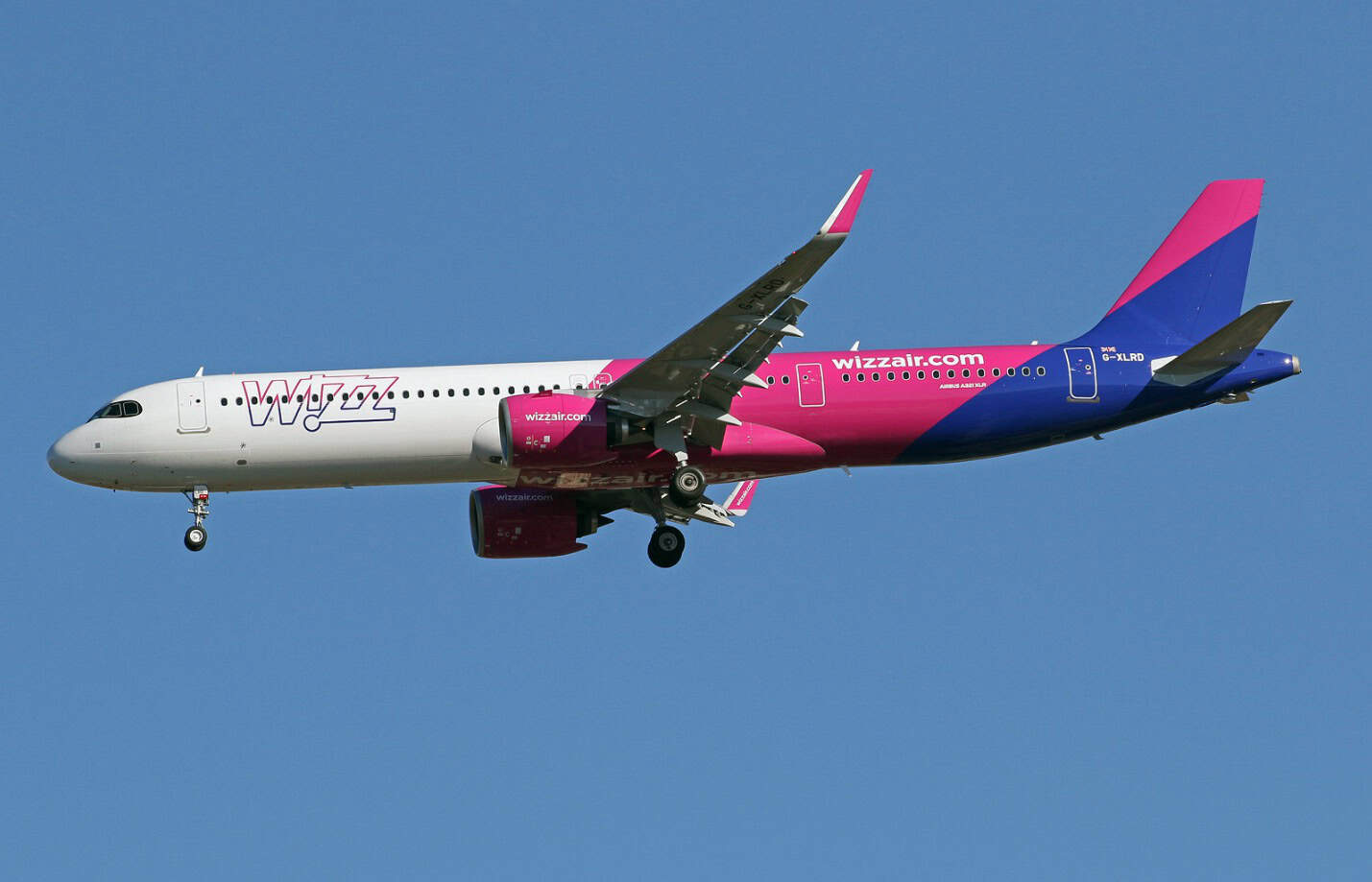
Wizz Air has taken the Pratt & Whitney engines off three of its Airbus A321XLRs and fitted them to standard A321neos, a company spokesperson told Bloomberg on September 8, 2026. Two more XLRs have been pulled from London Gatwick and parked in Poland.
That leaves three of the airline’s nine XLRs carrying passengers, all on short European routes, according to Aviacionline, which detailed the spokesperson’s account.
Where Wizz’s nine XLRs are now
Wizz ended June with nine A321XLRs in its fleet and two more still on order, according to its first-quarter results, published on August 6.
Three of those jets are parked in Poland with no engines. Two are the former Gatwick aircraft, now stored at Katowice Airport, which Wizz expects to put back into short-haul flying.
A sixth XLR is sitting in Milan after ground damage, although Wizz still counts it as in service. The remaining three are flying short routes around Europe, Aviacionline reports.
How a long-range jet ended up on short hops
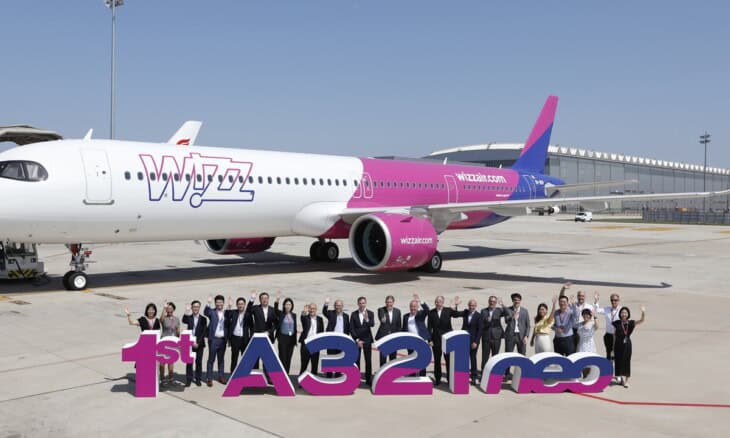
Wizz took the first Pratt & Whitney-powered A321XLR in May 2025, with 239 seats in a single class. Airbus said at the time that the jet would boost Wizz’s “capacity to connect Europe and the Middle East,” and noted that the airline had ordered 47.
Airbus rates the A321XLR for up to 4,700 nautical miles, or up to 11 hours in the air. That range is what separates it from a standard A321neo, and it is the part of the jet Wizz no longer uses.
The plan came apart less than two months after that first delivery. On July 14, 2025, Wizz announced it would suspend its Middle East operations from September 1, 2025, and said it was “rationalizing our A321XLR program,” according to its first-quarter results for that year.
In November 2025, Wizz converted 36 of its XLR orders into standard A321neos, which its half-year results said would leave a sub-fleet of 11. Its longest XLR flights, London Gatwick to Jeddah and to Medina at about seven hours each, were pulled from sale in July 2026, Simple Flying reported.
Chief commercial officer Ian Malin put it plainly at the Routes Europe conference in May: “When we left Abu Dhabi and no longer had a base there… we saw that the XLR didn’t fit our business model,” Aviacionline reports.
Why the engines are worth more than the airframes
The engines matter because Wizz is still short of them. As of June 30, 2026, it had 27 aircraft grounded by Pratt & Whitney GTF engine inspections, down from 41 a year earlier, according to its results.
The airline expects that number to fall to between 15 and 20 by the end of its financial year in March 2027, and to zero by the end of calendar 2027.
That turns an idle XLR into an engine donor. In Wizz’s fleet plan, the Airbus A321neo and the A321XLR both carry 239 seats, so a pair of engines moved from a parked XLR to a grounded neo puts the same number of seats back in the air.
Chief executive József Váradi has argued the jet still earns its keep on short routes. “You simply operate the XLR as an A321neo and get a large share of the economic benefits,” Aviacionline quotes him as saying.
Other airlines are buying the XLR for exactly the range Wizz is giving up. United, for example, will fly its first XLRs across the Atlantic to Amsterdam and Dublin from December 1.
The fleet count is a moving number
Wizz’s own results show nine XLRs at June 30 with two on order, while ch-aviation counted ten on September 11 and reported six of them sidelined. The breakdown above comes from a Wizz spokesperson’s comments to Bloomberg on September 8, not from a published fleet list.
Sources and references used for research and fact-checking.
- Wizz Air Holdings, Results for the three months to 30 June 2026 (Q1 F27)
- Wizz Air Holdings, Results for the three months to 30 June 2025 (Q1 F26)
- Wizz Air Holdings, Unaudited results for the six months to 30 September 2025 (H1 F26)
- Airbus, Airbus delivers first Pratt & Whitney-powered A321XLR to Wizz Air
- Airbus, A321XLR product page
Get the Newsletter
The latest aviation news and stories sent to your inbox.
About the Author

Tim is the owner and lead editor of AeroCorner since 2019, overseeing aviation content covering aircraft, airlines, airports, and the broader aviation industry. Through years of researching, writing, editing, and publishing aviation-focused content, he has developed extensive practical knowledge of commercial aviation and air travel. Based in Asia and a frequent traveler himself, Tim also brings firsthand passenger experience to AeroCorner’s coverage. Outside of publishing, he has also explored aviation firsthand through hands-on flight training in New Zealand.