

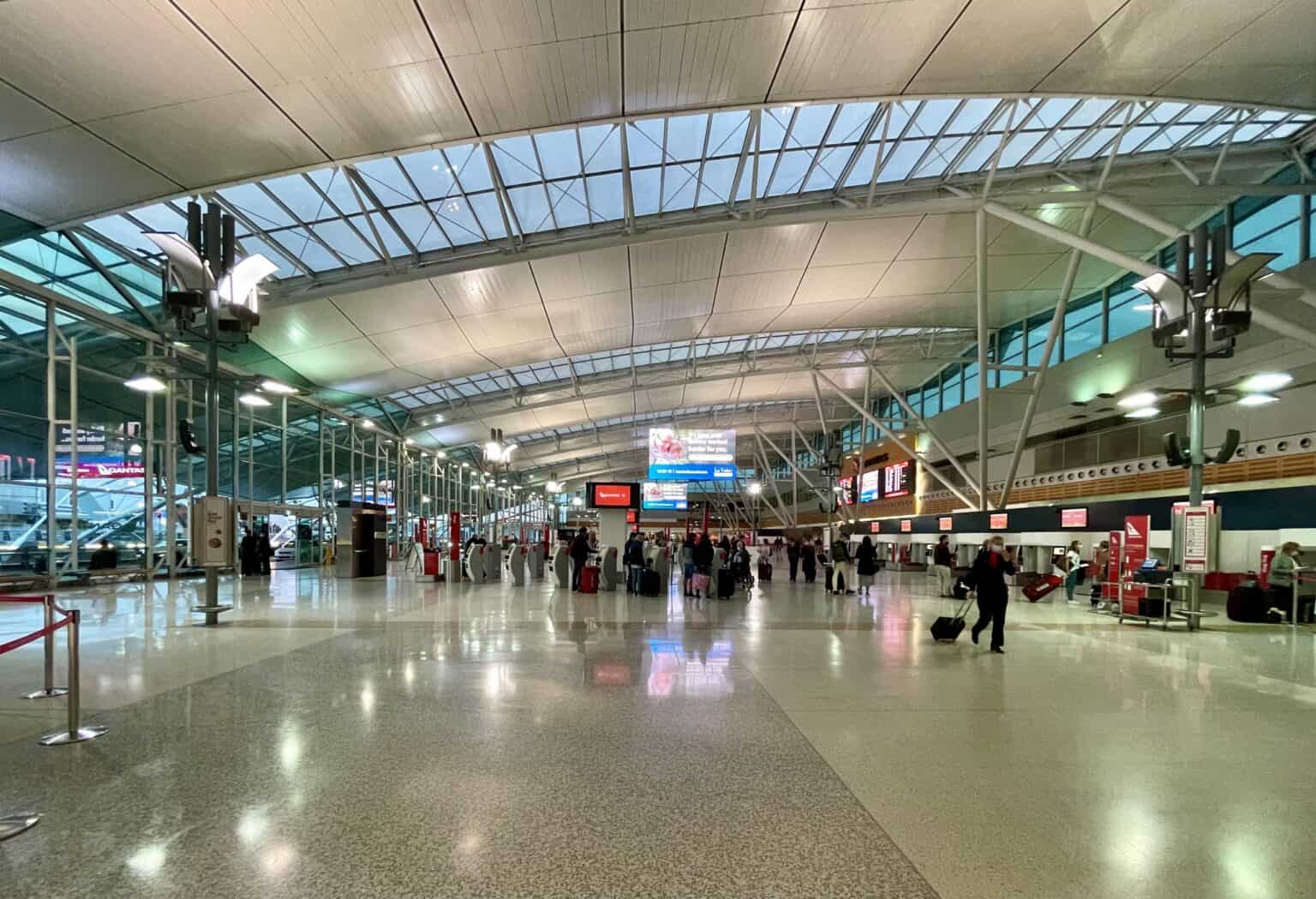
Security screeners at Sydney Airport plan a three-hour strike on Monday, September 28, 2026, the Transport Workers’ Union (TWU) says. On Thursday, September 24, about 400 screeners employed by contractor Certis stopped work for two hours in the morning, with a second stoppage scheduled that evening.
Monday is the first day of the New South Wales spring school holidays, which run to October 9, according to the NSW Department of Education. That puts the next stoppage on the day many families start traveling.
What happened on Thursday
The Certis screeners’ first stoppage ran from 7:30 a.m. to 9:30 a.m., with a second two-hour walkout scheduled from 6 p.m., Australian Aviation reported. It said 99 percent of members had voted in favor of the action.
Sydney Airport told passengers to allow extra time and watch for messages from their airline. One passenger told ABC News she had been in the security line for about 30 minutes.
The same day, Qantas ground and freight workers held a separate 24-hour strike at Sydney, Brisbane, Adelaide and Perth airports. The TWU said it involved staff from Qantas subsidiaries QGS and AAE, which moves freight including for Australia Post, along with QantasLink.
Qantas said it had contingency plans and did not expect customers to be disrupted. A spokesperson told ABC News the striking employees “do not service Qantas Domestic or Qantas International flights or QantasLink outside of Sydney.”
Planned action at Melbourne Airport was postponed, KarryOn reported.
What the screeners want
The TWU wants more full-time jobs, better pay and job security for the screeners. It aims its campaign at Sydney Airport itself rather than only at Certis, arguing that the airport should fund better wages through the contracts it awards.
“Sydney Airport must step in and properly fund the companies it uses to carry out these critical services for millions of travellers every year,” TWU NSW Secretary Richard Olsen said in the union’s statement. Olsen has also pointed to the airport’s A$584.3 million aeronautical profit in 2024-25, Australian Aviation reported.
Certis disputes the union’s picture. A spokesperson told ABC News the company was “committed to constructive bargaining” and that its Sydney screeners receive pay and conditions “materially above those provided under the relevant industry award.”
Why Australian strikes come with a timetable
Passengers get days of warning because of how Australian labor law works. For employee industrial action to be protected under the Fair Work Act, it must first be authorized in a secret ballot ordered by the Fair Work Commission, according to the Fair Work Ombudsman.
The union must then give the employer written notice, generally at least three working days ahead, or 120 hours for a multi-enterprise agreement. The notice has to state the nature of the action and the day it starts.
That notice is what lets the airport plan. Ahead of Thursday, Sydney Airport said it would roster extra staff in baggage rooms and put more passenger facilitation staff in the terminals, Australian Aviation reported.
Unannounced walkouts fall outside that system and give airlines no time to plan. In August, a wildcat action at Tel Aviv’s airport halted arrivals for about two hours and turned an Air France flight back to Paris.
What Monday flyers should expect
The TWU has not published the start time of Monday’s three-hour stoppage in the statements AeroCorner reviewed. One travel outlet, Travel Himalaya Nepal, reports that it runs overnight from 10 p.m. Monday to 1 a.m. Tuesday.
Until the airport or the union confirms the window, the advice Sydney Airport gave for Thursday is the safest guide. Allow extra time at security and check messages from your airline, and see our guide to how early to arrive for the deadlines that actually matter.
AeroCorner found no report of a settlement in either dispute as of September 25, so further action by either group remains possible.
Sources and references used for research and fact-checking.
Get the Newsletter
The latest aviation news and stories sent to your inbox.
About the Author

Tim is the owner and lead editor of AeroCorner since 2019, overseeing aviation content covering aircraft, airlines, airports, and the broader aviation industry. Through years of researching, writing, editing, and publishing aviation-focused content, he has developed extensive practical knowledge of commercial aviation and air travel. Based in Asia and a frequent traveler himself, Tim also brings firsthand passenger experience to AeroCorner’s coverage. Outside of publishing, he has also explored aviation firsthand through hands-on flight training in New Zealand.