

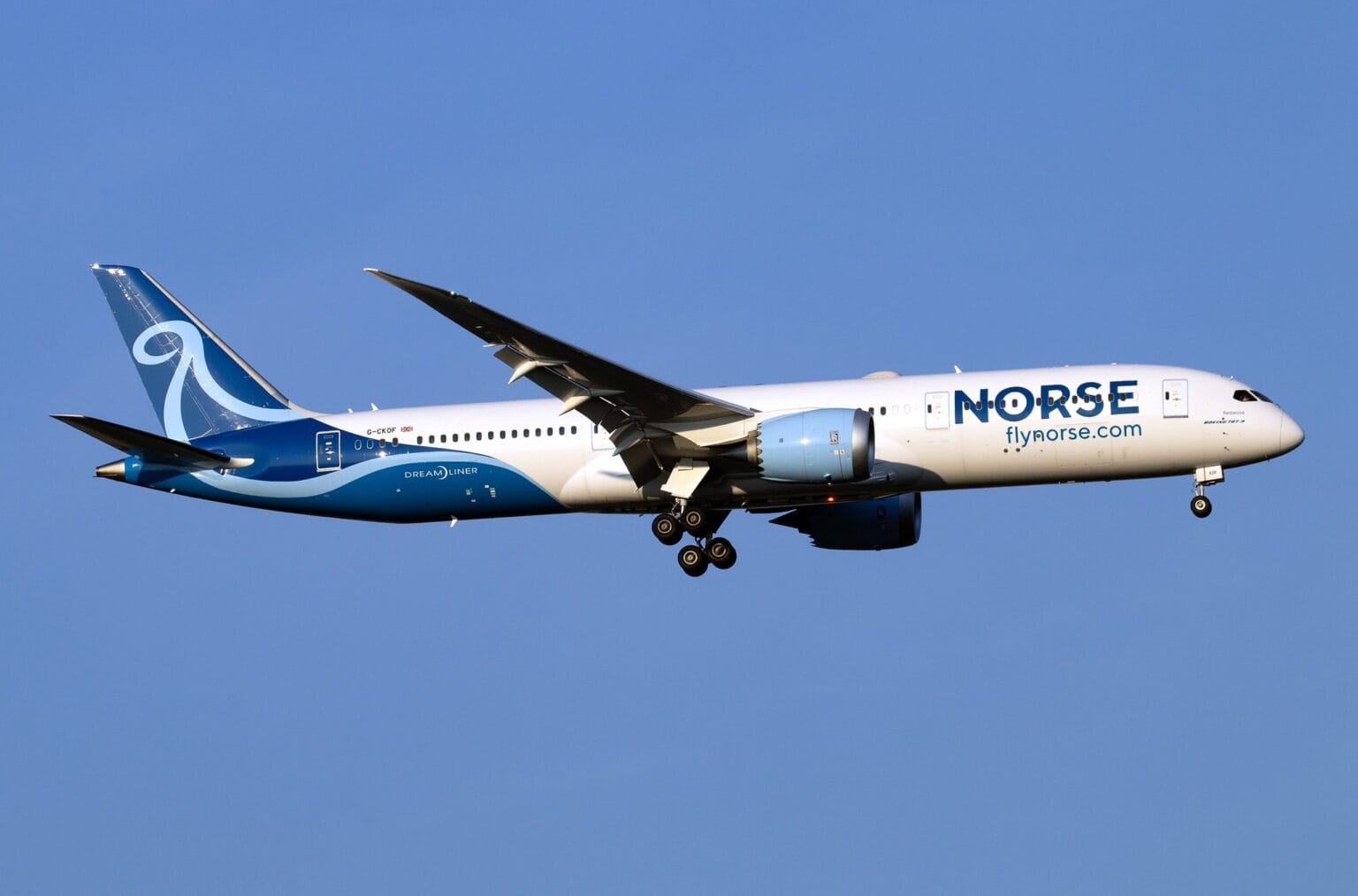
Norse Atlantic Airways has received notices from its aircraft lessors terminating the leases on all 12 jets in its fleet, the Norwegian long-haul carrier told the Oslo stock exchange on Friday, November 27, 2026. Norse said it contests the validity of the notices and is still trying to raise short-term financing.
The notice came a day after Norse grounded its flights. Every aircraft it flies is a leased Boeing 787 Dreamliner, so the airline now risks losing the fleet it would need to restart.
What Norse said on Friday
The three-paragraph statement, published at 08:30 CET (2:30 a.m. ET), did not name the lessors or say why the leases were terminated. It also gave no reason for Norse’s view that the notices are invalid.
Norse repeated that there could be “no assurance that a viable solution will be found” and said it would give more information “as and when appropriate.” No newer notice had appeared at the time of writing, around midday in Europe on Friday.
On Thursday, November 26, Norse confirmed in an earlier notice that it had suspended all of that day’s flights while it looked for financing. Its board said that if a short-term solution was not secured urgently, it intended to file for bankruptcy. That confirmed the halt that began on Wednesday evening, when Norse flights stopped without a word from the airline.
The same Thursday notice said Norse was talking to investors about a possible takeover that would include financing. It had also met holders of its $52 million senior secured bond on Wednesday.
Who owns the jets
Norse owns none of its aircraft. Its fleet of 12 Boeing 787-9s is split evenly between AerCap of Ireland and BOC Aviation of Singapore, six each, under deals signed in 2021, according to Aviacionline. Many of the jets had flown for Norwegian before it left long-haul flying.
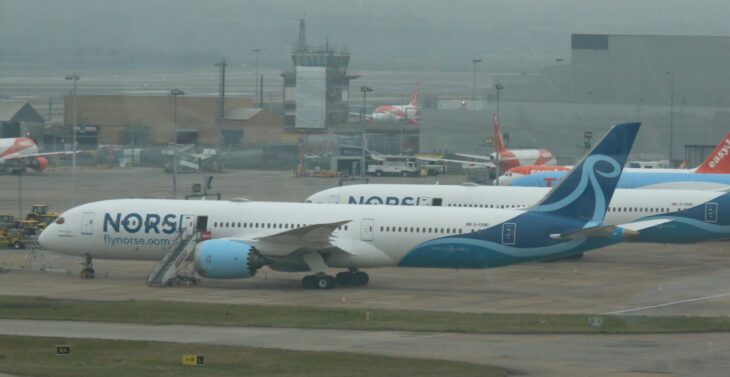
The aircraft were parked in Oslo, Stockholm and London Gatwick, and two UK-registered 787s, G-CKOF and G-CKWD, were expected to fly on Friday to Tarmac Aerosave’s storage site at Teruel in eastern Spain, Paddle Your Own Kanoo reported.
Why a termination notice matters
Under an operating lease, the airline pays monthly rent to fly a jet the lessor owns. A dry lease like this one typically lets the owner end the contract and take the aircraft back if the airline defaults, for example by missing rent.
For Norse, that is the difference between a pause and a shutdown. Any investor or buyer would need the 12 jets to stay, either by settling with the lessors or by signing new leases, and every day the aircraft sit on the ground they earn nothing for anyone.
Whether the notices stand is now a legal question. Norse has disputed them but has not said how, or whether it will go to court. Each jet the lessors move out of Norse’s hands is one more a rescuer would have to win back.
What booked passengers can do
Norway’s Consumer Council (Forbrukerrådet) published advice for Norse passengers on Friday. Its main warning is not to cancel a booking yourself: a passenger who cancels gets only taxes and fees back, while one whose flight Norse cancels is entitled to the full fare.
The council says passengers who paid by Visa or Mastercard, credit or debit, can claim the ticket price back from their card issuer if Norse goes bankrupt. The bank covers only what was paid by card, not extra costs such as new tickets or hotels, and travel insurance usually does not cover claims caused by a bankruptcy.
In the UK, the Civil Aviation Authority’s page on scheduled airline failures did not list Norse when AeroCorner checked on Friday. Its standing advice after past failures is to claim under Section 75 of the Consumer Credit Act for credit card payments, use chargeback for debit cards, and check for scheduled airline failure insurance.
ATOL protection covers only package trips booked with an ATOL holder, the CAA says, not flight-only tickets. In that case the travel company must arrange other flights or a refund.
For flights to or from the US, the Department of Transportation’s refund rule applies to foreign airlines too. A passenger whose flight is canceled and who declines an alternative is owed a refund within seven business days for card purchases, though that rule only helps while the airline can pay.
Sources and references used for research and fact-checking.
- Norse Atlantic ASA, Norse Atlantic ASA: Termination notices received from aircraft lessors (Oslo Børs notice, 27 Nov 2026 08:30 CET)
- Norse Atlantic ASA, Norse Atlantic ASA: Update on financial situation - suspension of operations (26 Nov 2026 08:50 CET)
- Forbrukerrådet (Norwegian Consumer Council), Norsekrisen: Sjekk dine rettigheter (27 Nov 2026)
- UK Civil Aviation Authority, Failure of scheduled airlines
- Federal Register / US DOT, Refunds and Other Consumer Protections (final rule, 26 Apr 2024)
Get the Newsletter
The latest aviation news and stories sent to your inbox.
About the Author
AeroCorner News is the aviation news desk of AeroCorner.com. It covers accidents and incidents, safety rulings, airline and airport disruption, and new aircraft. It works from primary sources such as the NTSB, FAA, EASA and the manufacturers' own announcements.