

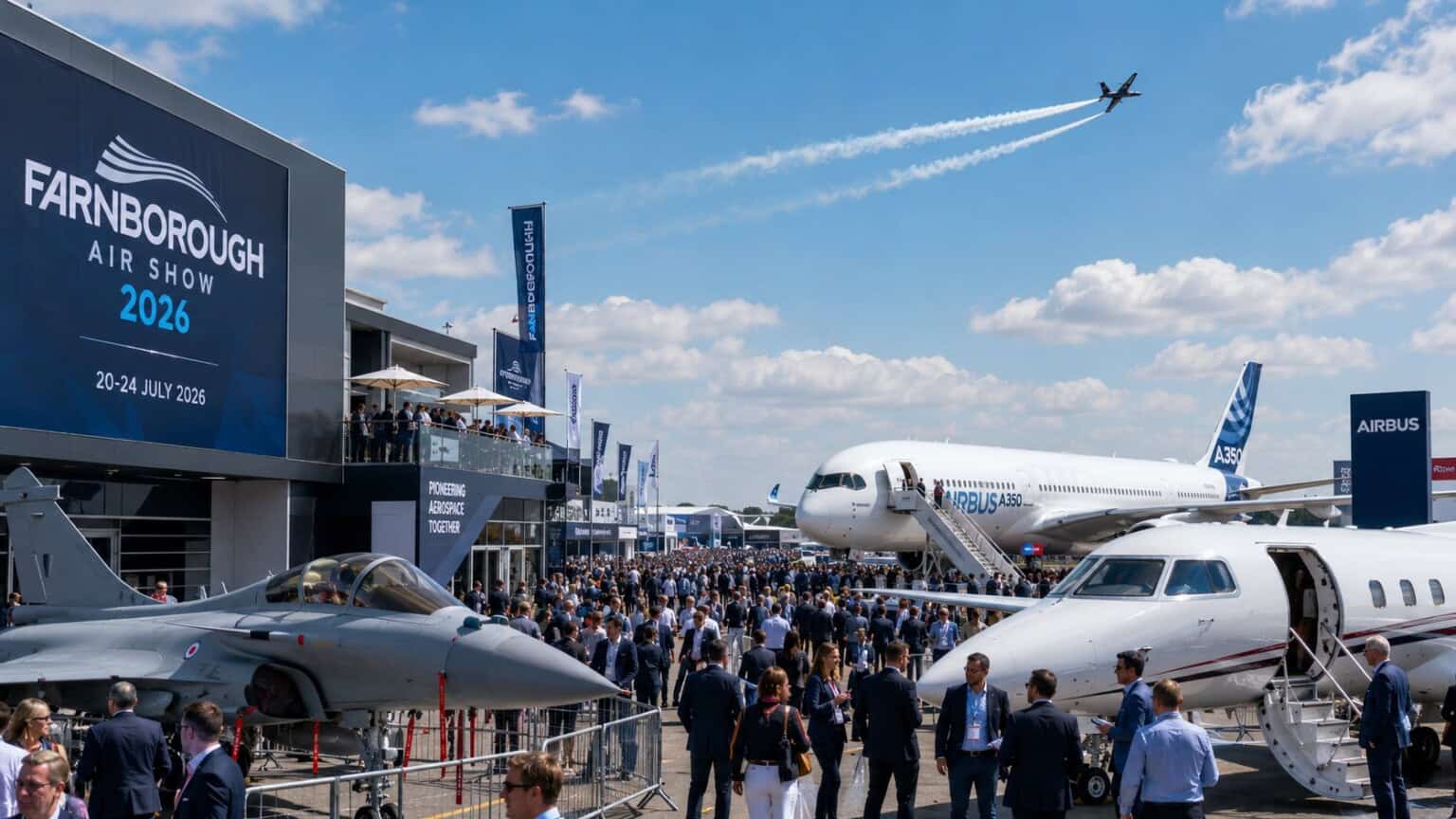
The Farnborough International Airshow closed on July 24, 2026, with roughly 327 firm commercial aircraft orders, a total that fell far short of the 800 or more that some analysts had forecast before the show opened. The gap was not a sign of weak demand. It reflected an industry that cannot build jets fast enough to justify booking many more.
A quieter show than expected
Boeing edged ahead on the order board with about 173 firm and tentative commitments, against roughly 154 for Airbus, according to tallies compiled through the week. Final counts varied by source depending on how options and commitments were counted, but the direction was clear.
The single largest deal came from the leasing company SMBC Aviation Capital, which split a 200-jet order evenly between 100 Boeing 737 MAX and 100 Airbus A320neo aircraft. That one order, first firmed up in the show’s day-one haul, accounted for more than half of the firm total on its own.
Other headline commitments included widebody orders from Riyadh Air and Philippine Airlines, 15 more 787-9s for AerCap, and an engine deal from BOC Aviation for up to 300 CFM LEAP engines. Most were confirmed by Boeing and Airbus during the week.
The headline number
About 327 firm orders, split roughly 173 to Boeing and 154 to Airbus. A single 200-jet SMBC lease order made up more than half the total.
Why the numbers stayed low
The explanation is a backlog problem, not a demand problem. Order books for both Boeing and Airbus narrowbodies and widebodies are already sold out deep into the next decade, the result of years of record ordering that production has never caught up to.
When a fresh order cannot be delivered until the mid-2030s, airlines have little reason to rush and manufacturers have little incentive to book volume they cannot build. Supply chain bottlenecks, engine delivery delays, and skilled labor shortages have all slowed production ramp-ups on both sides of the Boeing and Airbus rivalry.
Both companies have signaled they would rather stabilize their assembly lines and clear historic backlogs than chase headline order tallies. Seen that way, a modest Farnborough is simply what a supply-constrained boom looks like.
Farnborough alternates each year with the Paris Air Show as the industry’s main order-taking stage, so its running total gets watched as a barometer of confidence. This year’s outcome landed at the cautious end of the pre-show outlook rather than near the blockbuster projections. The lesson for observers is that raw order counts now say more about factory capacity than about how many airlines want new jets.
Reality check
A low order count at a sold-out moment is not weak demand. With backlogs stretching into the 2030s, the real constraint is how fast Boeing and Airbus can build, not how many airlines want to buy.
Sources and references used for research and fact-checking.
Get the Newsletter
The latest aviation news and stories sent to your inbox.
About the Author

Tim is the owner and lead editor of AeroCorner since 2019, overseeing aviation content covering aircraft, airlines, airports, and the broader aviation industry. Through years of researching, writing, editing, and publishing aviation-focused content, he has developed extensive practical knowledge of commercial aviation and air travel. Based in Asia and a frequent traveler himself, Tim also brings firsthand passenger experience to AeroCorner’s coverage. Outside of publishing, he has also explored aviation firsthand through hands-on flight training in New Zealand.