

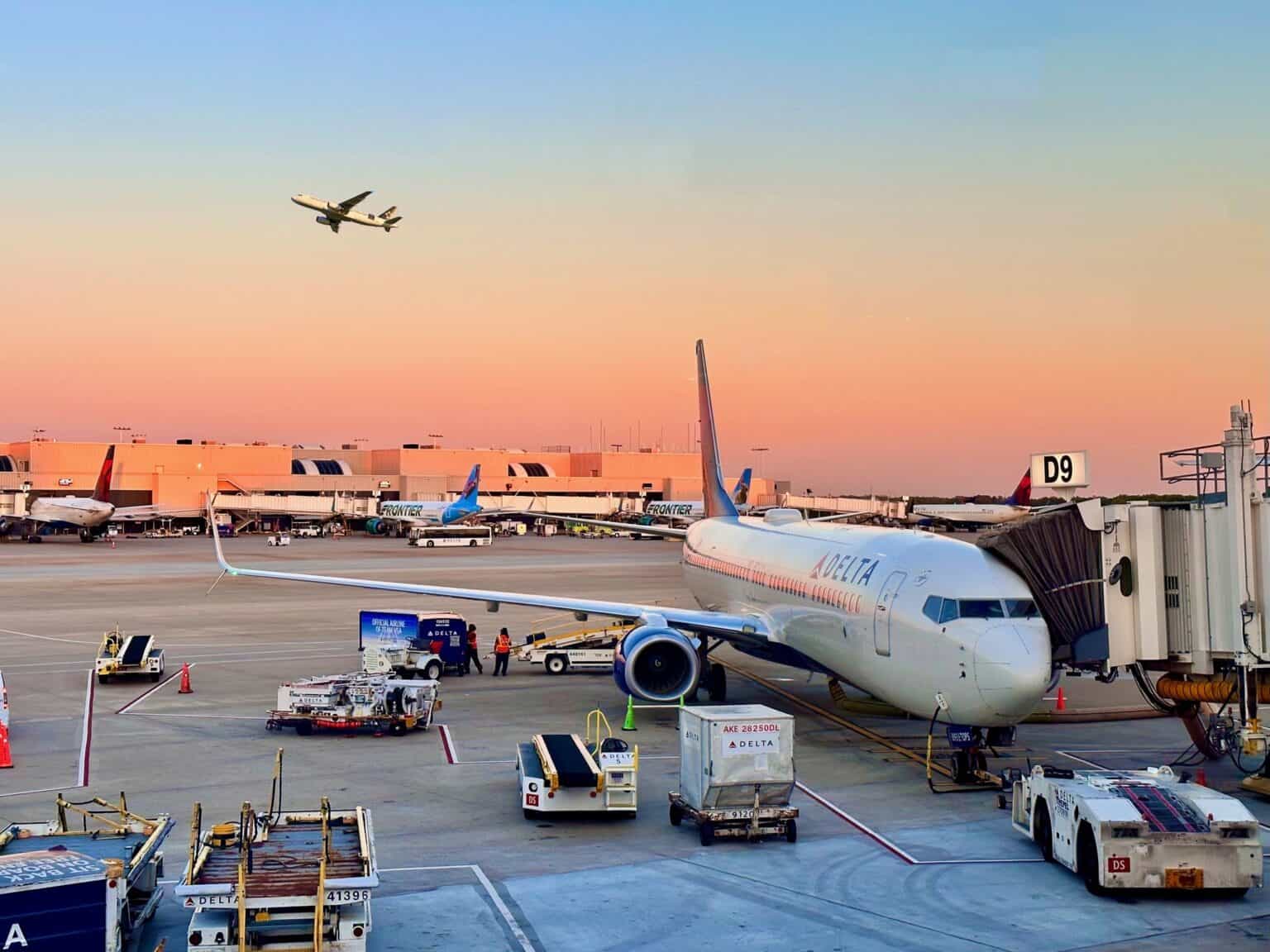
The FAA held Delta Air Lines flights bound for Hartsfield-Jackson Atlanta International Airport on Sunday morning, November 22, 2026, at the airline’s request, then replaced the ground stop with a delay program. Delta blamed a problem with the automation system it uses for weight and balance.
“Delta teams are using manual workarounds this morning to safely get flights departed while work continues to restore automation,” the airline said in a statement reported by Atlanta News First.
Delta also said it was working with air traffic control “to strategically enact programs to protect airport gates and tarmac areas from congestion at our Atlanta hub.” The disruption landed on the Sunday before Thanksgiving.
How the morning unfolded
The FAA’s ground stop advisory put the start at 7:46 a.m. ET, with a planned end of 9 a.m. It covered only Delta and its regional subcarriers, and the comment field read “carrier request.”
The stop applied to departures from 14 of the 20 en route center areas in the contiguous US. Areas handled by the Minneapolis, Denver, Salt Lake City, Seattle, Oakland and Los Angeles centers were left out.
At 8:32 a.m., the FAA issued a ground delay program and canceled the stop. The program widened the net to all 20 center areas, again for Delta and its subcarriers only, and was set to cover arrivals estimated through 12:59 p.m.
When it was issued, the program assigned delays averaging 57 minutes, with a maximum of 111 minutes. Those are assigned delays for flights into Atlanta, so they do not capture any knock-on delay to a plane’s later flights.
Just after 9 a.m., nearly 400 flights were delayed at the airport, Atlanta News First reported, citing FlightAware. Airport officials expect more than 4 million passengers over the Thanksgiving period through December 1, up 5% from last year, according to the station.
Why a weight system can stop a hub
An airliner cannot simply leave when the last bag is loaded. Federal rules require the airline to prepare a load manifest before each takeoff, and the captain must carry a copy or information from it.
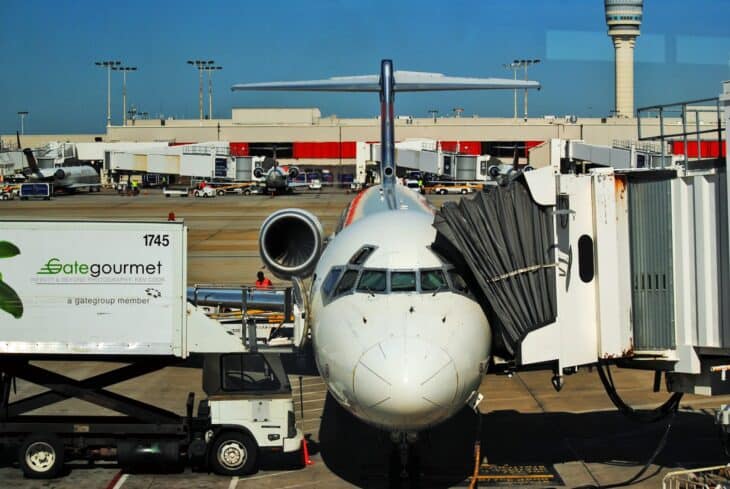
That document lists the weight of the aircraft, fuel, cargo, bags, passengers and crew, along with the maximum weight allowed for that flight. It must also show that the center of gravity is within approved limits.
The work can be done without the usual automation, as Delta said it was doing on Sunday. If that slows departures at a hub, however, arriving aircraft can run out of open gates and end up waiting on taxiways.
That is the congestion Delta said it was trying to prevent. Holding inbound flights at their origins gives the hub time to clear space.
What the FAA’s two tools do
A ground stop keeps the flights it covers on the ground until they are released. The FAA’s traffic management order calls it one of the most restrictive methods available and lists preventing airport gridlock among the reasons to use one.
A ground delay program is more measured. Each covered flight gets an arrival slot and a matching departure time, so traffic keeps moving at a rate the destination can absorb.
Atlanta had drizzle, mist and low clouds on Sunday morning, but neither advisory blamed the weather. Both listed the cause as “other.”
The FAA had separately held Delta’s regional subcarriers bound for New York LaGuardia from 7:10 a.m., also at the carrier’s request, while fog was disrupting that airport. That advisory did not say whether the weight-and-balance problem played any part.
United had a similar headache six days earlier, when a system outage left its crews without final weights on November 16. Delta’s statement, as reported, did not link its problem to United’s, or to the FAA’s nationwide ground stop on November 13.
What Delta passengers can do
Check the flight’s status even if your trip does not start in Atlanta, because a late inbound plane or crew can delay the next leg. Anyone connecting there should look at later options before the first flight departs.
Under federal refund rules, a flight that is canceled qualifies for a refund if you decline the alternatives. So does a delay that gets you to your destination at least three hours late on a domestic itinerary, or six hours on an international one, if you choose not to travel.
Delta’s customer commitment also promises a meal or meal voucher when a problem within its control leaves you waiting three hours or more past scheduled departure. Ask the airline how it has classified your delay, and keep any receipts.
As of 9:10 a.m. ET on Sunday, the FAA still listed the Atlanta delay program, and Delta’s statement, as reported that morning, gave no time for restoring the automation.
Sources and references used for research and fact-checking.
- FAA ATCSCC, Advisory 042: ATL ground stop, November 22, 2026
- FAA ATCSCC, Advisory 051: ATL ground delay program, November 22, 2026
- FAA ATCSCC, Advisory 033: LGA ground stop for Delta subcarriers, November 22, 2026
- FAA, NAS Status
- FAA, Order JO 7210.3, Section 18-13: Ground Stops
- FAA, Order JO 7210.3, Section 18-10: Ground Delay Programs
- eCFR, 14 CFR 121.665: Load manifest
- eCFR, 14 CFR 121.693: Load manifest contents
- eCFR, 14 CFR 121.695: Disposition of load manifest
- eCFR, 14 CFR 260.6: Refunds for canceled or significantly delayed flights
- eCFR, 14 CFR 260.2: Definitions
- Delta Air Lines, Customer Commitment
- National Weather Service, KATL and KLGA METARs
Get the Newsletter
The latest aviation news and stories sent to your inbox.
About the Author

AeroCorner News is the aviation news desk of AeroCorner.com. It covers accidents and incidents, safety rulings, airline and airport disruption, and new aircraft. It works from primary sources such as the NTSB, FAA, EASA and the manufacturers' own announcements.