The Spitfire and Zero fighter planes were two of the most famous planes during World War II. They both had their strengths and weaknesses, which made them ideal for different tasks. Here is a look at how these two planes compare to each other.
About the Spitfire
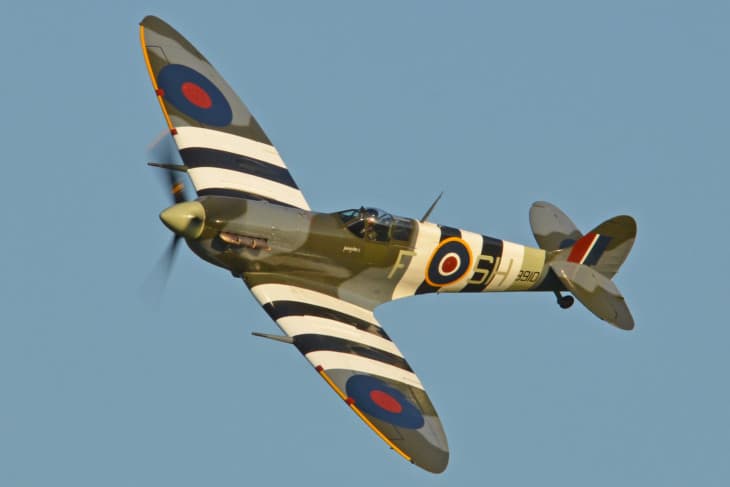
The Spitfire is the very symbol of British grit and determination during World War Two. With its sleek design and powerful Rolls-Royce engine, it could hold its own against German fighter planes during the Battle of Britain.
Though it entered service in 1938, improvements were constantly made to enhance its abilities – including fitting a massive 60-inch propeller for high-altitude combat and swapping out wing designs for increased speed and agility. Today, the legacy of the Spitfire lives on with the Battle of Britain Memorial Flight, where six restored planes proudly fly over the skies of England.
It’s hard not to feel a sense of national pride watching these graceful yet formidable aircraft soar above us, reminding us of our history and the bravery of those who fought for our freedom.
Also Read: Top 15 Most Produced Aircraft in WWII
Why was Spitfire developed and built?
The Spitfire’s development was spurred by the need for a high-performance fighter aircraft with significant armament. Reginald Mitchell of Supermarine Ltd. answered the call with his design, which met all the Air Ministry’s specifications and even exceeded expectations in terms of performance and agility.
Despite initial skepticism from certain officials, the Spitfire proved its worth in combat during the Battle of Britain, gaining recognition as one of the most successful fighters in World War II.
Its iconic shape and impressive capabilities have made it a symbol of British ingenuity and strength in adversity.
What purpose did the Spitfire serve?
With its elegant design and superior speed and maneuverability, the Spitfire quickly proved itself a force to be reckoned with during the Battle of Britain.
But the Spitfire didn’t just excel at air-to-air combat – it also served effectively as a photo-reconnaissance aircraft and fighter bomber, playing a crucial role in many World War II missions.
Following the war, the Spitfire continued to serve in various roles, including that of a trainer for aspiring pilots. The iconic aircraft has become synonymous with British victory during World War II and remains a celebrated symbol of bravery and determination.
About the Zero
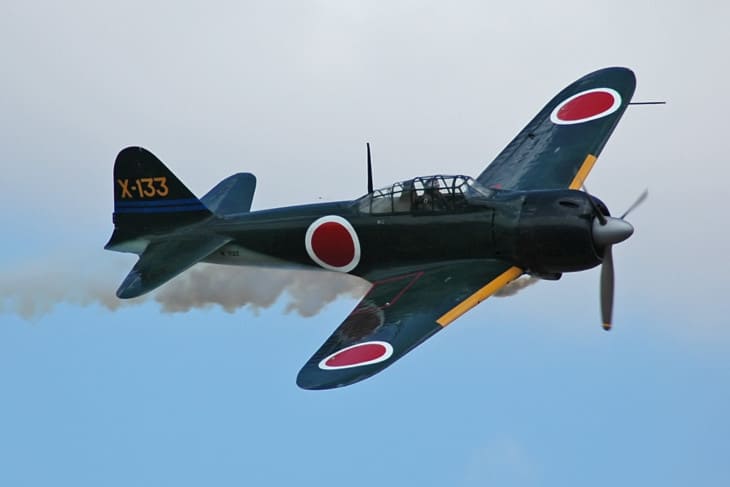
With its sleek design and state-of-the-art technology, The Zero quickly gained a reputation as a formidable foe during World War II. Allied pilots so feared that they dubbed it the “Zeke” or “Zekes.” However, as the war progressed and newer models were introduced, its weaknesses were exposed.
Despite this, the Zero remains renowned for its maneuverability and long-range capabilities. It continued to be used until the end of the war and even served in post-war conflicts such as the Korean War.
Why was the Zero developed and built?
The Mitsubishi A6M Zero was developed to meet the Imperial Japanese Navy’s long-range, maneuverable fighter aircraft specifications. It made its first flight in 1939 and quickly proved itself as a formidable force in air combat.
With its lightweight design, superior maneuverability, and long-range capabilities, the Zero dominated the Pacific theater until new Allied tactics and technology eventually drove it from the skies.
Despite, or perhaps because of, its formidable reputation and capabilities, the Zero remains one of the most iconic and historically significant fighter planes of World War II. It may have been “made in Japan,” but its legendary abilities earned it a place in the annals of aviation history across the world.
What purpose did the Zero serve
This legendary fighter plane served several roles in the Imperial Japanese Navy, most notably as a carrier-based and a land-based fighter plane. The Zero was considered the best carrier-based fighter of World War II and was unmatched in aerial combat for much of the war. It was also used as a land-based fighter and proved very effective in this role.
How are the Spitfire and Zero different?
The illustrious Spitfire and Zero were vastly different aircraft during WWII. The Spitfire boasted a speed advantage of over 100 mph and a higher maximum altitude ceiling. Its firepower was also more significant than the Zeroes. However, it sacrificed maneuverability and range in comparison to its opponent.
While the Zero had a range of nearly 2000 miles, the Spitfire could only fly for about 1000 miles before needing to refuel. But despite these shortcomings, the Spitfire still managed to hold its own against the Japanese fighter and became an iconic symbol of British resistance during the war.
How are the Spitfire and Zero similar?
There are also numerous similarities between these two warbirds. Both featured impressive range and turn rates, allowing them to outmaneuver their opponents in dogfights.
Additionally, both planes saw extensive use as bombers during the war, with modifications allowing them to carry a significant payload of bombs or rockets.
Even post-war, both aircraft continued to be used in various nations’ air forces, both serving as a testament to their effectiveness in combat and versatility on the battlefield.
What’s better about the Spitfire?
There are specs in which the Spitfire outperforms the Zero. These include:
Design:
The Spitfire’s design sets it apart from other fighter planes. Those famous elliptical wings give the aircraft a sleek appearance and increase its top speed and agility. The hollow rivets allow for the thinnest possible cross-section, giving Spitfire an edge over its competitors in terms of speed. And with impressive maneuverability, enemy fighters don’t stand a chance in one-on-one dogfights thanks to those same wings.
Engine:
The Rolls-Royce Merlin engine is one of Spitfire’s defining features. This powerful engine gives the Spitfire the speed and power it needs to take on enemy fighters. The Merlin engine is also known for its reliability, an essential quality in a fighter plane.
Armament:
The armament of the Spitfire is nothing to scoff at. It features eight .303 caliber machine guns capable of taking down enemy aircraft. Additionally, the Spitfire can be outfitted with bombs or rockets, making it a versatile fighter that can take on multiple roles in combat.
What’s better about Zero?
The Zero had a few key advantages over its rivals. It was superior in these areas:
Construction:
The Zero was constructed primarily of lightweight materials like wood and fabric. This made the aircraft very light and, as a result, very agile. The fuel tank setup was also designed to extend the plane’s range. The Zero could drop an empty external tank when necessary, giving it more endurance. However, the tradeoff for this was that the Zero lacked armor and defensive armaments, making it more vulnerable to enemy fire.
Performance:
The Zero was an excellent performer in the air. It was very agile and could extend its range when necessary. However, the lack of armor and defensive armaments made it more vulnerable to enemy fire.
Modern Relevance:
The principles behind Zero’s design are still relevant today. Aircraft are still designed to be lightweight and maneuverable, with fuel tanks that can be extended when necessary. The tradeoff for this is still the lack of armor and defensive armaments, but the Zero remains an influential aircraft design.
Conclusion
The Spitfire and the Zero were two of World War II’s most iconic fighter planes. They both had their strengths and weaknesses, but ultimately, they were both effective in combat. The Spitfire was a versatile aircraft that could take on multiple roles in action, while the Zero was an excellent performer with a long range. The better plane depends on the situation, but both are worth consideration.