It’s the classic WWII dogfight question: which plane is better? The sleek and deadly P-38, or the nimble but fragile Zero? We have America’s favorite warplane in this corner, the P-38 Lightning. And in that corner, we have the Japanese Imperial Navy’s top fighter, the Zero. So which plane comes out on top? Let’s take a closer look at each aircraft to find out.
About the P-38 Lightning
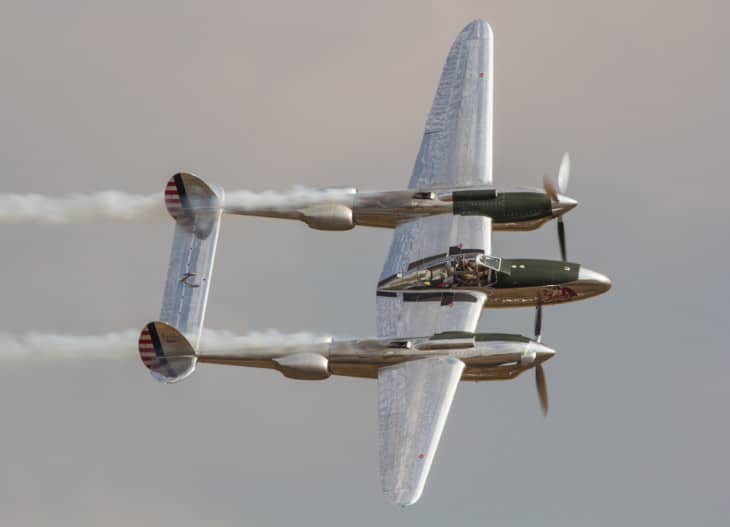
The P-38 Lightning quickly became one of the most versatile airplanes used in World War II. It was popular among fighter pilots for its agility and proved highly effective as a bomber escort and photo reconnaissance aircraft. Despite initially facing skepticism from Army Air Corps officials, the P-38 earned its reputation in battles over Europe and the Pacific.
Its unique design allowed for more extended-range missions and higher altitudes, making it formidable against ground targets and enemy planes. The P-38 was credited with shooting down more Japanese aircraft than any other Allied fighter plane.
The popularity of the P-38 among pilots, combined with its impressive performance in combat, solidified its legacy as a crucial piece of military equipment during WWII.
Why was the P-38 developed and built?
The P-38 was developed in response to USAAC Circular Proposal X-608, which outlined specific performance goals for a new fighter aircraft. These included the ability to fly at least 360 miles per hour and reach altitudes of 20,000 feet.
The plane also needed to have the capability to carry a 1,000-pound bomb load and be able to defend itself against enemy fire with machine guns or cannons. Kelsey and Gordon authored the proposal as leaders of the USAAC’s Pursuit Flying Group, and it was ultimately presented to twelve different aircraft companies for design submissions.
Lockheed’s entry, submitted in June 1937, proved successful, and they were awarded a contract for further development in August of that year. Testing the prototype, named “Model 222,” began in January 1939, with its first flight taking place on January 27th.
The P-38 played a significant role in World War II as a versatile fighter, reconnaissance aircraft, and bomber escort due to its speed and extended range capabilities. It has become one of the most recognizable aircraft in history thanks to its unique twin-boom and central nacelle design.
Cooling system problems plagued early versions of the P-38 but were eventually resolved by innovative redesigned parts such as water injection systems and newly developed Curtiss Electric propellers.
While production ended in 1945 with over 10,000 aircraft built, some P-38s remained in service until the 1950s with various Air Force organizations worldwide. The P-38’s legacy continues through notable pilots who flew it during WWII, such as Richard Bong (America’s top scorer), Adolf Galland (German Luftwaffe commander), and Antoine De Saint Exupéry (author of “The Little Prince”).
It also remains popular among aviation enthusiasts for its distinctive design and versatility in combat situations. Excitingly enough, even one is currently being restored for flight demonstration at the Planes of Fame Air Museum in California.
What purpose did the P-38 serve?
There are several purposes that the P-38 serves. The first and most important was as a fighter plane during World War II. It was also used as a bomber escort and photo reconnaissance aircraft. After the war, some were used by the Air Force for weather research until the 1950s.
About the A6M Zero
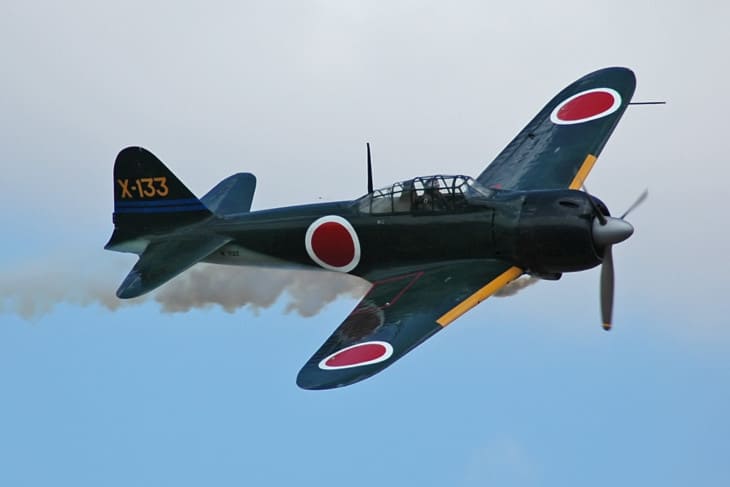
The Mitsubishi A6M “Zero” gained its infamous nickname because it had a record of zero losses to enemy aircraft in combat during its first ten months of service. Its sleek design, pioneered by designer Jiro Horikoshi, allowed for impressive speed and maneuverability.
Powered by a Nakajima Sakae engine, the Zero could reach top speeds of 565 km/h and maintain its agility even at high altitudes.
The fighter’s extended range capabilities made it a valuable asset for Japan as they engaged in battles across Pacific Islands during World War II. Despite its initial success, the Zero’s advantages were eventually outweighed by advancements in Allied technology and tactics.
By the war’s end, over 10,000 Zeros had been built by Mitsubishi Aircraft Company and subcontractor Nakajima Aircraft Company. Still, only a few remain today as museum exhibits or preserved in private collections.
Also Read: Mitsubishi A6M Zero
Why was Zero developed and built?
The team faced numerous challenges during the design and development process, such as the need for lighter-weight materials to increase maneuverability and the requirement for a long-range fuel tank.
Despite these difficulties, they were able to create their desired aircraft successfully. The Zero entered service in 1940 and quickly proved itself to be a formidable opponent, displaying superior maneuverability and range that allowed it to dominate air combat during the early years of World War II.
What purpose did the A6M Zero serve?
This plane was designed as a fighter plane and proved very successful. It was used by the Japanese during World War II in various battles across the Pacific Islands.
After the war, a few Zeros remained in service with the Air Force for weather research until the 1950s. Today, only a handful of these planes stay in existence. They can be found in museum exhibits and private collections around the world.
How are the P-38 and Zero different?
The P-38 and the Zero may look similar, but these planes have different origins and purposes. The P-38 was designed and produced by the American aircraft manufacturer Lockheed Martin during World War II. It was used primarily as a fighter and attack plane, with various models used by the United States Army Air Corps, Royal Air Force, and other allied forces.
On the other hand, the Zero was designed and produced by the Japanese aircraft company Mitsubishi during World War II, mainly serving as a fighter plane for the Imperial Japanese Navy.
However, it was also used as a bomber and trainer. In terms of performance, the P-38 had superior speed and armament compared to the Zero.
The P-38 could also fly at higher altitudes than its Japanese counterpart. Ultimately, both planes played significant roles in WWII but differed in their design and abilities.
How are the P-38 and Zero similar?
The military used the P-38 and the Zero during World War II, which have similarities. Both planes were designed for agility and speed, able to climb quickly and perform aerial maneuvers. They were also used as fighter planes, engaging in dogfights with enemy aircraft.
What’s better about the P-38?
The P-38 Lightning is often considered one of World War II’s most versatile and successful aircraft. One unique advantage of the P-38 was:
Engine:
Two Allison V-1710 engines powered the P-38 Lightning in the fuselage behind the cockpit. These liquid-cooled, supercharged engines each produced 1,150 horsepower and allowed the P-38 to reach speeds of up to 400 miles per hour. The twin-engine design also gave the P-38 greater power and performance at high altitudes.
Armament:
The P-38 was armed with four .50-caliber machine guns and one 20 mm cannon. The machine guns were in the nose, just ahead of the cockpit, while the cannon was mounted in the center of the fuselage below the pilot’s seat. This armament arrangement gave the P-38 a distinct advantage in battle, as it could fire all its weapons simultaneously without worrying about reloading.
Range:
The P-38 had a range of 1,600 miles thanks to its fuel capacity and drop tanks. This made it an excellent choice for long-distance escort missions or reconnaissance flights.
What’s better about the Zero?
The Zero fighter plane is renowned for the following:
Maneuverability:
The Zero fighter plane is renowned for its maneuverability, thanks to its lightweight and low wing loading. This allows the aircraft to turn sharply and adjust its altitude, making it a formidable opponent in dogfights.
Range:
Its range was also impressive for its time, allowing it to operate effectively over great distances.
Durability:
However, what truly sets the Zero apart is its durability. In addition to being able to withstand significant damage without losing control, the Zero can absorb impacts without sustaining severe damage, thanks to its sturdy landing gear and crash-resistant fuel tanks. This enabled pilots to survive crashes that would have destroyed other planes.
Conclusion
The P-38 and the Zero are iconic fighter planes from World War II. They have several similarities, such as their agility and speed, but they also have some key differences. The better plane depends on what you are looking for. If you need a long-range escort or reconnaissance plane, the P-38 is a good choice.