

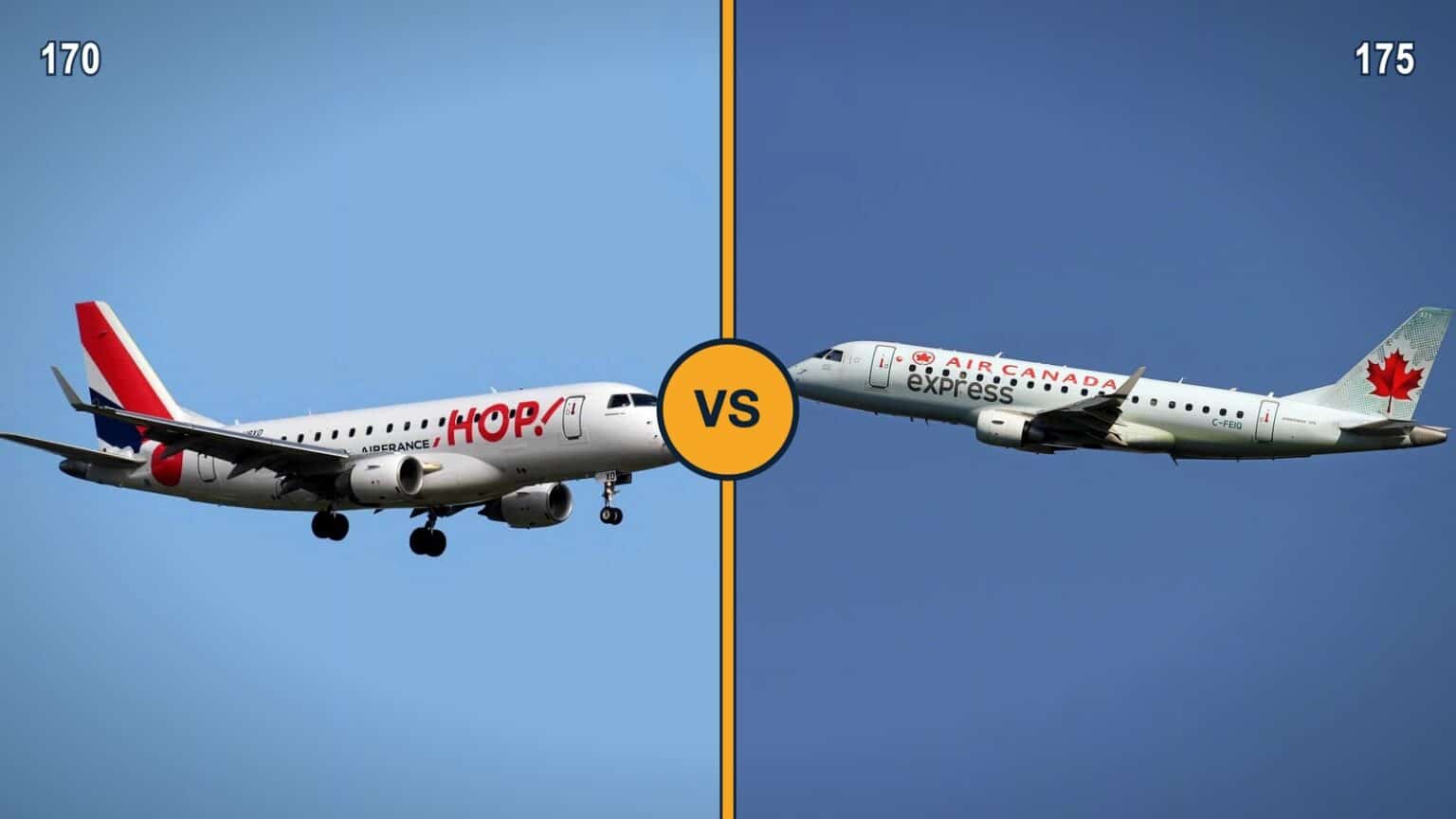

The E175 is a stretched E170. It is about 6 feet (1.8 m) longer and seats up to 88 passengers against up to 78, on the same engine family and the same cabin width.
The E170 needs less runway, with a takeoff distance of 5,400 ft (1,640 m) against 7,350 ft (2,240 m). The E175 is the one still in production, and the one US regional airlines fly by the hundred.
General
Embraer 170
Manufacturer
Embraer
ICAO code
E170
IATA code
E70
Produced
2002–2017
Price
$41 million (2016)
Engine
2 × General Electric CF34-8E
Engine type
Turbofan
Thrust
2 × 14,510 lbf · 65 kN
+2% (total)
Avionics
Honeywell Primus Epic
Wing tips
Blended tips
Seats
78
Crew
2
Embraer 175
Manufacturer
Embraer
ICAO code
E75S
IATA code
E75
Produced
2004–Present
Price
$45.7 million (2016)
Engine
2 × General Electric CF34-8E
Engine type
Turbofan
Thrust
2 × 14,200 lbf · 63 kN
-2% (total)
Avionics
Honeywell Primus Epic
Wing tips
Blended tips
Seats
88 economy · 86 business
Crew
2
Dimensions
Embraer 170
Cabin width
9 ft 0 in
2.74 m
9 ft 0 in
2.74 m
0%
Cabin height
6 ft 7 in
2.00 m
6 ft 7 in
2.00 m
0%
Cabin length
63 ft 9 in
19.43 m
63 ft 9 in
19.43 m
-8%
Exterior length
98 ft 1 in
29.90 m
98 ft 1 in
29.90 m
-6%
Tail height
32 ft 4 in
9.85 m
32 ft 4 in
9.85 m
0%
Fuselage diameter
9 ft 11 in
3.01 m
9 ft 11 in
3.01 m
0%
Wing span
85 ft 4 in
26.00 m
85 ft 4 in
26.00 m
-9%
Baggage volume
47 ft 3 in
14.39 m
47 ft 3 in
14.39 m
+56%
Embraer 175
Cabin width
9 ft 0 in
2.74 m
9 ft 0 in
2.74 m
0%
Cabin height
6 ft 7 in
2.00 m
6 ft 7 in
2.00 m
0%
Cabin length
69 ft 7 in
21.20 m
69 ft 7 in
21.20 m
+9%
Exterior length
103 ft 11 in
31.68 m
103 ft 11 in
31.68 m
+6%
Tail height
32 ft 4 in
9.86 m
32 ft 4 in
9.86 m
+0%
Fuselage diameter
9 ft 11 in
3.01 m
9 ft 11 in
3.01 m
0%
Wing span
94 ft 0 in
28.65 m
94 ft 0 in
28.65 m
+10%
Baggage volume
30 ft 2 in
9.20 m
30 ft 2 in
9.20 m
-36%
Weights
Embraer 170
Gross weight
—
—
—
Empty weight
46,643 lb
21,157 kg
46,643 lb
21,157 kg
-3%
Max payload
21,500 lb
9,750 kg
21,500 lb
9,750 kg
-3%
Fuel capacity
3,071 gal
11,625 L
3,071 gal
11,625 L
0%
Max takeoff weight
85,000 lb
38,600 kg
85,000 lb
38,600 kg
-4%
Max landing weight
73,500 lb
33,300 kg
73,500 lb
33,300 kg
-2%
Embraer 175
Gross weight
85,520 lb
38,791 kg
85,520 lb
38,791 kg
Empty weight
48,259 lb
21,890 kg
48,259 lb
21,890 kg
+3%
Max payload
22,300 lb
10,100 kg
22,300 lb
10,100 kg
+4%
Fuel capacity
3,072 gal
11,629 L
3,072 gal
11,629 L
+0%
Max takeoff weight
89,000 lb
40,400 kg
89,000 lb
40,400 kg
+5%
Max landing weight
75,000 lb
34,000 kg
75,000 lb
34,000 kg
+2%
Performance
Embraer 170
Max cruise speed
470 kt · 541 mph
870 km/h
470 kt
541 mph
870 km/h
0%
Max speed
470 kt · 541 mph
870 km/h
470 kt
541 mph
870 km/h
0%
Cruise speed
430 kt · 495 mph
796 km/h
430 kt
495 mph
796 km/h
0%
Approach speed
130 kt · 150 mph
241 km/h
130 kt
150 mph
241 km/h
-4%
Rate of climb
3,400 ft/min
17 m/s
3,400 ft/min
17 m/s
+70%
Range
2,150 nm · 2,470 mi
3,980 km
2,150 nm
2,470 mi
3,980 km
-2%
Service ceiling
41,000 ft
12,500 m
41,000 ft
12,500 m
0%
Takeoff distance
5,400 ft
1,640 m
5,400 ft
1,640 m
-27%
Landing distance
4,050 ft
1,240 m
4,050 ft
1,240 m
-2%
Embraer 175
Max cruise speed
470 kt · 541 mph
870 km/h
470 kt
541 mph
870 km/h
0%
Max speed
470 kt · 541 mph
870 km/h
470 kt
541 mph
870 km/h
0%
Cruise speed
430 kt · 495 mph
796 km/h
430 kt
495 mph
796 km/h
0%
Approach speed
135 kt · 155 mph
250 km/h
135 kt
155 mph
250 km/h
+4%
Rate of climb
2,000 ft/min
10 m/s
2,000 ft/min
10 m/s
-41%
Range
2,200 nm · 2,530 mi
4,070 km
2,200 nm
2,530 mi
4,070 km
+2%
Service ceiling
41,000 ft
12,500 m
41,000 ft
12,500 m
0%
Takeoff distance
7,350 ft
2,240 m
7,350 ft
2,240 m
+36%
Landing distance
4,150 ft
1,260 m
4,150 ft
1,260 m
+2%
Embraer 170 comparisons
No other comparisons yet.
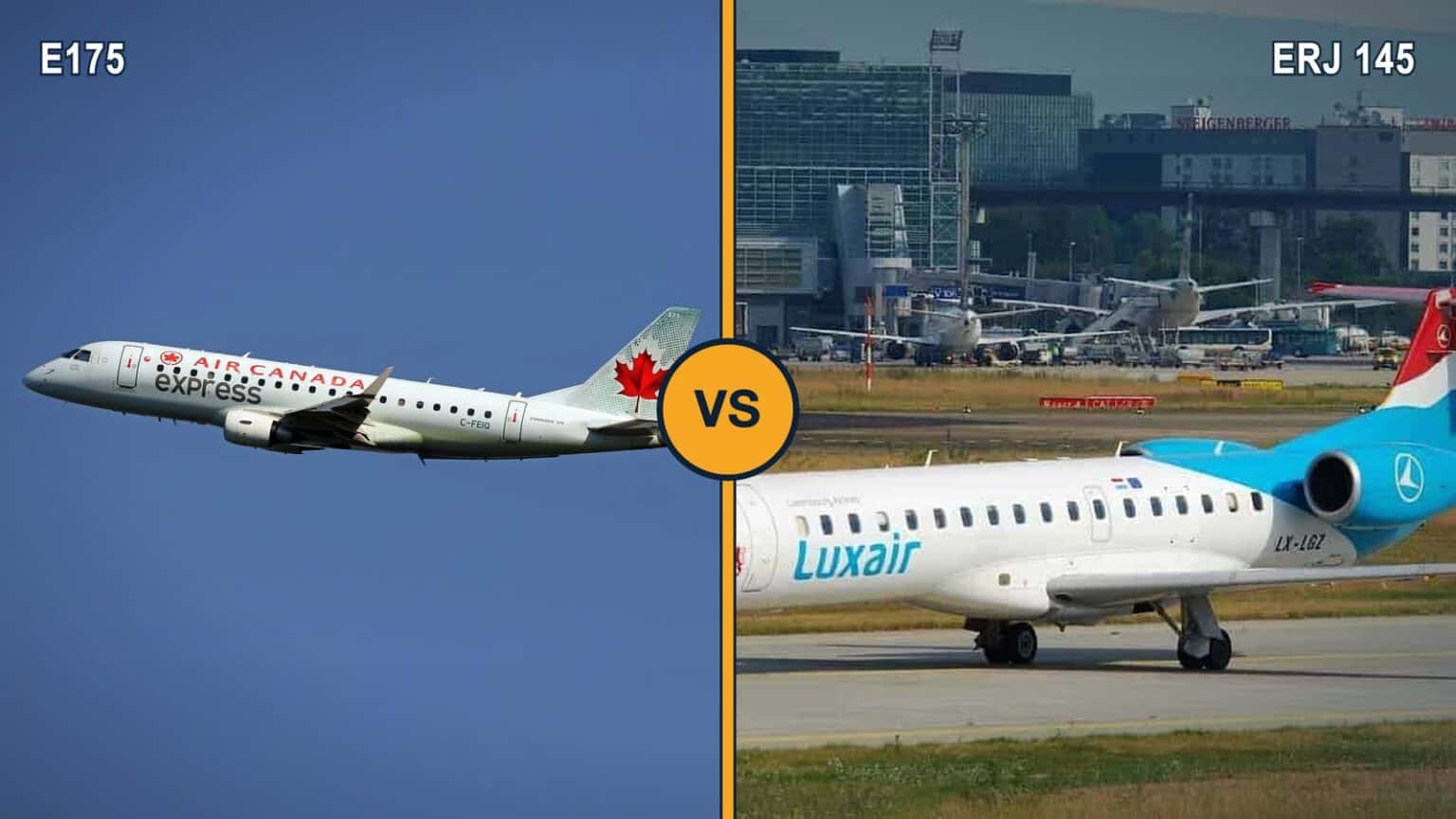
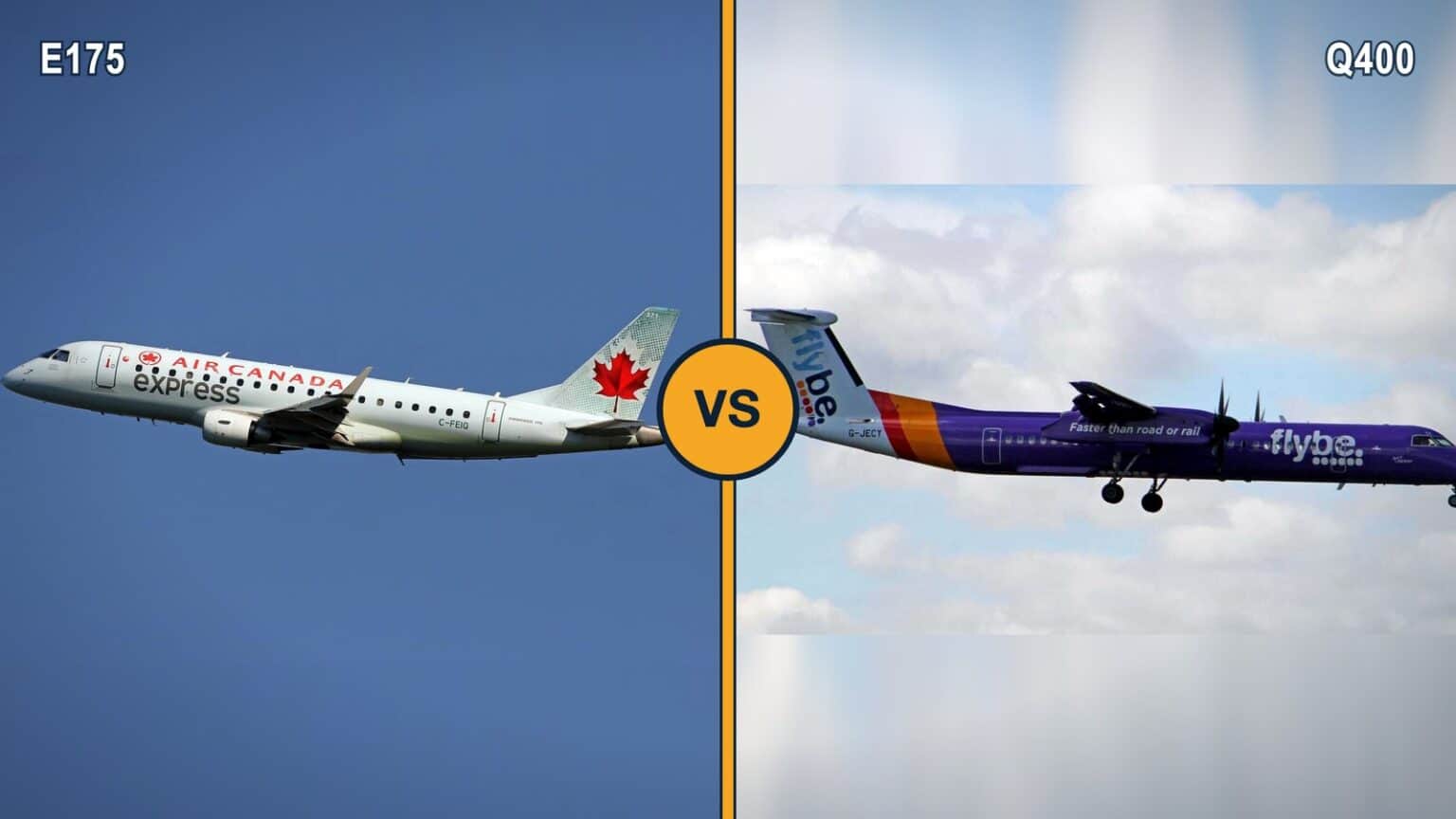
Table of Contents
| Measure | E170 | E175 |
|---|---|---|
| Relationship | The original E-Jet | A stretch of the E170 |
| First delivery | LOT Polish Airlines, March 17, 2004 | Air Canada, July 2005 |
| High-density seating | Up to 78 | Up to 88 |
| Typical two-class seating | 66 | 76 |
| Winglets | Blended tips | Angled winglets on aircraft built from 2017 |
| Production | Ended in 2017 | Still in production |
E170 vs E175: one airplane, two lengths
The Embraer 170 and the Embraer 175 are the two smallest members of the Embraer E-Jet family. The E175 is a stretched E170, and both are powered by two General Electric CF34-8E engines.
They share a cabin width of 9 ft 0 in (2.74 m), a cabin height of 6 ft 7 in (2.00 m) and a fuselage diameter of 9 ft 11 in (3.01 m). A passenger sits in the same width of cabin in either one.
The E-Jet family was designed around a common type rating, so a pilot can move between family members without starting a new rating.
The short version
Pick the E170 for shorter runways and a smaller, cheaper airplane. Pick the E175 for more seats and a little more range. Only the E175 is still being built.
Where the E170 wins
Runway and climb
The E170 is the better airplane off a short runway. The database lists a takeoff distance of 5,400 ft (1,640 m) for the E170 against 7,350 ft (2,240 m) for the E175.
Landing distance is much closer, at 4,050 ft (1,240 m) against 4,150 ft (1,260 m).
The E170 also climbs faster in the database, at 3,400 ft/min (17 m/s) against 2,000 ft/min (10 m/s) for the E175. Its approach speed is lower too, at 130 kt (150 mph, or 241 km/h) against 135 kt (155 mph, or 250 km/h).

Weight and cargo space
The E170 is the lighter airplane. Its empty weight is 46,643 lb (21,157 kg) against 48,259 lb (21,890 kg), and its maximum takeoff weight is 85,000 lb (38,600 kg) against 89,000 lb (40,400 kg).
It also lists more baggage room, at 508 ft³ (14.4 m³) against 325 ft³ (9.2 m³) for the E175. The E175 gives some of its hold back to a longer passenger cabin.

Where the E175 wins
Seats
The E175 is 103 ft 11 in (31.68 m) long and the E170 is 98 ft 1 in (29.90 m). That is a stretch of about 6 feet (1.8 m).
The cabin grows by the same amount, from 63 ft 9 in (19.43 m) to 69 ft 7 in (21.20 m). Embraer lists typical two-class seating of 66 for the E170 and 76 for the E175, and up to 78 and 88 in a high-density layout.
Ten more seats spread the crew, fuel and fees over more paying passengers, which is why the E175 became the bigger seller.

Range and payload
The E175 flies a little farther. The database lists 2,530 miles (4,070 km) for the E175 against 2,470 miles (3,980 km) for the E170.
Maximum payload is higher too, at 22,300 lb (10,100 kg) against 21,500 lb (9,750 kg). Both carry the same 3,050 gal (11,600 L) of fuel.

Still in production
Production of the E170 ended in 2017. The E175 is still being built, and aircraft built from 2017 carry angled winglets that Embraer offered only on the E175.
The winglets raise the span from 85 ft 4 in (26.00 m) to about 94 ft 0 in (28.65 m), which is why the database lists the E175 with the wider wing. They cut fuel burn by about 6.4% against the original E175.
Engines and speed
Both jets use the General Electric CF34-8E. The E170 lists thrust of 2 × 14,510 lbf (65 kN) and the E175 lists 2 × 14,200 lbf (63 kN).
Speed is the same. The database lists a maximum speed of 470 kt (541 mph, or 870 km/h) and a cruise speed of 430 kt (495 mph, or 796 km/h) for both, with a ceiling of 41,000 ft (12,500 m).
The jets differ in size, not in how fast they fly. Our database lists a price of $41 million for the E170 and $45.7 million for the E175, both in 2016 dollars.
Myth check: the E175 is not the newer generation
The E175 is the stretch of the E170, not the next generation. The newer E175-E2 is a different, heavier airplane that US regional airlines cannot order in numbers because of scope clause limits on maximum takeoff weight. The plain E175 is the one still in production for them.
Who flies them
LOT Polish Airlines took the first E170 delivery on March 17, 2004. Air Canada took the first E175 in July 2005.
The E175 became the workhorse of US regional flying. Embraer’s 1,500th E-Jet, delivered in 2018, was an E175 for Horizon Air.
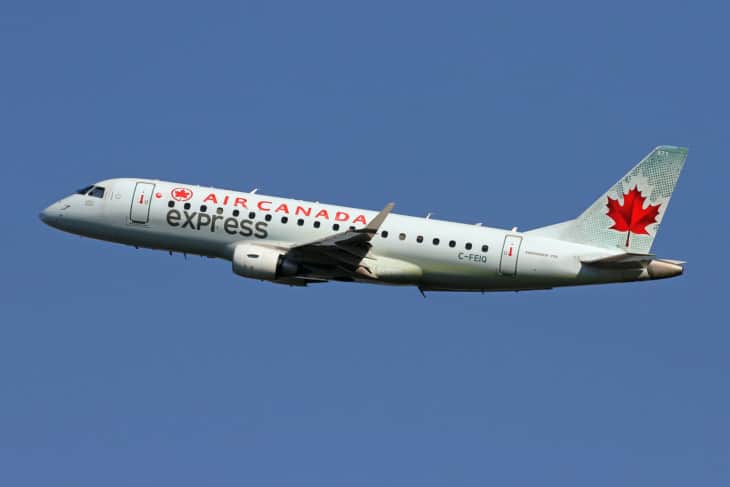
American Eagle, Republic and flybe are among the carriers shown in the photos on this page.
Seat maps, legroom and the first flight
Passengers often search for the seat map. Legroom is set by the airline, not by the model, so two carriers can offer different pitch on the same jet.
The E-Jet prototype first flew on February 19, 2002. The E170 was the first model in the family, and the E175 followed as the stretch.
A pilot or passenger spotting the two on the ramp can tell them apart by length. The E175 is the longer jet, and a late-build E175 also has the angled winglets.
Which is better, the E170 or the E175?
For most airlines the E175 is the better airplane. It seats up to 88 passengers against up to 78, flies a little farther and is still in production.
The E170 is the better choice for a short runway or a thinner route. It is lighter, takes off in less distance and climbs faster in the database.
A passenger in either one sits in the same width of cabin, so the main difference is the number of rows.
FAQ
The E175 is a stretched E170. It is 103 ft 11 in (31.68 m) long against 98 ft 1 in (29.90 m), with a cabin 69 ft 7 in (21.20 m) long against 63 ft 9 in (19.43 m). The extra length lets an airline fit up to 88 seats against up to 78.
The E170 is the smallest member of Embraer’s E-Jet family, a twin-engine regional jet. It first flew on February 19, 2002, and the first one was delivered to LOT Polish Airlines on March 17, 2004.
The E175, but only just. Our database lists 2,530 miles (4,070 km) for the E175 against 2,470 miles (3,980 km) for the E170.
Yes. Both use two General Electric CF34-8E engines. The database lists 14,510 lbf (65 kN) per engine for the E170 and 14,200 lbf (63 kN) for the E175.
No. Production of the E170 ended in 2017. The E175 is still being built, largely for US regional airlines.
Yes. The E-Jet family was designed around a common type rating, so crews can move between family members without retraining on a new rating.
Sources and references used for research and fact-checking.
About the Author

Tim is the owner and lead editor of AeroCorner since 2019, overseeing aviation content covering aircraft, airlines, airports, and the broader aviation industry. Through years of researching, writing, editing, and publishing aviation-focused content, he has developed extensive practical knowledge of commercial aviation and air travel. Based in Asia and a frequent traveler himself, Tim also brings firsthand passenger experience to AeroCorner’s coverage. Outside of publishing, he has also explored aviation firsthand through hands-on flight training in New Zealand.