


Table of Contents
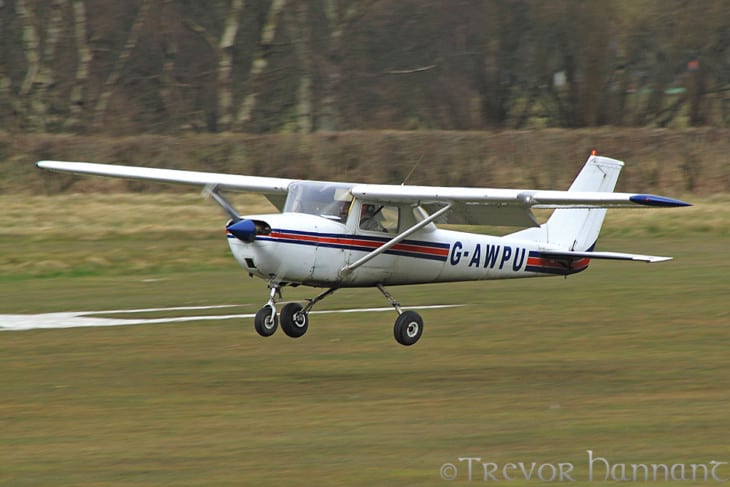
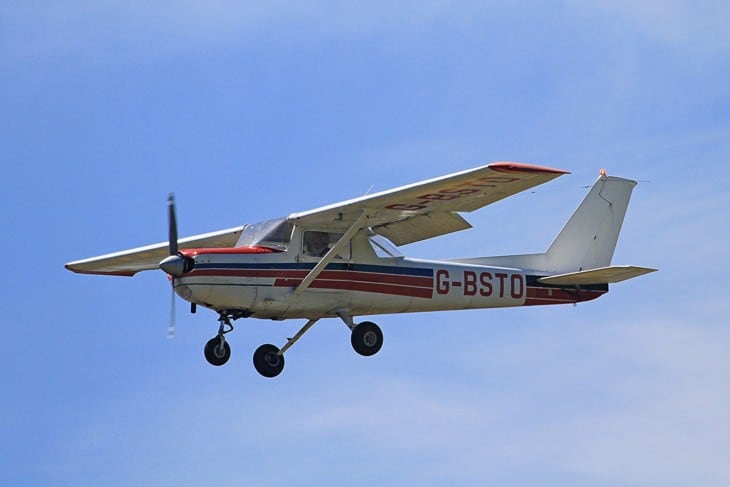
| Cessna 150 | Cessna 152 | |
|---|---|---|
| Number built | 23,839, including Reims-built F150s | 7,584, including Aerobats |
| First flight | September 12, 1957 (as the Model 142) | Introduced in 1977 as a 1978 model |
| Engine lineage | Continental O-200-A on American-built airplanes | Lycoming O-235-L2C, then O-235-N2C from 1983 |
| Maximum flap travel | 40 degrees | 30 degrees |
| Aerobat version | A150K Aerobat, from the 1970 model year | A152 Aerobat, certified for +6 and -3 G |
| Replaced by | The Cessna 152 in 1977 | Nothing; Cessna stopped light aircraft in 1985 |
Which airplanes the panel compares
The panel above compares the standard Cessna 150 with the standard Cessna 152. Both also came as Aerobats, and Reims in France built F150 and F152 versions, some with different engines.
Cessna 150 vs 152: which is better?
Neither airplane is a clear winner, because the 152 is a minor modification of the 150. The 152 has the edge on engine life and gross weight. The 150 has the larger production run and a long record as the standard trainer.
If you are choosing between two airplanes, condition, engine hours and avionics matter more than the model number.
Where the Cessna 150 wins
The 150 is the original tricycle-gear trainer. It first flew on September 12, 1957, and production began in September 1958 at Wichita, Kansas. Its 23,839 airplanes make it the fifth most produced aircraft ever.
That huge fleet means parts, owner groups and instructors who know the type are everywhere. The 150 also gave Cessna room to refine it over nineteen model years, including a swept tail from 1966 and the Aerobat from 1970.

The 150 has larger flap travel, up to 40 degrees. That gives a steeper approach, which some pilots like for short fields.
Where the Cessna 152 wins
The 152 replaced the 150 in the summer of 1977. Cessna aimed for more useful load, less noise and better running on 100LL fuel, to compete with the Beechcraft Skipper and Piper Tomahawk.
The Lycoming O-235 has a longer time between overhauls than the Continental in the 150, so the 152 is cheaper to run over time. Gross weight rose from 1,600 pounds to 1,670 pounds.

Cessna also limited flap travel to 30 degrees for better climb with full flaps. In 1983 the engine changed to the O-235-N2C, with a new piston and combustion chamber to reduce lead fouling.
How they fly
The two fly almost alike. Both are high-wing, fixed-gear two-seaters with gentle stalls, which is why so many flight schools bought them.
The handbook for the 152 lists stall speeds between roughly 31 and 40 knots indicated with power off, depending on flaps and center of gravity. Neither airplane likes two adults, full fuel and a hot, high airport, so plan weight carefully.

Aerobat versions
Both types came as Aerobats. The A150K Aerobat arrived for the 1970 model year. The A152 Aerobat is certified for +6 and -3 G, with four-point harnesses, skylights and jettisonable doors.
Both Aerobats are stronger than the standard airplane and meant for training in basic maneuvers. Cessna built 315 A152s and Reims built 89 FA152s. Most pilots will never need one, but they exist if you want to learn basic aerobatics.
How the Cessna 150 changed over 19 years
Cessna labeled the 150 by model year, much like a car maker. The airplane stayed simple, but the details moved a lot.
The 1964 model added a cut-down rear fuselage with a wraparound Omni-Vision rear window. The 1966 model brought a tail fin swept back 35 degrees, wider doors, more baggage space and electrically operated flaps. It was also the biggest year of the run, with 3,067 built.
The 1967 model bowed the doors outward for about 3 inches more cabin width. The 1971 model swapped the flat steel gear legs for tubular ones, and the 1975 150M added a taller, narrower tail.
What the Cessna 152 changed
The 152 is a minor modification, so it looks nearly identical from the ramp. The changes are under the cowling and in the numbers.
Early 152s carried the O-235-L2C rated at 110 hp, which still suffered some lead fouling. From 1983 the O-235-N2C rated at 108 hp took over. The airframe is mostly 2024-T3 aluminum with glass-reinforced plastic wingtips and fairings.
The 152 also has single-slotted Fowler flaps that deploy electrically to 30 degrees. The nosewheel steers through the rudder pedals, which keeps it forgiving for students.
If you outgrow two seats, the next step is usually the four-seat Cessna 172. Our Cessna 152 vs 172 comparison covers that move.
Reims-built versions
Reims Aviation in France built both types under license. Reims built 1,764 Cessna 150s as the F150. In 1972 it introduced the FRA150L Aerobat with a 130-horsepower O-240-A, the first engine change for the type.
Reims also built 552 F152s and 89 FA152s. If you shop in Europe, expect to see these more often than American-built airplanes.
Modifications owners add
Hundreds of modifications exist for the 152. Owners add tailwheel conversions, STOL kits such as the Horton kit, flap gap seals, auto fuel approvals and auxiliary fuel tanks.
The Sparrow Hawk power package raises output to 125 hp, though it shortens the recommended time between overhauls from 2,400 to 2,000 hours. A 1996 certification also approved the 152 to run on 100% ethanol as an alternative to 100LL.
Who flew them
Flight schools and private owners are the core market for both types, and many airplanes are still in those hands today. Our list of the most produced aircraft of all time puts the 150 in the top five. The U.S. Air Force Academy flying team used three 150s, designated T-51A.
Military 152 operators have included the Bolivian Air Force, the Mexican Navy and the Argentine National Gendarmerie. The Bangladesh Army inducted five A152 Aerobats in 2019.
Which one should you buy or rent?
Pick the 152 if you want the newer engine design and the extra gross weight. Pick the 150 if you find a clean airplane with fresh engine time at a good price.
A pre-purchase inspection matters more than the label on the tail. Both are 40 to 67 years old, so each airplane’s history decides how good it is.

FAQ
Sources and references used for research and fact-checking.
About the Author

Tim is the owner and lead editor of AeroCorner since 2019, overseeing aviation content covering aircraft, airlines, airports, and the broader aviation industry. Through years of researching, writing, editing, and publishing aviation-focused content, he has developed extensive practical knowledge of commercial aviation and air travel. Based in Asia and a frequent traveler himself, Tim also brings firsthand passenger experience to AeroCorner’s coverage. Outside of publishing, he has also explored aviation firsthand through hands-on flight training in New Zealand.