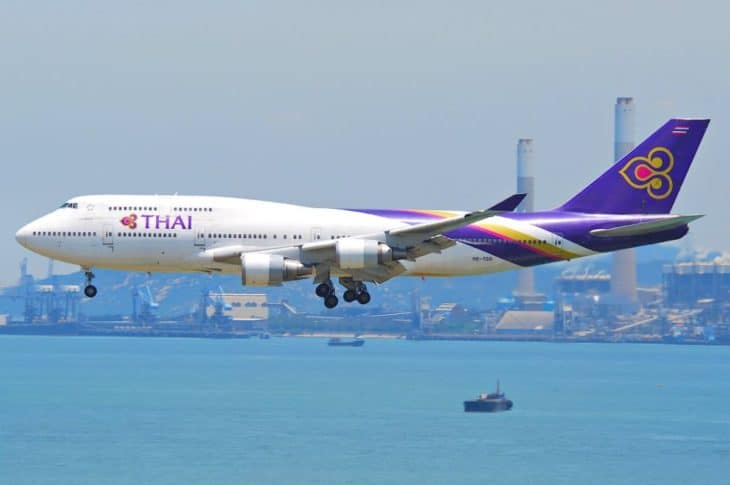

The Boeing 747 and McDonnell Douglas DC-10 are two of the most iconic aircraft. Both have played essential roles in aviation history and have been widely used by airlines worldwide. This article will stack 747 vs DC10 and compare the two aircraft.
About the Boeing 747
Let’s start with the Boeing 747. This behemoth is a four-engine wide-body jet airliner that was first introduced in 1969 and has become the most recognizable airliner in the world.
Why was it developed and built?
Factory-made by the famous Boeing’s Commercial Aircraft unit in the United States, the Boeing 747 was originally envisioned to have 150 percent greater capacity than the Boeing 707, one of the common commercial airliners at that time.
What purpose does it serve?
The Boeing 747 is used for various purposes, from hauling cargo to carrying passengers on long-haul flights. It is also used for VIP transport and first-class service in smaller markets. Also, it’s used for military purposes and some specialized applications, such as Spacelab missions.
About the aircraft McDonnell Douglas DC-10
The McDonnell Douglas DC-10 is a three-engine wide-body airliner that flew in August 1970. It served mainly as an airliner but also saw military and freighter roles. The McDonnell Douglas DC-10 was the second wide-body airliner to enter commercial service, following the Boeing 747.
Why was it developed and built?
The McDonnell Douglas DC-10 was designed as a response to the success of the Boeing 747. It featured greater seating capacity and better fuel efficiency than its predecessor, the Douglas DC-8.
What purpose does it serve?
The DC-10 is used for various purposes, from hauling cargo to carrying passengers on long-haul flights. Airlines also use it for VIP transport and first-class service in smaller markets.
How are the Boeing 747 and McDonnell Douglas DC-10 Mriya different?
The McDonnell Douglas DC-10 and the Boeing 747 are both wide-body, three-engine passenger aircraft. While these two planes have a lot in common, there are also some crucial differences. Let’s take a closer look.
Size
One of the most obvious differences between the McDonnell Douglas DC-10 and the Boeing 747 is size. The McDonnell Douglas DC-10 is generally smaller than the Boeing 747, with
- A length of 55.55 meters compared to 76.25 meters for the Boeing 747.
- The wingspan of 50.39 meters compared to 68.5 meters for Boeing 747.
McDonnell Douglas DC-10 can seat between 270 and 380 passengers, while the Boeing 747 can seat up to 660 passengers in a typical configuration.
Engines
Both planes have three engines, but they are not identical. The McDonnell Douglas DC-10 has two engines mounted on the tail and one under the fuselage, while the Bowing 747 has two engines mounted on each wing.
This difference in engine placement means that the McDonnell Douglas DC-10 has a more balanced performance and can take off and land on shorter airstrips than the Boeing 747, which needs a longer runway due to its weight and wingtip design.
Cruise and Range
The Boeing 747 has a higher maximum cruise speed than the DC-10, at around 933 km/h. It also has a longer range of up to 14,320 km compared to the McDonnell Douglas DC-10 range of 9,400 km.
How are the Boeing 747 and McDonnell Douglas DC-10 similar?
The Boeing 747 and McDonnell Douglas DC-10 are the most popular wide-body aircraft ever produced. Though different manufacturers designed them, there are several similarities between these two planes.
- The Boeing 747 and McDonnell Douglas DC-10 have three engines, one on each side of the fuselage and one on the tail.
- This configuration is known as a “tricycle” layout and is more aerodynamically efficient than the “tail-dragger” layout used on older aircraft.
In air travel, both planes are well-suited for long-haul flights.
What’s better about the Boeing 747?
The first Boeing 747 rolled out of the factory in 1968 and has been in production ever since. But what makes the Boeing 747 so unique? Let’s take a closer look.
The Boeing 747 is a wide-body aircraft with four engines mounted on wing pylons. It has a distinctive “hump” on the forward fuselage, which houses the cockpit and extra fuel tanks.
The hump provides clearance for the aircraft’s tails when taxiing on the ground. It is available in several variants, including the Passenger, Freighter, Combi, and Extended Range versions.
Four high-bypass turbofan engines power the Boeing 747. These engines produce a lot of thrust, which allows the aircraft to take off and land at relatively low speeds. This also makes the 747 very quiet inside and around airports.
What’s better about the McDonnell Douglas DC-10?
The McDonnell Douglas DC-10 first entered service in 1971 and was produced until 1989. It was designed as a wide-body jetliner for long-haul flights and could carry between 247 and 380 passengers, depending on the model.
The plane became popular with airlines and passengers alike thanks to its spacious interior and superior comfort. Many passengers preferred the McDonnell Douglas DC-10 to rival aircraft like the Boeing 747 due to its more intimate cabin atmosphere.
Another benefit is stability. This is partly due to its trijet layout, which gives the plane better balance than a traditional twin-engine plane. As a result, the McDonnell Douglas DC-10 has an excellent safety record; it has one of the lowest hull loss rates of any wide-body airliner.
Finally, the McDonnell Douglas DC-10 is also known for being very reliable. Thanks to its simple design and sturdy construction.
This reliability means that airlines can count on the plane to make their scheduled flights, which is vitally important in today’s competitive marketplace.
Conclusion
The McDonnell Douglas DC-10 and the Boeing 747 have produced two of the most successful wide-body aircraft ever. They both offer an excellent range, reliability, and passenger comfort. However, each has unique advantages.
The DC-10 is slightly smaller and more balanced than the Boeing 747, while the Boeing 747 has a greater capacity and is better suited to long-haul flights.