

Table of Contents
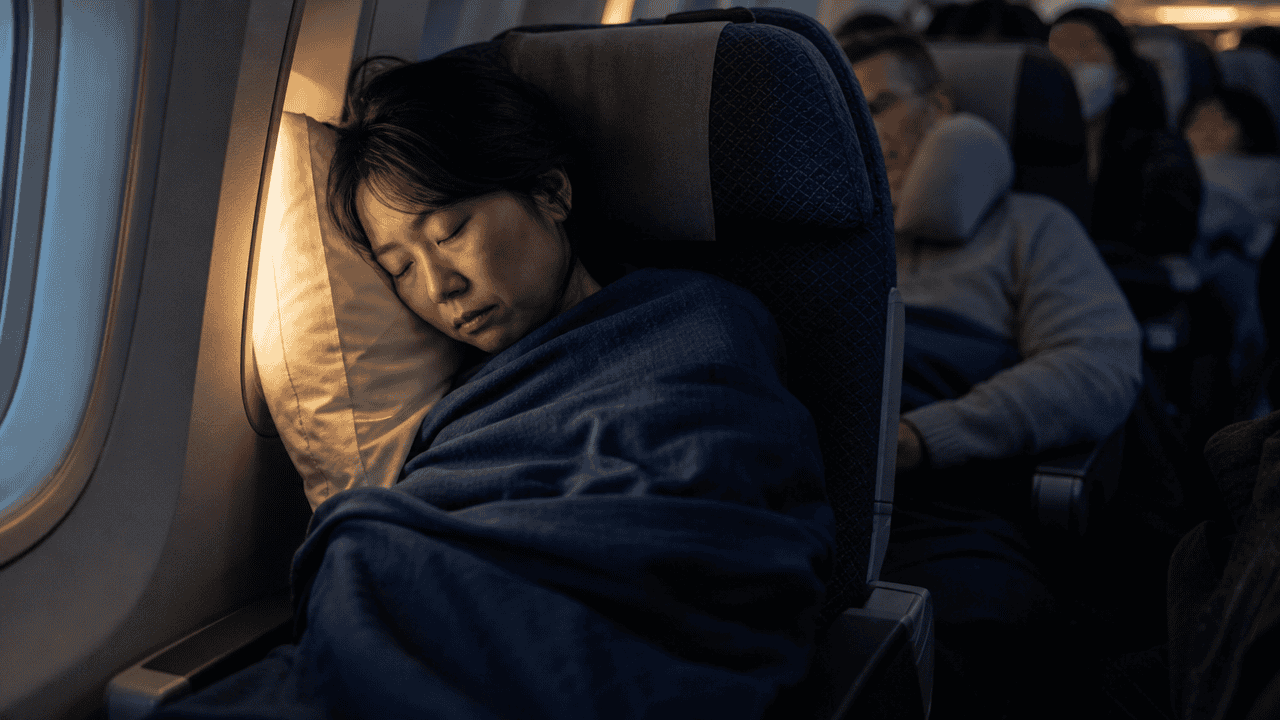
Six hours into a ten-hour flight, your shoes feel a size too small, your mouth tastes like cotton, and you have pulled on every blanket the crew will hand out, even though the passenger next to you looks perfectly comfortable in a t-shirt. Nothing dramatic happened. No turbulence, no bad meal, no missed sleep.
That is the cabin working on your body, quietly, for hours. It happens to almost everyone on a long-haul flight, whether they are sitting in economy or stretched out in business class.
Four separate, well-documented things are happening to you at once, and each one explains a specific complaint you have probably had on a long flight without ever knowing why.
The short answer
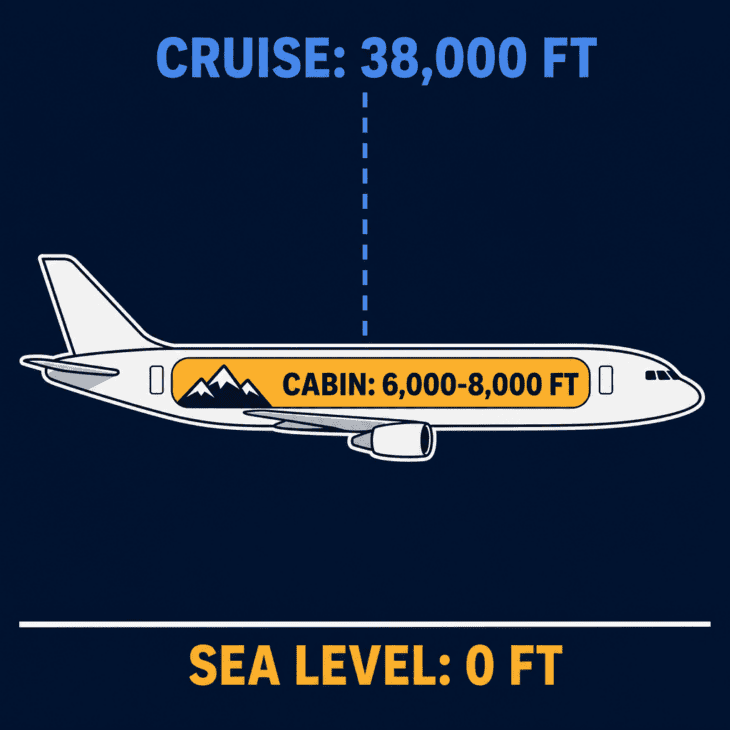
A pressurized cabin is not sea level. Regulators let airlines pressurize the cabin only to the equivalent of roughly 6,000 to 8,000 feet of altitude, the air is kept deliberately dry to protect the airframe, hours of sitting still let blood pool in your legs, and the cabin is kept cold on purpose.
None of that is dangerous for a healthy passenger on its own. Stacked together for eight or ten hours, it adds up to real, measurable physical stress, which is exactly what you feel by the time the seatbelt sign comes back on for landing.
The four-part toll of a long flight
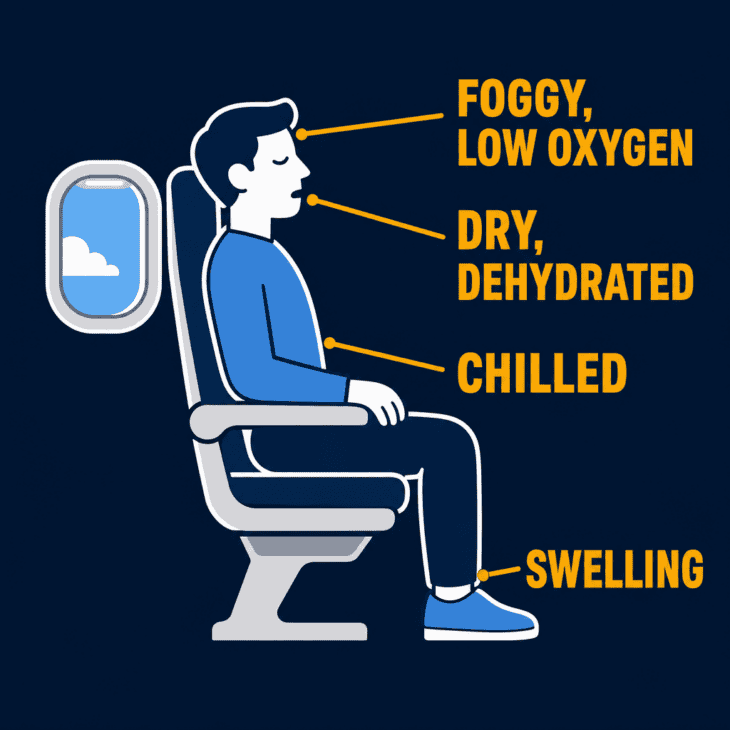
Mild oxygen thinning from cabin altitude, single-digit-to-low-double-digit humidity that dries you out, blood pooling in your legs from hours of stillness, and a cold cabin that keeps your body working a little harder than usual.
The cabin sits at the altitude of a mountain town, not sea level
Airliners cruise at 35,000 to 40,000 feet, an altitude where an unprotected passenger would lose useful consciousness within a minute or two. Federal rules only require the cabin to be pressurized to the equivalent of 8,000 feet at most, and in practice most jets run closer to 6,000 to 8,000 feet at cruise, roughly the elevation of Aspen or Mexico City.
At that pressure, a healthy passenger’s blood oxygen saturation typically dips from around 97 percent at sea level into the low-to-mid 90s, according to FAA-funded research on cabin altitude and passenger health. That mild thinning is why you might feel foggier or more tired on a long flight even after a full night’s sleep.
It is also the same pressure shift that makes your ears pop as the cabin climbs and descends on the way up and down (why ears pop in airplanes).
The cold cabin air ties back to that same oxygen dip. Combining thinner air with a warm cabin raises the odds of a passenger feeling lightheaded or fainting, so crews keep the temperature on the cool side on purpose, not to save money on heating.
That mild oxygen thinning affects nearly everyone a little, but FAA research on cabin pressure and vulnerable passengers found the effect runs stronger in older adults and in travelers with existing heart or lung conditions, some of whom show measurable drops in blood oxygen and need extra care or supplemental oxygen on a long flight.
The same bleed-air system that pressurizes the cabin also dries it out. That air is drawn from outside the engines, where it starts out nearly moisture-free, and airlines deliberately keep it that way rather than adding humidity, because moist air speeds up corrosion in an aluminum airframe (why airplanes are so dry).
Most cabins run at roughly 10 to 20 percent relative humidity, and older jets can fall into the single digits, well below the 30 to 50 percent most homes sit at. That is why your throat, eyes, and skin dry out faster on a plane than almost anywhere else you would spend a full day.

Newer composite jets change that math. Carbon-fiber fuselages resist corrosion and metal fatigue far better than aluminum, so aircraft like the Boeing 787 can pressurize down to about 6,000 feet and run cabin humidity as high as 20 to 25 percent. Passengers on those aircraft consistently report feeling less wrecked after a long flight, though it does not erase the effects entirely.
Sitting still is doing more damage than the thin air
The altitude and dryness explain the foggy head and the parched throat, but the swelling in your ankles by hour six comes from something simpler: you have barely moved. Gravity pools blood in your leg veins whenever you sit still for hours, cabin or no cabin.
The mild drop in cabin pressure makes that fluid a little more likely to seep into surrounding tissue, which is why feet and ankles swell on long flights (why feet swell on airplanes).
In a small number of passengers, that pooled, sluggish blood clots inside a deep leg vein, a condition doctors call deep vein thrombosis, or DVT. Public health researchers estimate roughly 1 in 6,000 passengers on flights longer than four hours develops a clot, with the risk rising further on flights of eight to ten hours or more.
What actually helps
A Cochrane review of nearly 3,000 travelers found that wearing compression stockings cut the rate of symptomless leg clots from tens per thousand passengers down to roughly two or three per thousand.
Most flight-related clots never announce themselves, which is part of why the condition is easy to underestimate. When symptoms do show up, they are usually confined to one leg: swelling, warmth, redness, or a dull ache or tightness in the calf that does not ease when you change position.
Getting up to walk the aisle every hour or two, flexing your calves in your seat, and drinking more water than you think you need do much of the same job as the stockings, for free, and they matter more than which cabin class you happen to be sitting in.
The “economy class syndrome” myth misses what is really going on
The myth: it's a legroom problem
Flight-related blood clots picked up the nickname “economy class syndrome” decades ago, as if cramped seating alone were the cause and a bigger seat would solve it.
The real driver is stillness, not seat width. A business or first class passenger who reclines flat and never gets up faces a similar relative increase in clot risk to an economy passenger who does the same, because the shared cause is hours without moving your legs, not the size of the seat around them.
Long car and train trips of similar duration carry a comparable rise in clot risk, which is further evidence that immobility, not something unique to aircraft cabins, is doing most of the damage. A lower cabin altitude and higher humidity, like the Boeing 787 offers, measurably reduce fatigue and discomfort, but they do not cancel out the risk that comes from sitting still for hours.
Next time you land with tight shoes, a dry throat, and a foggy head, none of it is random. It is your body responding, in a fairly predictable way, to a pressurized tube that trades some comfort for weight savings, corrosion resistance, and a wide safety margin.
The fix is almost embarrassingly simple: get up and walk the aisle every couple of hours, drink more water than feels necessary, and pull on compression socks before any flight longer than four hours. Your body will thank you before your feet even touch the jet bridge.
Sources and references used for research and fact-checking.
- Electronic Code of Federal Regulations (eCFR), Federal Aviation Administration, 14 CFR 25.841 - Pressurized cabins
- Federal Aviation Administration, Office of Aerospace Medicine, Health Effects of Aircraft Cabin Pressure in Older and Vulnerable Passengers
- National Research Council (National Academies Press, via NCBI Bookshelf), The Airliner Cabin Environment and the Health of Passengers and Crew
- Centers for Disease Control and Prevention (CDC), Understanding Your Risk for Blood Clots with Travel
- Cochrane Library, Compression stockings for preventing deep vein thrombosis in airline passengers
Get the Newsletter
The latest aviation news and stories sent to your inbox.
About the Author

Tim is the owner and lead editor of AeroCorner since 2019, overseeing aviation content covering aircraft, airlines, airports, and the broader aviation industry. Through years of researching, writing, editing, and publishing aviation-focused content, he has developed extensive practical knowledge of commercial aviation and air travel. Based in Asia and a frequent traveler himself, Tim also brings firsthand passenger experience to AeroCorner’s coverage. Outside of publishing, he has also explored aviation firsthand through hands-on flight training in New Zealand.