

Table of Contents
A paper airplane is one of the cheapest science fair projects there is. One sheet of paper, one tape measure, and a question you can test in an afternoon.
The best projects change one thing at a time. Each idea below gives you the question, the variable and a simple method, so the board writes itself.
Pick a design to test from paper airplane designs, and find more hands-on projects in airplane activities for kids. If your student prefers building to testing, try airplane crafts for kids.
01. Wing Shape and Flight Distance
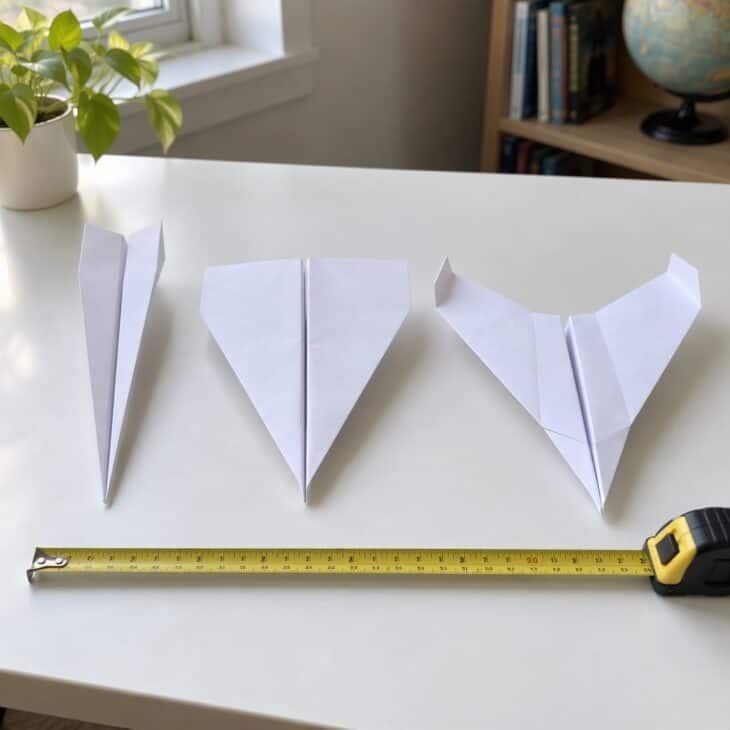
What it is Question: does wing shape change how far a paper plane flies? Variable: wing shape (narrow, wide, swept) with the same sheet of paper, fold count and launch.
Why it works It gives a clear single variable and a result you can read on a tape measure.
How to get it Fold three planes from identical 8.5 by 11 inch (21.6 by 27.9 cm) sheets, changing only the wing. Throw each one 10 times from the same line and average the distances. Chart the three averages as a bar graph.
02. Paper Weight and Flight Time
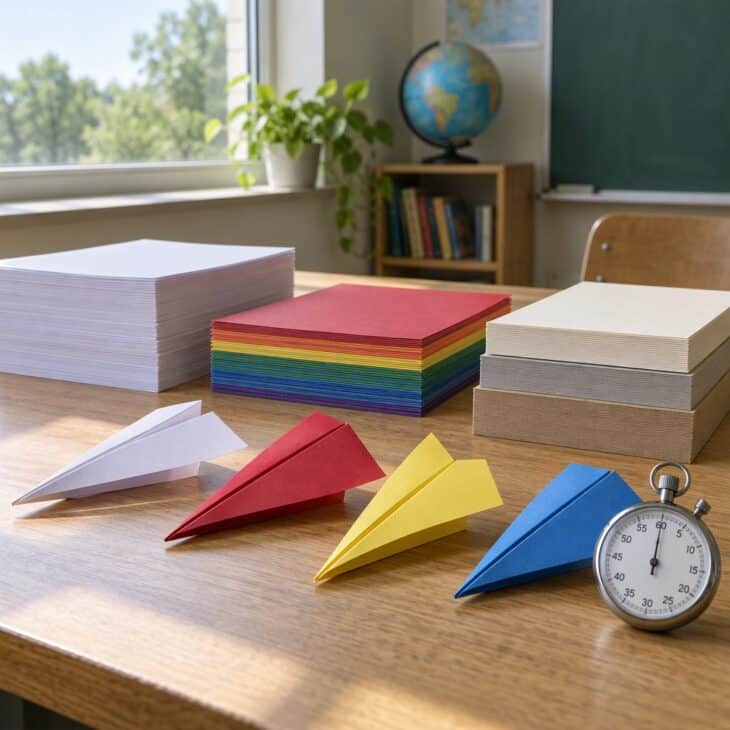
What it is Question: do heavier sheets fly longer? Variable: paper weight, from 20 lb copy paper to 65 lb cardstock, with one fixed design.
Why it works Weight is easy to change and ties straight to lift and gravity.
How to get it Fold the same design from each paper and time every flight with a phone stopwatch. Launch indoors to avoid wind, ten throws per paper. Report the average hang time and note which paper stalled.
03. Launch Angle Test
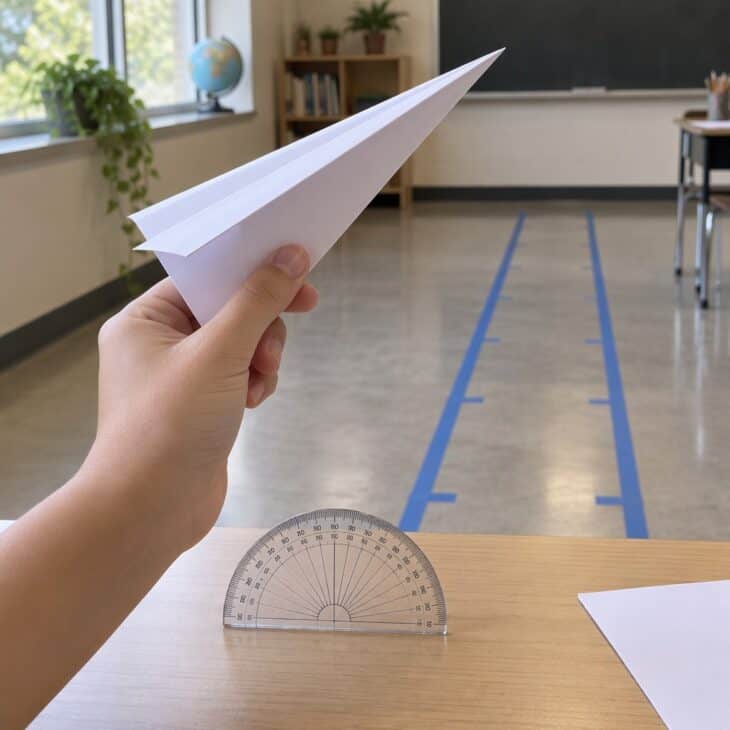
What it is Question: what launch angle gives the longest flight? Variable: angle (0, 15, 30, 45 degrees) with one plane and one throw strength.
Why it works Students see that more height is not always more distance.
How to get it Mark a floor lane in feet and use a cardboard wedge cut to each angle as a launch guide. Throw the same plane five times per angle. Plot angle against average distance and find the peak.
04. Nose Weight and Balance
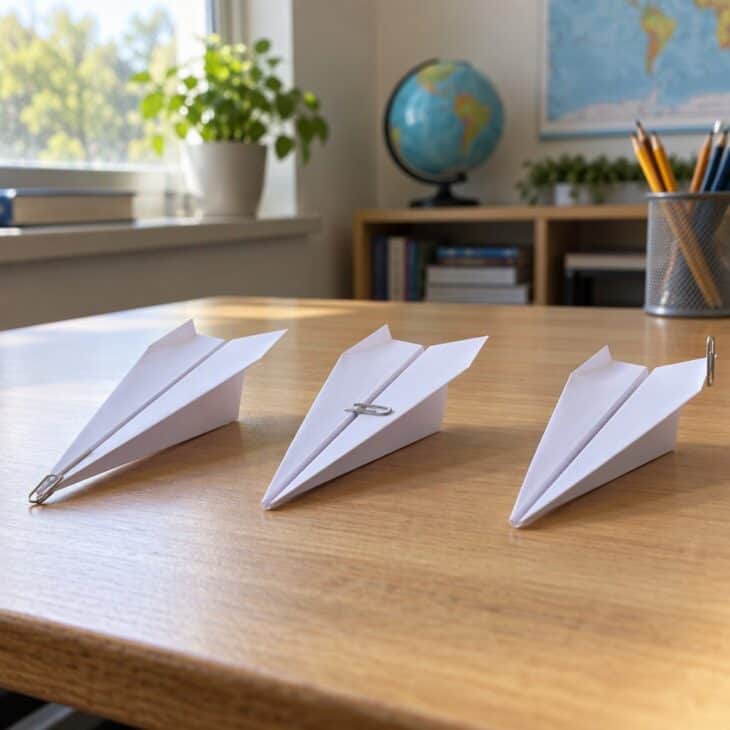
What it is Question: where should weight sit on a plane? Variable: position of one paper clip (nose, middle, tail).
Why it works Center of gravity is the core of real aircraft balance, shown in one clip.
How to get it Clip a standard paper clip at each position on identical planes. Fly each ten times and log whether it dives, glides or stalls. Move the clip a half inch (1.3 cm) at a time to find the best spot.
05. Winglets and Wing Tips
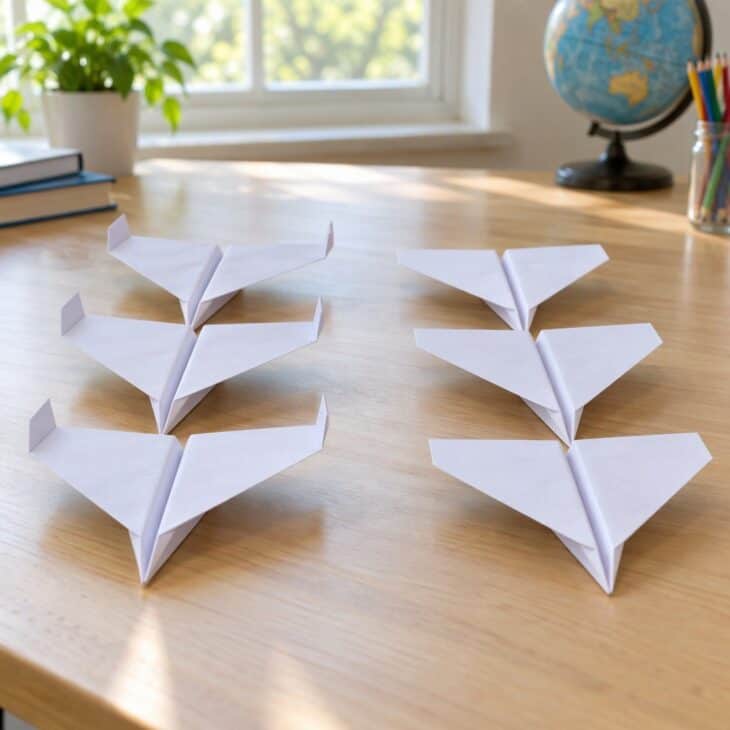
What it is Question: do folded-up wing tips help? Variable: winglet height, from none to 1 inch (2.5 cm).
Why it works Real airliners use winglets, so students test a real engineering choice.
How to get it Fold the tips up on one plane and leave a twin flat. Compare 10 throws each for distance and straightness of path. Note whether the winglet plane drifts less.
06. Elevator Flap Angles
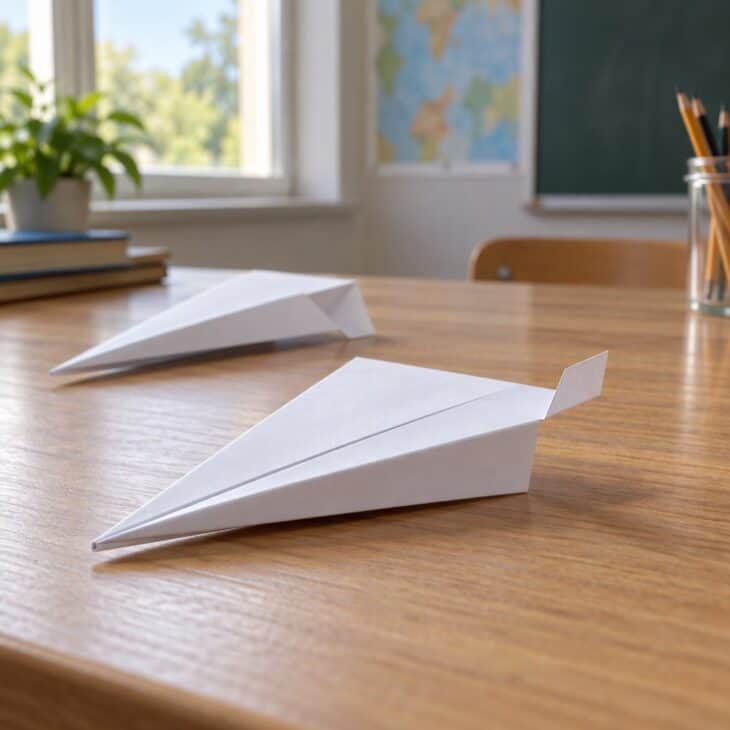
What it is Question: how do trailing-edge flaps change the flight path? Variable: flap angle (up, flat, down).
Why it works Flaps give a visible link between a control surface and what the plane does.
How to get it Cut a 1 inch (2.5 cm) slit on each wing’s back edge and bend the flap. Fly three versions and describe each path as climbing, level or diving. Record the results in a table.
07. Wing Area and Glide
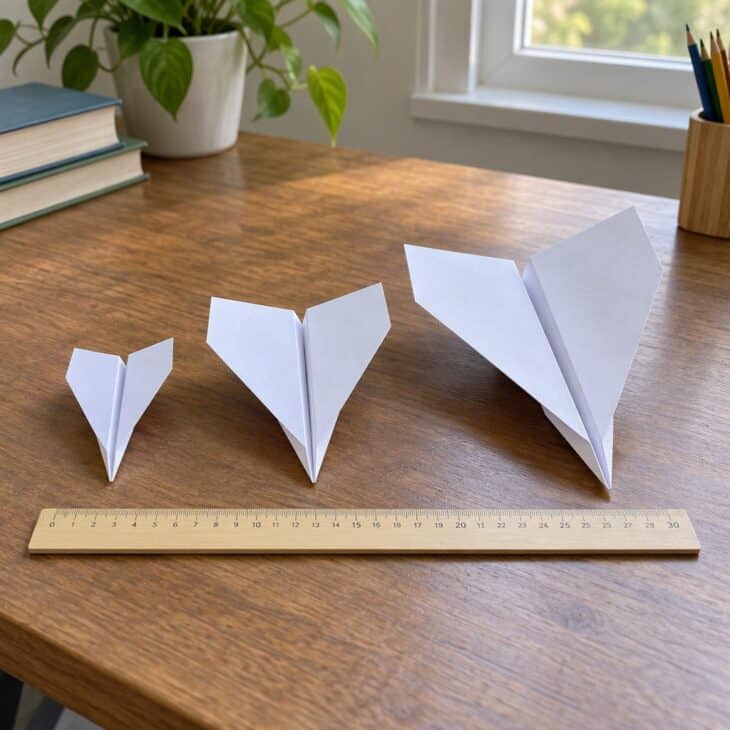
What it is Question: does a bigger wing glide farther? Variable: total wing area, trimmed in steps.
Why it works It shows the tradeoff between lift and drag in a way kids can measure.
How to get it Start with a large-wing plane and trim 0.5 inch (1.3 cm) per round. Throw each version five times and note distance and time aloft. Graph area against average flight time.
08. Fuselage Length Test
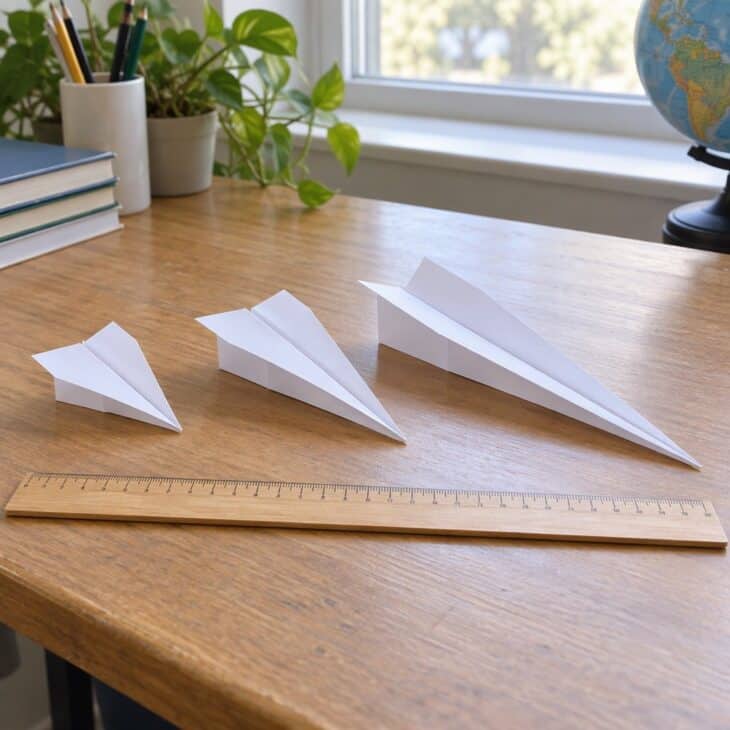
What it is Question: does body length affect stability? Variable: fuselage length with matching wings.
Why it works Longer bodies change where weight and drag sit, so results are surprising.
How to get it Fold each version from a different sheet length while holding wing size fixed. Fly each ten times and score straight flights out of ten. Report which length held its line best.
09. Indoor Versus Outdoor Flight
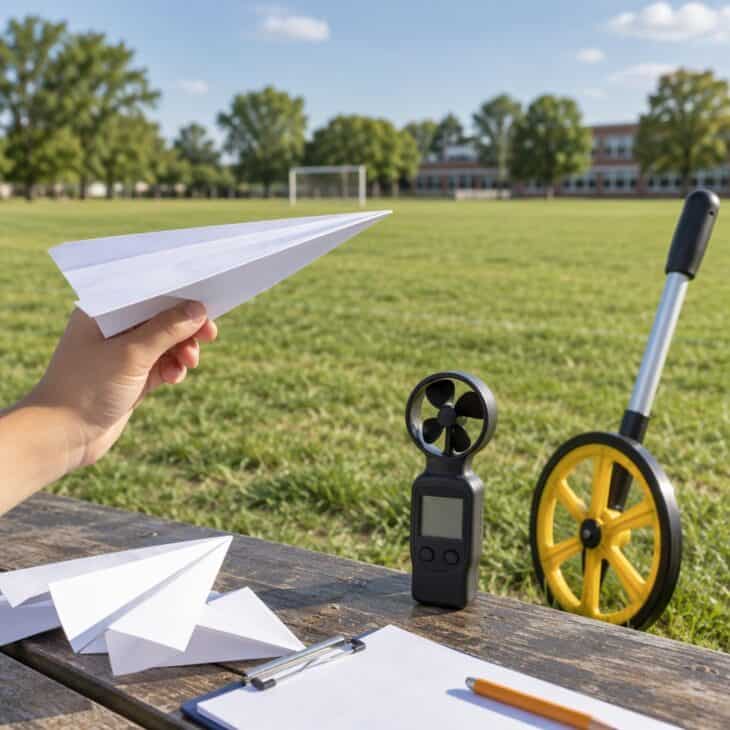
What it is Question: how much does wind change a flight? Variable: indoor still air compared with outdoor breeze.
Why it works It adds a real-world variable and a chance to use a wind meter.
How to get it Fly the same plane five times in a gym and five times outside. Log the wind speed in mph (km/h) for each outdoor throw. Compare average distances and the spread of results.
10. Folding Precision Test
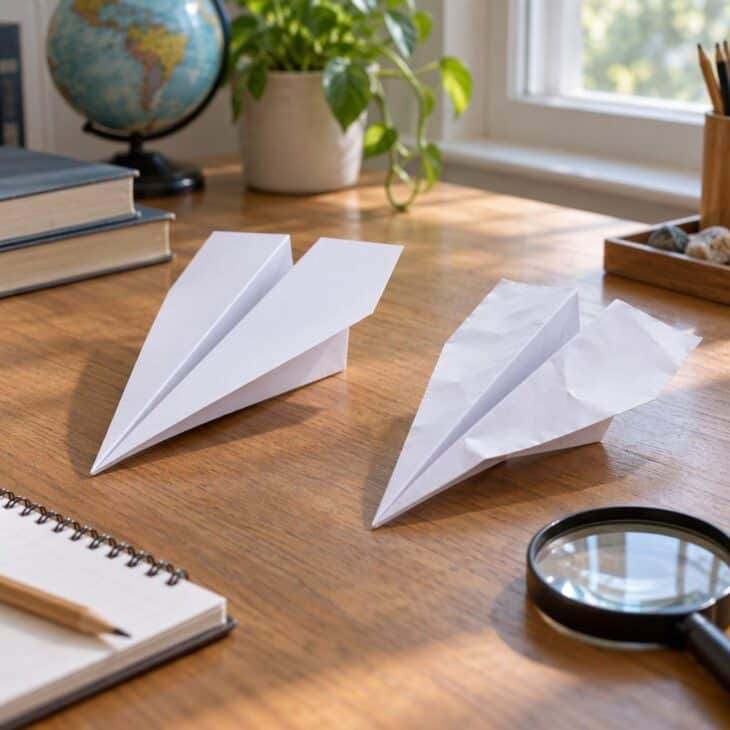
What it is Question: do sloppy folds hurt flight? Variable: crease accuracy.
Why it works It teaches that small build errors decide results in real aircraft too.
How to get it Fold one plane carefully with a ruler edge and one by eye. Throw each 10 times and record distance and the direction it veers. Show both planes on the display board.
Fair test tip
Change one variable at a time and repeat every throw at least 10 times. Judges reward averages and honest notes about what went wrong.
11. Surface Roughness and Drag
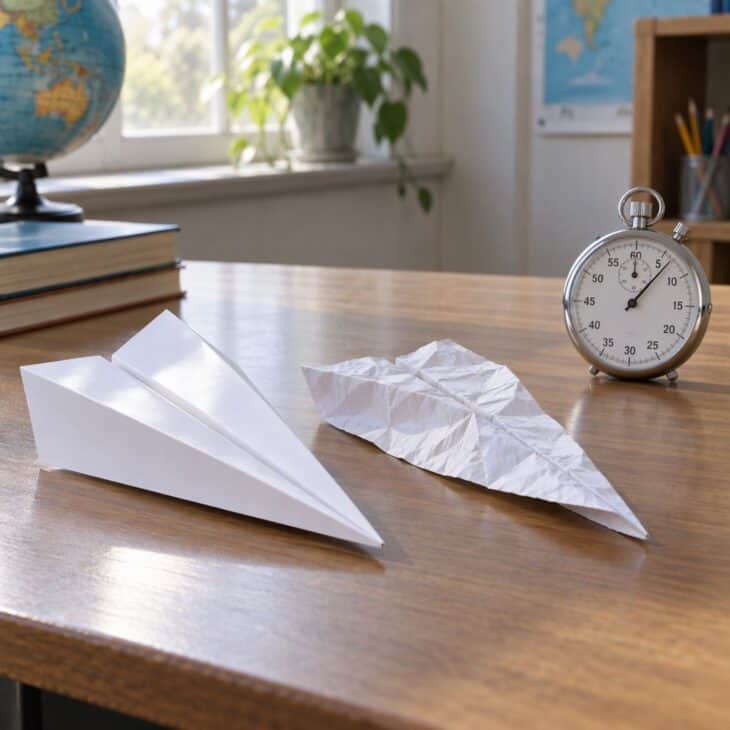
What it is Question: does a rough surface slow a plane? Variable: smooth, crumpled-flat and sandpapered paper.
Why it works Drag from skin friction is a hard idea made visible with kitchen supplies.
How to get it Prepare three sheets with different surfaces and fold the same design from each. Launch with a rubber band launcher for even speed. Compare the average flight distances.
12. Rubber Band Launcher Power
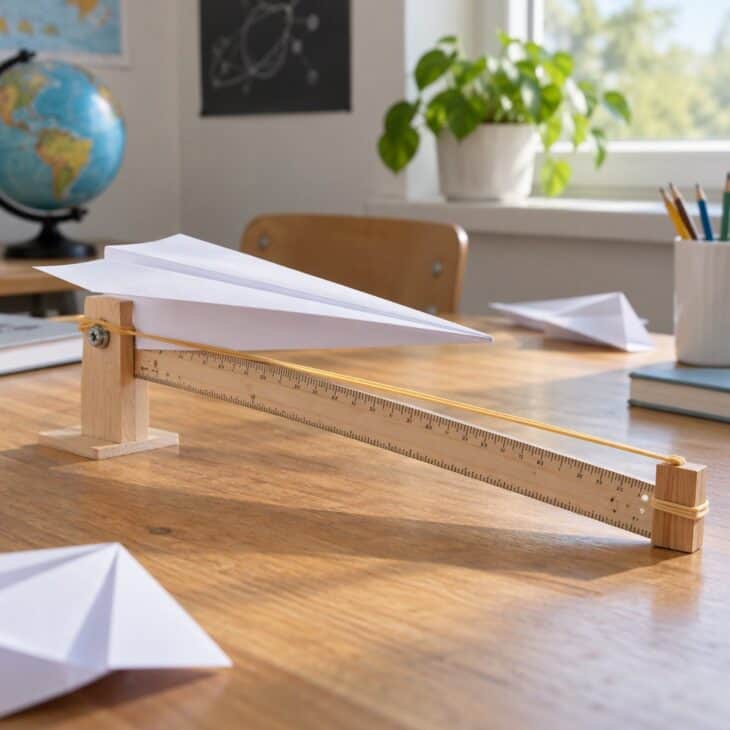
What it is Question: how does launch speed affect distance? Variable: rubber band stretch (1, 2, 3 inches).
Why it works A launcher removes throwing differences, so the data is cleaner.
How to get it Build a launcher from a ruler and a rubber band hooked on a pencil. Stretch the band to each mark and release five times each. Graph stretch against distance.
13. Dihedral Wing Angle
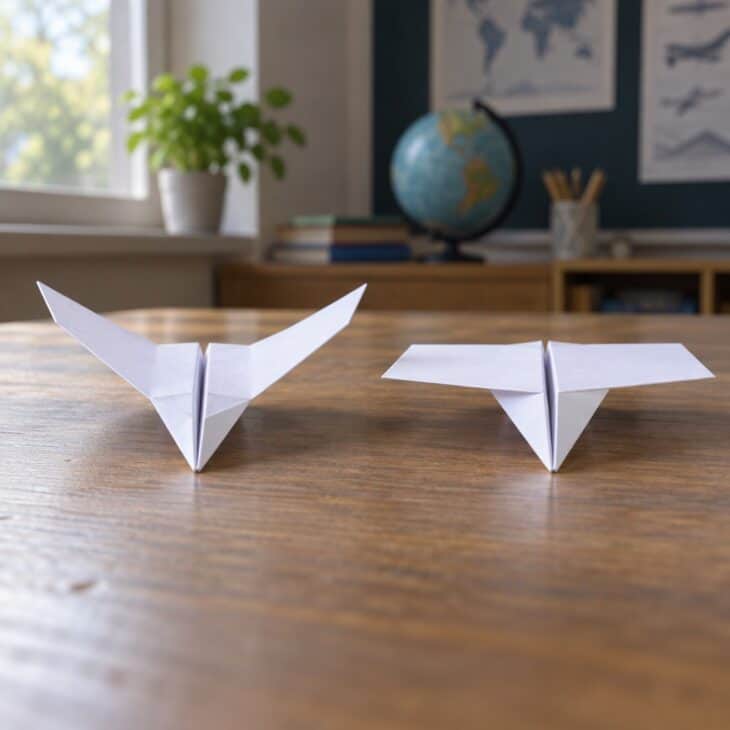
What it is Question: does a V-shaped wing keep a plane steadier? Variable: dihedral angle, from flat to 20 degrees.
Why it works Dihedral is a real stability feature on many small aircraft.
How to get it Fold three planes with wings bent at different angles using a protractor. Throw each into a light side puff from a small fan. Note which versions recover fastest.
14. Tail Fin Size Experiment
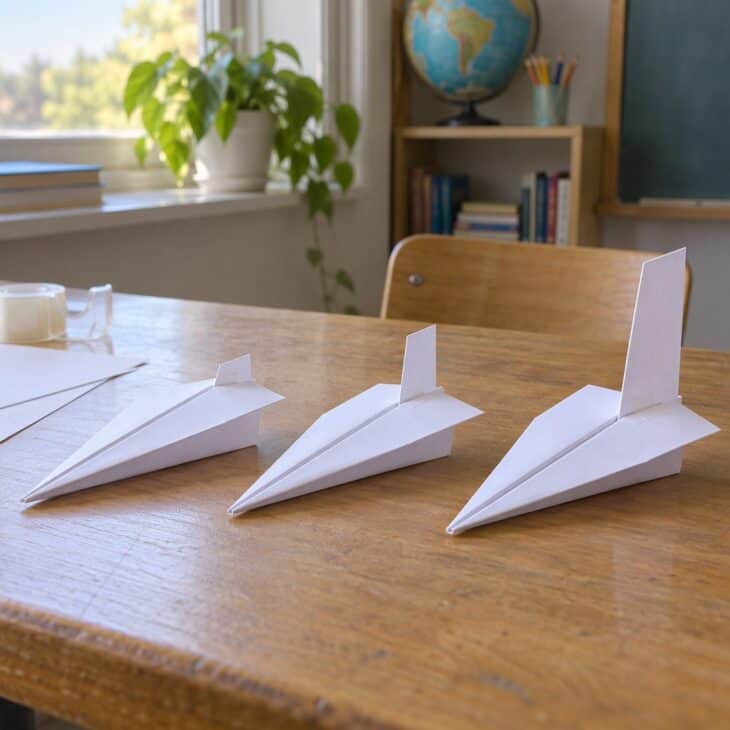
What it is Question: what tail size keeps a plane flying straight? Variable: vertical fin height.
Why it works The vertical tail steers a real aircraft, so the link is easy to explain.
How to get it Tape a paper fin of 0.5, 1 and 2 inches (1.3, 2.5, 5 cm) to identical planes. Fly 10 throws each and measure sideways drift in feet. Report the fin height with the least drift.
15. Humidity and Paper Behavior
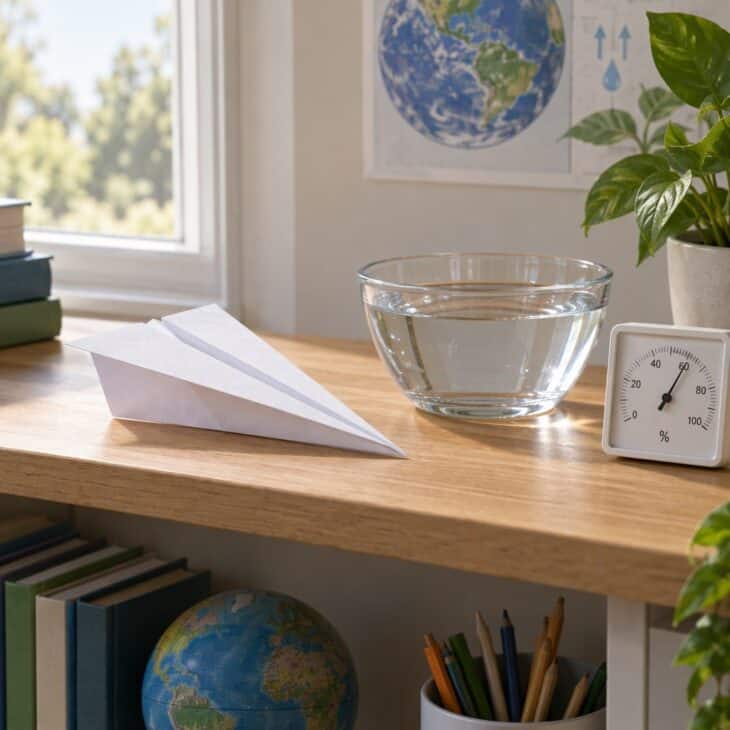
What it is Question: does damp paper fly differently? Variable: dry paper compared with lightly humidified paper.
Why it works It shows how materials respond to the environment, which matters in aircraft design.
How to get it Hang one set of sheets in a steamy bathroom for 10 minutes and keep another set dry. Fold, weigh and fly both sets. Compare weights and distances.
16. Slow Motion Video Analysis
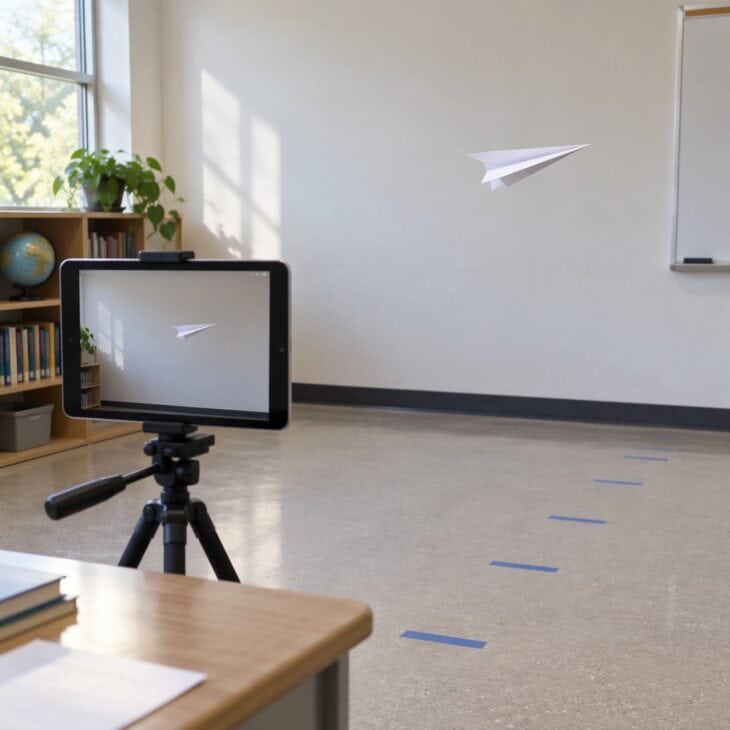
What it is Question: how does a plane move through each phase of flight? Variable: none, observation of launch, climb and glide frames.
Why it works Video turns a two-second flight into data students can study.
How to get it Film flights in slow motion on a phone, with tape marks every 3 feet (0.9 m). Step through frames to find speed and glide angle. Show screenshots on the board.
17. Best Design Tournament
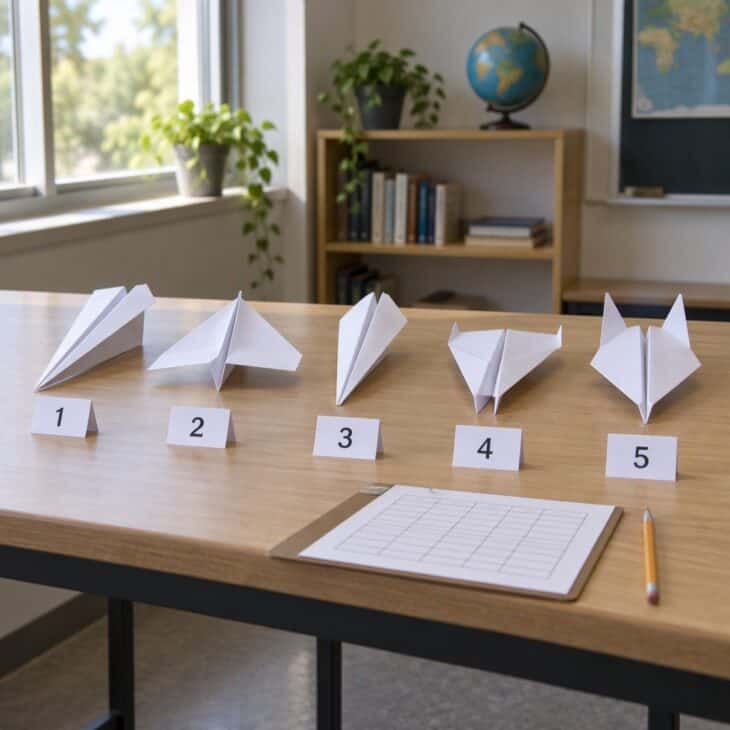
What it is Question: which classic design wins on distance, time and accuracy? Variable: design type (dart, glider, stunt, canard, wide delta).
Why it works It combines several measures, so students must justify a winner.
How to get it Fold five known designs from the same paper and score each over 10 throws. Rank by distance, flight time and target accuracy. Declare an overall winner and explain the scoring.
18. Target Accuracy and Trim
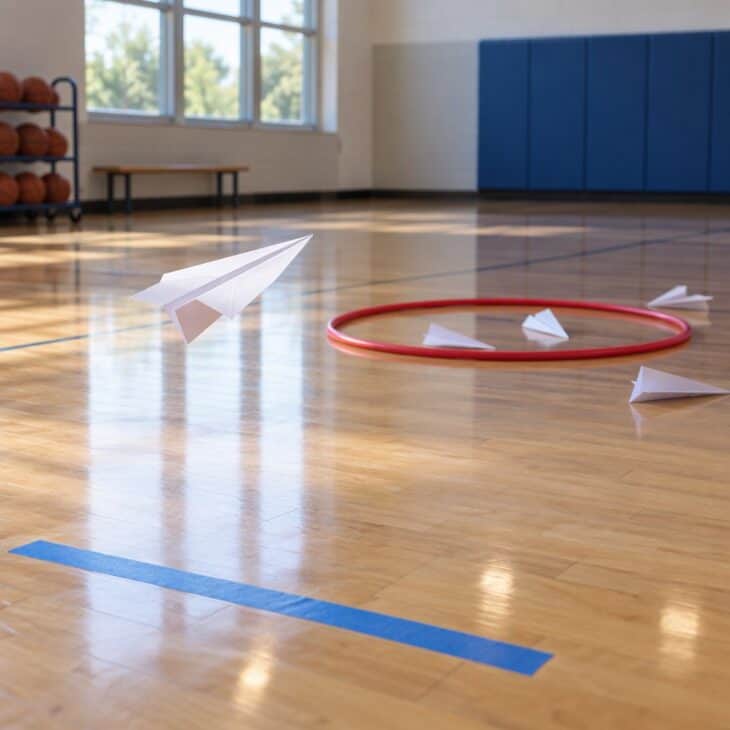
What it is Question: can small trim changes improve accuracy? Variable: small bends in the trailing edge to correct drift.
Why it works Trimming is how real pilots and builders correct a plane that will not fly straight.
How to get it Throw a plane at a hoop 15 feet (4.6 m) away and note the miss direction. Bend the tail edge a tiny amount and repeat. Track how many throws land inside the hoop before and after trimming.
19. Wing Aspect Ratio
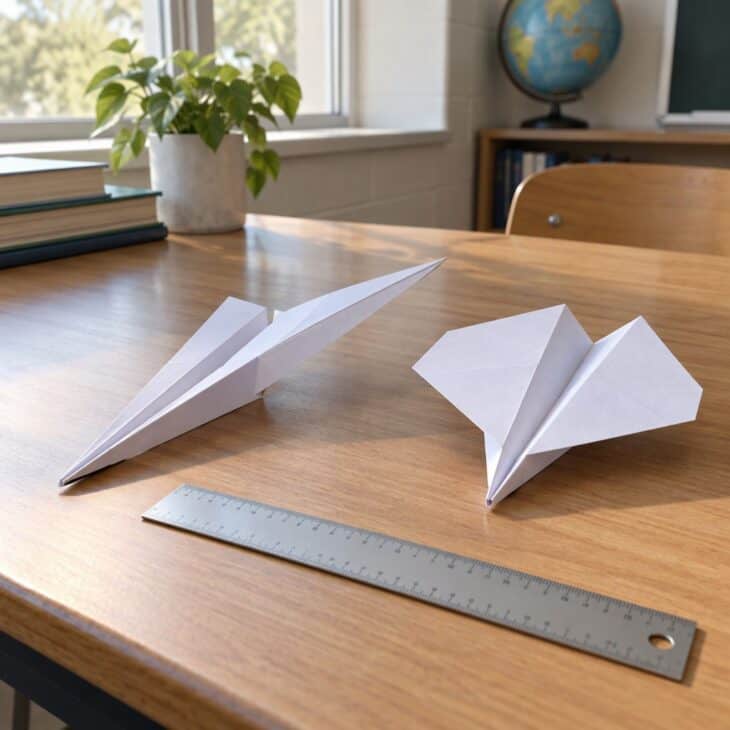
What it is Question: do long, thin wings glide better than short, wide ones? Variable: aspect ratio (span divided by chord) at equal wing area.
Why it works Sailplanes use long wings for a reason, and this lets students test it.
How to get it Cut wings of equal area at ratios of 3, 5 and 7 and attach them to the same body. Throw each 10 times and record glide distance. Plot ratio against average distance.
20. Display Board and Presentation
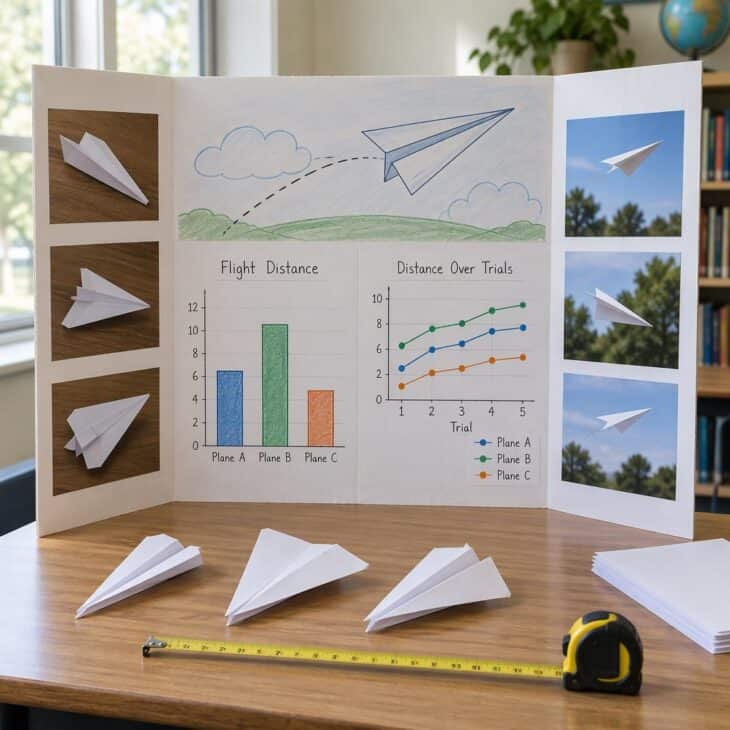
What it is Question: how do you present results clearly? Variable: format of charts and summary.
Why it works A clear board often scores as much as the experiment.
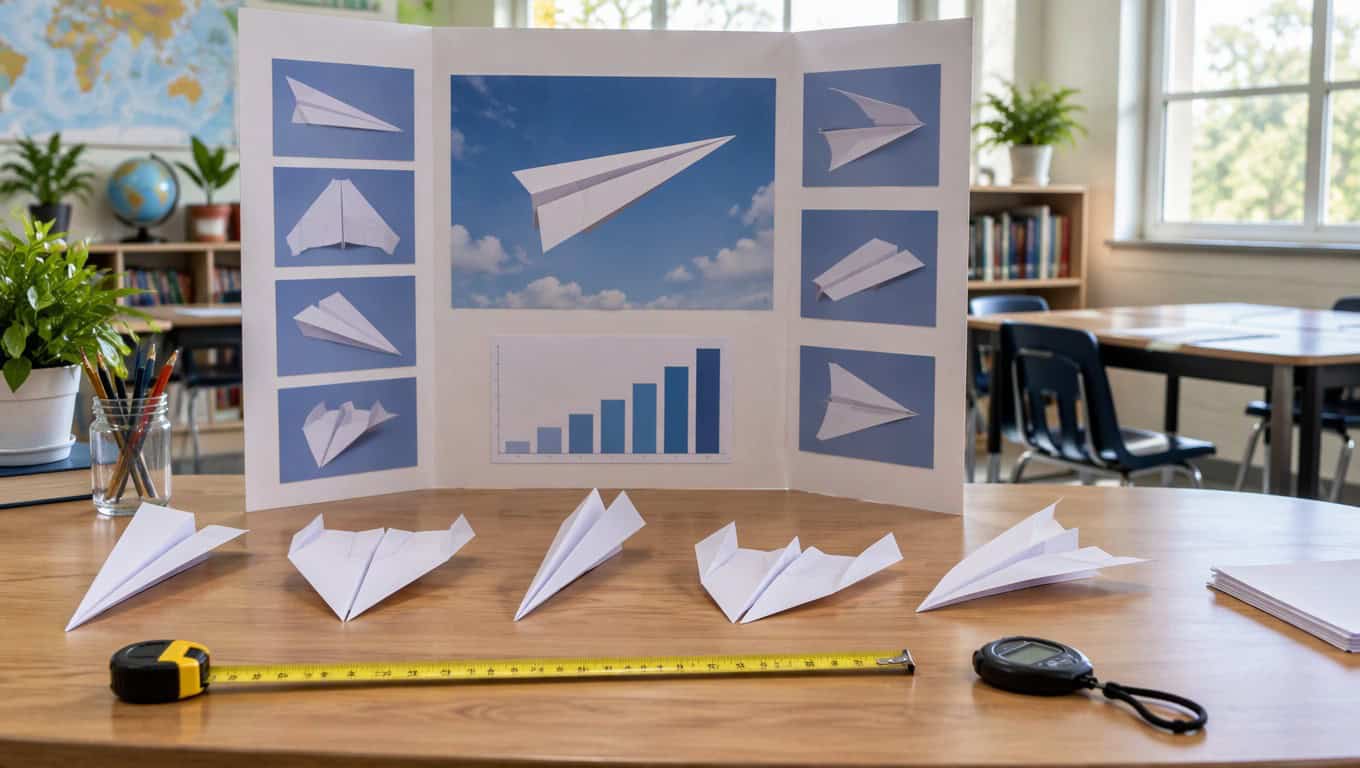
How to get it Put the question, hypothesis, method, data table and one chart on the board. Include a sample plane and a one-sentence conclusion. Practice a 60-second talk before the fair.
Get the Newsletter
The latest aviation news and stories sent to your inbox.
About the Author

Hanna writes AeroCorner's aviation-lifestyle and decor guides, turning a love of flight into ideas for your home, celebrations, and gift lists.