

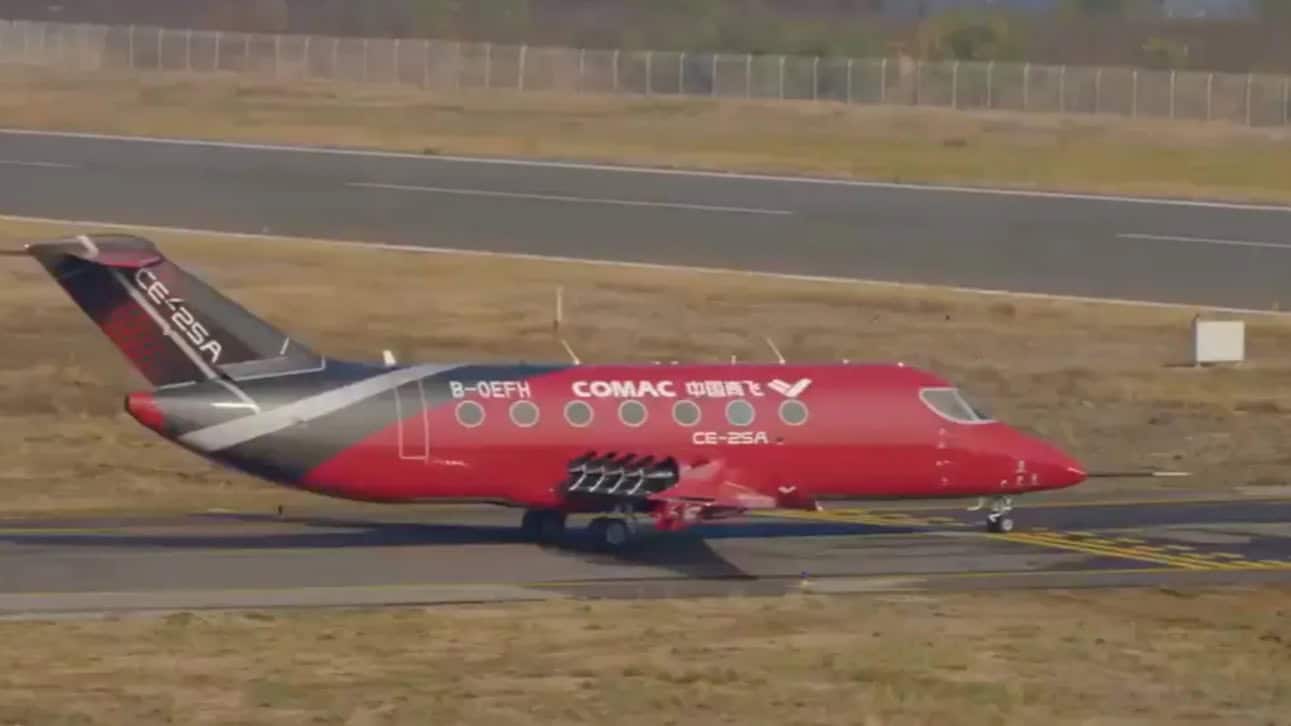
China’s COMAC flew its all-electric CE-25A commuter aircraft with a crew on board for the first time on Saturday, November 14, 2026, at Binzhou in Shandong province. Two pilots and a flight-test engineer were aboard, according to COMAC’s account carried by Xinhua.
COMAC said the aircraft performed normally and that every test indicator met expectations. The whole test took 57 minutes and 46 seconds, of which 16 minutes and 38 seconds were spent in the air, covering 37.5 miles (60.4 km), China Daily reported.
Until Saturday, the CE-25A had only flown with nobody on board. According to Xinhua, its first unmanned autonomous flight took place on February 2, and it has since completed 19 unmanned autonomous validation flights.

What the CE-25A is
The CE-25A is a 19-seat airplane built for short intercity routes, with a maximum takeoff weight of 10 metric tons (about 22,000 pounds). COMAC, whose C919 narrowbody flew its first international route in August, is its builder, and Xinhua calls it COMAC’s first electric commercial aircraft.
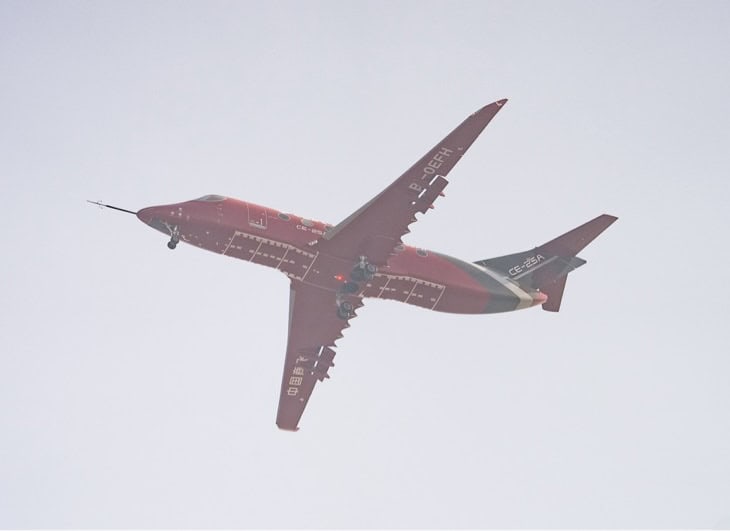
The official figures are a cruising speed of 186 mph (300 km/h), a cruising altitude of about 7,900 feet (2,400 m) and a range of about 250 miles (400 km). The thrust comes from ten electric ducted fans set in a row above the wings, five per side.
Xinhua says the aircraft was developed jointly by COMAC, battery maker CATL, Shanghai Jiao Tong University and other partners. None of the official accounts of the flight say what battery the aircraft carries or how much of its weight the battery accounts for.
A full-size, T-tailed demonstrator first showed up in photos a Chinese automotive influencer posted on Weibo on October 28, and COMAC had not verified the sighting at the time, AIN reported. AIN gave that aircraft’s registration as B-0EFH, while the official reports of Saturday’s flight give none.
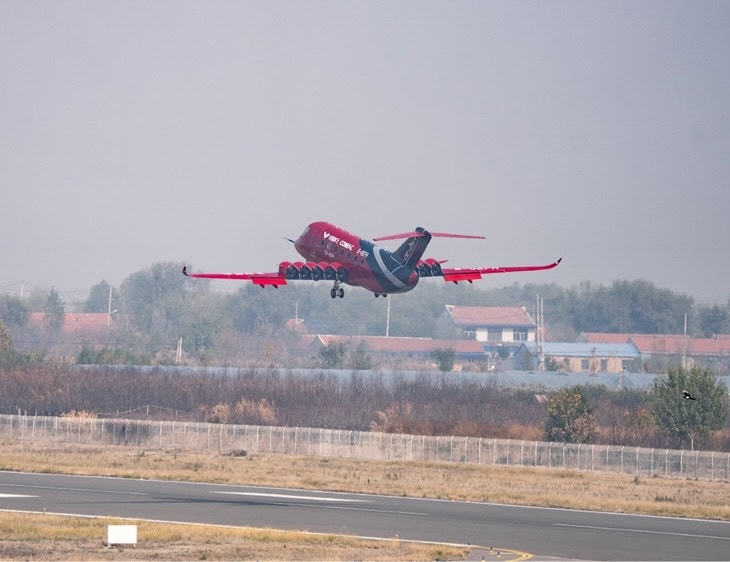
The design itself dates to 2023, when COMAC showed a CE-25A model at the China International Import Expo in Shanghai with a range target of 250 to 310 miles (400 to 500 km). A “verification flight” COMAC announced that year was made with a subscale model, according to Chinese media reports cited by AIN.
Why it is being certified like an airliner
The Civil Aviation Administration of China (CAAC) has accepted COMAC’s application for a type certificate, according to Xinhua. Chinese state media say the aircraft is being developed under CCAR-25, China’s airworthiness standard for transport-category airplanes.
That is a heavier rulebook than its seat count might suggest, but it fits the aircraft’s weight. In the United States, a plane with 19 passenger seats or fewer can be certified in the lighter normal category, but only up to a maximum takeoff weight of 19,000 pounds under 14 CFR 23.2005.
At about 22,000 pounds, the CE-25A sits above that ceiling, so a comparable American design would fall outside the normal category. None of the official reports gives a date for certification, series production or entry into service.
Where it stands among electric commuter projects
Western companies have chased electric airplanes of this size for years, with mixed results. Eviation’s nine-passenger Alice first flew on September 27, 2022, an eight-minute flight from Grant County International Airport in Moses Lake, Washington.
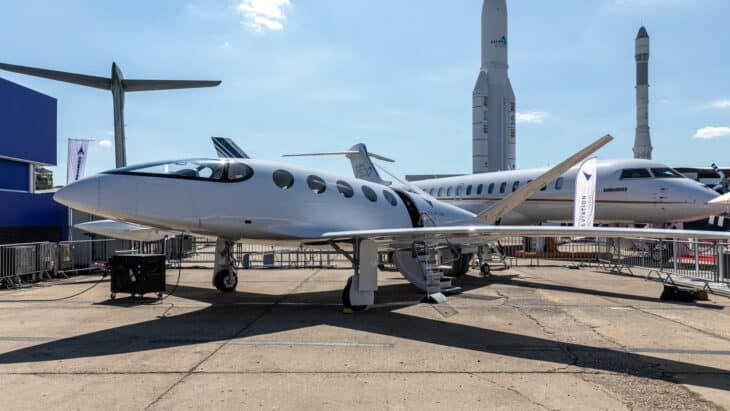

In February 2025 Eviation paused work on Alice and laid off most of its staff while it looked for long-term partners, AVweb reported. Its majority owner, Clermont Group, said it remained committed to the venture.
Heart Aerospace flew its battery-powered X1 demonstrator for 27 minutes at Plattsburgh, New York, on August 12, 2026. Heart calls the X1, at more than 25,000 pounds at takeoff, the world’s largest electric aircraft.
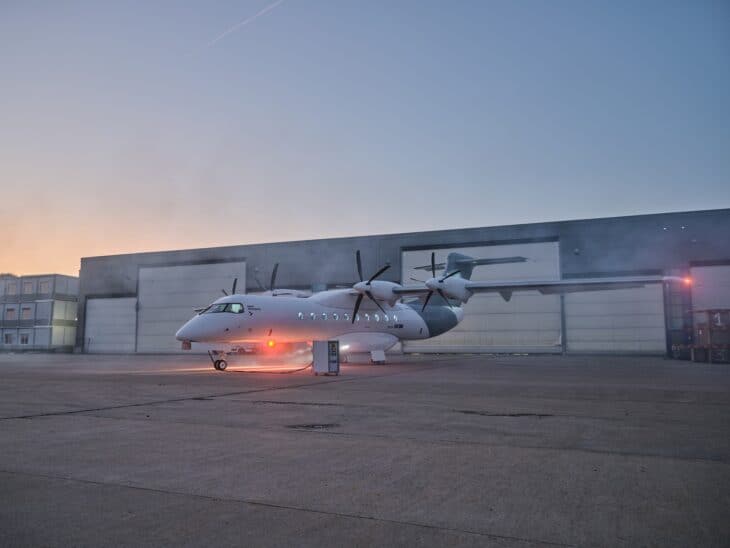

The X1 is a stepping stone rather than a product, though. The airliner Heart plans to sell, the 30-seat ES-30, is a hybrid-electric design aimed at entering service in 2031.
COMAC is aiming the CE-25A at the 125-to-250-mile (200 to 400 km) intercity market, Global Times reported. The same report said future plans include larger, longer-range new-energy aircraft and derivatives such as business jets, rescue aircraft and unmanned cargo aircraft.
Saturday’s flight was a short one, at well under 20 minutes airborne. What it changes is that COMAC’s electric program is now flying with people on board, and its type certificate application is with the CAAC.
Sources and references used for research and fact-checking.
Get the Newsletter
The latest aviation news and stories sent to your inbox.
About the Author

AeroCorner News is the aviation news desk of AeroCorner.com. It covers accidents and incidents, safety rulings, airline and airport disruption, and new aircraft. It works from primary sources such as the NTSB, FAA, EASA and the manufacturers' own announcements.