

Table of Contents
The best gifts for student pilots support the training itself, not just the idea of flying. Below are 25 picks that hold up to that test: study tools, cockpit gear, and a few milestone pieces built around what someone actually needs between their first lesson and their checkride.
A student pilot’s gear list is different from a certificated pilot’s. They are still buying their first headset, not their third, and they need a written-test book more than a chronograph. If your pilot already has a certificate, our guide to gifts for pilots covers the next stage of gear instead.
The list runs from small, inexpensive tools to bigger-ticket gear, so pick a few that match the budget and the stage of training. Every item links straight to the exact product on Amazon.
As an Amazon Associate, AeroCorner earns from qualifying purchases made through the links on this page. This does not affect the price you pay.
1. ASA Fuel Test Cup
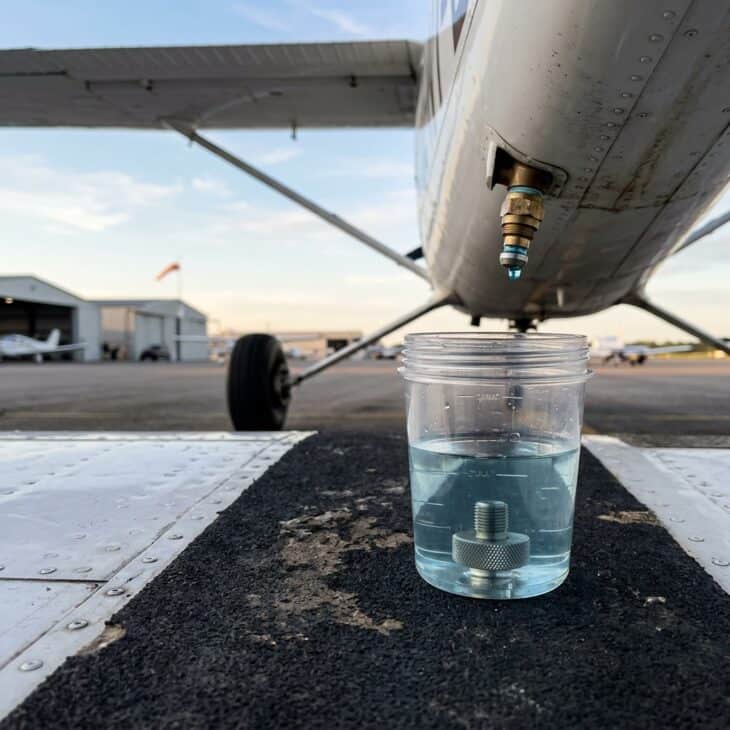
What it is A clear cup with a reinforced pin that opens a fuel drain valve, letting a pilot catch a sample and check it against the tank before flying. Most hold about 12 ounces and include a fine screen to catch debris.
Why it works Sumping fuel is one of the first habits a student pilot builds, and a good cup makes checking for water and contamination faster during a preflight that already has a long checklist.
How to get it Confirm the pin fits the drain valves on the aircraft they train in, since styles vary between low-wing and high-wing trainers. Choose a cup with a screen for catching debris, not just a plain jar. Buy two, since these are easy to leave behind on the ramp.
2. Rechargeable LED Flight Bag Penlight
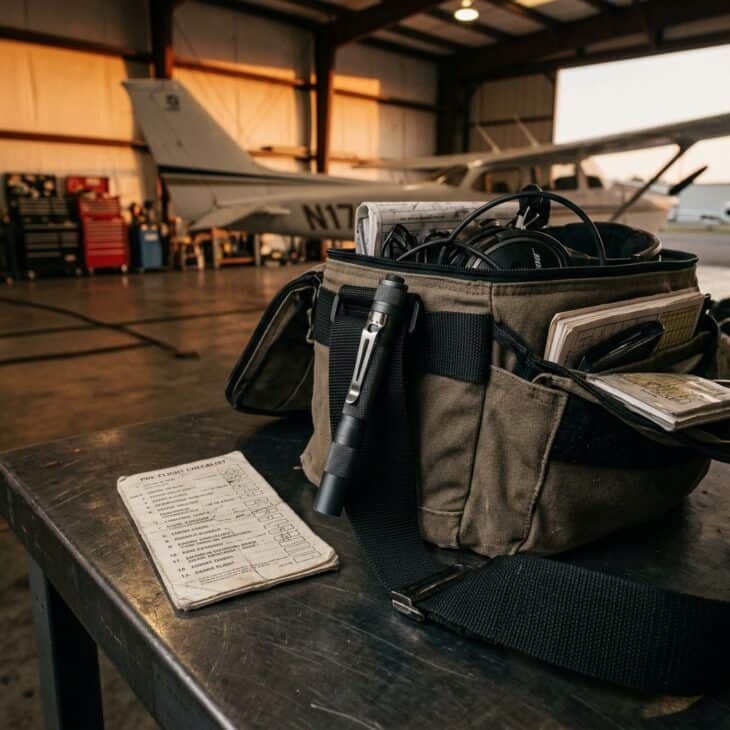
What it is A slim, pocket-clip flashlight with a rechargeable battery, usually offering a bright spot beam and a dimmer flood setting. Most run for hours on a single charge and recharge over USB.
Why it works Night flying and early-morning preflights both come up fast in training, and a dim, steady light protects night vision far better than a phone screen.
How to get it Choose a model with a low, dimmable setting rather than one fixed brightness, since a full-power beam ruins night vision in the cockpit. Look for a pocket clip that fits a shirt or a kneeboard strap. Confirm it charges over USB-C so it shares a cable with everything else in the flight bag.
3. ASA Aviation Navigation Plotter
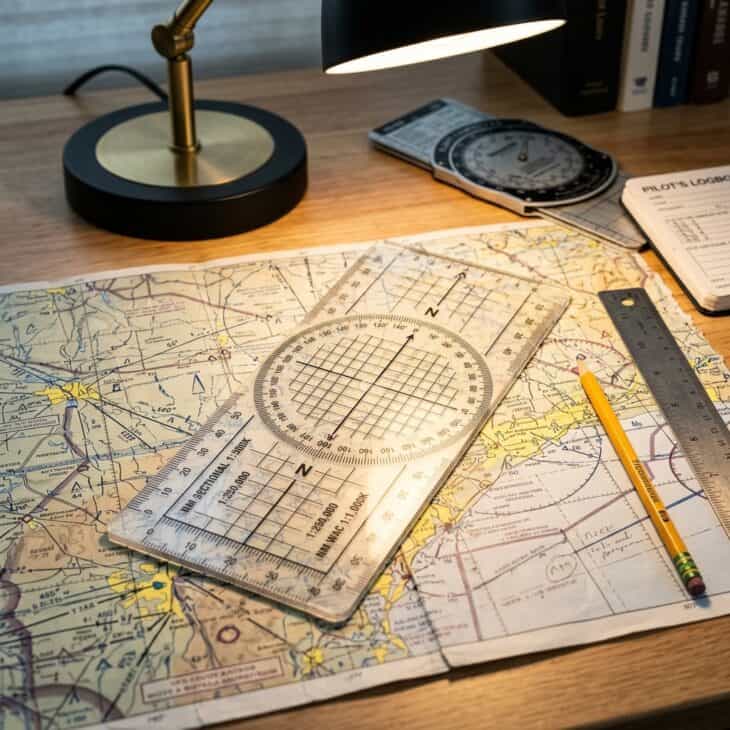
What it is A square or rectangular ruler with a built-in protractor and a nautical- and statute-mile scale matched to sectional chart projection. It reads true course and distance directly off a printed chart without separate tools.
Why it works Cross-country flight planning starts with a plotter and a chart, long before an app takes over, and it stays useful as a backup once the electronics are put away.
How to get it Match the scale to the sectional charts they actually fly with, since WAC and terminal-area scales differ from standard sectionals. Choose durable resin over thin plastic, which warps in a hot flight bag. Pair it with a real paper sectional so it gets used, not just displayed.
4. ASA Metal E6B Flight Computer
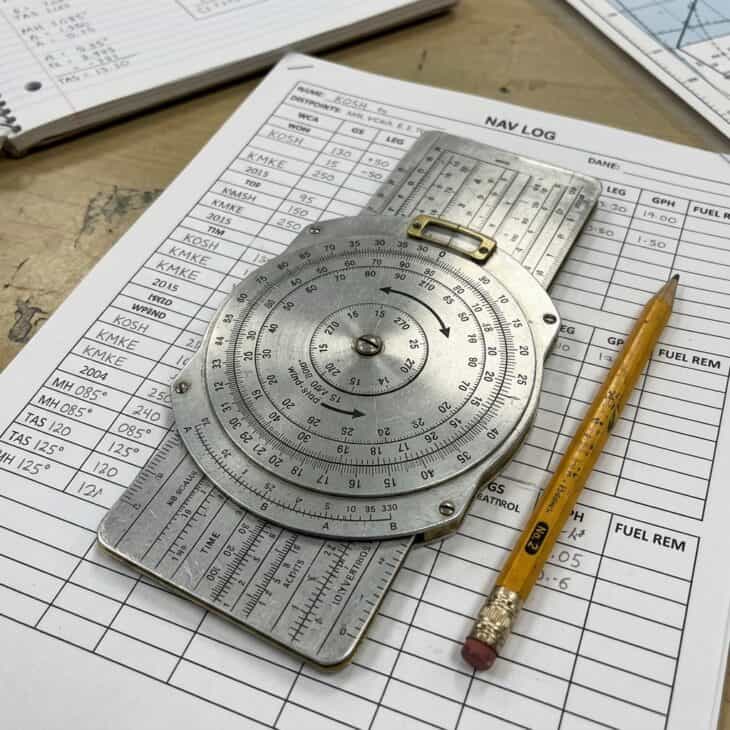
What it is A circular slide-rule calculator with a rotating wind face on one side and a computation dial on the other, machined from aluminum rather than the paper or plastic versions sold as novelties. It solves time, speed, distance, fuel burn, and wind correction by hand.
Why it works Ground schools still teach the manual E6B first, because it forces a student to understand what the numbers mean before an electronic version does the work automatically.
How to get it Choose the metal version over paper or thin plastic, since the dials need to rotate smoothly for years of use. Look for large, high-contrast printing that is easy to read in a dim cockpit. Keep the electronic version, further down this list, as a second tool rather than a replacement.
5. Pilot’s Pocket Reference Handbook
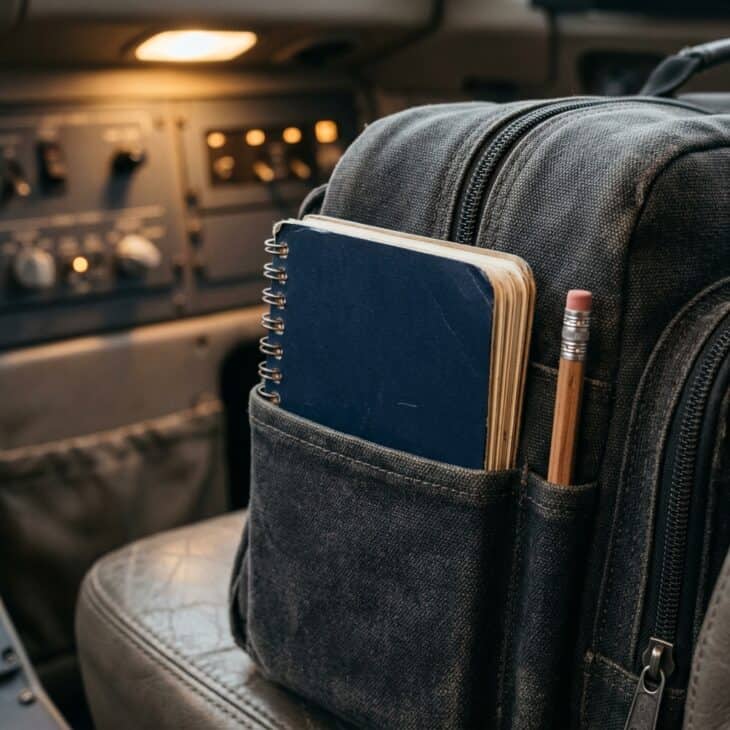
What it is A small spiral-bound reference covering flight calculations, weather report decoding, radio phraseology, and a condensed checklist format, sized to fit a flight bag pocket rather than a shelf.
Why it works Early training throws a lot of new abbreviations and formulas at a student at once, and a pocket reference answers a quick question without pulling out a full textbook mid-lesson.
How to get it Choose a recent printing so frequency and procedure references stay current. Look for a spiral or lay-flat binding, since a paperback spine will not survive a flight bag. Pair it with the written test prep book below rather than using it as a standalone study guide.
6. ASA Private Pilot Written Test Prep Book

What it is A chapter-by-chapter study guide organized around the FAA private pilot knowledge exam, with practice questions, explanations, and references back to the source regulations for every topic tested.
Why it works The written exam has to be passed before a student can take the checkride, so a current edition of this book is closer to a required tool than an optional gift.
How to get it Buy the current edition rather than an older used copy, since the question bank changes from year to year. Choose the “plus” version with practice software if the pilot prefers computer-based drilling. Check with their instructor first in case the flight school already provides a specific prep course.
7. Current-Year FAR/AIM Handbook
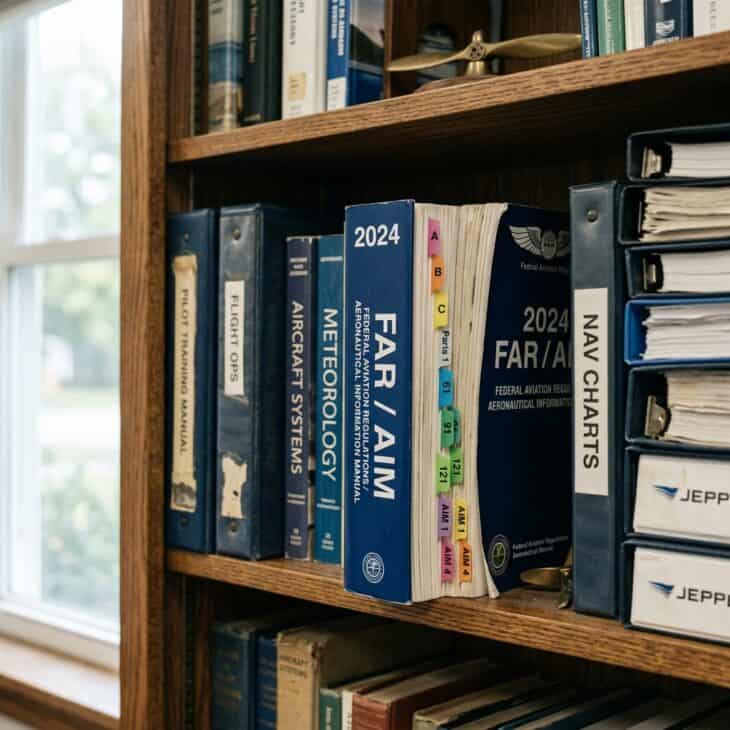
What it is The combined Federal Aviation Regulations and Aeronautical Information Manual in one annually updated paperback, covering everything from certification rules to airspace and lost-communication procedures. See 14 CFR 61.51 for one example of what it spells out.
Why it works Examiners routinely ask a candidate to find a specific rule in the FAR/AIM during the oral portion of the checkride, so knowing how to navigate the book matters as much as knowing the rule itself.
How to get it Buy the current year’s printing, since regulations and procedures do change annually. Add a set of tabs, sold separately, so it is fast to navigate during checkride prep. Skip the digital-only version if their instructor still tests from the printed page numbers.
8. Airman Certification Standards Study Guide
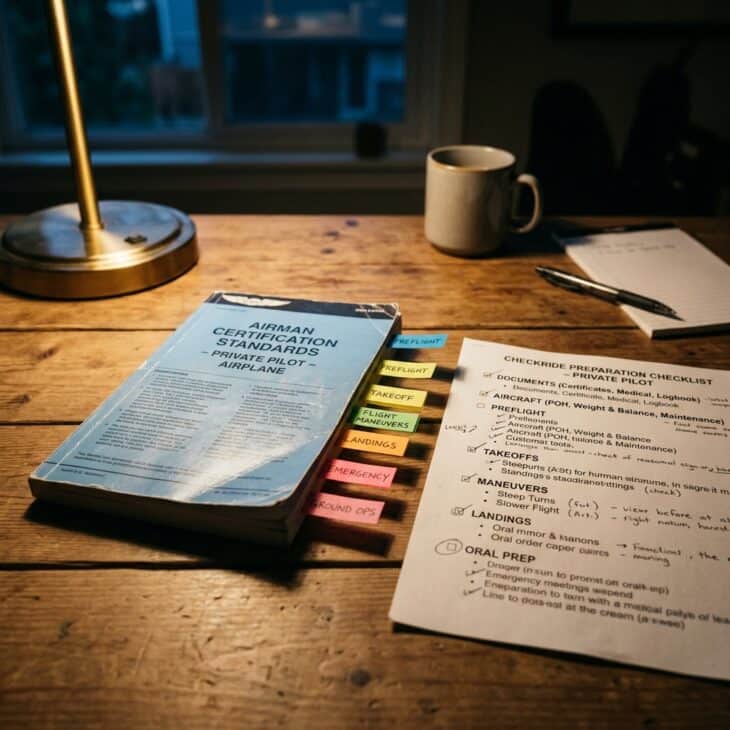
What it is The FAA’s official Airman Certification Standards booklet, listing every task, tolerance, and risk-management element an examiner scores on the private pilot checkride, organized by area of operation.
Why it works The ACS is not a study aid written by a third party, it is the actual document the examiner uses, so reading it removes the guesswork about what the checkride will cover.
How to get it Confirm it matches the current revision letter for their certificate, since the FAA updates the ACS periodically. Get the airplane single-engine land edition unless they are training in a different category. Read it alongside what actually happens on a checkride for how it plays out in practice.
Skip anything that isn't required reading
A student pilot’s flight bag fills up fast with required books alone. Before buying a novelty item, check whether a training-stage essential like the FAR/AIM or ACS is still missing.
9. Aviation-Themed Insulated Water Bottle
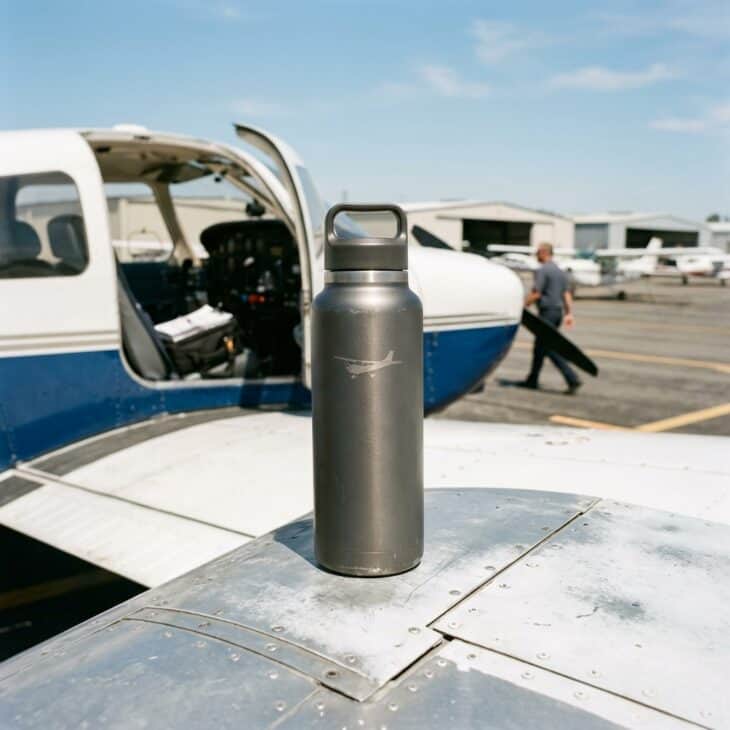
What it is A double-wall insulated stainless steel bottle printed with a small aviation graphic, sized to fit a flight bag side pocket or a cup holder in the cockpit. Most keep drinks cold for 12 hours or more.
Why it works Training flights and preflight briefings run long, and dehydration is an easy, avoidable distraction during a lesson that already demands full attention.
How to get it Pick a size that actually fits their flight bag’s side pocket rather than the largest bottle available. Choose a leak-proof flip lid over a screw cap for one-handed use during a briefing. Keep the design subtle so it reads as gear, not a novelty item.
10. Private Pilot Wings Lapel Pin
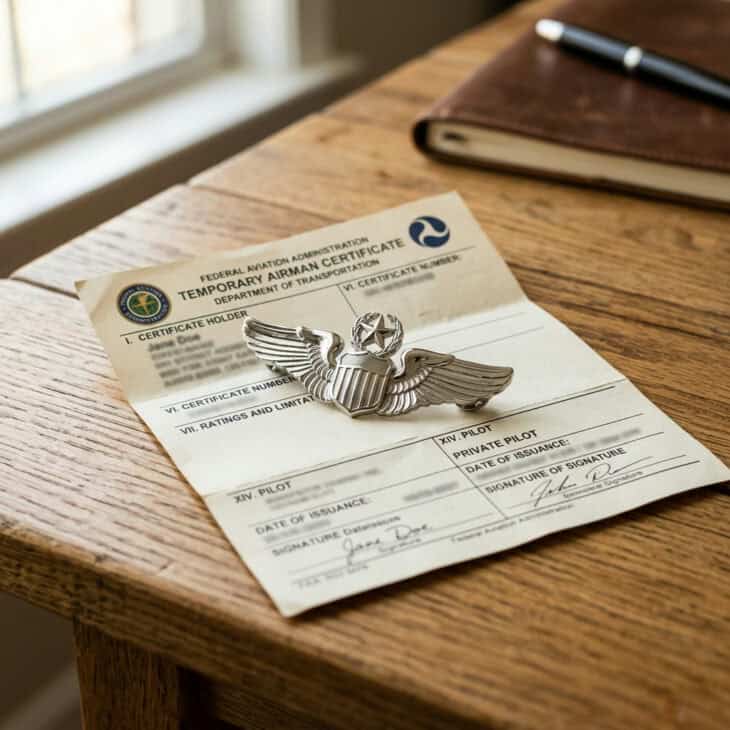
What it is A struck-metal wings badge in the standard private pilot pattern, with a pin back sized for a jacket lapel, headset bag, or flight bag strap. Unlike an engraved keepsake version, this is the plain, everyday pin style.
Why it works Given ahead of the checkride, it works as encouragement, and given after, it marks the exact moment a student becomes a private pilot, a milestone worth marking even before the plastic certificate arrives.
How to get it Time the gift to the milestone, before a checkride as encouragement or right after as congratulations. Choose sterling silver or a gold-tone finish based on what they will actually wear. Pin it to a headset bag if a lapel is not part of their usual wardrobe.
11. First Solo Shirt-Tail Tee
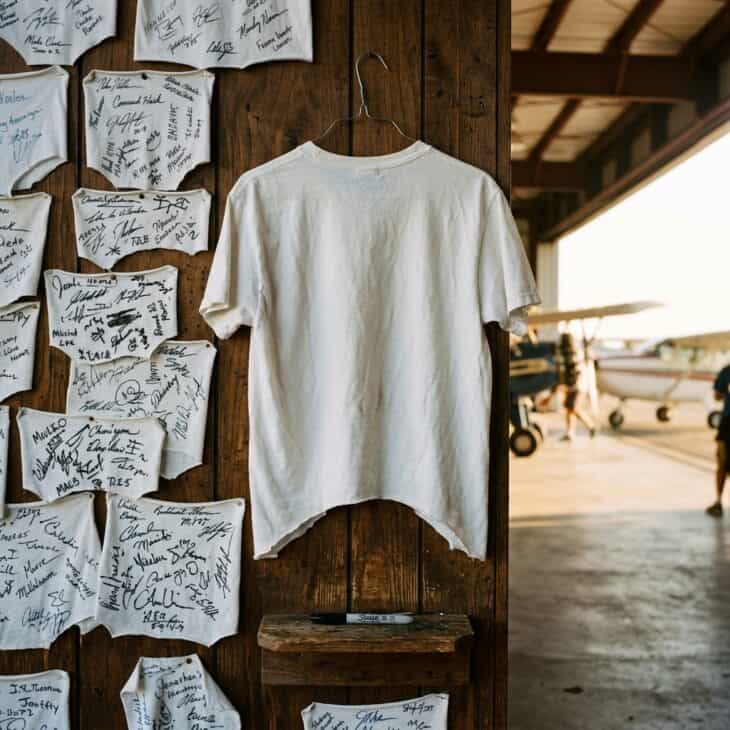
What it is A plain, inexpensive t-shirt bought specifically to be worn on first-solo day, made to be cut. Some versions come pre-printed with a spot for the instructor to sign and date the tail after the flight.
Why it works Cutting the tail off a student’s shirt after their first solo is one of the oldest traditions in flight training, and the shirt only matters once, so a cheap, dedicated one beats sacrificing a favorite.
How to get it Buy it well before the actual first solo, since that day arrives with little warning once a student is ready. Choose a plain cotton shirt that is easy to cut and sign with a marker. Give it early, as a nudge that the milestone is coming, not as a surprise after the fact.
12. Compact Aluminum Training Kneeboard
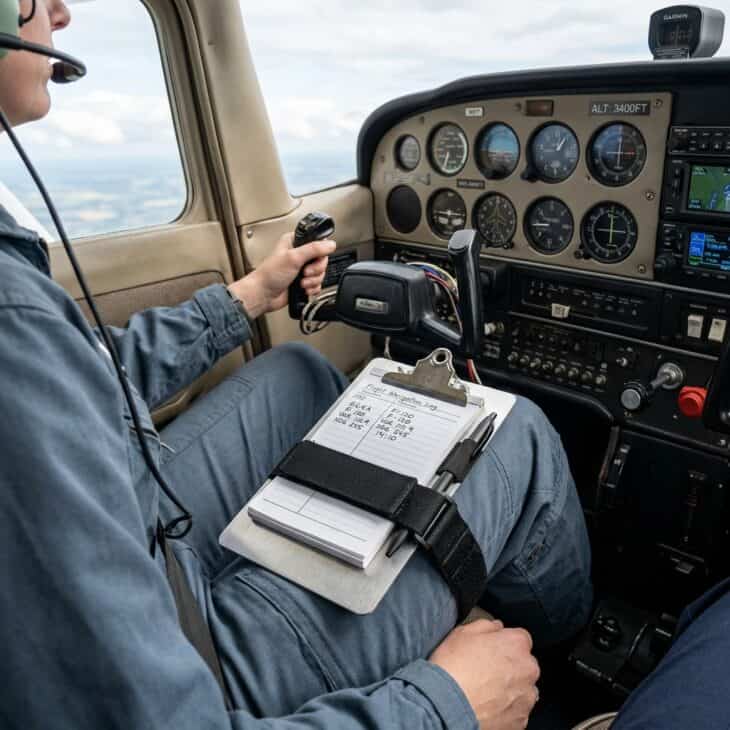
What it is A small, leg-strapped writing board with a metal clip and a pen holder, sized deliberately smaller than a full leather kneeboard so it does not crowd the tight cockpit of a two-seat trainer.
Why it works Early lessons happen in cramped trainers where a full-size board bumps the yoke or the door, and a compact one holds a checklist and a pencil without adding bulk.
How to get it Check the aircraft they train in before buying, since a Cessna and a Piper leave different amounts of knee room. Look for a wide, adjustable leg strap rather than a narrow elastic band. Skip anything with a built-in tablet mount unless they are already flying with an iPad in the cockpit.
13. RAM Tab-Tite Yoke Clamp Mount
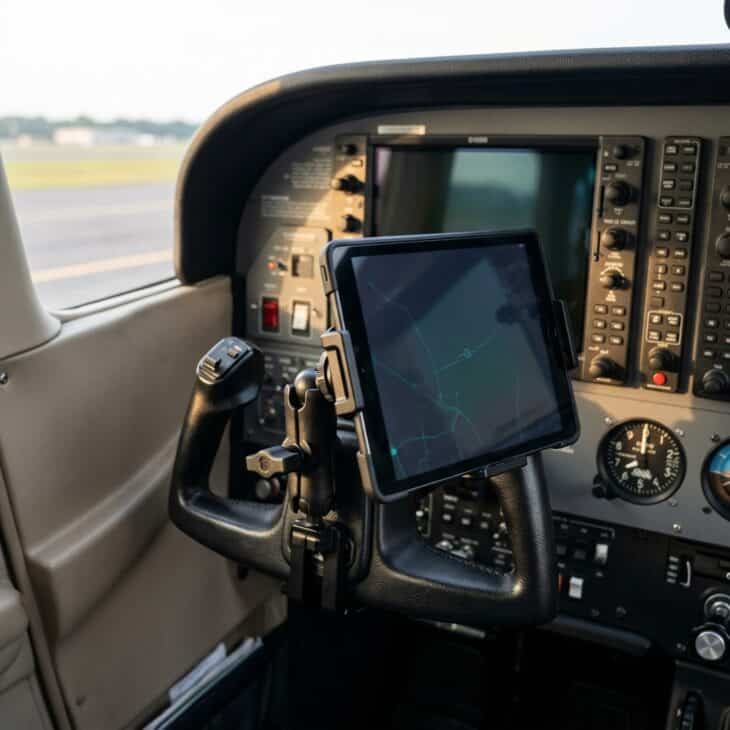
What it is A clamp that grips the aircraft’s control yoke and holds a spring-loaded cradle sized for a small tablet, connected by an adjustable ball-and-socket arm so the screen can angle toward the pilot.
Why it works Most student pilots fly with an electronic flight bag app running on a tablet from early in training, and a proper mount frees both hands instead of balancing the device on a leg.
How to get it Measure the yoke’s tube diameter before ordering, since clamps have a fixed range. Match the cradle size to the exact tablet model, with or without a case. Confirm their instructor and aircraft owner allow yoke-mounted hardware before installing one.
14. Aviation Document and Chart Pouch
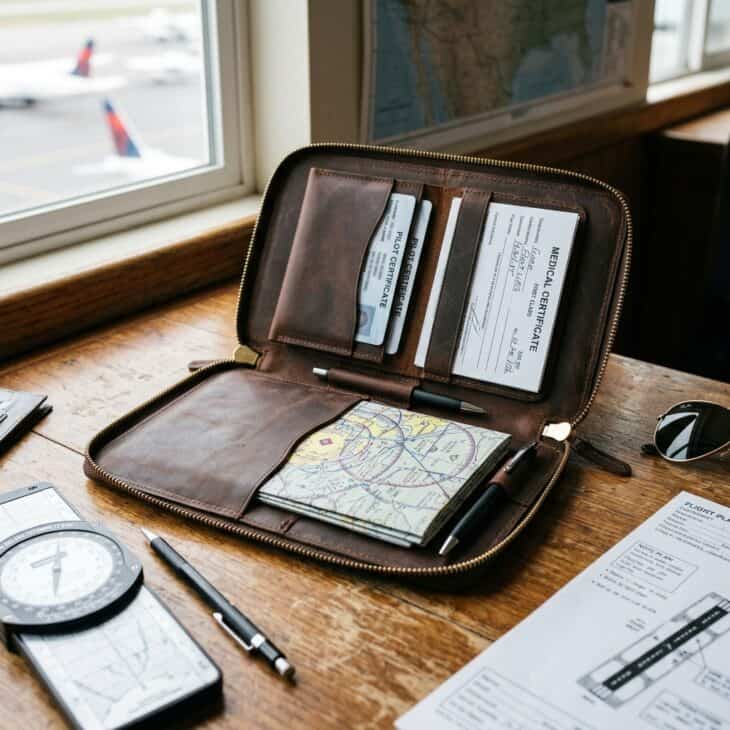
What it is A slim zippered pouch with card slots for a pilot certificate and medical, plus a flat sleeve for folded charts or approach plates, small enough to fit inside a larger flight bag rather than replacing it.
Why it works A student pilot has to carry specific documents on every flight, and a dedicated pouch keeps them from getting crumpled loose at the bottom of a backpack.
How to get it Confirm the card slots fit a standard plastic certificate and medical without forcing them. Choose water-resistant material if they train somewhere humid or fly floatplanes. Keep it inside their main flight bag rather than as a separate item to remember.
15. Starter Student Pilot Logbook
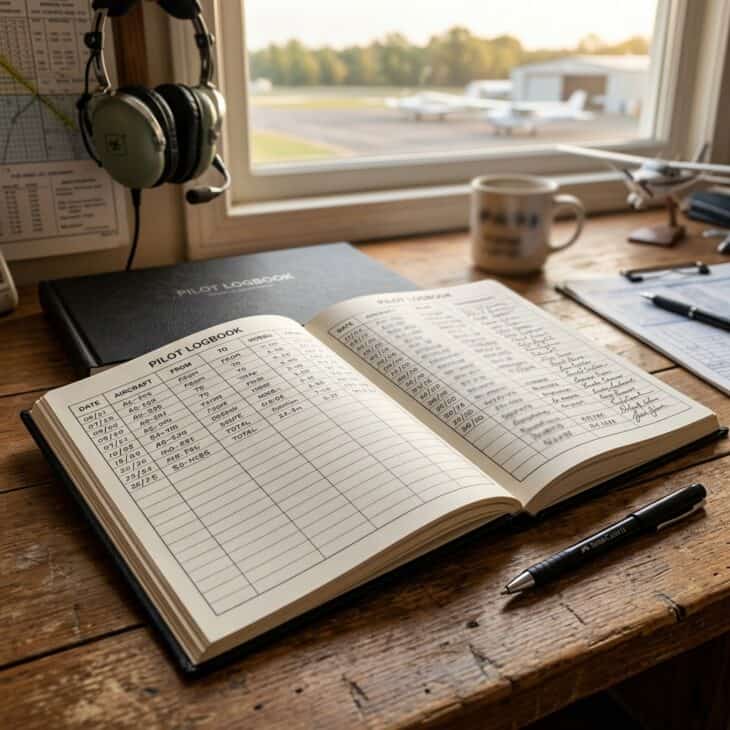
What it is A bound logbook with ruled columns for date, aircraft, route, flight conditions, and time, formatted to comply with FAA recordkeeping requirements. Standard editions run smaller and less expensive than the leather professional volumes built for career pilots.
Why it works Every flight a student logs from their very first lesson counts toward certificate minimums, and a proper logbook, not a notebook, is what an examiner expects to see at the checkride.
How to get it Choose a standard edition rather than a professional volume built for turbine and multi-engine time they do not have yet. Confirm it has a page for instructor endorsements, since solo and checkride endorsements go there. Buy it in the first week of training, not after logging hours in a loose notebook.
16. Student Pilot Course Progress Planner
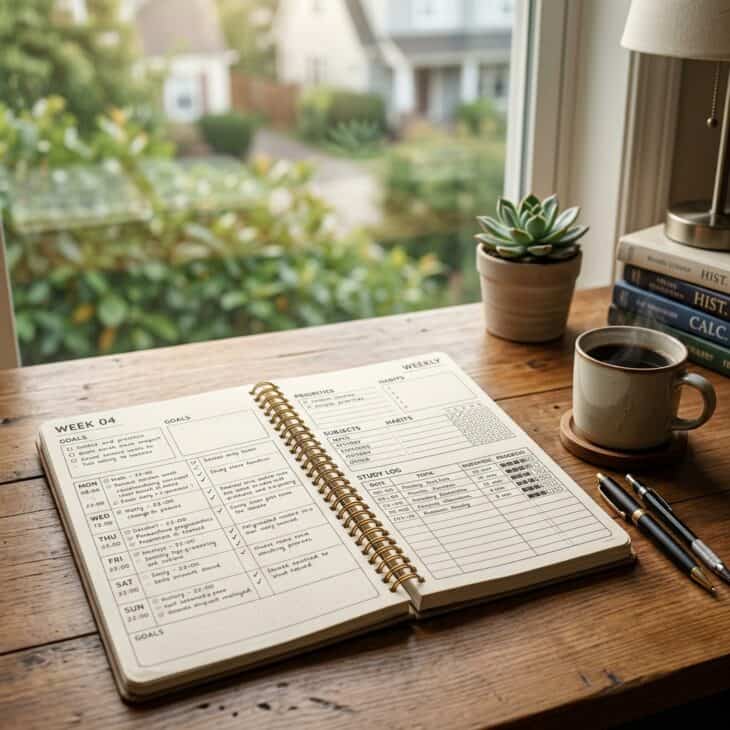
What it is A study-focused notebook separate from the official logbook, with pages for tracking ground-school topics, maneuver progress, and study goals week to week rather than just flight time.
Why it works Flight training is not linear, and a planner gives a student somewhere to see what topics still need work, which matters more for morale than a logbook full of hour totals.
How to get it Choose one with dedicated pages for maneuver and topic tracking, not just blank lined paper. Give it early in training, when the habit of tracking progress matters most. Keep it separate from the FAA logbook so the two never get confused.
17. Build-Your-Own Trainer Aircraft Model Kit
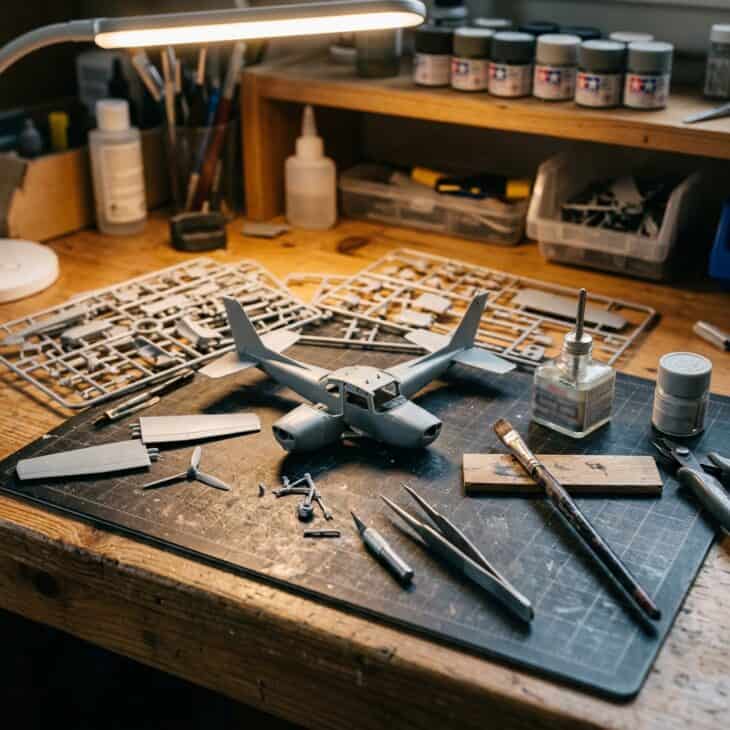
What it is An assemble-it-yourself plastic scale model of a common trainer aircraft, with engraved panel lines, a detailed cockpit interior, and decals, built with glue and paint rather than snapped together.
Why it works Building a model of the exact type they train in gives a student a slow, hands-on project that has nothing to do with studying, which is its own kind of useful during a demanding training schedule. Pair it with these model airplane display ideas once it’s finished.
How to get it Match the kit to the actual trainer type if possible, a Cessna 172 kit for a 172 student rather than a generic warbird. Check the skill level listed on the box, since some kits assume prior modeling experience. Add basic glue and paint if the kit does not include them.
18. Rod Machado’s Private Pilot Handbook
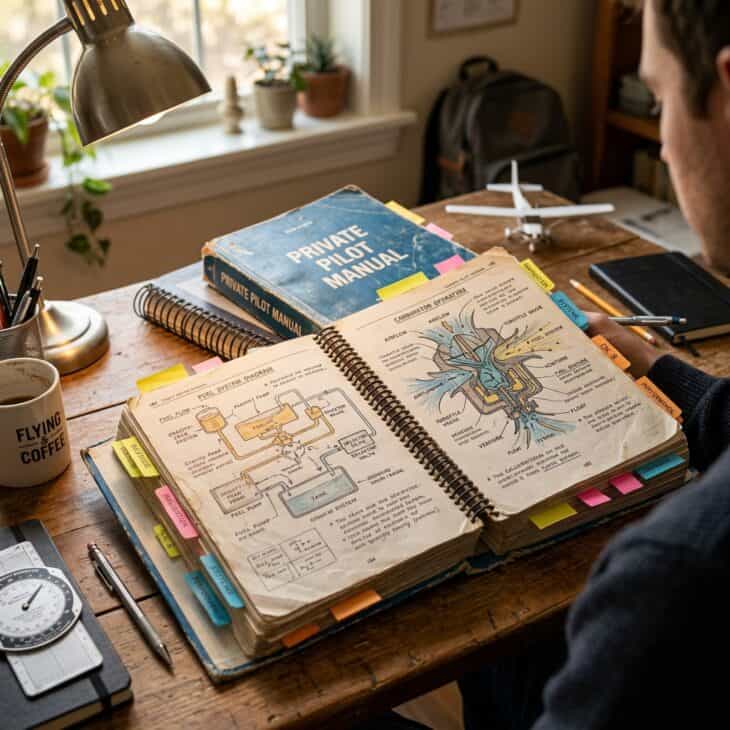
What it is A full-color ground school textbook covering aerodynamics, weather, regulations, and navigation with hundreds of illustrations, distinct from the exam-question-focused test prep book earlier on this list.
Why it works Test prep books teach a student to answer exam questions, while a full ground school textbook teaches the underlying concepts, and most instructors want a student working from both.
How to get it Check whether their flight school already assigns a specific ground school textbook before buying a different one. Choose the hardbound edition if it will get years of reference use rather than one course. Read a chapter together if you also want to understand what they’re learning.
19. Framed VFR Sectional Chart Print

What it is A full-size, current-edition VFR sectional chart printed for framing rather than folding into a flight bag, ordered for the specific region where the student trains.
Why it works Unlike a generic aviation poster, a sectional centered on their actual home airport and practice area is specific to their training, which is what makes it worth framing instead of tossing out once it expires.
How to get it Order the sectional that actually covers their home airport, not a generic region. Expect it to go out of date for navigation within months, since these prints are for display, not flight use. Frame it with UV-protective glass if it will hang in direct sunlight.
Ask their instructor before buying anything electronic
Some flight schools standardize on a specific EFB app, ADS-B receiver, or tablet mount for every student. A quick question avoids buying hardware that does not pair with what the school already uses.
20. Jeppesen Student Pilot Flight Bag
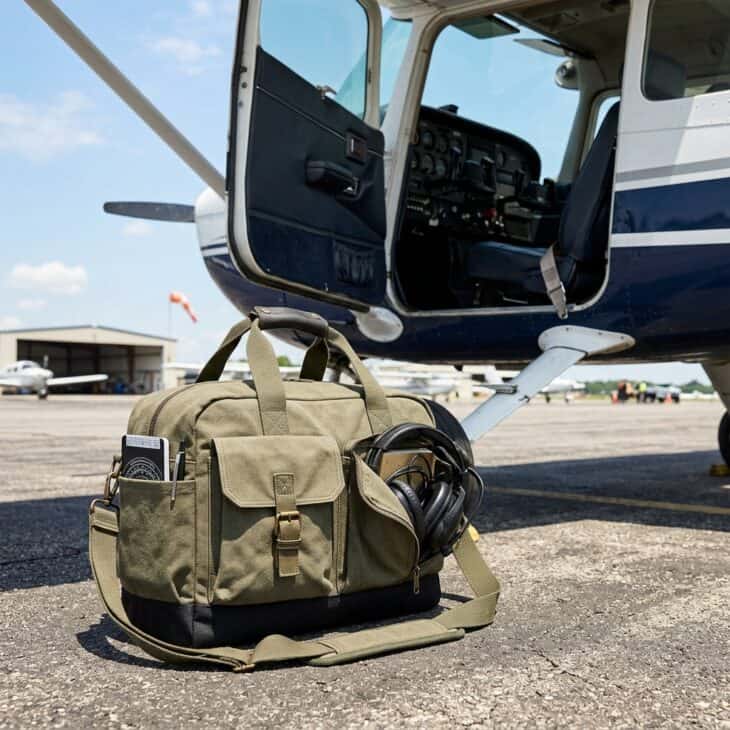
What it is A compact canvas bag sized for early training, with outside pockets for a headset, a logbook, and charts, a removable shoulder strap, and a reinforced bottom that survives being set down on a ramp.
Why it works A student pilot does not need a full professional bag built for chart cases and multiple headsets, and starting with a smaller, purpose-built bag beats overbuying before they know what they’ll actually carry.
How to get it Choose a size scaled to early training gear, not a full professional loadout. Look for a reinforced bottom, since flight bags spend a lot of time on pavement. Expect to upgrade to a bigger bag later if they continue past a private certificate.
21. Timex Expedition Digital Timer Watch
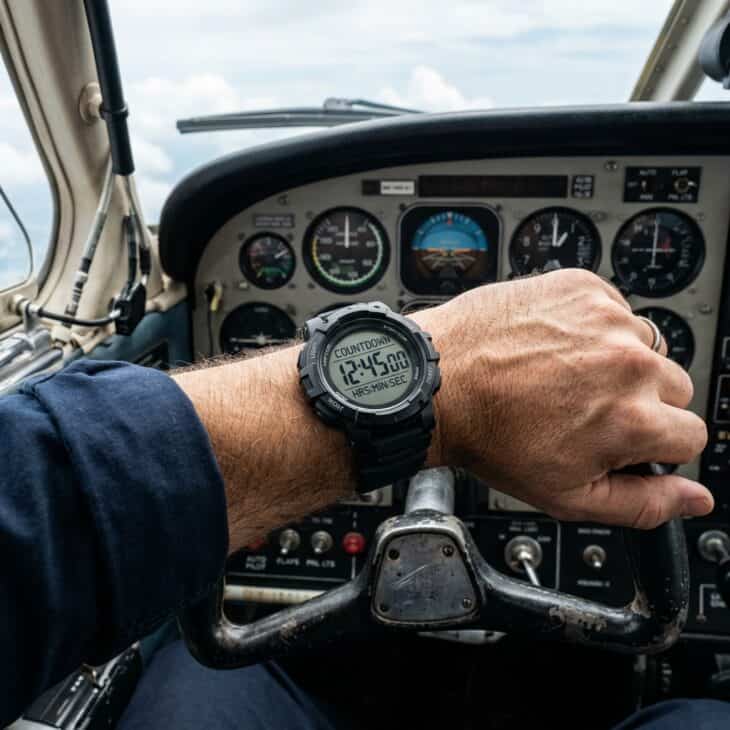
What it is A digital sports watch with a chronograph, a countdown timer, and multiple alarms, built around function rather than an analog aviation aesthetic. It is a different tool than the slide-rule-bezel chronograph a career pilot might wear.
Why it works Early training leans on timed turns, timed climbs, and dead-reckoning legs flown by the clock, and a large, easy-to-read digital timer is faster to use mid-maneuver than a phone.
How to get it Choose a model with a countdown timer, not just a stopwatch, since timed legs count down rather than up. Confirm the buttons are easy to operate with gloves on if they train somewhere cold. Keep the display simple, since a busy multi-function face is harder to read at a glance in flight.
22. David Clark H10-13.4 Student Headset
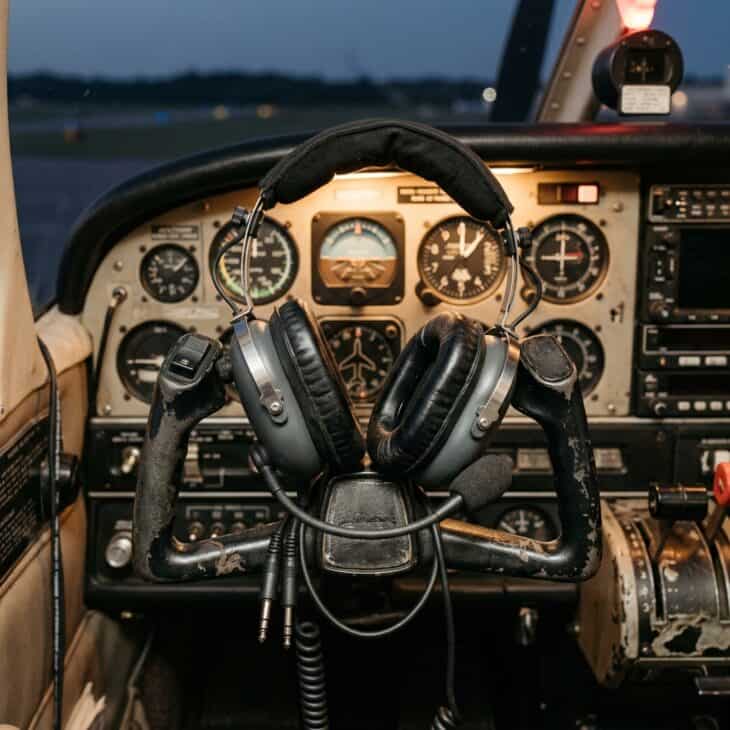
What it is A passive noise-reduction headset with foam and gel ear seals rather than battery-powered active noise cancellation, built around durability and a long warranty instead of the extra electronics.
Why it works Most flight schools rent or issue exactly this style of headset to new students, so owning one removes the daily hassle of borrowing shared gear and gets a student used to their own fit early.
How to get it Choose passive noise reduction as a first headset, it is lighter, needs no batteries, and costs less than an active model. Confirm the ear seals fit comfortably over glasses if they wear them. Treat an active noise-canceling headset as a later upgrade once they’re flying regularly on their own.
23. Icom IC-A25N Handheld NAV/COM Transceiver
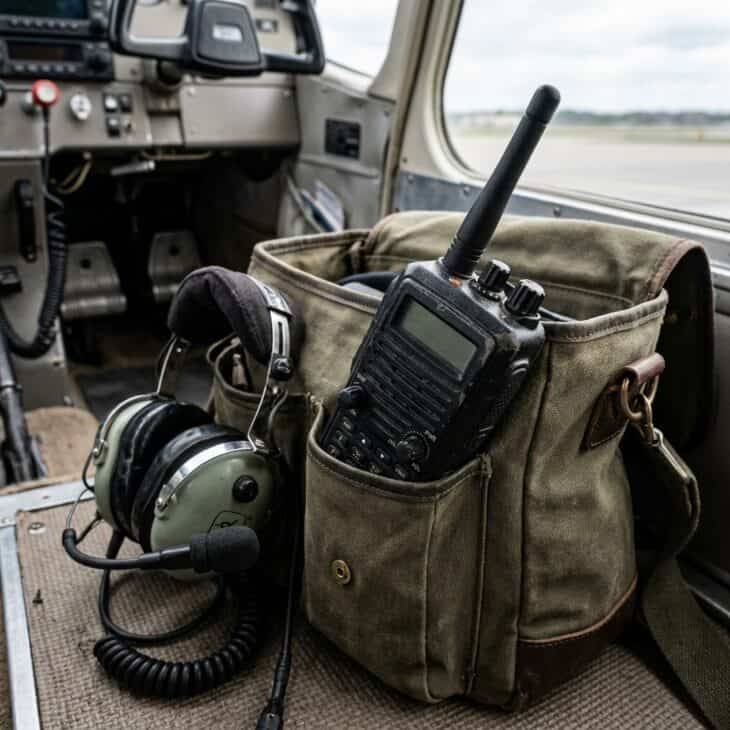
What it is A battery-powered handheld radio that can both transmit and receive on aviation frequencies, with built-in GPS and VOR navigation in the nav-equipped version, unlike a receive-only scanner.
Why it works If an aircraft’s electrical system or primary radio fails, a handheld transceiver is real backup communication capability, and practicing radio calls at home builds confidence long before solo flights start.
How to get it Confirm it transmits and not just receives, since a receive-only scanner cannot back up a failed radio. Charge it fully before every flight it’s carried on, since a dead handheld is dead weight. Practice with it on the ground first so the controls are familiar before an actual radio failure.
24. Sentry Portable ADS-B Weather and Traffic Receiver
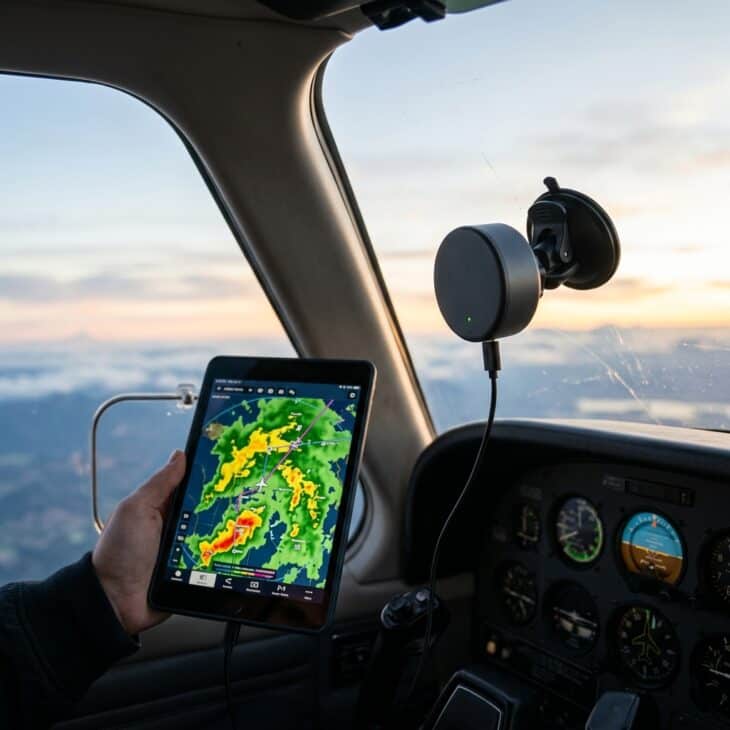
What it is A small, battery-powered portable receiver that streams free ADS-B weather and traffic data to an EFB app on a paired tablet or phone, with no subscription required for the weather feed.
Why it works Reading weather and traffic on a moving map is a skill worth building from early training onward, not something to learn for the first time after the certificate is already in hand.
How to get it Confirm it pairs with whatever EFB app their flight school or instructor already uses. Choose a model with a built-in battery over one that requires panel power, so it works in any rented aircraft. Treat the in-flight weather as supplemental, never a replacement for an official preflight briefing.
25. ASA CX-3 Electronic Flight Computer
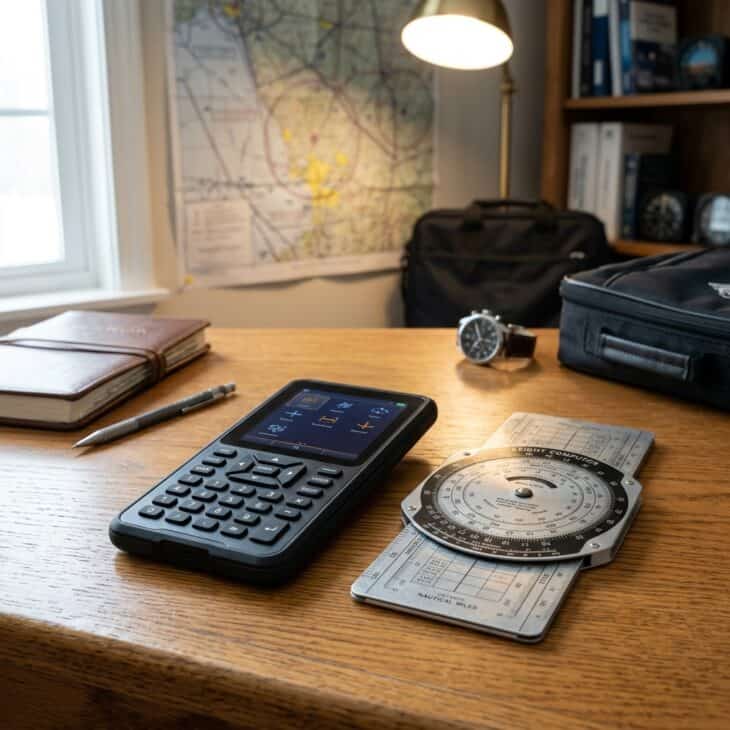
What it is A handheld electronic calculator built specifically for aviation math, covering time, speed, distance, fuel, weight and balance, and wind correction through a menu interface instead of a rotating dial.
Why it works The manual E6B teaches the concepts, but most working pilots and plenty of examiners carry the electronic version day to day, so it is a second, faster tool worth owning once the manual one is second nature.
How to get it Confirm it is approved for use on the FAA knowledge exam before the checkride, since not every electronic calculator is. Keep the manual E6B in the bag too, since some instructors still want to see it used. Pack spare batteries, since a dead electronic computer is no better than not having one.
Sources and references used for research and fact-checking.
Get the Newsletter
The latest aviation news and stories sent to your inbox.
About the Author

Hanna writes AeroCorner's aviation-lifestyle and decor guides, turning a love of flight into ideas for your home, celebrations, and gift lists.