

Table of Contents
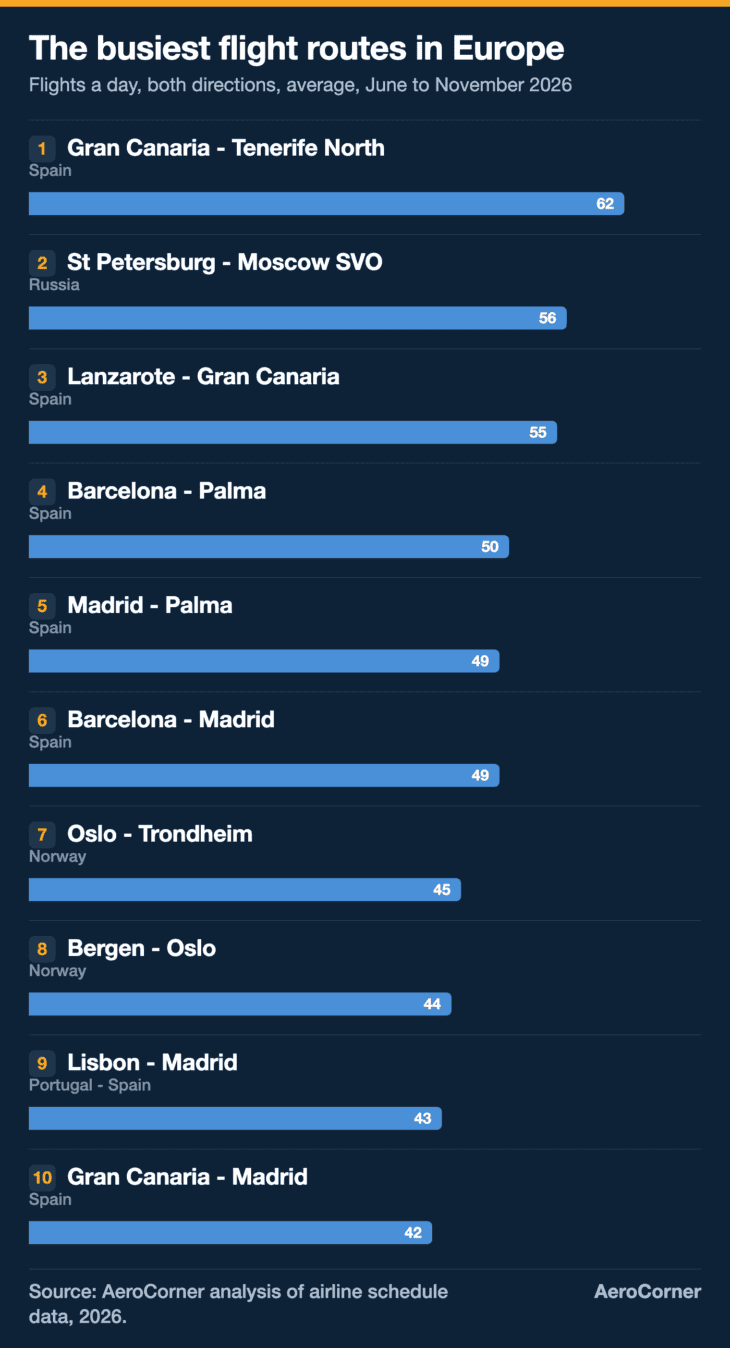
The busiest flight route in Europe is a 69-mile (112 km) island hop: Gran Canaria to Tenerife North in Spain’s Canary Islands, with 62 flights a day in both directions. St Petersburg to Moscow Sheremetyevo is second with 56, and Lanzarote to Gran Canaria third with 55.
The ranking is an AeroCorner analysis of airline schedule data, average of 6 weekly samples, June to November 2026. Every route is counted the same way: flights a day, both directions added.
Spain holds six of the top 10 outright and touches a seventh, and five of the ten start or end on an island. Not one London route makes the list. Below are the top 10, why Spain’s islands and Russia’s capitals dominate, the busiest international routes, and the full table.
How we count
Once a month we take one week of flights for about 280 of the world’s largest airports and count every flight between each pair of them. Each figure is the average of six weekly counts, June to November 2026. A route is one airport pair with both directions added, so 62 flights a day means about 31 each way. We count routes that at least one passenger airline flies, and every flight on such a route counts, including cargo and private jets, so a few figures run high; we flag those in the entries. Our data is complete only for routes above about 40 flights a day, which in Europe leaves 14 routes, so this list stops at 10. OAG’s well-known lists rank routes by scheduled seats, so their order differs where aircraft are much bigger or smaller than usual. The table at the end can be sorted.
1. Gran Canaria (LPA) – Tenerife North (TFN): 62 flights a day
- Flights a day, both ways: 62
- Distance: 69 mi
- Type: Domestic
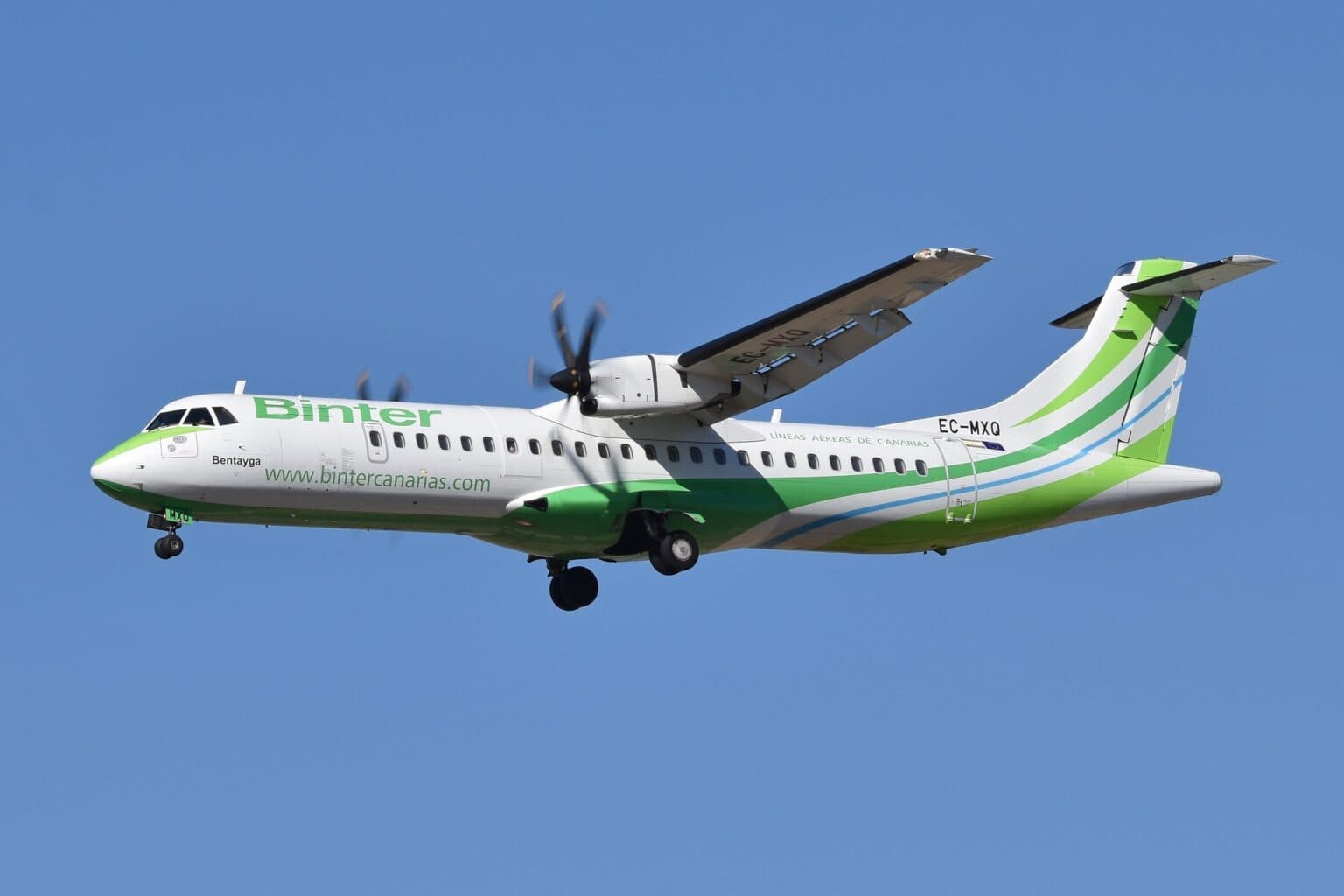
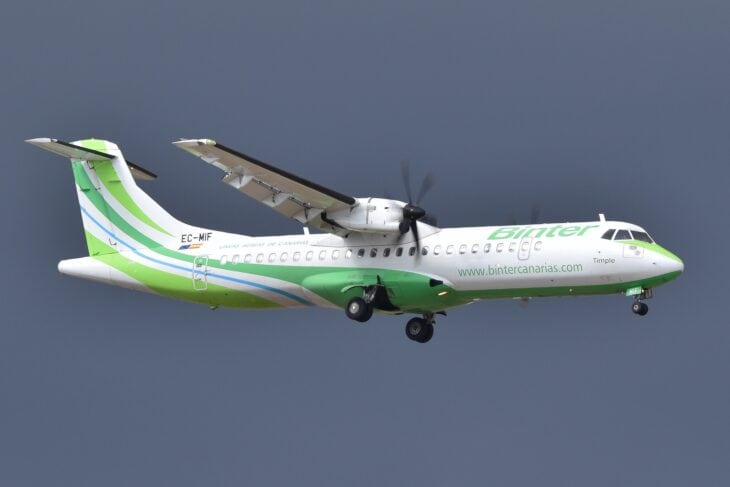
Gran Canaria to Tenerife North averaged 62 flights a day across our six sample weeks, six more than any other route in Europe. The two airports are the hubs of Binter Canarias, the islands’ own airline, which links Gran Canaria and Tenerife all day long.
Most flights are ATR 72-600 turboprops flown for Binter by Canarias Airlines and Naysa, and Canaryfly adds more. Those aircraft seat roughly 70, which is why the route that tops a flight count never appears near the top of a seat ranking.
Our samples ranged from 52 flights a day in September to 72 in June. Aena counted about 900,000 passengers on the route in 2023, a small total for so many flights, and the clearest sign that it is a bus service with wings.
2. St Petersburg Pulkovo (LED) – Moscow Sheremetyevo (SVO): 56 flights a day


- Flights a day, both ways: 56
- Distance: 372 mi
- Type: Domestic
St Petersburg Pulkovo to Moscow Sheremetyevo links Russia’s two biggest cities, 372 miles (599 km) apart, with 56 flights a day. Aeroflot, its sister airlines Rossiya and Pobeda, and Pegas Fly all fly it.
The figure is held down by one weak sample. Five of our six weeks read 54 to 73 flights a day, but the November week read only 36, with the Moscow-bound direction almost missing. Without it the route would average about 60 and sit within two flights of first place.
It is also only one of three airport pairs between the cities, since flights from St Petersburg also go to Vnukovo and Domodedovo. Count all three and the city pair is busier still.
3. Lanzarote (ACE) – Gran Canaria (LPA): 55 flights a day

- Flights a day, both ways: 55
- Distance: 129 mi
- Type: Domestic
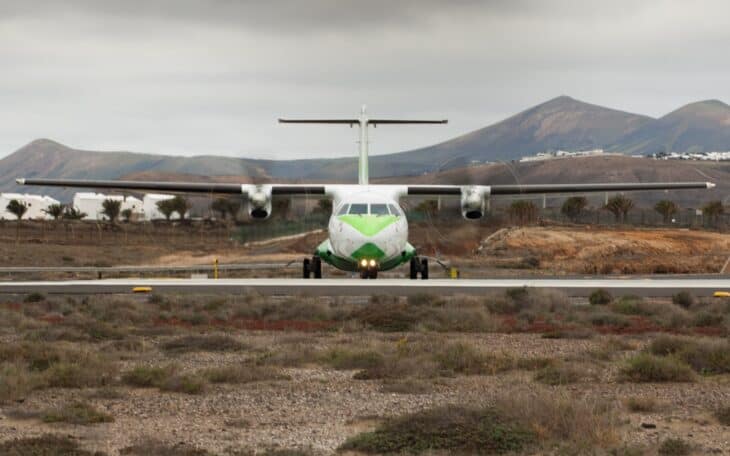
Lanzarote to Gran Canaria is the second Canary Islands route in the top three, at 55 flights a day over 129 miles (207 km). Binter’s turboprops, Canaryfly and some TUIfly flights share it.
It was one of the steadiest routes through the summer, at 55 to 59 flights a day from June to October, before dropping to 43 in our November week.
4. Barcelona (BCN) – Palma de Mallorca (PMI): 50 flights a day

- Flights a day, both ways: 50
- Distance: 125 mi
- Type: Domestic
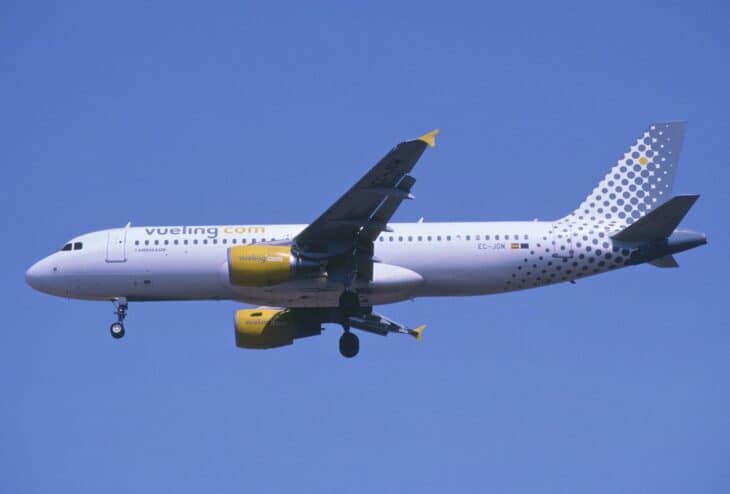
Barcelona to Palma de Mallorca averaged 50 flights a day over just 125 miles (202 km). Vueling, Air Europa and Ryanair fly it, and the cargo airline Swiftair also appears in our operator list, so a few of the daily flights carry freight.
This is the route that wins on seats. OAG names Barcelona to Palma Europe’s busiest domestic route of 2025, with 2,955,696 scheduled seats, up from just under 2.9 million in 2024. Its jets carry far more people per flight than the Canary Islands turboprops ahead of it.
Our samples peaked at 55 flights a day in July and eased to 43 in November, the shape of a holiday route.
5. Madrid-Barajas (MAD) – Palma de Mallorca (PMI): 49 flights a day


- Flights a day, both ways: 49
- Distance: 340 mi
- Type: Domestic
Madrid to Palma de Mallorca ran 49 flights a day over 340 miles (547 km), a fraction ahead of Madrid to Barcelona. Iberia, Iberia Express, Air Europa, Ryanair and Wizz Air all fly it.
Unlike Barcelona to Palma, it did not fade in the autumn: our November week read 56 flights a day, its highest of the period. Palma de Mallorca and Gran Canaria are each an end of two of Europe’s five busiest routes.
6. Barcelona (BCN) – Madrid-Barajas (MAD): 49 flights a day


- Flights a day, both ways: 49
- Distance: 300 mi
- Type: Domestic
Barcelona to Madrid, once the airline shuttle every Spanish business traveler knew, still runs 49 flights a day over 300 miles (483 km). Iberia, Iberia Express, Air Europa and Vueling fly it.
That figure runs high. Our operator list includes cargo carriers such as Swiftair and the DHL airline EAT Leipzig, plus business jet companies such as Gestair, so the airline schedule alone is smaller than 49.
It is also the most business-shaped route in the top 10: our August week read just 33 flights a day, against 56 in October.
High-speed rail can take more than 80% of the market on corridors like this one, and a 2026 study found airlines on Spain’s rail-competed Madrid routes kept their frequencies but cut seats by 10% to 16%.
7. Oslo Gardermoen (OSL) – Trondheim Vaernes (TRD): 45 flights a day

- Flights a day, both ways: 45
- Distance: 226 mi
- Type: Domestic
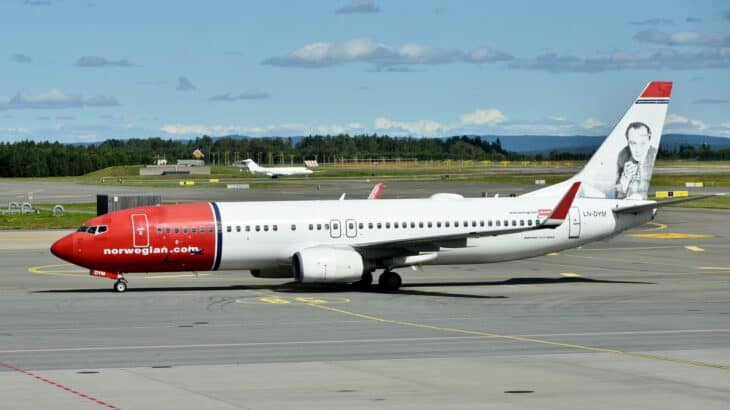
Oslo Gardermoen to Trondheim Vaernes averaged 45 flights a day over 226 miles (363 km). Norwegian, SAS and Wideroe fly it, and a few smaller operators in our list add a handful of flights.
Norway’s mountains and long coastline make flying the normal way to cross the country, and Oslo alone had 31 domestic destinations in 2025. Trondheim and Bergen are its two busiest routes in our data.
The route’s shape gives it away as a work commute: 52 to 54 flights a day in June and September, but only 32 in our July week, the heart of the summer holidays.
8. Bergen Flesland (BGO) – Oslo Gardermoen (OSL): 44 flights a day

- Flights a day, both ways: 44
- Distance: 202 mi
- Type: Domestic
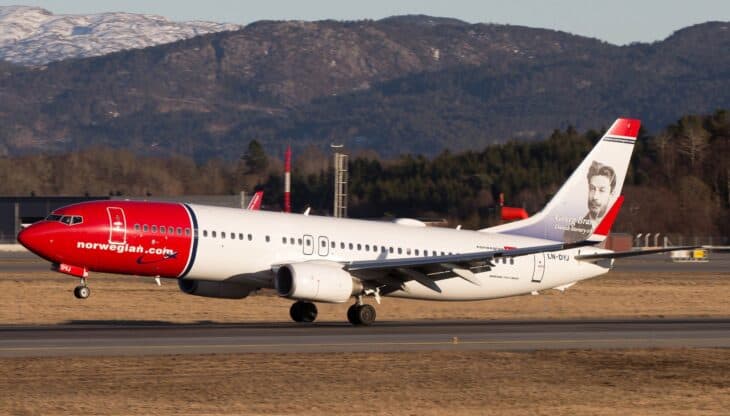
Bergen to Oslo is almost a twin of the Trondheim route, at 44 flights a day over 202 miles (325 km). Norwegian, SAS and Wideroe fly it, so Norway puts two routes in Europe’s top 10 with a population of under six million.
It dipped the same way in summer, to 32 flights a day in July from 51 in June and September. Oslo to Stavanger, Norway’s third trunk route, sits just below our cut-off.
9. Lisbon (LIS) – Madrid-Barajas (MAD): 43 flights a day

- Flights a day, both ways: 43
- Distance: 319 mi
- Type: International
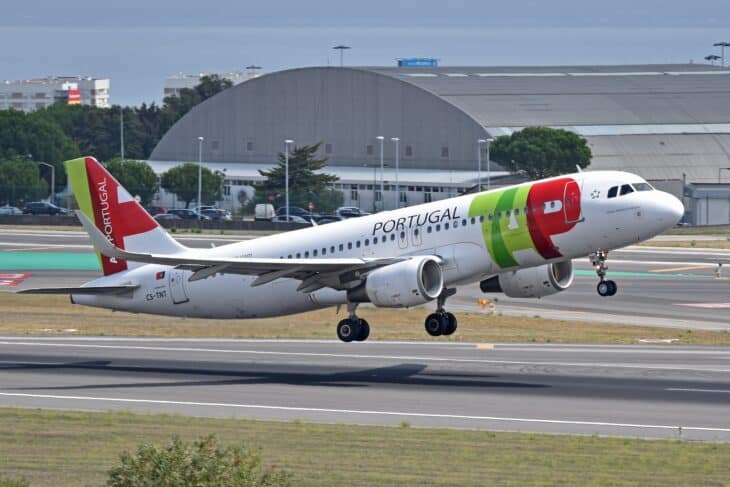
Lisbon to Madrid is the busiest international route in Europe by our count, at 43 flights a day over 319 miles (513 km). TAP Air Portugal, Iberia, Air Europa, easyJet and Ryanair fly it, and partner airlines such as Aeromexico and Air Canada sell seats on their flights.
It is the steadiest route on the list: every sample week read 41 to 45 flights a day, with almost no summer peak. OAG ranks it second among Europe’s international routes for summer 2025, with 1,287,024 seats, just behind Rome to Madrid.
Madrid, the busiest end in Europe
Madrid-Barajas is one end of four of Europe’s top 10 routes: Palma, Barcelona, Lisbon and Gran Canaria. Only Gran Canaria comes close, with three, which says more about Madrid’s role as the hub of Spain’s airlines than about any single city pair.
10. Gran Canaria (LPA) – Madrid-Barajas (MAD): 42 flights a day


- Flights a day, both ways: 42
- Distance: 1,098 mi
- Type: Domestic
Gran Canaria to Madrid closes the top 10 with 42 flights a day, and at 1,098 miles (1,766 km) it is by far the longest route on the list. The Canary Islands sit off the coast of Africa, but they are part of Spain, so this is a domestic flight.
Iberia Express, Air Europa, Binter, Vueling and Ryanair fly it, with partner airlines such as Qatar Airways selling seats on some flights. It barely moved through the period, at 40 to 45 flights a day in every sample.
Its partner route, Madrid to Tenerife, falls below the cut-off. For the world’s top routes on the same measure, see the busiest flight routes in the world, where Europe’s leader ranks only 38th.
Why Spain’s islands fill Europe’s busiest routes
Two of Spain’s island groups put five routes in the top 10. In the Canaries, the islands depend on short flights for work, school and hospital trips, and Binter runs them like a bus network from its two hubs.
The Balearics work the other way. Mallorca is a holiday island linked to Spain’s two biggest cities by jets, so Barcelona to Palma ranks fourth by flights but first in Europe by seats.
Both share the trait that puts routes on top everywhere in the world: water between the two ends, so no train can compete. The same rule explains why Seoul to Jeju is the busiest flight route in the world.
Russia’s domestic market
St Petersburg to Moscow is the only route outside Spain and Norway in the domestic top 10. Since 2022, flights between Russia and the European Union have been suspended, so Russia’s airlines lean harder on routes inside the country.
The busiest international flight routes in Europe
Only four international routes clear our cut-off. Lisbon to Madrid leads with 43 flights a day, then Dublin to Edinburgh (42), Rome Fiumicino to Madrid (41) and Dublin to Manchester (41).
OAG’s seat counts order them differently. For summer 2025 it put Rome to Madrid first with 1,322,042 seats and Lisbon to Madrid second, and for the whole of 2024 it ranked Rome to Madrid first and Dublin to London Heathrow second, with 2.35 million seats.
Copenhagen to Oslo, third on OAG’s summer list, sits just below our cut-off at 40 flights a day. For the world picture, see the busiest international flight route.
But what about London?
London is Europe’s biggest air market, yet no London route makes the top 10. Its traffic is split across Heathrow, Gatwick, Stansted, Luton, City and Southend, so no single airport pair reaches 40 flights a day. Dublin to Heathrow, which OAG ranks second in Europe by seats, runs fewer, bigger aircraft and falls below our cut-off. Istanbul and Moscow are split the same way: Izmir to Istanbul Airport runs 41 flights a day, just outside the top 10, before counting the flights to Sabiha Gokcen.
Europe’s top 10 busiest flight routes: the full table
The table below holds the same 10 routes with their distance and type. Tap a header to sort it, or search it for a city.
| Rank | Route | Countries | Flights a day, both ways | Distance | Type |
|---|---|---|---|---|---|
| 1 | Gran Canaria (LPA) – Tenerife North (TFN) | Spain | 62 | 69 mi | Domestic |
| 2 | St Petersburg Pulkovo (LED) – Moscow Sheremetyevo (SVO) | Russia | 56 | 372 mi | Domestic |
| 3 | Lanzarote (ACE) – Gran Canaria (LPA) | Spain | 55 | 129 mi | Domestic |
| 4 | Barcelona (BCN) – Palma de Mallorca (PMI) | Spain | 50 | 125 mi | Domestic |
| 5 | Madrid-Barajas (MAD) – Palma de Mallorca (PMI) | Spain | 49 | 340 mi | Domestic |
| 6 | Barcelona (BCN) – Madrid-Barajas (MAD) | Spain | 49 | 300 mi | Domestic |
| 7 | Oslo Gardermoen (OSL) – Trondheim Vaernes (TRD) | Norway | 45 | 226 mi | Domestic |
| 8 | Bergen Flesland (BGO) – Oslo Gardermoen (OSL) | Norway | 44 | 202 mi | Domestic |
| 9 | Lisbon (LIS) – Madrid-Barajas (MAD) | Portugal – Spain | 43 | 319 mi | International |
| 10 | Gran Canaria (LPA) – Madrid-Barajas (MAD) | Spain | 42 | 1,098 mi | Domestic |
FAQ
Sources and references used for research and fact-checking.
- OAG, The Busiest Flight Routes of 2025
- OAG, Europe's Most Popular Flight Routes for Summer
- The Irish Times, Dublin to Heathrow was second busiest air route in Europe last year, new figures show
- Universitat Oberta de Catalunya, Airlines maintain flights despite high-speed rail
- Wikipedia, Binter Canarias
- Wikipedia, Tenerife North-Ciudad de La Laguna Airport
- Wikipedia, Oslo Airport, Gardermoen
- Wikipedia, Pulkovo Airport
Get the Newsletter
The latest aviation news and stories sent to your inbox.
About the Author

Tim is the owner and lead editor of AeroCorner since 2019, overseeing aviation content covering aircraft, airlines, airports, and the broader aviation industry. Through years of researching, writing, editing, and publishing aviation-focused content, he has developed extensive practical knowledge of commercial aviation and air travel. Based in Asia and a frequent traveler himself, Tim also brings firsthand passenger experience to AeroCorner’s coverage. Outside of publishing, he has also explored aviation firsthand through hands-on flight training in New Zealand.