

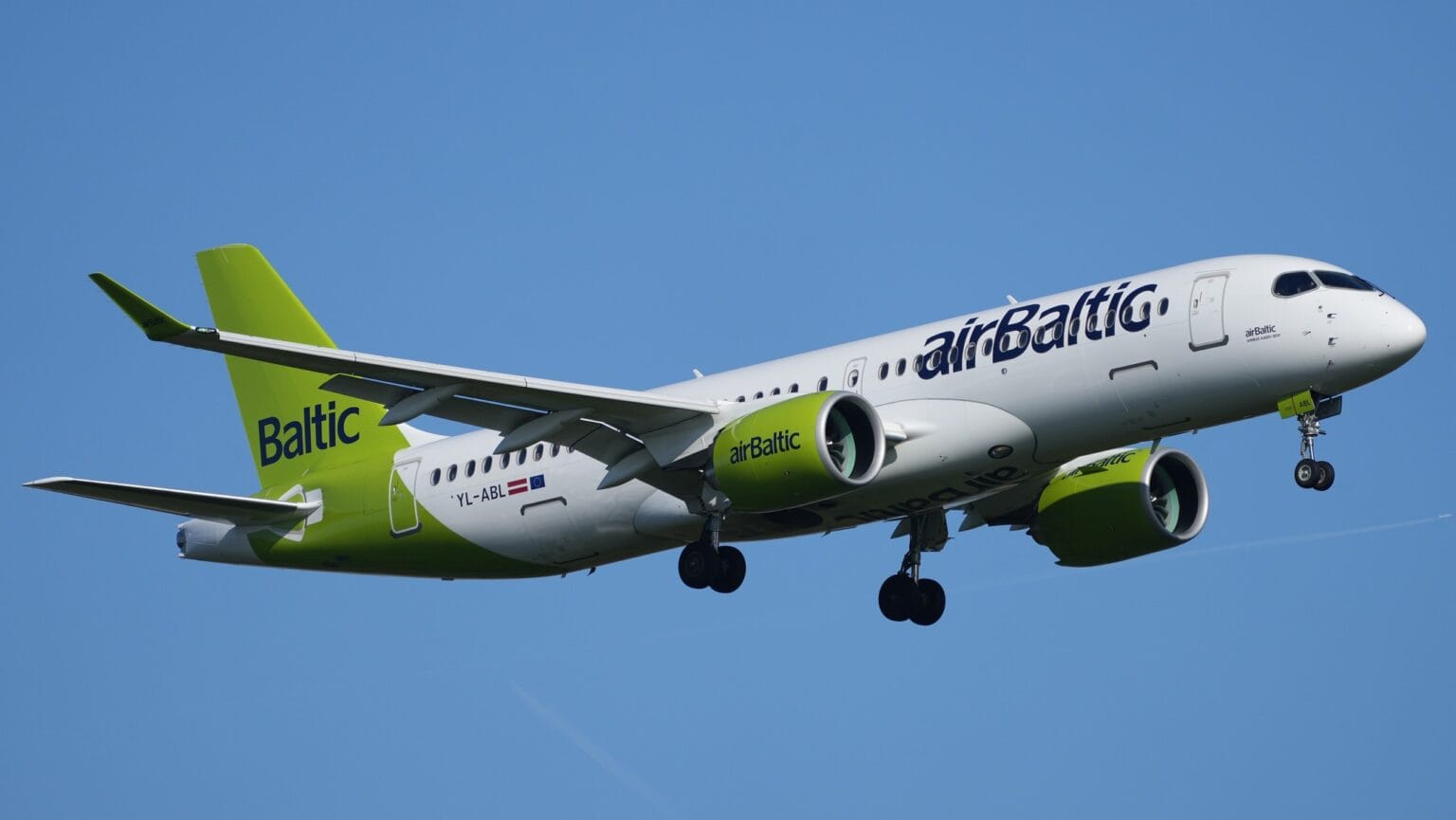
airBaltic plans to make about 100 pilots and 200 cabin crew members redundant, the Latvian airline confirmed on October 28, 2026. According to the Latvian Aviation Trade Union (LAA), crew will start to learn whether they keep their jobs from Saturday, October 31.
The figures put a number on the crew share of the 500 to 700 job cuts airBaltic flagged on October 5 across Riga, Vilnius and Tallinn. The roughly 300 covers pilots and cabin crew only.
airBaltic spokesperson Augusts Zilberts confirmed the numbers to LSM, Latvia’s public broadcaster, but said they are not final and could change once staff assessments are complete. Another spokesperson, Edvards Dālderis, gave AeroTime the same figures.
Who Is Affected, and Where
airBaltic links the cuts to the flying and route network it plans for next year. It says the pilot reductions will reach all three of its bases, in Riga, Vilnius and Tallinn.
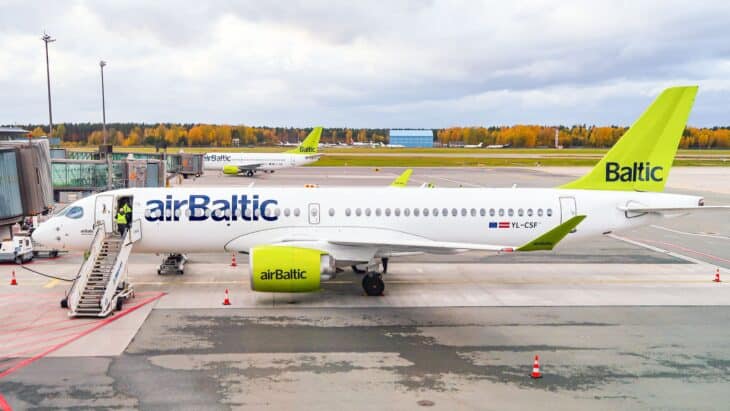

For cabin crew, the airline says Riga has more cabin crew than it needs while Vilnius and Tallinn need more, so Riga staff will be offered posts at those bases where vacancies exist.
In a statement quoted by AeroTime, the union says all of the cabin crew cuts fall on the Riga base, with Tallinn and Vilnius untouched; neither airBaltic statement in the LSM and AeroTime reports gives a split by base.
The LAA also says the 200 figure leaves out cabin crew who have already left voluntarily since the collective redundancy process began, LSM reported.
Board chairman Andrejs Martinovs told Latvian Radio on October 20 that the situation was “changing every day” as some staff resign on their own. He said a hoped-for mass move to part-time or 85% hours had not worked, so reduced hours are now voluntary and judged case by case.
The Fight Over Selection Criteria
The union’s main complaint is how crew are being ranked. It says staff are assessed on criteria it has not received in writing, using promotion lists that, it claims, airBaltic itself said on September 3 contain “non-objective elements.”
The LAA says it received an email describing the method only on October 27 and 28. It has asked chief executive Erno Hildén and human resources vice president Katya Leidmane to meet this week and to hold back individual notifications until the criteria are reviewed.
“At present, the process is not in accordance with the law,” LAA board chair Dace Kavasa told Latvian Television. The union also calls one offer an ultimatum: crew who sign a mutual agreement to leave would get preference at interviews if airBaltic hires again.
airBaltic disputes that account. Zilberts said the criteria were chosen after several rounds of consultation, and that the airline accepted a compromise proposed by two other unions: using the pilot and cabin crew assessment systems it already applies.
He said those systems weigh length of service, which the LAA had pressed for, along with professional qualifications and other job-performance factors.
The union also claims that up to 30 cabin crew jobs on airBaltic’s Belgrade operation have been filled through a Serbian temporary work agency while permanent crew are dismissed. The airline’s response quoted by AeroTime does not address that claim.
airBaltic flies A220-300s for Air Serbia, the Belgrade-based flag carrier, under a two-year wet-lease deal that was due to start on November 1, 2025, N1 reported when it was announced. The union did not say whether its Belgrade figure refers to that contract.
Why Written Criteria Matter
The EU’s collective redundancies directive requires an employer planning mass layoffs to give workers’ representatives, in writing, “the criteria proposed for the selection of the workers to be made redundant,” along with the reasons, numbers and timing.
Consultation must begin “in good time with a view to reaching an agreement” and cover ways to avoid the cuts or reduce how many people they hit. That is the ground the union stands on when it says consultations “cannot be closed while basic questions remain open.”
The directive also says notified layoffs cannot take effect earlier than 30 days after the authorities are told. airBaltic said on October 5 that it had already notified Latvia’s State Employment Agency.
The claim that the process breaks the law is the union’s own reading. The reports cite no ruling on it by a regulator or a court.
A Smaller Airline Under Chapter 11
The crew cuts follow the smaller A220 fleet in airBaltic’s new business plan. The airline operates 54 aircraft and plans about 36 by the end of 2026, then a gradual return to around 40 later in the decade.
airBaltic lost 128.2 million euros in the first half of 2026 on revenue of 399.2 million euros, and blamed high fuel costs for much of it, LSM reported.
Leasing out aircraft and crews to other airlines had been the growth engine: those flights rose 35% to 18,300 in the first half. Now that work is shrinking too, after SWISS said on October 27 that its airBaltic wet lease ends with the 2026/27 winter timetable.
airBaltic entered Chapter 11 in the US Bankruptcy Court in New York on September 14. The Latvian state owns 88.37% of its shares and Lufthansa 10%, so the cuts are a political question in Riga as well as a corporate one.
Sources and references used for research and fact-checking.
- airBaltic, airBaltic to align workforce with new business plan
- airBaltic, airBaltic files first monthly operating reports with U.S. Court
- SWISS, SWISS to operate more flights with its own aircraft and crews again from summer 2027
- EU (Council Directive 98/59/EC), Council Directive 98/59/EC on collective redundancies
Get the Newsletter
The latest aviation news and stories sent to your inbox.
About the Author

AeroCorner News is the aviation news desk of AeroCorner.com. It covers accidents and incidents, safety rulings, airline and airport disruption, and new aircraft. It works from primary sources such as the NTSB, FAA, EASA and the manufacturers' own announcements.