
Twin Turboprops
Adam A-500
ICAO: A500
Ambitious composite designs aiming to redefine modern general aviation

AeroCorner features profiles for 2 Adam aircraft. This includes 1 Twin Turboprop and 1 VLJ (Very Light Jets). Each profile includes performance data, photo galleries, dimensions, and operational history.
Adam Aircraft Industries was an American aircraft manufacturer known for its use of advanced composite materials and unconventional twin-engine configurations. The company developed the A500, a push-pull twin designed for high efficiency and safety, and the A700 AdamJet, a very light jet aimed at the emerging VLJ market of the early 2000s. Despite strong technical innovation, the company ceased operations in 2008.
Adam Aircraft became a symbol of early-21st-century aerospace ambition, blending modern materials, sleek aerodynamics, and entrepreneurial vision in an industry dominated by long-established manufacturers.
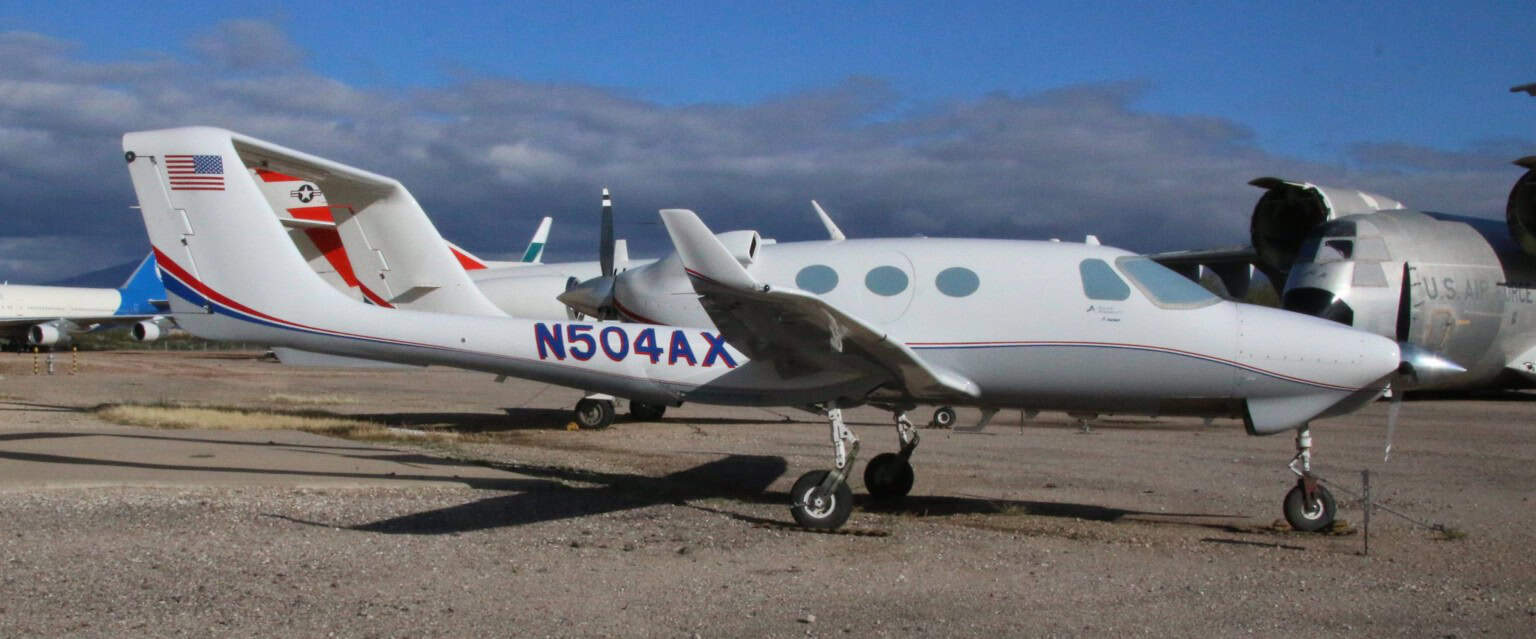
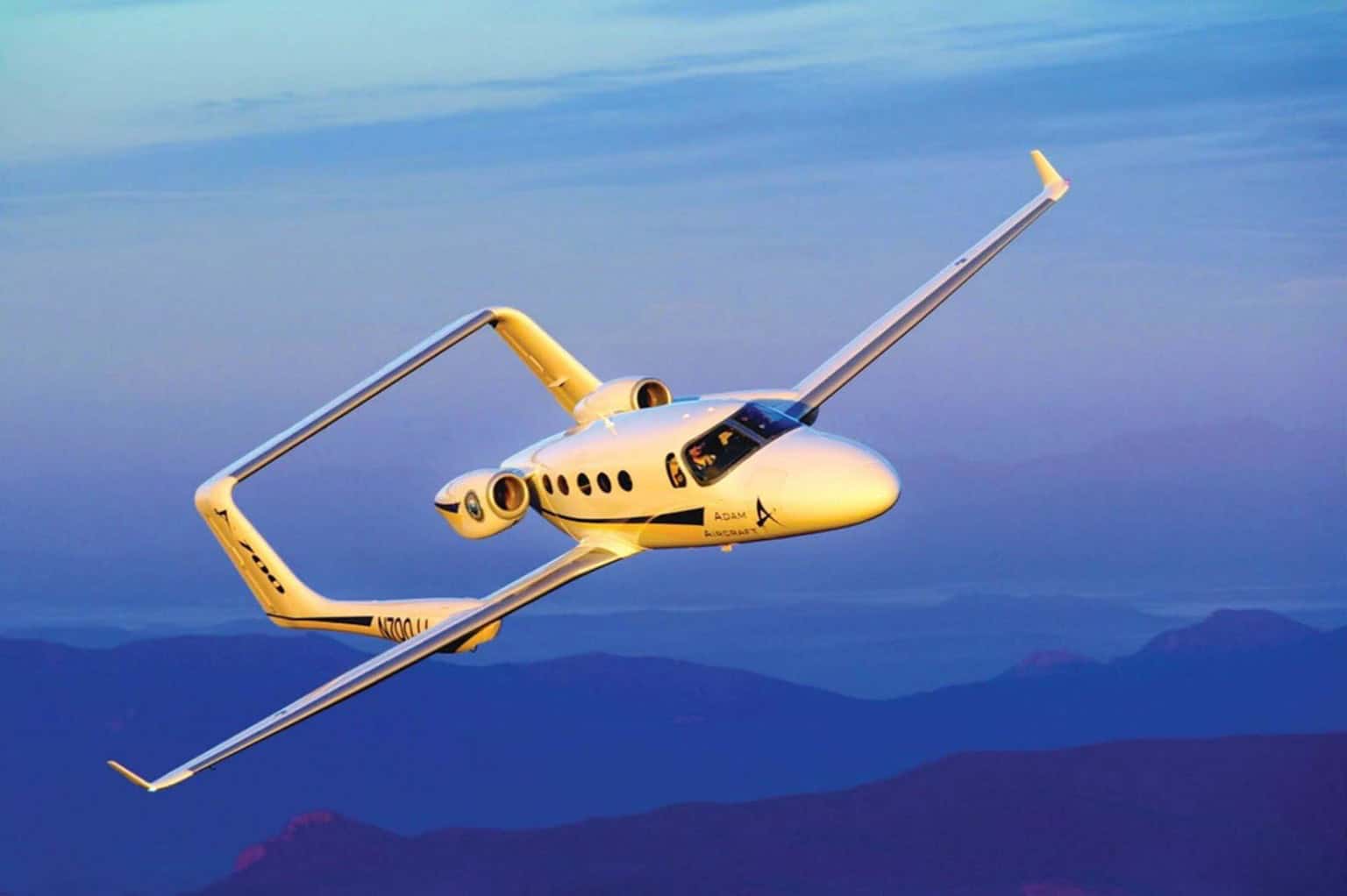

Adam Aircraft was founded in 1998 by entrepreneur Rick Adam in Englewood, Colorado. The company’s early mission was to create modern general aviation aircraft using extensive composite construction and NASA-inspired aerodynamic designs. It began developing prototypes for a family of twin-engine aircraft ranging from piston models to light jets.
In the early 2000s, Adam Aircraft expanded rapidly, securing investors, building engineering teams, and developing prototype aircraft. The company embraced advanced composite manufacturing and innovative push-pull engine configurations that aimed to improve safety by reducing asymmetric thrust risks associated with engine failures.
The mid-2000s marked Adam Aircraft’s most promising period. The company achieved FAA certification for the A500 and made significant progress on the A700 light jet prototype. The aviation industry regarded Adam as one of several emerging manufacturers pushing the boundaries of composite aircraft design and targeting new jet markets.
Adam Aircraft operated manufacturing and engineering facilities in Englewood, Pueblo, and Ogden, Utah. These sites supported composite fabrication, flight testing, customer service operations, and prototype development.
The company emphasized modern composite construction, aerodynamic efficiency, and safety improvements through inline (push-pull) twin-engine layouts. The goal was to combine twin-engine redundancy with single-engine handling characteristics while reducing drag and pilot workload.
Despite early promise, financial strain and delays in certification led Adam Aircraft to file for bankruptcy in 2008. The company’s assets were acquired by Russian investment group AAI Acquisition, which attempted to revive production; however, sustained manufacturing and further certification never materialized, leading to the brand’s eventual disappearance.
The FAA certification of the A500 demonstrated Adam’s capability to bring a clean-sheet composite aircraft to market. Its push-pull configuration offered unique safety advantages compared to conventional twins.
The A700 positioned Adam Aircraft as a contender in the early very light jet market, competing with Eclipse and Cessna’s Mustang. The aircraft generated enthusiasm for its performance potential and space-efficient design.
Adam invested heavily in composite production techniques, becoming one of the few new manufacturers capable of building pressurized composite fuselages, wings, and control surfaces at scale.
The company’s bankruptcy reflected both internal financial strain and the broader collapse of the VLJ bubble. The A700’s certification delays and high development costs further contributed to its failure.
Although new ownership briefly revived the program, the economic climate and certification challenges prevented a full return to production, ending prospects for both the A500 and A700.
Adam Aircraft is remembered for its bold composite designs and its attempt to break into both the piston-twin and VLJ markets simultaneously. The A500 and A700 remain notable examples of early carbon-fiber general aviation aircraft, and the company’s engineering work influenced later composite manufacturing methods used by other manufacturers.