

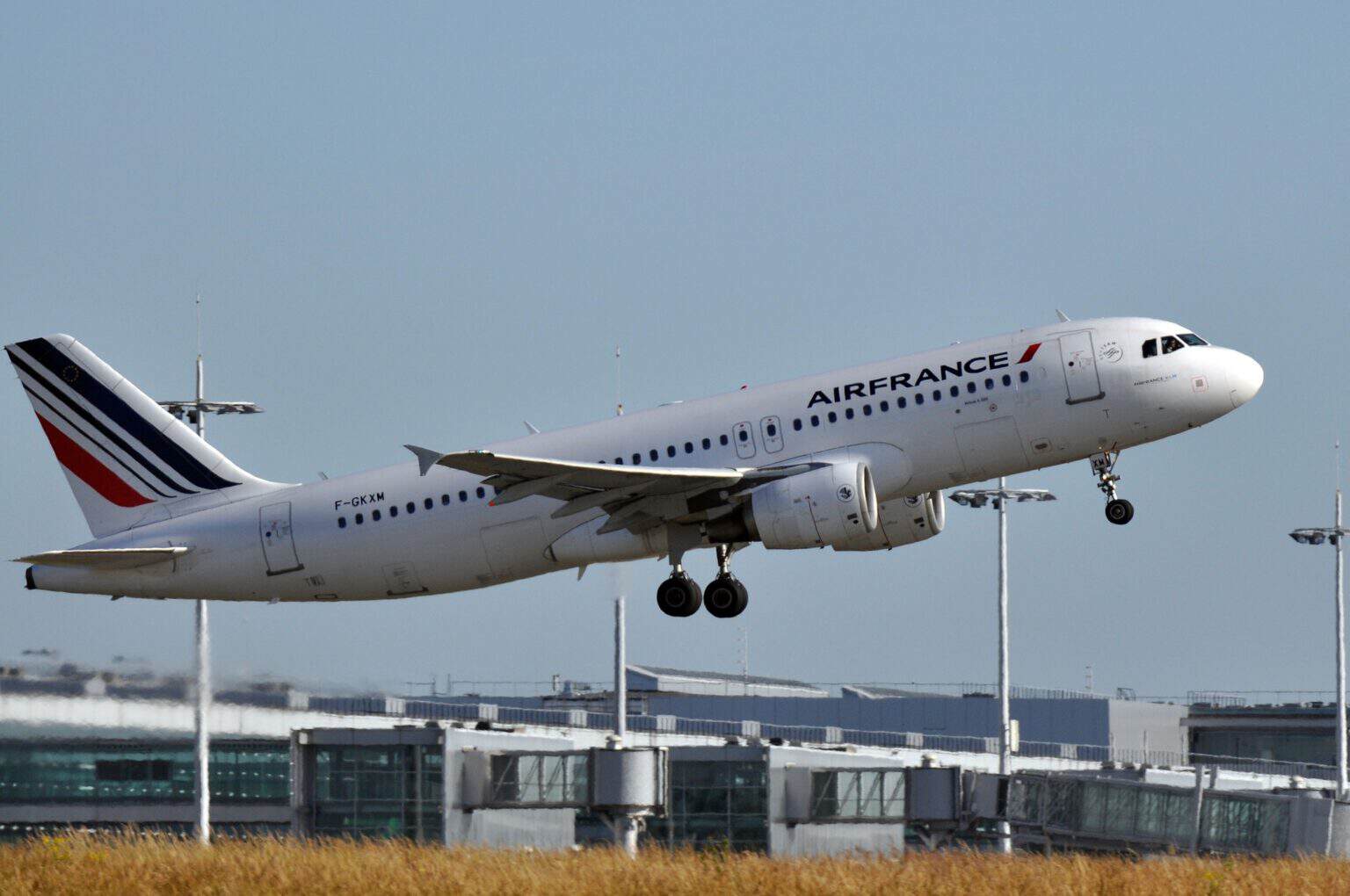
Five French flight crew unions have called a national strike from Saturday, October 17, to Wednesday, October 21, 2026, over a pension rule due to take effect next year. The walkout would hit the first days of France’s fall school holidays.
The joint notice, signed by the SNPL pilots’ union along with UNSA PNC, SNPNC-FO, SNGAF and UNAC, runs from 12:01 a.m. on October 17 to 11:59 p.m. on October 21, Paris time. It asks pilots and cabin crew to stop work completely for all five days.
Who is covered
The call applies to flight crew at every air transport and aerial-work company operating under French labor law. That takes in Air France and its low-cost arm Transavia France, as well as smaller French carriers.


The notice was first reported by Air Journal on September 19. SNPNC-FO republished it on its website on September 30, and the unions say they remain ready to resume talks with the government.
The timing is pointed. France’s Toussaint school holidays run from October 17 to November 2 across all three mainland school zones, according to the government’s official calendar, so the strike would land on the first weekend of the break.
At the time of writing, we found no reduced schedule published by Air France or Transavia for the strike days. Whether flights from Paris Charles de Gaulle and other French airports are cut will depend on how many crew members actually walk out.
The pension rule behind the walkout
The dispute is over France’s rules on combining a pension with a paycheck, known as cumul emploi-retraite. The 2026 social security financing law, enacted on December 30, 2025, rewrites them for anyone whose first basic state pension starts on or after January 1, 2027.
Under the new rules, a retiree who works before the legal retirement age loses a euro of pension for every euro earned, according to a summary by law firm CMS. Between that age and 67, the pension is cut by half of earnings above a threshold to be set by decree, and from 67 there is no cap.
The unions want flight crew and their own supplementary pension fund, the CRPN, kept out of the reform through the law and its implementing rules. They call it “particularly punitive and unsuited” to flying jobs, according to Air Journal’s account of their statement (our translation).
Their argument is that flying careers can end early. Pilots and cabin crew must pass regular medical checks and face age limits on some roles, which can end a flying career well before the general retirement age.
The unions say the government has offered only “limited promises,” including a partial exemption through an administrative circular rather than the law itself. “We therefore have no reliable guarantee,” they wrote.
What travelers can expect
A strike notice does not tell an airline how many flights it will lose. Under a 2012 French law, now in the transport code, employees whose absence would directly affect flights must tell their employer at least 48 hours in advance that they intend to strike.
Strikers who change their minds must say so at least 24 hours ahead, so airlines get a working picture of staffing about two days out. The same law requires the airline to give passengers free, accurate information on the flights it will operate at least 24 hours before the disruption starts.
It is a different mechanism from the one used in last month’s civil service strike, when France’s aviation regulator ordered airlines to cut flights at Paris CDG and Marseille. This time, the disruption depends on how many of the airlines’ own crew members declare.
For passengers whose flights are canceled, EU rule 261/2004 still requires the airline to offer a refund or rerouting, plus meals and, where needed, a hotel. Cash compensation is less certain this time, and the reason is the cause of the strike.
In a 2021 ruling involving SAS pilots, the EU Court of Justice held that a strike by an airline’s own staff over pay is not an “extraordinary circumstance,” so compensation is owed. But the court added that a strike over demands only public authorities can satisfy may be one.
This strike targets a government pension law rather than the airlines, so carriers may argue that exception applies. The court’s test is applied case by case, so passengers may not know where they stand until a claim is decided.
Sources and references used for research and fact-checking.
- SNPNC-FO, Préavis Intersyndical de GRÈVE NATIONALE
- Service-Public.fr (French government), Quel est le calendrier des vacances scolaires 2026-2027 et 2027-2028 ?
- Assemblée nationale, Texte adopté n° 864: proposition de loi relative à l'organisation du service et à l'information des passagers dans les entreprises de transport aérien de passagers (Feb 22, 2012)
- Court of Justice of the European Union, Press release No 44/21: Judgment in Case C-28/20 Airhelp v SAS
- EUR-Lex, Regulation (EC) No 261/2004
Get the Newsletter
The latest aviation news and stories sent to your inbox.
About the Author

Tim is the owner and lead editor of AeroCorner since 2019, overseeing aviation content covering aircraft, airlines, airports, and the broader aviation industry. Through years of researching, writing, editing, and publishing aviation-focused content, he has developed extensive practical knowledge of commercial aviation and air travel. Based in Asia and a frequent traveler himself, Tim also brings firsthand passenger experience to AeroCorner’s coverage. Outside of publishing, he has also explored aviation firsthand through hands-on flight training in New Zealand.